


9 Ways You Depend on a Healthy Ocean
Even if you live inland, the ocean is important to your life, from your lungs to your medicines, from the weather to the economy. We all need a healthy ocean!
What is nature worth? It's both priceless and worth many trillions. Here's how it props up our lives and economies, and what we can do to help it.

The economy—that’s something people created, right? Human beings are the only organisms on Earth to assign value in the form of money (as far as we know). The products and services we’re buying with that money are also created by humans. And so much of this is happening seemingly far from nature, in concrete jungles.
Get conservation news, stories and local opportunities, delivered monthly.
Sign UpBut nature and the economy are deeply related. We wouldn’t even have an economy without nature. When we help it, it helps us. And when we value nature, we can better protect it.
Here’s why taking care of nature is the smartest investment we can make.
Nature adds so much to our lives, so where do we start? Well, let’s acknowledge that some of its benefits simply can’t be quantified. Nature is all around us, and it’s invaluable—as in precious, essential, and immeasurable.
How much is it worth when you gain a sense of calm from breathing in the forest air, listening to a babbling stream or viewing a sunset that stops you in your tracks?
How many dollars, euros or rupees is equal to the sense of wonder of a toddler exploring the outdoors? The awe of seeing an eagle, a deer or a dolphin for the first time?
Nature helps us connect with the world around us, including with other people, through religion, culture and shared experiences across planet Earth. And all of these connections are priceless.
Like the foundation of a house, nature holds up our lives and economies, even when we can’t see it happening.
Global and local economies alike rely on Earth’s habitats for its goods (foods like fruits and vegetables or raw materials like wood and fresh water) and its services (like climate regulation and flood protection).
And when we start applying dollar figures to nature’s value, the numbers are mindboggling. The World Economic Forum estimates that $44 trillion of the world’s economic value generation—or about half of global GDP—is highly or moderately dependent on nature.
That kind of influence means nature supports just about every industry in the world and—zooming in a bit—every job in the world. Clearly, nature is the real bottom line.


If you work in food-related industries (or eat food, for that matter), you can thank nature. About 35% of all grown food production, including 75% of major crops, benefit from the pollination of birds, bats and insects.
The pollination of these foods, including cash crops like coffee, cocoa, avocados and almonds, is worth up to $577 billion a year.
And then there’s tourism. There’s a good chance nature was a major reason for your decision to travel somewhere recently. It may have been for the comfortable climate or the background scenery. Or it may have been more directly for an excursion to a national park or a relaxing beach.
If you enjoy a white sand beach, thank the poop of a parrotfish. And if you went to see coral reefs, hoo boy, you really need to thank nature! Tourism around coral reefs is a $36 billion industry and growing.
At every moment—while you’re sleeping, brushing your teeth, or reading this article—wildlife and habitats near and far are providing you critical services that help you live and thrive.
These benefits are known as ecosystem services. And they aren’t nice-to-haves: they're essentials for life, and in turn, our livelihoods. An economy won’t last long without clean water, air, food or a habitable climate.
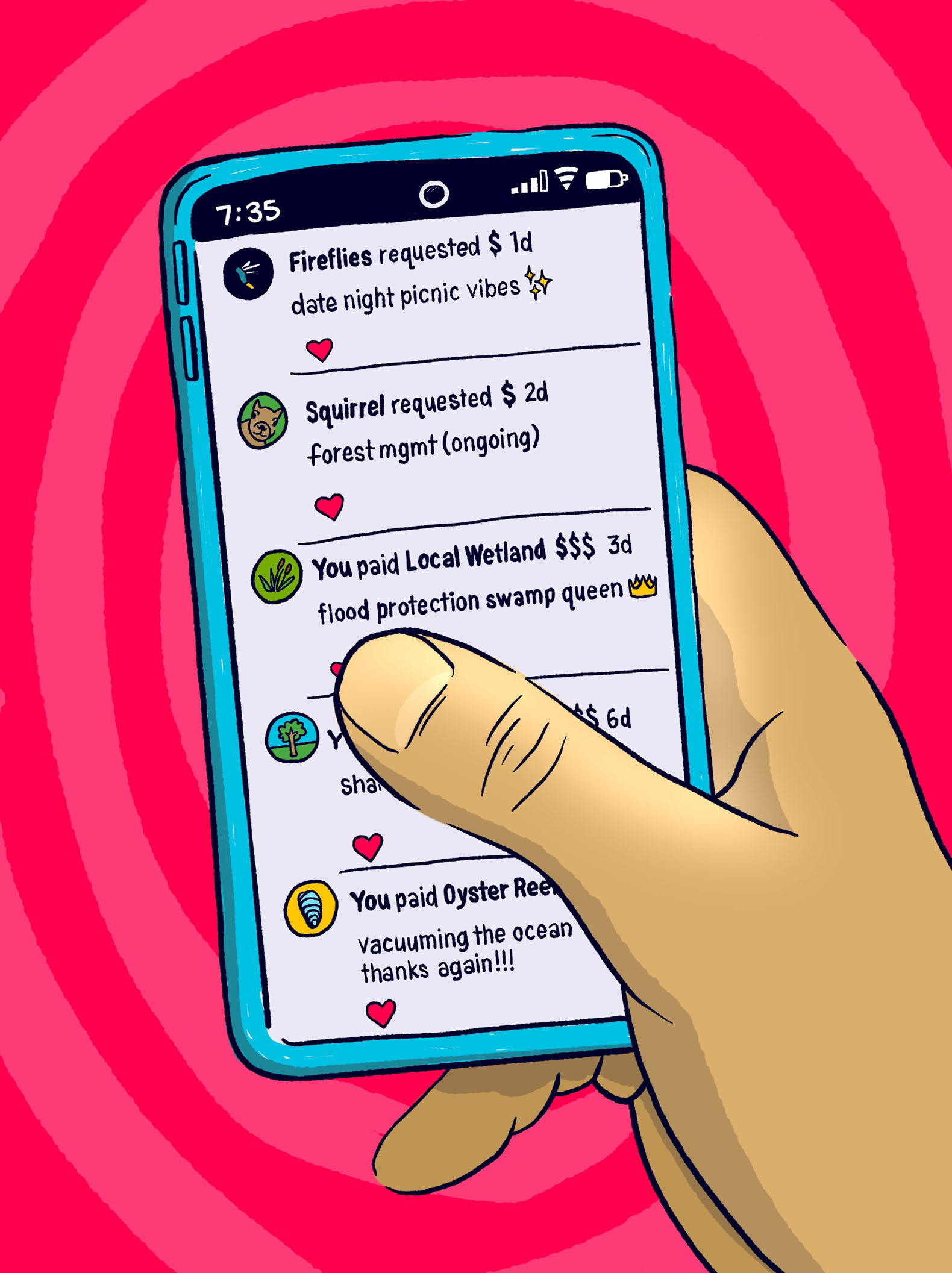
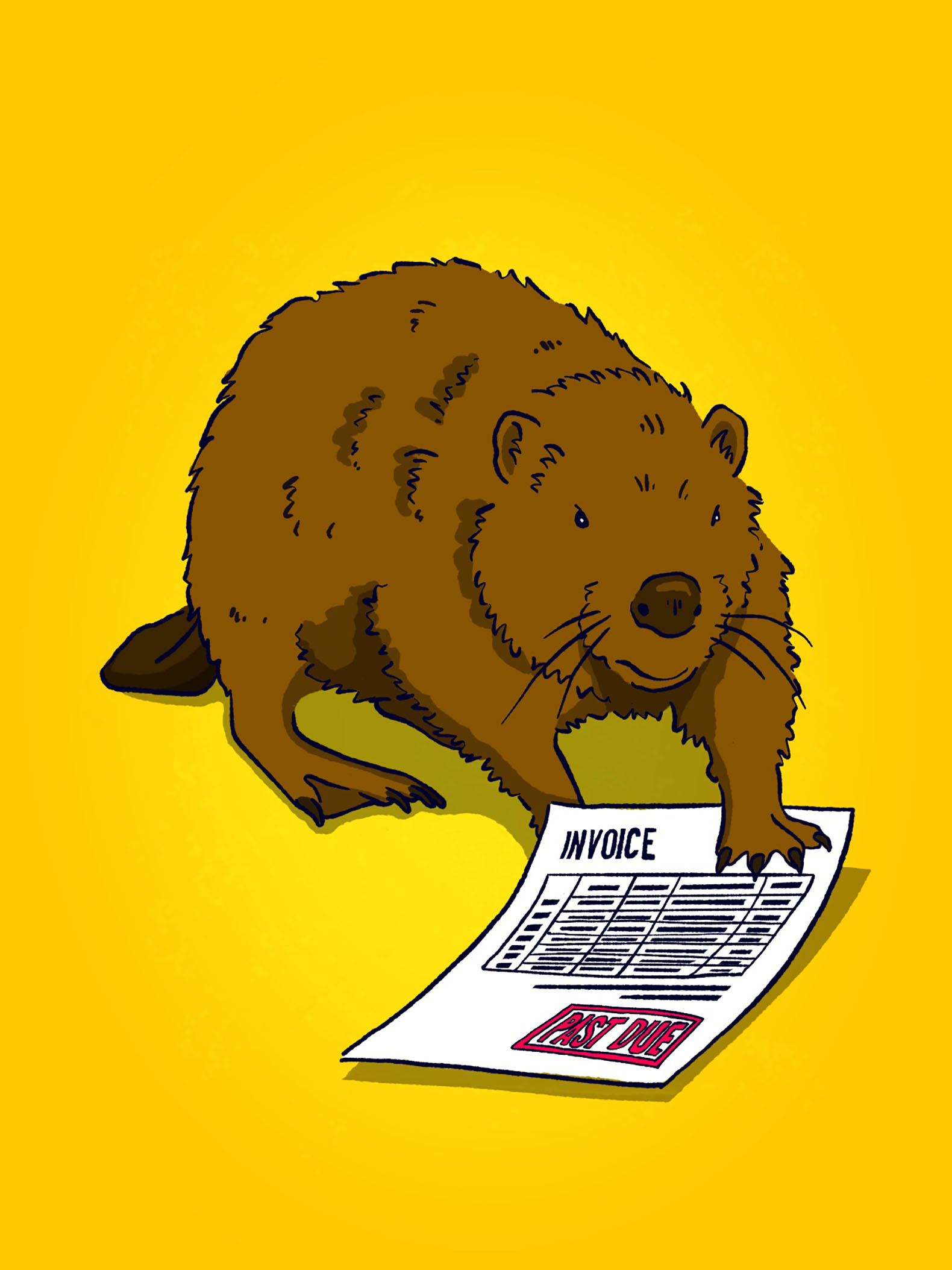
And though nature works around the clock, it’s not sending us invoices. All it asks is that we keep it healthy so it can keep functioning well and in turn provide these services.
The value of these services is staggering, even though most economic values don’t account for it. If you were to put a price on nature’s ability to filter water, clean the air and regulate the climate on a global scale, it would be trillions of dollars. In fact, an analysis by BCG put that number at $150 trillion—that's 5X the size of the U.S. economy.
Ways nature is helping us thrive.
We’ve been talking a lot about economies at a global scale. Now, let’s talk about you.
More than any credit card perk or coupon, nature saves you money by lowering your utility bills, keeping you healthy and protecting you from disasters.
As global temperatures continue to increase at alarming rates, people are devoting more time, attention and money than ever to keeping our bodies cool. In cities, planting trees is one of the most effective cooling solutions.
In fact, trees can cool the air in urban areas as much as a staggering 45℉. This natural cooling can save you money by helping you avoid health hazards and by lowering electricity bills for running fans and air conditioning.
Good health keeps medical and insurance costs down. While trees cool our streets, pollinators like bees, butterflies and birds make it possible for plants to provide us with many micronutrients in our diet that keep us healthy.
Recent studies also show just spending time in nature—literally just being near it—has powerful mental health benefits.
One of the biggest ways nature aids our wellbeing and saves us money is by protecting us from severe storms, floods and fires. These disasters are at best costly and inconvenient, and at their worst, they are life-threatening.
Wetlands and floodplains act as sponges to stop water from destroying our houses. Coral reefs, oyster reefs, mangroves, and sand dunes all reduce wave energy and help maintain shorelines.
During Hurricane Sandy in 2012, New Jersey wetlands saved more than $625 million in avoided flood damage for nearby communities.
That dollar figure is big on its own, but it looms larger when you consider what water damage entails: costly reconstruction, tricky removal of unhealthy mold, and the loss of priceless sentimental items.
Nature can help protect us from wildfire, too. Smart forest management that accounts for fire’s natural role in many forest ecosystems can reduce the risk of out-of-control and costly megafires.
Keeping us healthy and safe.
If you haven’t caught on yet, acts of service are kind of nature’s love language. When we love nature back by keeping it healthy, we take care of everyone—in a very cost-effective way.
Unfortunately, we have a lot of work to do to live up to our end of the bargain. Humans keep degrading nature and making it harder for it to support us.
Species are dying off, freshwater habitats are rapidly degrading, and climate change is only accelerating. We’re already seeing real effects on our food systems, water supplies, and other critical natural resources.
In fact, right now for every dollar invested in nature conservation, $30 is spent on activities that destroy it, according to the United Nations Environment Programme.
Given its value to our lives and our economies, protecting nature is the smartest investment we can make. And we’ve got the receipts to prove it.
Read the latest research
Every dollar invested in forest restoration and wetland protection can save up to $7 in wildfire and flooding costs.

For every $1 the U.S. government invests in conservation, the average return is 4X.

Water from unprotected watersheds can cost 10 times as much as water from protected ones.

$1 spent to plant and maintain trees creates $5 in benefits to communities by cooling air, reducing pollution, filtering water, providing recreation, etc.
And keep in mind, nature doesn’t have a chapter 11 bankruptcy. It’s very hard to rebuild ecosystems. It’s much easier and cost-effective to prevent them from being lost in the first place. We'll say it again: Taking care of nature is the smartest investment we can make.
One of the best arguments for protecting nature is also one of the simplest economic arguments: it’s cheaper than the alternatives. After all, it’s much more cost-effective to prevent a megafire by taking care of forests than it is to fight it head-on and rebuild.
Common sense saves dollars and cents.
Unless nature does start billing us for all the services it provides, it’s up to us to properly account for and invest in its contributions—something that our human economy overall has so far failed to do.
Today, there’s at least a $700 billion gap between what the world spends to protect nature versus what we need to be spending each year. Ecosystem services worth trillions to the world’s economies can’t be paid for by philanthropy alone. Businesses and governments need to include ecosystem services in their planning, accounting, risk management and investment decisions.
When we can track cattle to ensure they are not grazed on deforested land—as we’re doing in parts of Brazil—we can ensure the beef we buy didn’t come at the cost of tropical forest destruction, and even increase the value of that beef for ranchers.
When nature’s value is accounted for in economies, it allows for conservation to happen not just because of its ethical value but because it’s practical and good business sense.
Should we protect nature for its own sake? Absolutely! But we should also protect nature because it’s an investment in all of us.
How valuing nature leads to creative, innovative ways to protect and restore habitats faster and at greater scales.


