

How Offshore Wind Can Restore Europe's Lost Oyster Reefs
Europe's offshore wind expansion offers a unique chance to restore native oyster reefs—uniting clean energy, climate action, and ocean habitat recovery.
When it comes to the climate crisis, every action matters.

The next UN climate conference, COP31, will take place November 9 - 20, 2026, in Antalya, Türkiye.
This guide covers background info about climate COPs, including COP31.
COP, standing for the Conference of the Parties, is an annual high-level meeting organized by the United Nations, and the Climate COP is organized by the UN Framework Convention on Climate Change (UNFCCC).
Climate COPs are important because they bring together delegates from nearly every country on Earth to negotiate global goals for tackling climate change, present their individual countries’ plans for contributing to those goals and report on their progress.
The climate COP meets in a different country every year to demonstrate the importance of collaboration between the world’s nations. COP31 will take place in 2026 in Antalya, Türkiye. This follows COP30, which brought nearly 200 countries together to coordinate global climate action during November 2025 in Belém, Brazil.
Global Insights.
Check out our latest thinking and real-world solutions to some of the most complex challenges facing people and the planet today.
COP30 closed in Belém, Brazil, on November 22, 2025, after a grueling final round of overnight negotiations. In The Nature Conservancy’s assessment, the summit delivered real progress, though not everything it set out to achieve.
The big news was the launch of the Tropical Forests Forever Facility, a fund designed to pay countries to keep forests standing. But there were quieter wins too: progress on how the world measures adaptation, stronger recognition of Indigenous Peoples and keeping the carbon market rules under Article 6 on track. Brazil’s COP president also promised to draw up roadmaps for ending deforestation and phasing out fossil fuels.
The biggest shortfall was fossil fuels. By the end of the second week, 88 countries had backed a roadmap to transition away from fossil fuels, and the idea appeared in early drafts, but it vanished from the final text after pushback from major fossil fuel producers. Language on reforming fossil fuel subsidies was also dropped.
It would have been stronger to see fossil fuels written into the final text instead of being handled through a separate COP Presidency process, but that process is at least a partial step forward on the core driver of climate change.
Between these items, and the continued gap in climate finance needed to address issues at scale, TNC will be attending the next Climate COP in order to continue advocating for progress and the implementation of solutions that we know work.
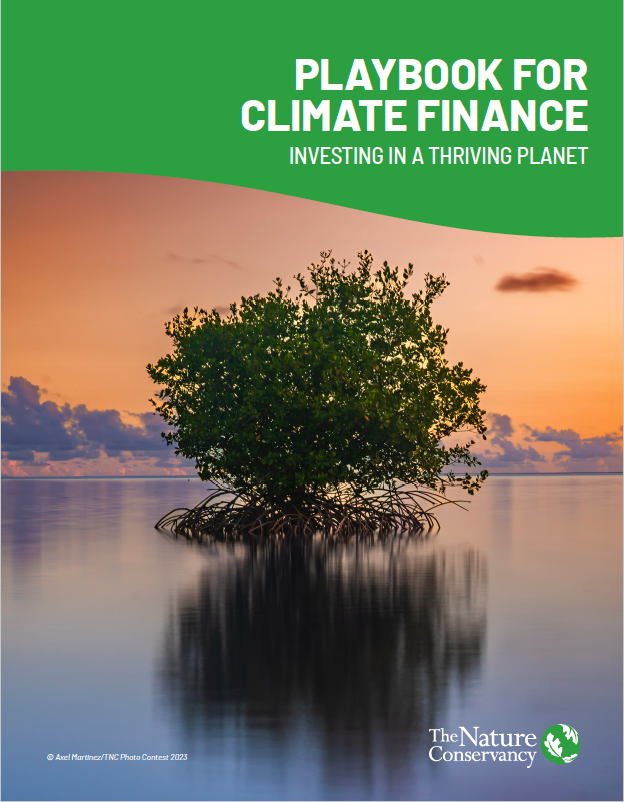
In response to the need for an economic blueprint to address the climate crisis, TNC created the Playbook for Climate Finance: a roadmap for unlocking the flow of finance to the solutions our planet urgently needs. It gathers a decade of breakthroughs into one guide and includes 10 bold approaches that prove we can tackle climate change, protect nature and strengthen communities at scale.
Finance Roadmap: Finalizing the Baku-to-Belém Roadmap to operationalize the US $1.3 trillion climate finance goal, including who pays, how it’s tracked and how private capital is mobilized.
Stronger NDCs: Pushing countries to submit enhanced 2035 climate plans aligned with the 1.5 °C target and linked to the Global Stocktake outcomes.
Adaptation Metrics: Agreeing on a workable set of Global Goal on Adaptation indicators and financing mechanisms that balance rigor with feasibility for developing nations.
Just Transition & Loss & Damage: Defining financing and equity frameworks that ensure fair transitions for workers and vulnerable countries and scale up loss & damage funding.
Implementation & Accountability: Shifting focus from pledges to delivery and oversight, strengthening reporting, institutional coordination and real-world project pipelines.
We have been advocating for a swifter transition to renewable energy sources, greater use of natural climate solutions and more investment from both the public and private sectors, especially to help those countries that have been most affected by the impacts of climate change.
We’re also working to ensure there is increased inclusivity and equity in climate policy processes since the leadership of under-represented groups, like Indigenous Peoples and Local Communities (IPLCs), are essential to protecting cultural and biological diversity.
As a global society, we must:
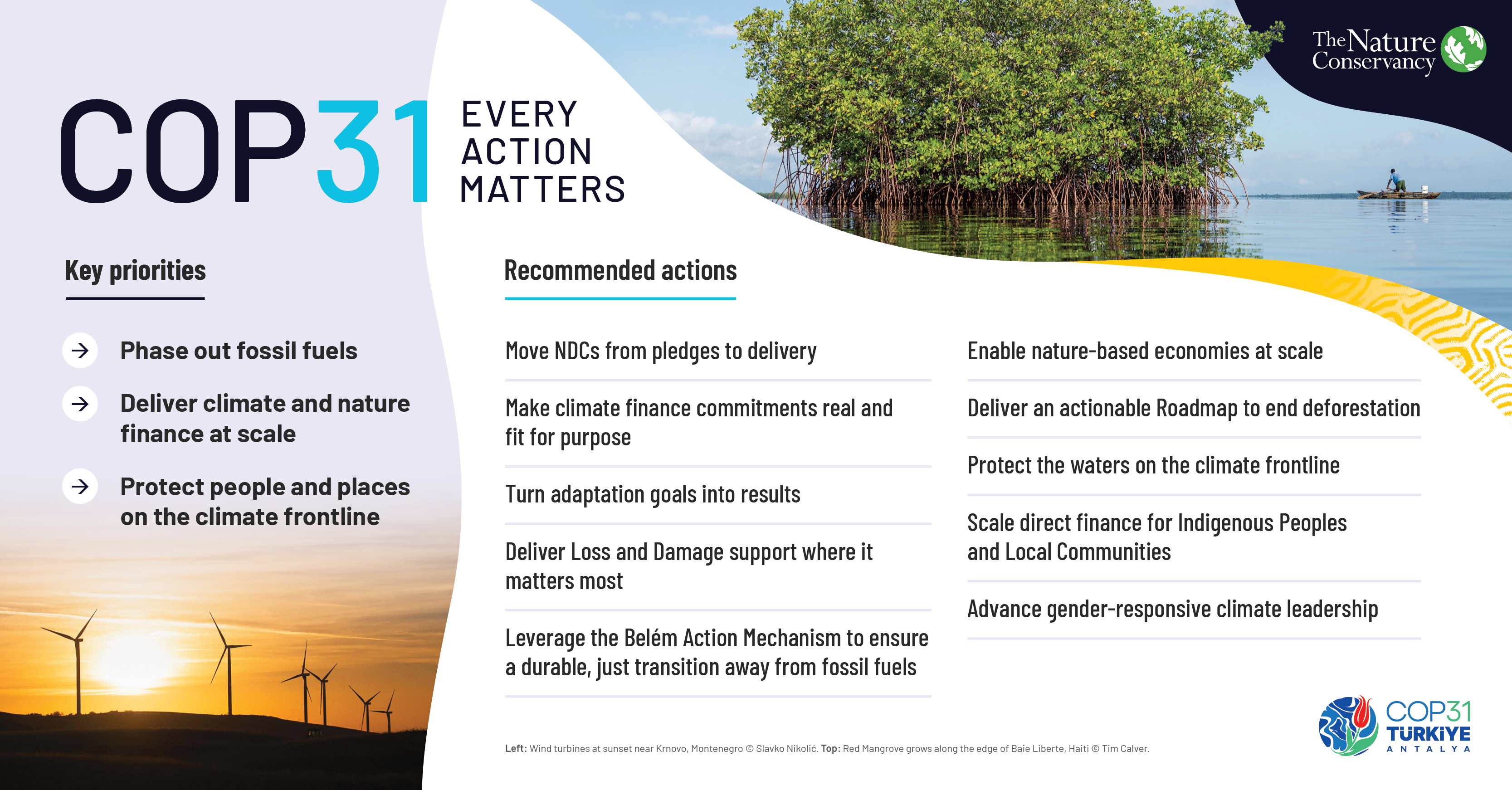
You can read about the global actions we advocate for in Antalya on our COP31 Scorecard.
DownloadExplore these key stories of global climate and conservation actions that are benefiting people and planet.
Every action matters. Every ounce of carbon, every fraction of a degree, every day matters. Our leaders’ climate actions matter, and your climate actions matter too.
Our FAQs about climate and guide to talking about climate change will help you feel more comfortable raising these topics at the dinner table with your friends and family.
Want to have an age-appropriate conversation about climate change with kids? Nature Lab has a variety of lessons, videos and other resources to educate K-12 students on climate issues and solutions.
Share this page on your social channels so others know what they can do, too. Here are hashtags to join the conversation: #COP30 #NatureNow
Measure your own carbon footprint and learn how the climate has changed since your own “carbon birth year.”
If you're in the U.S., speak out for climate action now at all levels of government. Pledge to stand with The Nature Conservancy as we call on U.S. leaders to put nature and climate solutions on the policy agenda.
Get our timely takes on some of the biggest challenges facing people and the planet. Sign up now.
Educate yourself and share the knowledge. If you feel ready to take a deep dive, scroll down to the next section for some resources we've put together on key topics that will be discussed at COP30.
TNC is hosting and participating in a dynamic range of events across the Blue Zone, Green Zone, and throughout the city of Belém. Join us to hear innovative and actionable solutions that can deliver real progress. View and register for in-person events here.
Real-world solutions to the most complex challenges facing people and nature today.


