

Volgenau Virginia Coast Reserve
Protecting Coastal Habitats and Strengthening Resilient Communities on Virginia’s Eastern Shore

- Phone: 757-442-3049
-
Follow


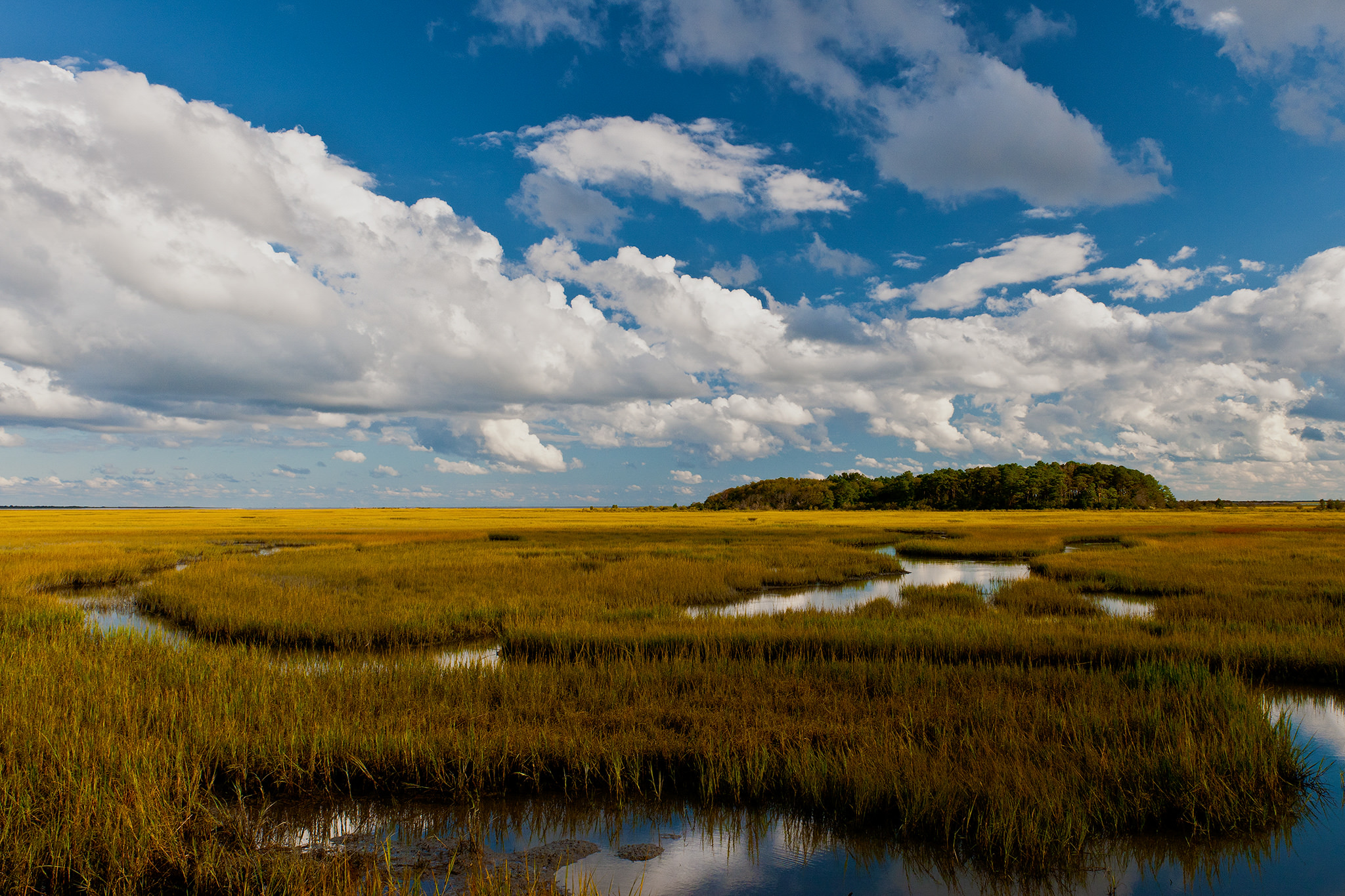
The Virginia Coast Reserve (VCR) is the longest expanse of wilderness on the East Coast of the United States, comprised of 14 undeveloped barrier and marsh islands, coastal lagoons, salt marshes and mudflats, forested uplands, and other protected habitats. These habitats are vital for Eastern Shore Communities, as they act as a nature- based protection from storm surges and sea level rise, while also providing critical wildlife habitat. In addition, the mainland and island preserves offer visitors and community members unique natural experiences.
The Nature Conservancy (TNC) has been invested and involved at the VCR for nearly 60 years. Protection of this vast coastal ecosystem has provided a living laboratory that is informing marine and coastal science around the world. At VCR, we have the largest successful seagrass restoration project in the world; we have decades of research to inform the conservation and management of important migratory bird species; and we are an active partner in nature-based, community resiliency projects. The work we do serves as a model for how conservation can help both human and natural communities adapt and become stronger in the face of a changing climate.
Our Conservation Impact
More than 50 years committed to Virginia's Eastern Shore. We are proud to see these numbers continue to grow every year.
-
+40,000
Acres protected
-
+11,900
Acres of eelgrass restored
-
+7,500
Students participated in our education programs
-
+7,500
People reached through community events and TNC preserves.
-
+25,000
Nesting birds managed for resilience
How We Work
We have a clear mission and ambitious goals. Dive into our six strategies.

Land Protection
Working with local, state, and federal partners, TNC protects land on the Eastern Shore through land acquisition and conservation easements. TNC owns and/or manages 40,000 of the 133,000 acres that are protected on the Eastern Shore of Virginia.

Migratory Bird Conservation
Through long-term collaboration with state and federal agencies and academic partners, VCR has guided decades of research and monitoring, to protect and understand migratory bird populations that use the Eastern Shore’s coastal habitats either as a foraging, nesting or breeding area. Our team strengthens the resilience of these species through strategic management and stewardship, while also advancing our understanding of how climate change, habitat loss, and other threats affect their populations throughout the Western Hemisphere.
VCR is part of the Western Hemisphere Reserve Network (WHSRN) and globally recognized as an important place by the National Audubon Society.

Marine Habitat Restoration
TNC is working with partners to maintain and restore marine habitats at a landscape scale, from restoring oyster reefs to expanding the largest seagrass restoration that has also allowed the reintroduction of bay scallops. These efforts are boosting biodiversity, improving water quality, storing carbon, driving local economies, and strengthening coastal resilience in the face of rising seas and stronger storms.

Coastal Resilience
As sea‑level rise and stronger storms increase vulnerability, coastal communities are becoming more exposed to flooding on a more frequent basis. The Coastal Resilience Program at TNC includes an online tool (the Coastal Resilience Tool) to help in conservation and community decision-making, implementation of nature-based solutions (NbS) to reduce habitat and community vulnerability and the scientific evaluation of the effectiveness of those NbS. Each pillar of the program strengthens the others: the Coastal Resilience Tool helps identify appropriate NbS for specific locations, and the evaluation of those NbS expands our baseline knowledge, improving future resilience planning and action.

Community Engagement
People are at the heart of TNC’s work, and community engagement is crucial to the success of our local conservation, restoration, and educational projects. Free public events on Brownsville Preserve, such as Open Farm Day, Una Bienvenida a la Naturaleza, and the Holiday Open House welcome our neighbors and provide connection with nature, as well as with our VVCR staff and programs. Volunteer opportunities such as Whimbrel Watch, Eelgrass Collection, and Field Experiences for local students further strengthen that connection.

Education
Our education program connects students, teachers, and community members with the unique coastal ecosystems of Virginia’s Eastern Shore through hands‑on, place‑based learning. By combining field experiences, classroom resources, and partnerships with local schools, the program builds environmental literacy and inspires life-long coastal stewards.
Visit Our Preserves

Barrier Islands
VVCR’s 14 barrier and marsh islands provide ideal habitat for migratory birds and other wildlife.

Brownsville Preserve
Headquarters of the Volgenau Virginia Coast Reserve, Brownsville Preserve offers visitors a unique glimpse of the Eastern Shore.

Coastal Resilience
Working with partners to better understand how nature can make coastal communities more resilient in the face of a changing climate.
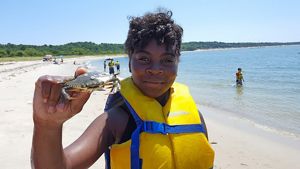

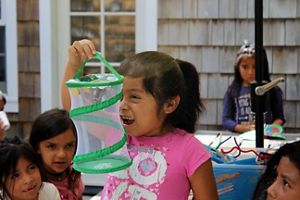
Connecting Kids with Nature: A student holds up a crab caught during VVCR's summer kayak camp. © Jennifer Davis/TNC
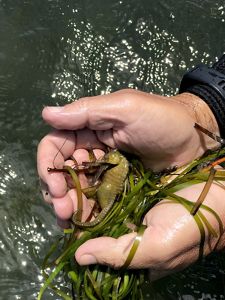
Eelgrass Restoration: VVCR's seagrass restoration program has helped bring more diversity and resilience to the shore. © TNC VA
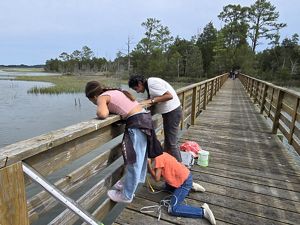
VVCR Education Program: TNC VA has am education program, partnering with schools, we have reached more than 20,000 students with hands-on learning experiences. © Margaret Van Clief
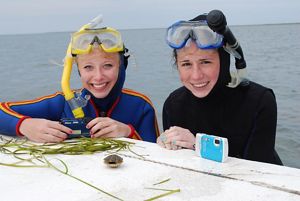
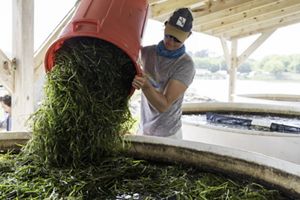
Eelgrass Restoration: Volunteers help the VVCR team harvest eelgrass seeds to then spread at restoration sites during the fall. © Bill Flemming
Celebrating Community: VVCR staff, local advisory committee members and a fleet of volunteers welcomed nearly 350 people to Brownsville Preserve on Dec. 6, 2018 for the annual holiday open house. © Lisa Kong Photography
VVCR Education Program: By combining field experiences, classroom resources, and partnerships with local schools, VVCR's education program connects kids with nature. © Daniel White
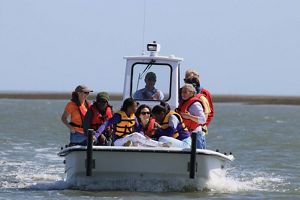
VVCR Community Engagement: Boat tours are a frequent tool used by our VVCR team to connect community members to TNC's conservation work. © TNC VA
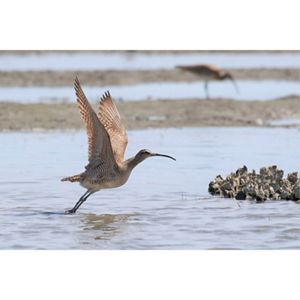
Whimbrel Takes Flight: A whimbrel takes flight from the Eastern Shore of Virginia. © Mario Balitbit/TNC
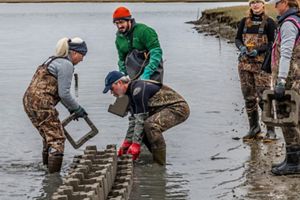
Coastal Restoration: TNC and its partners are advancing nature‑based solutions for shoreline protection—such as oyster reef and wetland restoration—to reduce erosion and flooding. © Mark Schwenk
Eelgrass Restoration: TNC and partners are building the largest eelgrass restoration site in the world. © Jay Fleming

The Science of Success
Research conducted through UVA and Virginia Sea Grant on VVCR oyster reefs can help identify which areas in seaside bays are most likely to support a successful oyster reef.
Our Staff
Meet the people working on creative solutions here on Virginia’s Eastern Shore.
Media inquiries: To schedule an interview with a member of our VVCR staff, please contact Ann Nallo, Director of Communications in Virginia, at ann.nallo@tnc.org.
Other inquiries: For island‑use policies, connecting with our community outreach or education programs, or conducting research on the islands, please contact Margaret Van Clief, Community Engagement Specialist, at margaret.vanclief@tnc.org or (757) 414-9227.

Jill Bieri, Volgenau Virginia Coast Reserve Director
Jill Bieri leads a dedicated team working to protect, restore, and sustain the barrier islands, coastal lagoons, and bayside ecosystems of Virginia’s Eastern Shore. Her work is guided by a deep commitment to coastal and bay ecology, environmental education, gender equity, and nonprofit leadership—ensuring that both nature and human communities thrive together.
“Virginia’s Eastern Shore is my home, a conserved coastal wilderness with rural communities that are united by culture and nature-- and full of character. I feel privileged to live and work here.”

Alexandra Wilke, Coastal Scientist
Alex manages the Volgenau Virginia Coast Reserve’s migratory bird program and is responsible for year-round stewardship of 50 miles of barrier island beaches. She works with Federal and State partners along the entire Atlantic coast to integrate VVCR's efforts with broader bird conservation initiatives.

Alex Rich, Operations Specialist
Anchored in her love for her home, Virginia’s Eastern Shore, Alex keeps the Brownsville office running seamlessly while supporting its conservation mission. She’s a connector—building relationships that matter, crafting events that leave lasting impressions, and ensuring every detail of hospitality reflects care and purpose. Behind the scenes, Alex manages the essentials— local accounts payable, event and meeting logistics, and the preserve housing to name just a few— with precision and dedication.
“Born and raised on the Eastern Shore, I aim to be a good ambassador. I want to use my knowledge and connection to the Shore to enrich visitor experiences and to show others what is profound about the coastal wilderness.”

Bo Lusk, Coastal Scientist
Bo Lusk grew up playing and working in the waters of the Eastern Shore. He leads the Volgenau Virginia Coast Reserve’s marine restoration work, including ongoing projects to restore oyster and eelgrass habitats, as well as working with partners to re-introduce the bay scallop to Virginia waters.
“I get to work in and help improve this incredible place to make it resilient for my children’s future and ensure its value for those of us who work and play here today.”

Ben Nettleton, Land Protection Manager
As Land Protection Manager, Ben identifies priority sites for protection and works with landowners who wish to see their land conserved. He also leads annual monitoring of VVCR’s more than 70 conservation easements in Accomack and Northampton Counties and works to develop conservation and management plans.
“I love working with private landowners who recognize the importance and beauty of their land and want to protect it. It is inspiring to witness this generosity and facilitate land protection that will leave a lasting legacy.”

Jennifer Miller, Environmental Education Program Manager
Jenny provides unique, hands-on learning opportunities for both teachers and students in Accomack and Northampton Counties. She also manages the Brownsville Preserve and maintains the William B. Cummings Birding and Wildlife Trail for the public to explore.
“It is an amazing feeling to leave a part of ourselves in every project we do to protect and preserve this beautiful area that we share with the community.”

Kirk Casper, Marine Field Technician
Kirk assists with VVCR’s oyster, eelgrass, and scallop restoration efforts while advancing techniques to enhance project outcomes. Using his knowledge of shellfish, Kirk conducts research and supports innovative restoration practices to bolster coastal resilience and conservation.
“Working in and around Virginia’s barrier islands, I’m constantly reminded of the beauty of our natural world. It’s an honor to protect and enrich these precious resources for the benefit of both the environment and the people who rely on it.”
Kate Coleman, Conservation Education Specialist
Kate is a licensed secondary science teacher. As the Conservation Education Specialist at the Virginia Coast Reserve, Kate leads place-based environmental education field experiences for students of all ages across the Eastern Shore of Virginia.
“I am proud to collaborate with local schools, my team of passionate colleagues and volunteers, and our strong community here on the Eastern Shore of Virginia to connect local students with Virginia’s breath-taking and inspiring coastal ecosystems.”

Margaret Van Clief, Community Engagement Specialist
Margaret works to connect the Eastern Shore community with TNC’s local work through public events, educational programming, and engagement activities both on and off The Nature Conservancy properties.
“I love our people here on the Shore, and I’m fortunate that my job allows me to engage with folks of all different ages and backgrounds and to help foster and strengthen connection with nature in our community.”

Mario Balitbit, Migratory Bird Specialist
A lifelong bird enthusiast, Mario supports long‑term monitoring of shorebird and waterbird species—including willets, American oystercatchers, and whimbrels—that breed, winter, or migrate along the Barrier Islands system. Mario also leads our Island Steward volunteer program, welcoming visitors and sharing barrier island policies that protect vulnerable beach‑nesting birds.
“I enjoy being out almost daily alongside the species we study—VVCR's marshes and barrier islands are my typical office space. Being in the field pushes me to stay curious and develop a deep appreciation for our natural systems.”

Marcus Killmon, Captain and Facilities Manager
Marcus supports every program at the Volgenau Virginia Coast Reserve, ensuring smooth operations across land and water. He maintains VVCR’s fleet of marine vessels and is a licensed captain. A lifelong Eastern Shore resident, Marcus grew up exploring Cedar Island and has served with the Wachapreague Volunteer Fire Department for more than 30 years.
“I enjoy that I spend 90% of my time outdoors. I love sharing my local experiences with the school groups we take out to the barrier islands.”

Susan Bates, Ph.D., Coastal Science Program Manager
Susan Bates leads the Virginia Coast Reserve’s Coastal Resilience Program, integrating cutting‑edge science into conservation planning. She develops research, tools, strategies, and partnerships that help communities understand and apply nature‑based solutions for coastal resilience. With a background in global climate science and oceanography, she ensures that strong, actionable science guides conservation work across Virginia and beyond.

Zak Poulton, Coastal Biologist/Technology Specialist
A certified UAV pilot, Zak develops the technology and data systems that power monitoring and stewardship across the Volgenau Virginia Coast Reserve. He leads drone‑based imaging and mapping efforts and builds modern data‑collection tools that improve accuracy, efficiency, and field safety for conservation teams. Focused on innovation, Zak integrates new technologies that strengthen long‑term conservation and research across migratory bird protection, island stewardship, marine restoration, coastal resilience, and land conservation.
“We do our best work when science, technology, and teamwork come together. I’m proud to help build the tools that drive conservation across this incredible landscape.”
Volunteer with Us!
Support the VVCR team with your helpful spirit and generosity of time! We offer a variety of volunteer opportunities across the state, including on the Eastern Shore.
- Brownsville Preserve Steward: Stewardship workdays are typically held 1-2 times a month to complete projects such as trail maintenance, cutting and hauling limbs, building or repairing boardwalks and cutting brush and overgrown vegetation.
- Bluebird Box Monitoring: This is a great opportunity for birders! Volunteers are needed to check bluebird boxes, fill out data sheets and take photos as part of our bluebird monitoring at Brownsville Preserve. Volunteers will work as a team (monitoring individually) to ensure the bluebird boxes are monitored once a week (preferably the same day each week), starting the first week of April and running through August. It typically takes 2 hours each visit.
Please contact the Virginia Volunteer Program by emailing vavolunteers@tnc.org to receive further information.
Volunteer Fun
VVCR volunteers help us steward our preserves, connect with community members, restore eelgrass meadows, and so much more. The best part is—they have fun doing it!
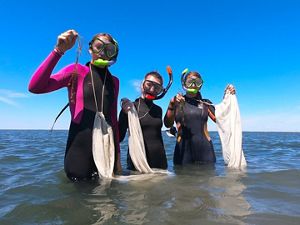
Eelgras Restoration: Volunteers help restore eelgrass at Virginia's Eastern Shore. © Krk Casper
Coastal Restoration: TNC and its partners are advancing nature‑based solutions for shoreline protection—such as oyster reef and wetland restoration—to reduce erosion and flooding. © Mark Schwenk
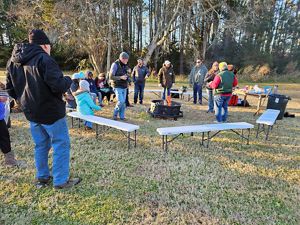
Holiday Open House: The VVCR teams hosts an annual holiday open house at TNC's Brownsville Preserve to connect community members with this beautiful site. © TNC VA
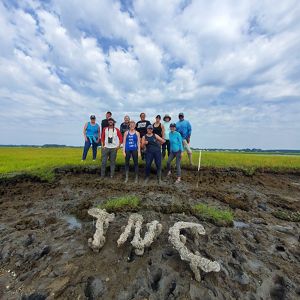
Group at VVCR: A group stands in behind the letters "TNC", after participating in oyster restoration at VVCR. © Britt Collins/TNC
Get Our Volunteer Email
Stay up to date with all our volunteer opportunities in your area and throughout Virginia. Subscribe to our monthly e-newsletter.

More than 50 Years of History
The Virginia Coast Reserve (VCR) has a rich history rooted in both ecological preservation and cultural heritage. In the 1970s, The Nature Conservancy (TNC) began acquiring Virginia’s barrier islands to protect them from development pressures. Over time the reserve grew into the largest stretch of coastal wilderness along the Atlantic seaboard. Today, VCR safeguards more than 130,000 acres of barrier islands, marshes, forests, and coastal bays, ensuring that migratory birds, marine life, and coastal communities benefit from its protection.
At the heart of the reserve lies Brownsville Preserve, once a working farm dating back to the 1600s and now the headquarters of TNC’s program. Its historic manor house and grounds reflect centuries of human history, from agriculture to the legacy of enslavement, while serving today as a hub for education, research, and community engagement. Over five decades, TNC has pioneered restoration projects such as oyster reef and seagrass recovery, making it a global model for nature-based solutions to climate resilience. We continue to honor the past while shaping a sustainable future for Virginia’s Eastern Shore.
A Legacy of Coastal Conservation
VVCR Milestones
Dive into our conservation work in Virginia's Eastern Shore


The United States Navy sought to use condemnation to take ownership of Parramore—Virginia’s largest barrier island—and convert it into a bombing range.

TNC started the protection of the barrier islands, and the Viginia Coast Reserve program (VCR) started.

The VCR Study set the ecological, economic, protection, and stewardship framework that now shapes VCR’s work.

VCR became a member of the UNESCO Biosphere Program and was recognized as a U.S. Department of the Interior National Natural Landmark.

TNC protected much of the remaining barrier islands, along with the iconic Brownsville Preserve, while partners continued advancing conservation across the region.

The Eastern Shore of Virginia National Wildlife Refuge was established.

VCR was designated a National Science Foundation Long-Term Ecological Research site.

An additional 3,500 acres of vital habitat were conserved, and VCR joined the Western Hemisphere Shorebird Reserve Network.

VCR was recognized as a Global Important Bird Area by the National Audubon Society.

TNC partners with Virginia Marine Resources Commission (VMRC) to restore the first oyster reef at VCR.

TNC and volunteers join Virginia Institute of Marine Science (VIMS) on eelgrass restoration at VCR.

Virginia’s first shellfish (oysters, clams, bay scallops, etc.) sanctuaries established at VCR through an agreement between TNC and VMRC.
The first decade of the new millennium saw accelerated land protection, with 125,000 acres conserved by 2010—including numerous new TNC conservation easements and easements held by the Virginia Eastern Shore Land Trust.
TNC’S VCR program changed its name to Volgenau Virginia Coast Reserve (VVCR) in honor of the Volgenau family and their dedication to conservation.

VVCR celebrated its 50th anniversary with nearly 130,000 acres of conservation lands.
History and Legacy

Revealing History
Digging deeper into Brownsville Preserve's cultural history to more accurately represent its past stories.

Celebration, Reflection, Elevation
If a picture is worth 1,000 words, this storymap is priceless. A look back at 50 years of the Volgenau Virginia Coast Reserve.

The Volgenau Virginia Coast Reserve Story
Reflections on protecting a coastal wilderness and looking ahead to our next half century of conservation.
Our Key Partners
We work closely with Federal, state and local partners to achieve our conservation goals.
- Smithsonian Marine GEO
- University of Virginia Long Term Ecological Research (LTER)
- College of William and Mary’s Virginia Institute of Marine Science (VIMS)
- Virginia Marine Resources Commission
- US Fish and Wildlife Service
- Virginia Departments of Environmental Quality, Wildlife Resources and Conservation and Recreation
- Local government and private landowners
In addition to domestic partners, our work has global reach as well. The VCR is a member of the UNESCO Biosphere Program, dedicated to establishing a scientific basis for enhancing the relationship between people and their environments.

VCR is one of 701 sites of excellence in the World Network of Biosphere Reserves spanning 124 countries and including 21 transboundary sites. The network promotes collaboration and represents a unique tool for international cooperation through sharing knowledge, exchanging experiences, building capacity and promoting best practices.
Coastal Resilience
Virginia's Eastern Shore lies within one of the U.S’s most vulnerable coastal regions. Sea levels are rising at three to four times the global average and storms are intensifying. But natural solutions can provide a first line of defense.
The Nature Conservancy is working with leading coastal scientists and community partners to explore and document the resilience inherent in the Eastern Shore's natural systems. We are using this living laboratory to better understand how nature can make coastal communities here—and everywhere—more resilient in the face of a changing climate.
- Accomack-Northampton Planning District Commission
- University of Virginia’s Long-Term Ecological Research Project
- Virginia Institute of Marine Science’s Center for Coastal Resource Management
- University of North Carolina at Chapel Hill
- Randolph-Macon College
- Duke University
- University of North Carolina-Wilmington
- Natural Capital Project
- The Brosnan Center for Risk Reduction
- NASA-Wallops Flight Facility
- U.S. Fish and Wildlife Service Chincoteague National Wildlife Refuge
- ARCADIS US, Inc.
- Warren-Pinnacle Consulting, Inc.
Education
VVCR’s education program aims to connect public school students in Accomack and Northampton Counties to the natural world through experiential field trips. The curriculum-based trips have been designed for 5th, 7th, and 10th grade students. The field experiences were collaboratively designed with local educators through participatory workshops to ensure they are aligned with Virginia’s Standards of Learning (S.O.L.’s.)
Land Protection
Through the Virginia Eastern Shore Conservation Alliance, we work with local, state, and federal partners, as well as private organizations, to conserve land in Accomack and Northampton counties.
Over the years TNC has assisted Virginia’s departments of Conservation and Recreation, Game and Inland Fisheries, and the Coastal Zone Management Program, to identify and conserve natural areas for wildlife and public access.
We have partnered with the U.S. Fish and Wildlife Service to add property to the Eastern Shore of Virginia National Wildlife Refuge, and helped develop the Cape Charles Bike and Hike Trail.
One private partner, Virginia’s Eastern Shore Land Trust (VESLT), was established in 2003 to protect local farms, forests and wetlands. VESLT holds 76 conservation easements on 14,000 acres of land, including 1,037 acres that are co-held by The Nature Conservancy. TNC and VESLT also partner in outreach and education efforts, including an annual 2nd grade field trip to VCR's Brownsville Preserve.
Marine Habitat Restoration
VCR works alongside the Virginia Marine Resources Commission (VMRC) in oyster reef restoration. Each year, we expand this work by building additional reefs in the coastal waters on both sides of the Eastern Shore. We also monitor these reefs to understand how they develop into functional habitat over time and to improve how we design and construct future reefs.
A decades-long partnership with the Virginia Institute of Marine Science (VIMS) has resulted in the largest and most successful seagrass restoration project in the world. We’re working together to build on this success by returning bay scallops to Virginia waters. In 2017, we released 12.3 million bay scallop larvae that were spawned by VIMS and Cherrystone Aquafarms into the eelgrass in South Bay. The hope is to eventually restore a self-sustaining population of bay scallops.
Migratory Bird Conservation
We work closely with many different partners to understand how bird populations use and depend on the Volgenau Virginia Coast Reserve for survival. We use migratory bird conservation information to understand range-wide conservation needs and guide local management actions to protect and build resilient migratory bird populations both in coastal Virginia and throughout the hemisphere.
- Center for Conservation Biology at the College of William and Mary
- Virginia Tech Shorebirds Program
- US Fish & Wildlife Service
- Virginia Department of Wildlife Resources
- Virginia Department of Conservation and Recreation
- Virginia Marine Resources Commission
- Virginia Coastal Zone Management Program
- NASA/Wallops Flight Facility
- Coastal Virginia Wildlife Observatory
- National Park Service
- USDA Virginia Wildlife Service
Long Term Ecological Research (LTER)
The largest and longest-lived ecological network in the United States, LTER brings together a multi-disciplinary group of scientists to study, document and analyze environmental change at sites across the country. The LTER program at the Virginia Coast Reserve began in 1987, and is administered through the Department of Environmental Sciences at the University of Virginia. Research projects include studying how climate change, sea-level rise and more—and more intense—coastal storms affect both human and natural communities on the Eastern Shore.
US Navy
We have worked with the US Navy since 2016 as part of their project to assess the winter population status of harbor and gray seals in the area. A group of approximately 50-80 seals routinely use TNC property at the Volgenau Virginia Coast Reserve to haul out. We also assist the Navy in deploying satellite tracking tags, successfully tagging 7 seals in 2018. We have learned a great deal about how the seals are using the area and the weather conditions that impact their behavior.

VCR is a member of the UNESCO Biosphere Regions Program, dedicated to establishing a scientific basis for enhancing the relationship between people and their environments.
VCR is one of just over 800 sites of excellence in the World Network of Biosphere Reserves spanning 142 countries and including 21 transboundary sites. All reserves around the world share three core functions: conserving biodiversity and ecosystems, supporting sustainable development, and providing logistical support for science, monitoring, education, and learning. The network promotes collaboration and represents a unique tool for international cooperation through sharing knowledge, exchanging experiences, building capacity and promoting best practices.

We Can't Save Nature Without You
Sign up to receive monthly conservation news and updates from Virginia. Get a preview of Virginia's Nature News email
Related Stories

Recovering the Past: A History That Mirrors My Own
VVCR History Intern Vanessa Moses reflects on the enslaved individuals who built what is now Brownsville Preserve, and finds connections across time in her own family's history.

Restoring what was lost: How science and community are bringing back bay scallops
After nearly a century of extinction, seagrass restoration and other conservation work could lead to a scallop resurgence in Virginia’s coastal bays.

Marine Habitat Restoration
From building oyster reefs to establishing the largest successful eelgrass restoration effort in the world, we're putting science to work in Virginia's coastal bays.