

 How It Started
 The Future
 Global Importance
 Milestones

Seed to Scale in the Midwest
Small, place-based efforts through land protection, partnerships, or innovation grow over time into solutions that shape entire systems and influence work far beyond the Midwest.

A forested sanctuary in southern Wisconsin, the Baraboo Hills are home to more than 1,800 species.
A visit to the Baraboo Hills can feel like stepping into an enchanted forest. Comprising 144,000 acres in southern Wisconsin, the Hills feature oak-hickory, pine relict and hemlock forest, an array of spring wildflowers, and as many as 250 different bird species, 135 of which nest there. The landscape is also home to nearly half of all amphibian species in Wisconsin and half of all mammal species in the broader ecoregion.
To put it simply, this area of Wisconsin punches above its weight class for biodiversity.


Since 1964, TNC has helped protect over 12,000 acres across the Baraboo Hills range.

The Baraboo Hills support as many as 250 different migratory bird species, 135 of which nest in its forests. It is a truly global nursery.

The Baraboo Hills are home to nearly half of all amphibian species in Wisconsin and half of all mammal species in the broader ecoregion.
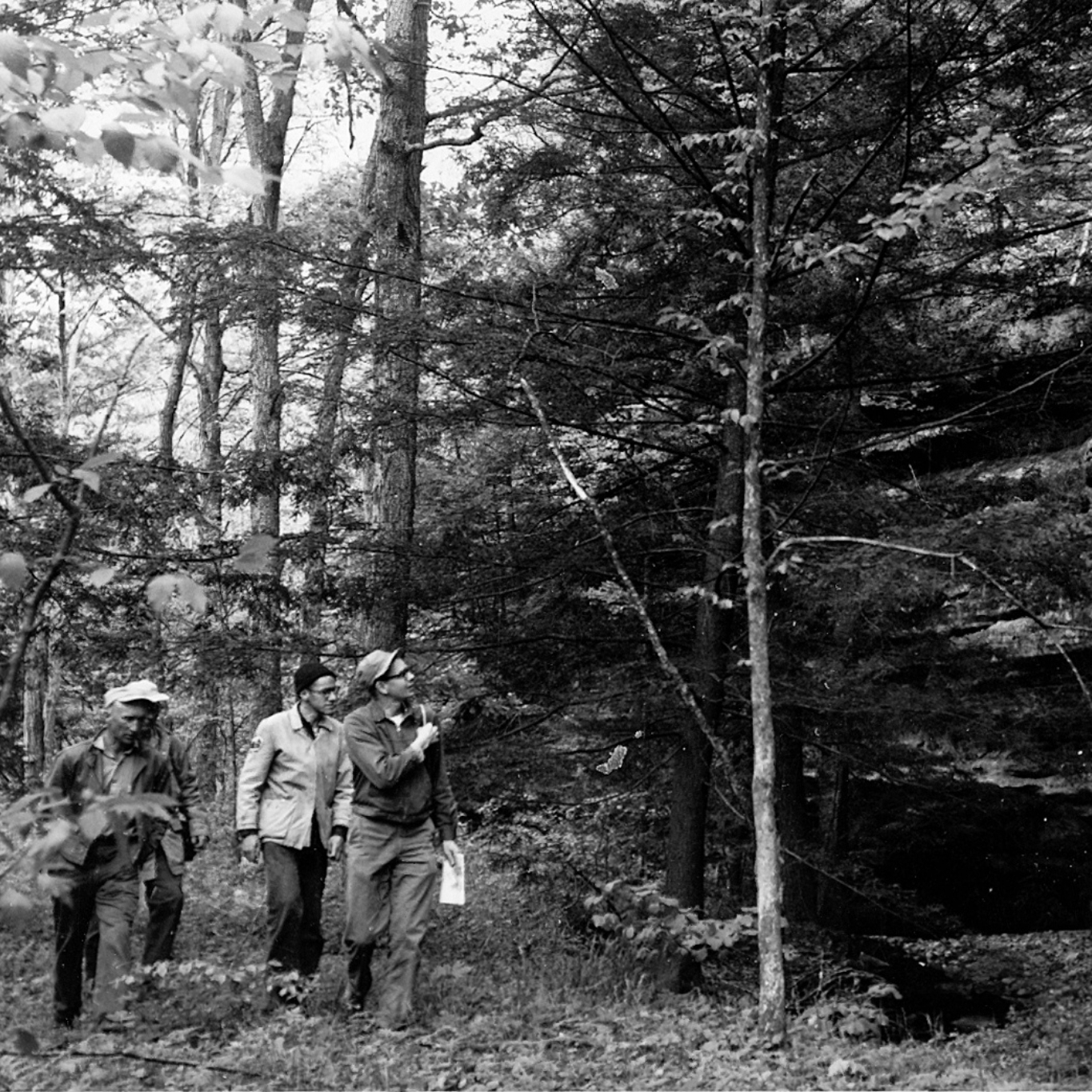
Our work in Baraboo Hills began with an 80-acre land purchase at Hemlock Draw in 1964, marking the start of a multi-decade commitment to protecting, managing and connecting vulnerable, unique lands across the Baraboo Range.
Led by a collection of TNC in Wisconsin’s founding members, including folks like UW–Madison professors Hugh Iltis, Joe Hickey and Orrie Loucks, ecologist Jim Zimmerman and renowned farmer-naturalist Harold Kruse, initial efforts in the Hills were focused on establishing a series of preserves and research sites, known as the “Honey Creek Project,” that would protect a patchwork quilt of area woodlands and forests in perpetuity.
Groups like the Sierra Club and the Wisconsin Society for Ornithology were among the key partners in these early protection efforts, which were spurred by the rapid development that was occurring across the landscape. At the close of the ‘60s, TNC purchased 171 acres at Baxter’s Hollow, marking another important milestone in the Baraboo Hills legacy.
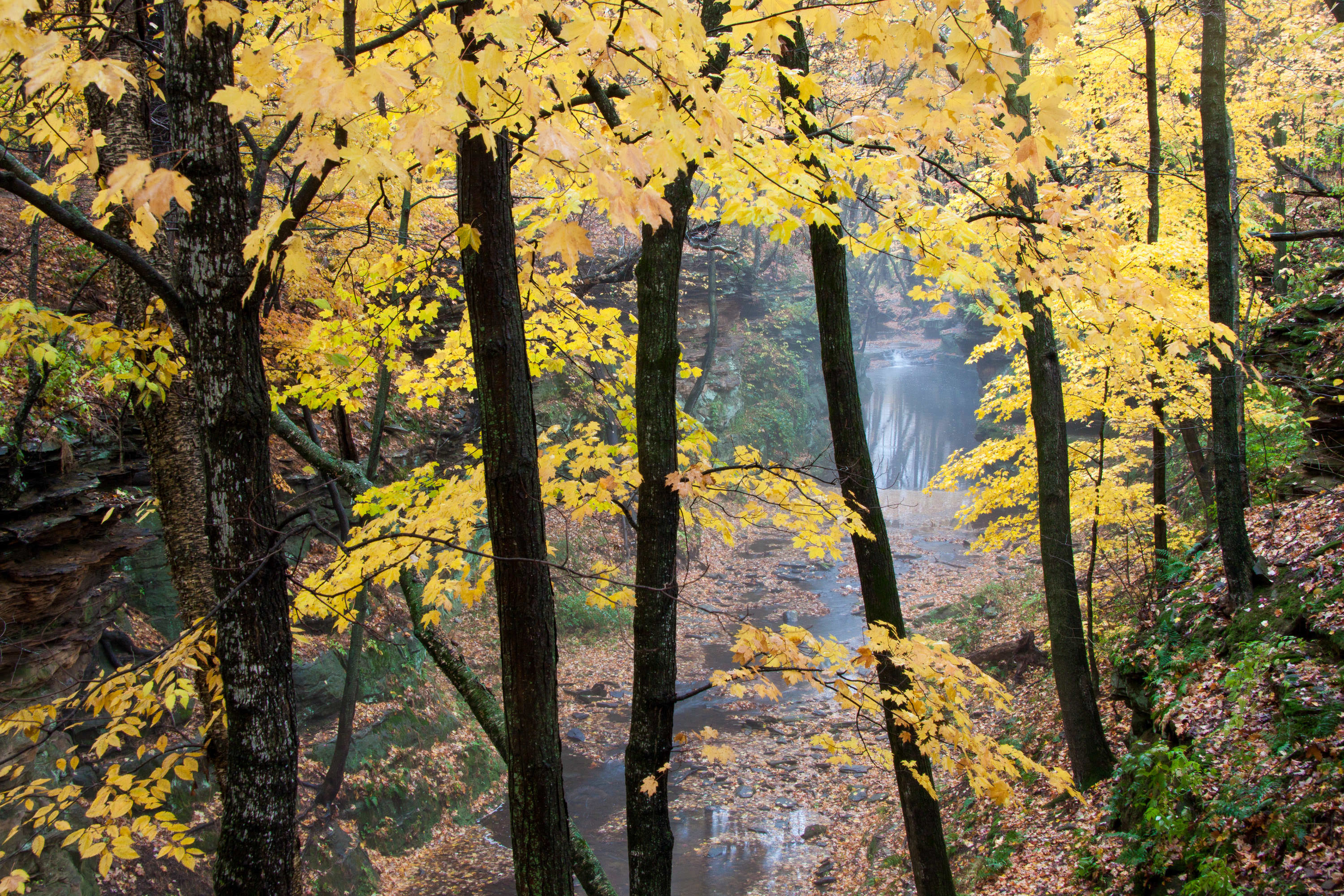
Since the initial purchases in the ’60s, TNC has, through direct acquisitions and partner-assisted efforts, helped protect more than 12,000 acres of highly diverse forest where northern and southern plant species coexist.
The large, contiguous block of forest and woodland habitat that blankets the Hills is an important nesting area for the cerulean warbler and Acadian flycatcher and a critical feeding ground for many other birds that pass through the area annually. TNC’s properties also connect with thousands of acres of land owned by the Wisconsin Department of Natural Resources (WDNR), the Ho-Chunk Nation, local county and municipal governments, and private groups like the Baraboo Range Preservation Association and the Wisconsin Society for Ornithology.
A truly connected wildlife corridor, the properties allow iconic Wisconsin species like deer and wild turkey to thrive and are also home to lesser-known, smaller species such as the pickerel frog and the giant ichneumon wasp.

There are many bird species, such as cerulean warblers and scarlet tanagers, that come to this portion of the Hills on long migratory journeys. They come from places like Colombia, where they winter, and then come here to the Baraboo Hills to nest.
As TNC’s work has evolved over the decades, the awareness and necessity to actively steward sites to sustain biodiversity has also evolved.
Prescribed fire and a variety of land management techniques have been integrated into how TNC stewards and cares for sites in the Baraboo Hills, and recent research efforts, such as the UW–Madison-led Soundscape project, have demonstrated the efficacy of these practices in supporting a high number of insect and bird species, especially in areas with high densities of white oak.
Additionally, management efforts in recent years have been tailored to anticipate the impacts of climate change on this unique landscape, including support for climate-resilient tree species that will thrive under warmer temperatures.

While other areas in the state also support migratory bird species, the density in the Baraboo Hills is truly astounding. The unique conditions and diversity of plant communities support healthy insect populations, which in turn provide abundant food resources for birds along the Mississippi Flyway.
Many of these birds travel thousands of miles each year from across Latin America and the Caribbean, making the story of the Hills as international as it is local. This landscape, where north and south come together, is worth a visit any time of the year, and be sure to bring your binoculars!
What began as a purchase of a small parcel of forest for conservation now stretches over hundreds of thousands of acres in southern Wisconsin.


TNC purchases first 80 acres at Hemlock Draw

First 171 acres acquired at Baxter’s Hollow with help from a generous gift from Dr. Donald Kindschi.

TNC adds 321 acres (formerly Klondike Campground) to Baxter’s Hollow.

Baraboo Hills becomes TNC in Wisconsin’s first “landscape-scale” project.

Baraboo Hills Soundscape research launched in collaboration with a team from UW–Madison.
Explore more inspiring seeds and stories from across the Upper Midwest and Wisconsin.


