
interstitialRedirectModalTitle

interstitialRedirectModalMessage

Places We Protect

Baxter’s Hollow

Wisconsin

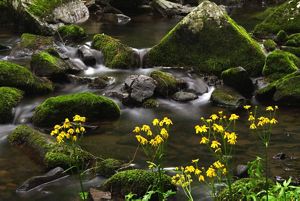
A creek flows between rocky banks in a forest carpeted with ferns and moss.
Otter Creek Beautiful Otter Creek is home to a rich collection of aquatic life, including frogs and caddisflies. © Steve S. Meyer

Baxter’s Hollow is The Nature Conservancy’s largest preserve in Wisconsin.

Overview

Description

Remarkable for the large area of deep forest and the mountain-like creek that it protects, Baxter’s Hollow, in the Baraboo Hills, is TNC’s largest preserve in Wisconsin.

The area has a rich human history. In his book “Natural Areas in the Baraboo Hills,” Harold Kruse—local farmer, naturalist, writer and conservationist—lists a few of the human activities in the hollow. These included “...an unsuccessful attempt to establish a village—Otterville, a brief gold mining operation (no gold found), several saw mills and a feed mill, maple syrup and sorghum making, a commercial campground, and harvest of wood products.”

Yet, despite years of human habitation, this area still seems wild and untouched.

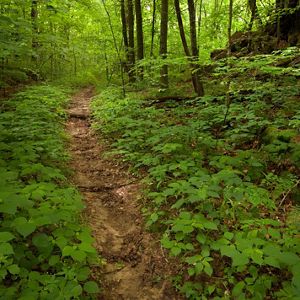
The rich forest covering Baxter’s Hollow is part of the state’s largest intact southern deciduous forest. The forest is a mosaic of many parts. Thick stands of oak, hickory, maple and ash grow on the quartzite bluffs that dominate the landscape. In the gorge that gives the preserve its name, yellow birch, white pine, maple and basswood grow along the edge of Otter Creek.
Access

OPEN TO THE PUBLIC

The unmarked trail is very primitive. Off-trail conditions are very rocky.

Hours

Open year-round, sunrise to sunset.

Highlights

Spring wildflowers, birding, fall color

Size

5,910 acres

Explore our work in Wisconsin

Photos from Baxter’s Hollow

From spring ephemeral wildflowers to migrating birds, this preserve is home to a diverse array of species for visitors to enjoy.

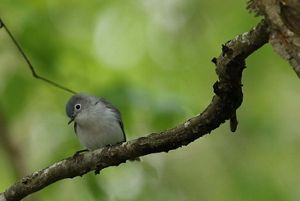
A blue-grey gnatcatcher sits on a branch with its head cocked to its right.
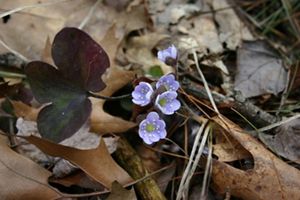
Light purple hepatica flowers blooming on the forest floor.
A forest in the height of summer, with green ferns and other plants growing under tall trees.
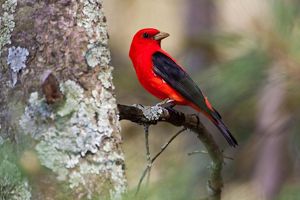
An adult male scarlet tanager perched on a branch.
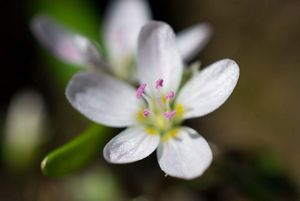
Closeup of spring beauty flowers, with their delicate white petals.
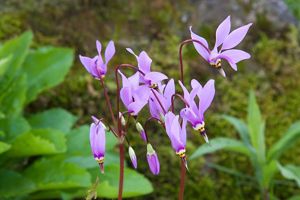
Shooting star spring wildflowers blooming on the forest floor.
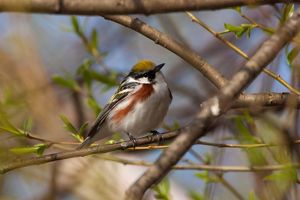
A male chestnut-sided warbler perches on a branch.
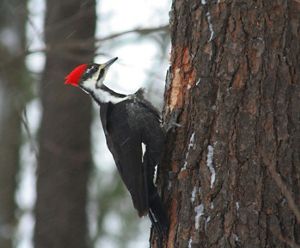
A pileated woodpecker perched on the side of a tree’s trunk, looking for food.
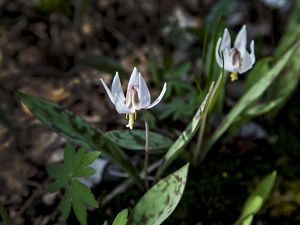
White dogtooth violet flowers on the forest floor.
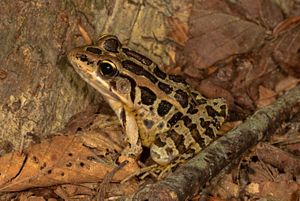
A brown frog with dark brown spots sits on the forest floor among dead leaves.

Visit

  • The rich forest covering Baxter’s Hollow is part of Wisconsin’s largest intact southern deciduous forest. You can see oak, hickory, maple, ash, yellow birch, white pine, maple and basswood.

    Spring is an especially good time to visit: the wildflowers are in bloom, such as Jacob’s ladder and marsh marigold in low-lying spots; carpets of spring beauty, dogtooth violet and hepatica on hillsides; and shooting stars and alum root in the glades. Additionally, the migratory songbirds have returned from their wintering grounds in Latin America. More than 92 species of birds breed here, making the Hollow one of the most important nesting areas for forest-dwelling birds in southern Wisconsin. Birds that are rare in the state—such as the cerulean warbler, worm-eating warbler and the hooded warbler—can be found here.

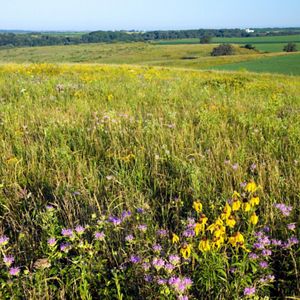
    During the summer growing season, impressive wildflowers such as bee balm, common spiderwort, compass plant and blazing star are on display, and wildlife such as butterflies, bees and other pollinators frequent the preserve. Be sure to check out Otter Creek; this beautiful stream is the thread that ties the preserve together. The creek is home to a rich collection of aquatic life rare in Wisconsin, including the pickerel frog and at least 78 species of caddisflies.

    As fall approaches, the summer colors fade to red, orange and gold. Migratory birds such as cerulean warbler, worm-eating warbler and the hooded warbler are on the move, and you’re likely to spot raptors such as broad-winged hawks.

    Many of our preserves allow deer hunting from October through the first week of January, so wearing blaze orange is suggested when hiking in these areas during hunting season.

  • Baxter’s Hollow is a wonderful place to hike, bird watch, take photos and enjoy the sights and sounds of nature. The preserve also offers hunting opportunities; you can learn more about hunting on our Wisconsin preserves here.

    Trails

    The unmarked trail is about 5 miles roundtrip and is primitive with uneven, rocky areas. It will be muddy on and after rainy days and when snow is melting.

    • Hours: Sunrise to sunset

    • Parking: There is designated parking along Stones Pocket Road.

    • Restrooms: There are no restrooms available.

    • Visitor center: There is no visitor center.

    • Picnic area: There is no designated picnic area.

    • Wildlife viewing areas: While you can view wildlife throughout the trail, there are no designated overlooks, platforms or wildlife viewing areas.

    • EV Charging: EV charging is not currently available.

    • Cell phone and wifi service: Most TNC preserves are located in remote areas, meaning cell phone and wifi service may not always be available.

    • Wear comfortable footwear suitable for natural trails, but please do not wear heavy, cleated boots that can damage them.
    • To protect yourself from ticks, poison ivy or poison sumac, wear long pants and tuck them into your socks.
    • No matter the season, each person in your party should bring a full water bottle. Dehydration is a serious risk at any time of the year.
    • To get the most from your visit, you may want to bring some or all of the following items:
      • Snacks
      • Camera

      • Insect repellent

      • Rain gear

      • Sunscreen

      • Binoculars

      • Compass

      • Field guides (wildflowers, birds, butterflies & other natural features)

      • First aid kit

    • Our vision is of a world where people and nature thrive together. The Nature Conservancy encourages people of all ages, experiences and abilities to visit our preserves and has a zero-tolerance policy for discrimination of any kind.
    • Service animals specifically trained to aid a person with a disability are welcome.
    • We encourage you to hike open trails and enjoy bird and wildlife watching and other permitted activities. Please do not trespass (or park) on private property adjacent to TNC preserves. Property lines are clearly marked with yellow signs featuring TNC’s logo. To protect the plants and wildlife that call the preserve home, TNC prohibits the following:
      • Biking and mountain biking

      • Camping, campfires and cooking

      • Caving

      • Fishing (except by permit on designated preserves)

      • Geocaching (except by permit on designated preserves)

      • Horseback riding

      • Hang gliding or paragliding

      • Ice skating

      • Hunting (except by permit on designated preserves)

      • Picking flowers, berries, nuts or mushrooms

      • Removing any part of the natural landscape (shells, rocks, etc.)

      • Rappelling

      • Rock climbing

      • Snowmobiling

      • Swimming

      • Firewood collecting

      • Littering (please remove all trash)

    Drones

    Drones—aka personal aircraft, unmanned aircraft systems (UAS) and unmanned aerial vehicles (UAV)—Self-propelled or other aircraft are prohibited from taking off, landing or being operated on any TNC preserve except for official TNC purposes, approved research or in an emergency landing situation. We prohibit the private use of drones on our preserves for the following reasons:

    • Privacy and enjoyment of other preserve visitors—In order to avoid capturing images of people who are not related to TNC, and from whom a necessary photo release has not been obtained.
    • Wildlife disturbance—To make sure drones will not disturb resident wildlife, especially areas with many birds or ground-based nests.
    • Preserve management—Unauthorized drones operating in areas where active land management is taking place, such as prescribed burning, could lead to potentially dangerous interactions.
    • Respecting neighboring property—Preserve boundaries are not always apparent from the ground. We wish to be good neighbors and minimize the risk of drones accidentally crossing over from our preserves to non-TNC property.
  • If you are experiencing an emergency, please call 911.

Our Work

The Nature Conservancy first came to the Baraboo Hills in the 1960s at the request of local residents and university professors who recognized the unique nature of this area. They wanted TNC’s help in protecting it.

Baxter’s Hollow is an important site for at least two reasons: it contains a good portion of the Otter Creek watershed, and it provides the deep woods that forest songbirds need.

Since 1969, when Dr. Donald Kindschi donated several parcels of land to TNC to establish the nature preserve, TNC has steadily been acquiring parcels of land here. Private landowners in the Baraboo Hills have been important to our preservation efforts at Baxter’s Hollow, making cooperative conservation of this critical bird and wildlife habitat possible.

While the forests of the Baraboo Hills are in relatively good condition, we are losing oak trees, putting the birds, insects and other wildlife that depend on them at risk. In 2014, we began to restore the oak forests at Baxter’s Hollow Preserve, using thinning and prescribed fire to set the stage for acorns to germinate and take root and for oak seedlings to have plenty of light to compete well.

Nearby Preserves

Need more nature? Visit The Nature Conservancy’s other preserves.