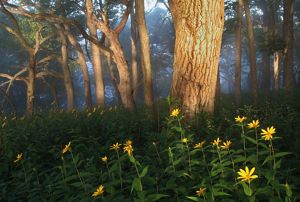
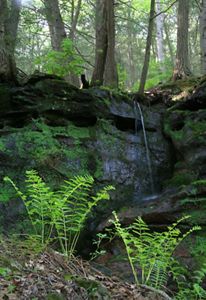
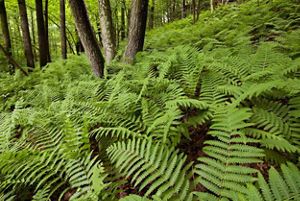
Many northern forest trees and plants, including hemlock, yellow birch, club mosses, liverworts and cliff saxifrage, can be seen at Hemlock Draw. There are also plentiful southern species like sugar maples, red and white oaks, hickories and ironwood trees.
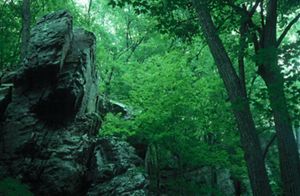
An interesting aspect of Hemlock Draw is its geology. Formations of sedimentary rock exposed within the preserve furnish evidence that the Baraboo Hills were a chain of sea islands in the Cambrian-Ordovician periods, some 500 million years ago. The sandstone deposits formed during this era lie above the much older Baraboo quartzite, which is revealed in one of the finest geologic features of the preserve, a narrow pillar of rock called a “sea stack.” The sea stack is a reminder of the time when tempestuous storms stirred an ancient island sea, eroding the quartzite bedrock and creating formations like those now found along rocky coastlines on the edges of this continent.
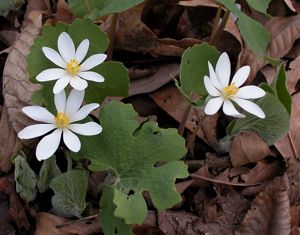
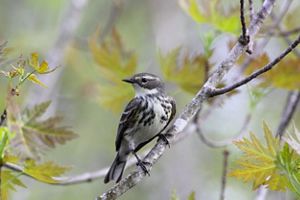
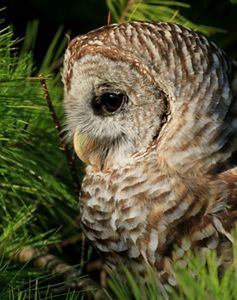
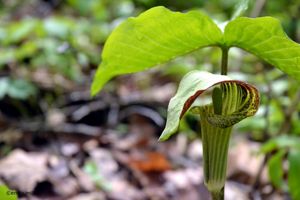
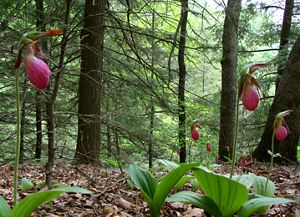
Hemlock Draw is especially beautiful in spring when the wildflowers are blooming and the songbirds are returning from their wintering grounds farther south. During these months and into the summer, wildflowers, such as wild geranium, wood anemone, bloodroot and trillium, flourish under the large trees. Several rare plants, including drooping sedge and kidney-leaved sullivantia, can also be found in Hemlock Draw. More than 40 species of breeding birds, including barred owls, ruffed grouse, wood thrush, six species of warblers—including the rare worm-eating warbler—and four species of woodpeckers, can be found in the preserve.
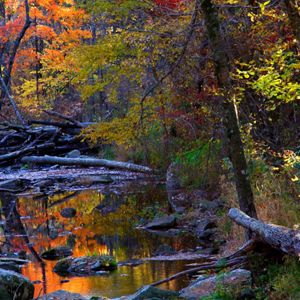
As fall approaches, the summer colors fade to red, orange and gold as plants like Ohio goldenrod bloom. Migratory birds are on the move, and you’re likely to spot raptors such as broad-winged and red-tailed hawks.
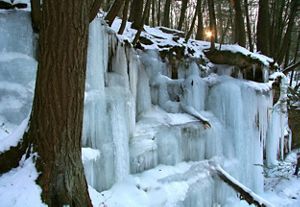
When winter arrives, snow and ice blanket the area, making it a welcome respite for visitors seeking the peace and quiet of the season. But winter is still a busy time in nature; watch for great-horned owls and bald eagles.