interstitialRedirectModalTitle

interstitialRedirectModalMessage

Places We Protect

Edge of Appalachia Preserve System

Ohio

Aerial video montage of the Edge of Appalachia Preserve System.
Edge of Appalachia Preserve drone video © Video footage via TJ Vissing

The Richard and Lucile Durrell Edge of Appalachia Preserve System encompasses over 21,000 acres in beautiful southern Ohio.

Overview

Description

The Richard and Lucile Durrell Edge of Appalachia Preserve System is one of the most biologically diverse natural systems in the midwestern U. S., encompassing rugged woodland, prairie openings, waterfalls, giant promontories and clear streams.

Lovingly called “The Edge,” this collection of preserves sits in the beautiful Adams County in Southern Ohio. These hills and forests are the foothills for the larger Appalachian Forest System. It serves as a protected corridor for migratory birds and for wildlife moving in response to a changing climate. Our work at The Edge includes habitat protection and restoration as well as forest and wildlife management.

The preserve system boasts a total of 27 miles of hiking on five different trails—including the Christian and Emma Goetz Buzzardroost Rock Trail, the Charles A. Eulett Wilderness Trail, the E. Lucy Braun Lynx Prairie, the Joan Jones Portman Trail and Rieveschl Overlook and the Helen C. Black Trail at the John and Marion Becker Cedar Falls Preserve. Each trail offers unique views and experiences, so plan to visit them all!

Photos from The Edge of Appalachia Preserve System

Lovingly called "The Edge," this preserve boasts an abundance of flora and fauna among the cozy nooks and breathtaking views.

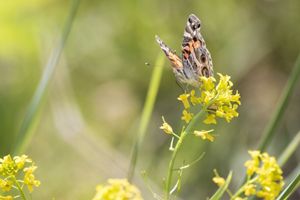
A colorful orange, black and white butterfly sits on a yellow flower.
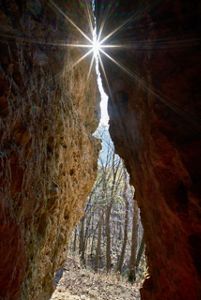
Sunlight shines through a crevice between two rock walls.
A picture of a flower with an orange-pink spiky cone with pink petals drooping down.
A small turtle sits on a dirt ground, looking at the camera, its legs and head poking out of the shell.
A beam of sunlight shines through the green foliage of the forest, over a small dirt country road.
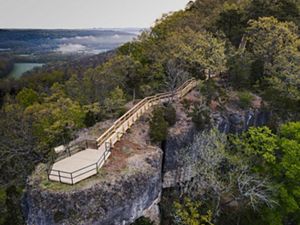
A bird's eye view of the wooden overlook that sits atop a large rock outcropping with forests surrounding.
A close up of a pink flower stalk with pink, coral and beige flowers drooping and whirling around the stem.
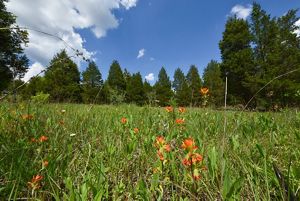
A green prairie dotted with bright scarlet flowers and surrounded by tall trees with a blue sky above.
Waterfall over rocks from upper angle
A close up of a fluffy light brown bird with a white face and a black band of feathers across its eye.

Visit

  • Visitors will find steep hills and deep hollows covered in deciduous hardwood forest, dry limestone prairies, rugged dolomite cliffs and rocky streams beds lined with spring wildflowers. Cerulean warblers and other neotropical birds abound during warmer months, while endangered species like the Indiana bat, green salamander and Allegheny woodrat find sanctuary throughout the year in the remote, secluded areas of the preserve. More than 100 rare plant and animal species make their home within the preserve system. 
     
    In the spring months, you’re likely to find early wildflowers such as wild blue phlox, columbine, trilliums, Indian paintbrush and shooting star. You might also spot migratory birds such as bay breasted warbler, chestnut sided warbler and magnolia warbler passing through on their way to summer breeding grounds further north. Other migratory birds arriving to breed stay for a longer period of time, including prairie warblers, blue grosbeaks and summer tanagers.  
     
    During the summer growing season, impressive wildflowers such as blazing stars, milkweeds and Prairie dock are on display, and wildlife such as black racer, eastern box turtle and eastern fence lizard frequent the preserve. Commonly heard breeding birds in the summer include eastern towhee, indigo bunting and common yellowthroat.

    As fall approaches, the wildflowers like stiff gentian and mistflower add color to red, orange and gold leaves of oak and hickory trees. Migratory birds such as red breasted nuthatch, white throated sparrow and golden crowned kinglet are on the move, and you’re likely to spot raptors such as red shouldered hawk or bald eagle.  
     
    When winter arrives, occasional snow fall provides a welcome respite for visitors seeking the peace and quiet of the season. But winter is still a busy time in nature; watch for reveal yellow bellied sapsucker, pileated and downy woodpeckers. White tail deer and wild turkey are also often visible in the distance. Visitors should also listen for wildlife during winter—including barred or great horned owls.  
     
    Many of our preserves allow deer hunting from October through the first week of January, so wearing blaze orange is suggested when hiking in these areas during hunting season. For the Edge of Appalachia Preserve, the only part of the public trails that allows hunting is the Buckeye Trail sections, including Strait Creek.

  • The Edge is a wonderful place to hike, bird watch, fish, kayak, canoe, take photos and enjoy the sights and sounds of nature. In addition, hunting is permitted on a very select portion of the Edge of Appalachia Preserve at certain times of the year. Permission to hunt is granted by Nature Conservancy staff to a limited number of applicants on a first-come, first-served basis. The permit application process for Edge of Appalachia will open in summer. For more information about hunting, including links to permit applications (once open), please visit our Ohio Hunting page

    Trails  
    The Edge of Appalachia Preserve (“The Edge”) is comprised of a number of distinct areas that were historically separate preserves. Over time, as the preserve has grown in size, these areas are now part of the larger Edge of Appalachia preserve. Today, many of the Edge’s trailheads are located at these historic preserve locations.  

    E. Lucy Braun Lynx Prairie Preserve Trail: This is the very first preserve protected by The Nature Conservancy (TNC) in Ohio and one of the earliest TNC preserves in the U.S. Protection of this site was inspired by the work conducted here by the renowned botanist E. Lucy Braun. Enjoy a mix of forest and rare dry limestone prairie, along with impressive displays of prairie wildflowers in late spring and summer.

    • Length of the trail: 1.3-mile loop

    • Type of trail surface: Mowed grass and dirt.

    • Typical and minimum trail tread width: Two feet

    • Typical and maximum trail grade: To be determined

    • Typical and maximum trail cross slope:  To be determined

    Christian and Emma Goetz Buzzardroost Rock Preserve TrailThis trail first follows along the top of a deep stream valley, then travels through forest and prairie. Visitors will follow along a high wooded ridgetop before finishing at an overlook atop Buzzardroost rock. The overlook was constructed to protect the rare dry limestone prairie that grows on the rock and to provide a sweeping view of the Ohio Brush Creek valley.

    • Length of the trail: 4.4-mile loop

    • Type of trail surface: Mowed grass, dirt, wood steps and overlook platform.

    • Typical and minimum trail tread width: Two feet

    • Typical and maximum trail grade: To be determined

    • Typical and maximum trail cross slope:  To be determined

    The Charles A. Eulett Wilderness Preserve Trail: Escape into the woods for some peace and quiet on this lightly used trail. The trail path guides visitors down into deep woods, past stands of rare Northern white cedar and by impressive cliffs and boulders of Peebles dolomite.

    • Length of the trail: 2.4-mile loop

    • Type of trail surface: Dirt 

    • Typical and minimum trail tread width: Two feet

    • Typical and maximum trail grade:  To be determined

    • Typical and maximum trail cross slope: To be determined

    John and Marion Becker Cedar Falls Preserve Helen C. Black Trail: This trail traverses the length of  Cedar Run gorge, terminating at an overlook of Cedar Falls. Hikers will see lush stands of wildflowers in the spring and large blocks of bedrock in the boulder field. Near the overlook, the trail travels through a rare older growth stand of northern white cedar trees. The falls are at their most impressive in the spring, winter and after heavy summer rainfall.  

    • Length of the trail: 3-mile round trip

    • Type of trail surface: dirt, occasional wood boardwalks and bridges 

    • Typical and minimum trail tread width: two feet

    • Typical and maximum trail grade:   To be determined

    • Typical and maximum trail cross slope:  To be determined

    Joan Jones Portman Trail: This trail provides an excellent introduction to the many varied habitats at the Edge of Appalachia preserve. Hikers will see dry limestone prairie, deciduous forest, dolomite cliffs and a small creek before the trail terminates at a promontory rock with a view of the surrounding hillsides. The trail is coincident for ¾ of a mile with a section of the North Country National Scenic Trail/Buckeye Trail, which continues on for another 15 miles within the preserve.

    • Length of the trail: 1.6-mile round trip
    • Type of trail surface: Dirt, mowed grass 

    • Typical and minimum trail tread width: Two feet

    • Typical and maximum trail grade:  To be determined

    • Typical and maximum trail cross slope: To be determined

    North Country National Scenic Trail/Buckeye Trail (NCNST/BT): 16 miles of this national and state trail travel through the preserve. Stretching for 4,800 miles from Vermont to North Dakota, the NCNST is the longest national scenic trail in the nation. At 1,444 miles, the BT is the longest trail in Ohio. Within the preserve, the two trails follow the same trail bed as they traverse steep hillsides and deep hollows that are heavily forested with rich deciduous forest. Primarily designed for backpackers, the trail can also be used by day hikers via four different trailheads. The trail features TNC’s only Ohio campsite, which is only accessible on foot and available by permit only. For more information contact The Nature Conservancy at 937-544-2880 or ohio@tnc.org

    • Length of the trail: 16 miles one way within the preserve

    • Type of trail surface: Dirt 

    • Typical and minimum trail tread width: Two feet

    • Typical and maximum trail grade: To be determined

    • Typical and maximum trail cross slope:  To be determined

    Please check individual trail pages as activities and visitation rules are different for each trail.

    Please note: Most trails do not have any restroom facilities. There is a restroom at the Dr. George Rieveschl, Jr. Creek's Bend Overlook near the Joan Jones Portman Trail, as well as at the Buzzardroost Rock trailhead.

    Community and Activities  

    The Nature Conservancy and the Edge of Appalachia Preserve System are part of an active community of local businesses and organizations working to promote the exciting destinations and things to do in Adams County. Spend the day on the trails but make sure to explore the rest of what  Adams County has to offer at the Adams County Travel & Visitors Bureau. Follow backroads to find quilt barns, Amish baked goods, historic sites and much more. Here are a few other  opportunities to enjoy the area.  

    • The Nature Conservancy in partnership with many other organizations, as part of Leadership Adams, created a Hiker's Guide to Adams County, Ohio. The guide is a detailed brochure of nature trails, maps and interpretive information to make visiting Adams County easy and enjoyable. Download the map.

    • The Nature Conservancy and the Cincinnati Museum Center (CMC) are active partners in managing and protecting the Edge of Appalachia Preserve. The Eulett Center is a hub for that partnership. It sits tucked into a hillside overlooking the preserve and serves as staff offices, meeting space and research lab.


    • Advanced Naturalist Workshops are offered at the Eulett Center by CMC staff. These are unique opportunities to learn from experts and assist scientists in the research process of studying the natural history of the flora and fauna of the area.  

  • Hours: Sunrise to sunset

    Parking: Please see each separate trail for parking. Main parking can be found at Richard and Lucile Durrell Edge of Appalachia Preserve Visitor Information Pavilion.

    Restrooms: Most trails do not have any restroom facilities. There is a restroom at the Dr. George Rieveschl, Jr. Creek's Bend Overlook near the Joan Jones Portman Trail, as well as at the Buzzardroost Rock trailhead. 

    Main entry point: Richard and Lucile Durrell Edge of Appalachia Preserve Visitor Information Pavilion. In addition to the main entrance, each individual trail will have its own amenities. Check individual pages for more details. 

    Visitor Center: No visitor center; only self-help kiosk at picnic pavilion.

    Picnic area: Creeks Bend overlook (also preserve and trail information self-help area, and public wifi)

    River access: Creeks Bend (canoe or fishing). Deep water river access with boat launch and parking is available at Mackenzie Run.

    Water: No potable water anywhere on the preserve. 

    Wildlife viewing areas: No designated viewing area.

    EV Charging: No EV charging at this time.

    Cell phone and wifi service: Most TNC preserves are located in remote areas, meaning cell phone and wifi service may not always be available.  

    • Wear comfortable footwear suitable for natural trails.

    • To protect yourself from ticks or poison ivy, wear long pants and tuck them into your socks.  

    • No matter the season, each person in your party should bring a full water bottle. Dehydration is a serious risk at any time of the year.

    • To get the most from your visit, you may want to bring some or all of the following items: 

    Snacks

    Camera 

    Insect repellent

    Rain gear

    Sunscreen

    Binoculars 

    Compass

    Field guides (wildflowers, birds, butterflies & other natural features) 

    First aid kit

  • Our vision is of a world where people and nature thrive together. The Nature Conservancy encourages people of all ages, experiences and abilities to visit our preserves and has a zero-tolerance policy for discrimination of any kind.  

    Service animals specifically trained to aid a person with a disability are welcome. In addition, leashed pets are permitted on the Joan Jones-Portman and Buckeye Trails.

    We encourage you to hike open trails and enjoy bird and wildlife watching and other permitted activities. Please do not trespass (or park) on private property adjacent to Conservancy preserves. To protect the plants and wildlife that call the preserve home, TNC prohibits the following:

    • Biking and mountain biking
    • Camping at Edge of Appalachia (except by permit only) 
    • Campfires and cooking 
    • Caving
    • Fishing (except by permit on designated preserves)
    • Geocaching (except by permit on designated preserves)
    • Horseback riding
    • Hang gliding or paragliding
    • Ice skating
    • Hunting (except by permit on designated preserves)
    • Picking flowers, berries, nuts or mushrooms
    • Removing any part of the natural landscape (shells, rocks, etc.)
    • Rappelling
    • Rock climbing
    • Snowmobiling
    • Swimming
    • Firewood collecting
    • Littering (please remove all trash)
    • Drones – aka Personal aircraft, Unmanned Aircraft Systems (UAS) and Unmanned Aerial Vehicles (UAV) — Self-propelled or other aircraft are prohibited from taking off, landing or being operated on any TNC preserve except for official TNC purposes, approved research, or in an emergency landing situation. We prohibit the private use of drones on our preserves for the following reasons:

    Privacy and enjoyment of other preserve visitors – In order to avoid capturing images of people who are not related to TNC, and from whom a necessary photo release has not been obtained.

    Wildlife disturbance – To make sure drones will not disturb resident wildlife, especially areas with many birds or ground based nests.

    Preserve management – Unauthorized drones operating in areas where active land management is taking place, such as prescribed burning, could lead to potentially dangerous interactions.

    Respecting neighboring property – Preserve boundaries are not always apparent from the ground. We wish to be good neighbors and minimize the risk of drones accidentally crossing over from our preserves to non-TNC property.

  • The Nature Conservancy maintains two access points for visitors to enjoy Ohio Brush Creek for fishing or via kayak or canoe. 

    Creek’s Bend Canoe Access: Located at 3223 Waggoner Riffle Road, West Union, OH. Paddlers will find parking, picnic pavilion, free WiFi and a maintained path to Ohio Brush Creek. Access is for paddle craft only.   

    Mackenzie Run Boat Ramp: Located at 653 Waggoner Riffle Road, Lynx, OH. Visitors will find parking for vehicles and boat trailers, security lighting, signage and a concrete boat ramp that provides boat and paddle craft access to Ohio Brush Creek. This section of the creek allows deep-water access to the Ohio River just three miles downstream.

  • For questions about the preserve, contact The Eulett Center at 937-544-2880.

    If you are experiencing an emergency during your visit, please call 911.

Current Conservation Work

The unique ecology of the area was first mentioned by geologist John Locke in 1838 in his geological survey. In the 1920s, the ecologist Dr. E. Lucy Braun conducted research and plant community inventories in the prairie remnants in Adams County near Lynx, Ohio. As a member of the Ecological Society of America, she advocated for the preservation of such natural areas for scientific use. In 1946, she and others at the ESA founded the "Ecologist's Union," which changed its name in 1950 to "The Nature Conservancy."  One of her study areas, "Lynx Prairie," became the second land protection project of the fledgling organization, with the first being in Mianus River Gorge in New York.

The Edge of Appalachia Preserve is threatened by the invasion of woody species into prairie openings, as well as unsustainable forestry practices and habitat fragmentation in areas surrounding the preserve. In addition, the unauthorized use of off-road vehicles inside the preserve is disturbing the habitat and creating favorable conditions for the establishment of non-native weedy plants, which eventually can displace native vegetation.

TNC has been working to combat these threats through land acquisition, education and restoration efforts.

  • Land acquisition focuses on consolidating landholdings and linking critical areas within the preserve system, which consists of 11 contiguous preserves that are owned and managed by both the Conservancy and the Cincinnati Museum Center (CMC).
  • TNC's Sunshine Corridor Project aims to link the Edge of Appalachia Preserve System with Shawnee State Forest, creating the largest contiguous, protected forestland in Ohio. This will benefit resident and migrating wildlife as well as create more recreational opportunities.
  • Land management efforts include restoration of glade communities and prairie openings, and addressing timber management issues as they relate to local economic development and neotropical migrant birds.
  • TNC and CMC staff are working to protect the endangered Allegheny woodrat. They are collaborating with researchers from nearby states to relocate a few woodrats to the Edge in the hopes of reinvigorating the gene pool and increasing populations. Allegheny woodrats require rocky crevices and cliffs for their habitats and are only found in select parts of the state.
  • TNC and partners are working to protect habitat known to be a favorite of the endangered Indiana bat, which likes to roost under the bark of trees in summer and hibernate in caves in winter.
  • TNC continues to build partnerships with the local community and public and private entities to develop innovative approaches to compatible economic development and promote ecotourism.
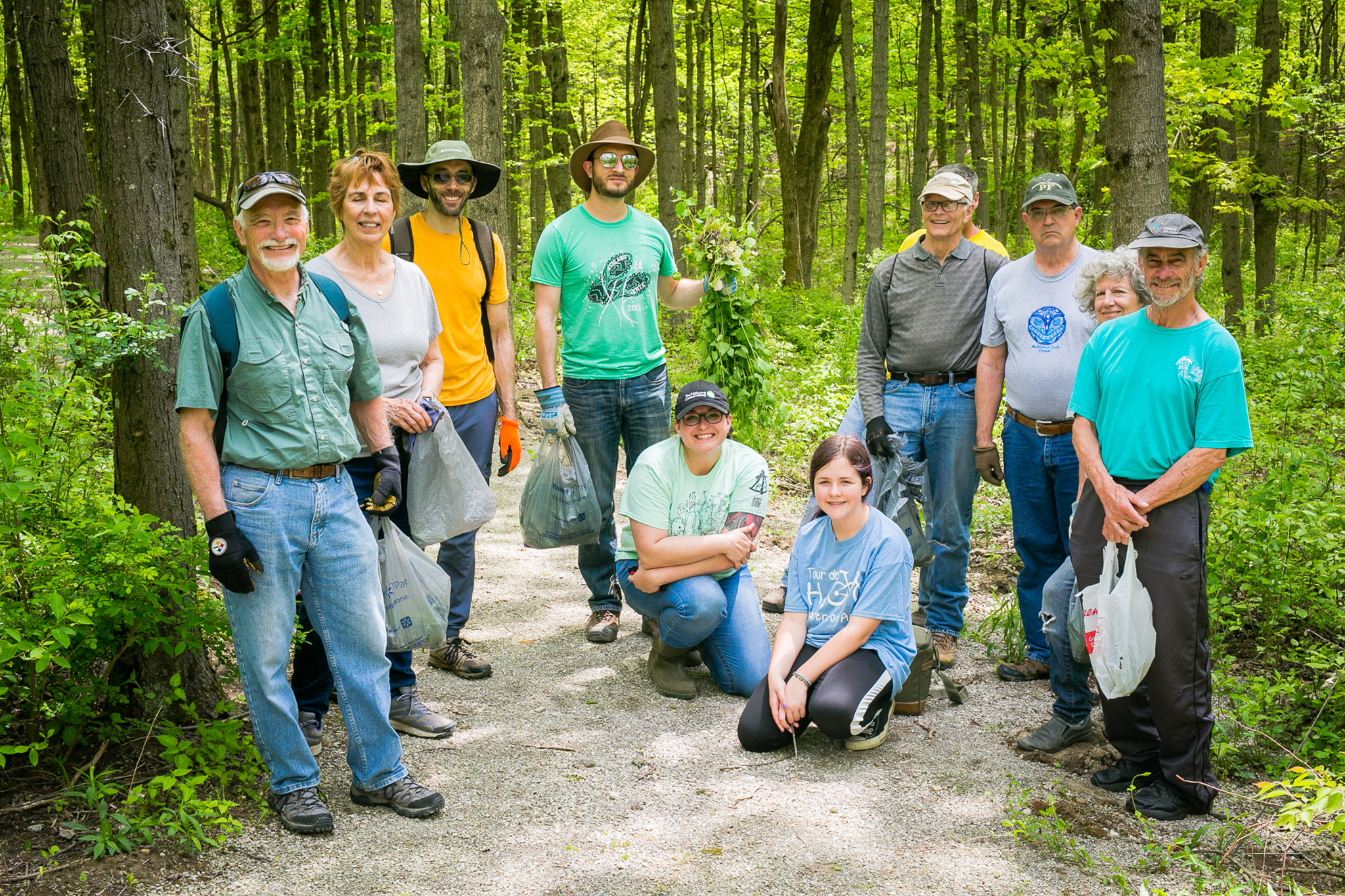
Volunteers hold bags of garlic mustard in forest.
Volunteer Work Day Volunteers pull garlic mustard at Big Darby Headwaters Nature Preserve © David Ike

Volunteering in Ohio

When you sign up to volunteer for The Nature Conservancy in Ohio, you will be welcomed into a family of dedicated individuals committed to protecting our state's finest natural areas. Whether you are interested in getting your boots dirty on our trails or organizing data at our office, we have a role for you.  For interest in volunteering at sites across Ohio, visit the Ohio Volunteer Program webpage.

We need your help protecting the natural treasures of Ohio’s Appalachian foothills.