
Some of Our Top Year-End Conservation Successes
This year we have expanded our projects and pioneered new ideas—always working toward a future where people and nature thrive.

Get a glimpse of some of our top three year-end conservation successes! From revitalizing water flows across North Carolina to championing peatland restoration, land protection and innovative land management, selecting our top three was challenging!
2025 Conservation Wins

Get the Full Scoop
Download our Year-End Afield Newsletter.
1
Rebuilding Resilience in Western North Carolina
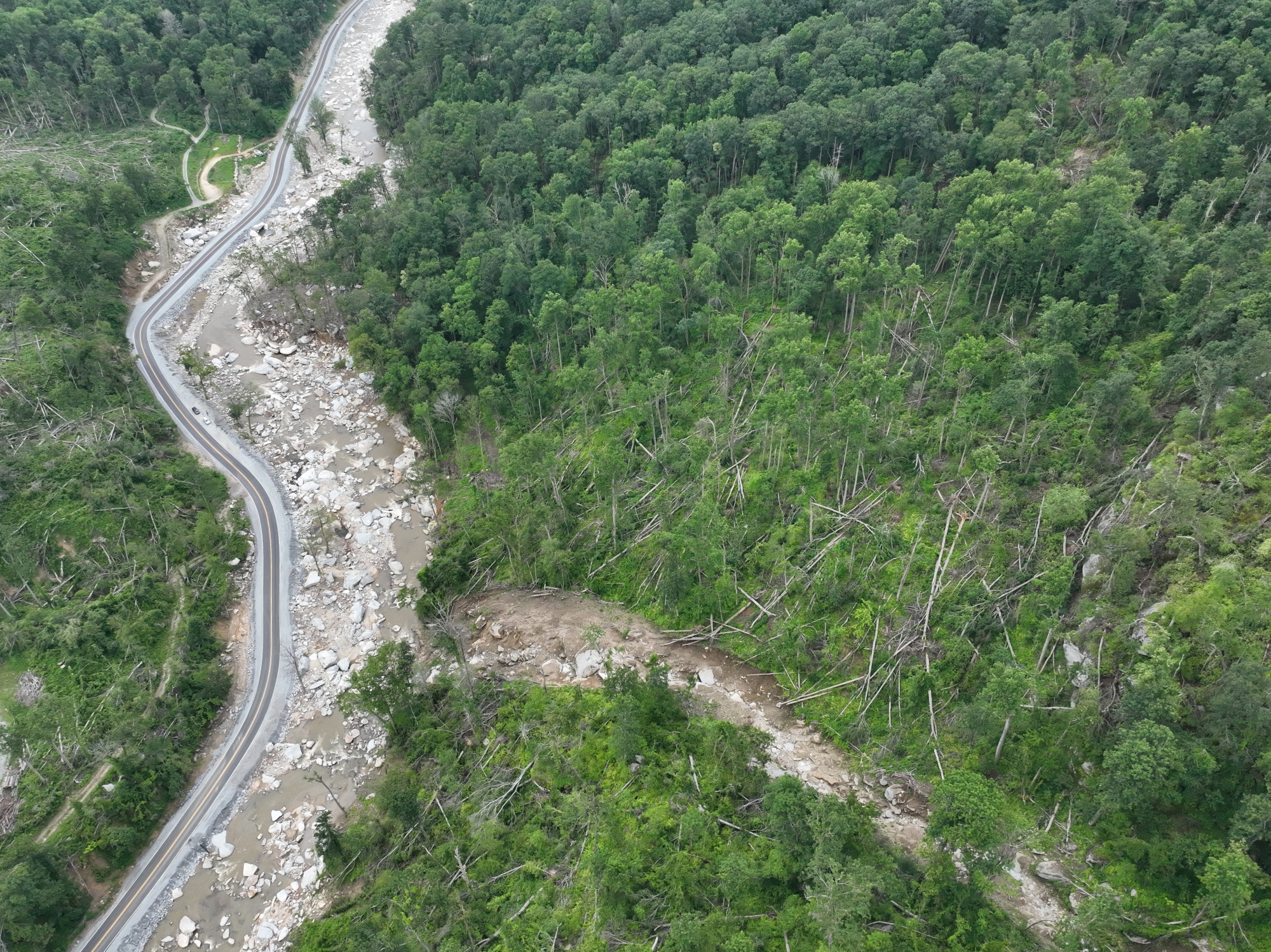
In the year since Hurricane Helene reshaped western North Carolina’s forests and rivers, The Nature Conservancy—together with many partners—has been laying the groundwork for long-term ecological recovery. From reconnecting stream systems to reducing wildfire risk, today’s restoration efforts are designed not only to heal the land but also to strengthen its resilience against future storms and other threats.
One of the most ambitious components of this recovery effort is the improvement of five to seven priority watersheds, including the North and South Mills Rivers, Davidson River, South Toe River, Wilson Creek and Johns River. Plans call for enhancing 180 miles of rivers and headwaters, removing 30 aquatic barriers, and replacing 30 headwater stream culverts to restore natural flow and habitat.
On the forest front, the goal is to reduce wildfire risk and promote native species regeneration through a combination of controlled burning, reforestation, invasive species treatment and midstory thinning. Together, these actions will help restore balance to the landscape and ensure healthier, more resilient forests for generations to come.
Keep reading about Hurricane Helene recovery plans.
2
7,500 Acres of Peatland Restored
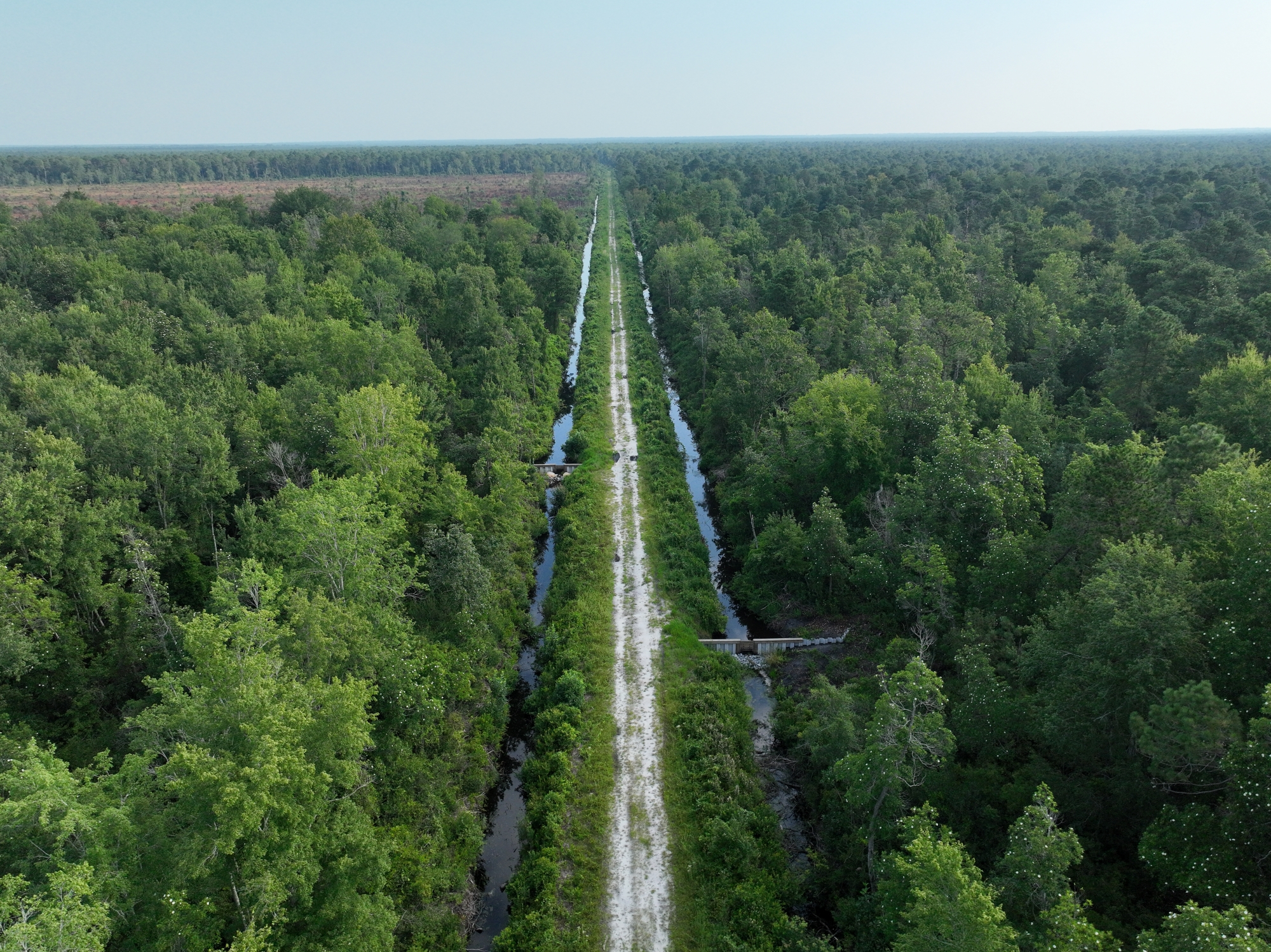
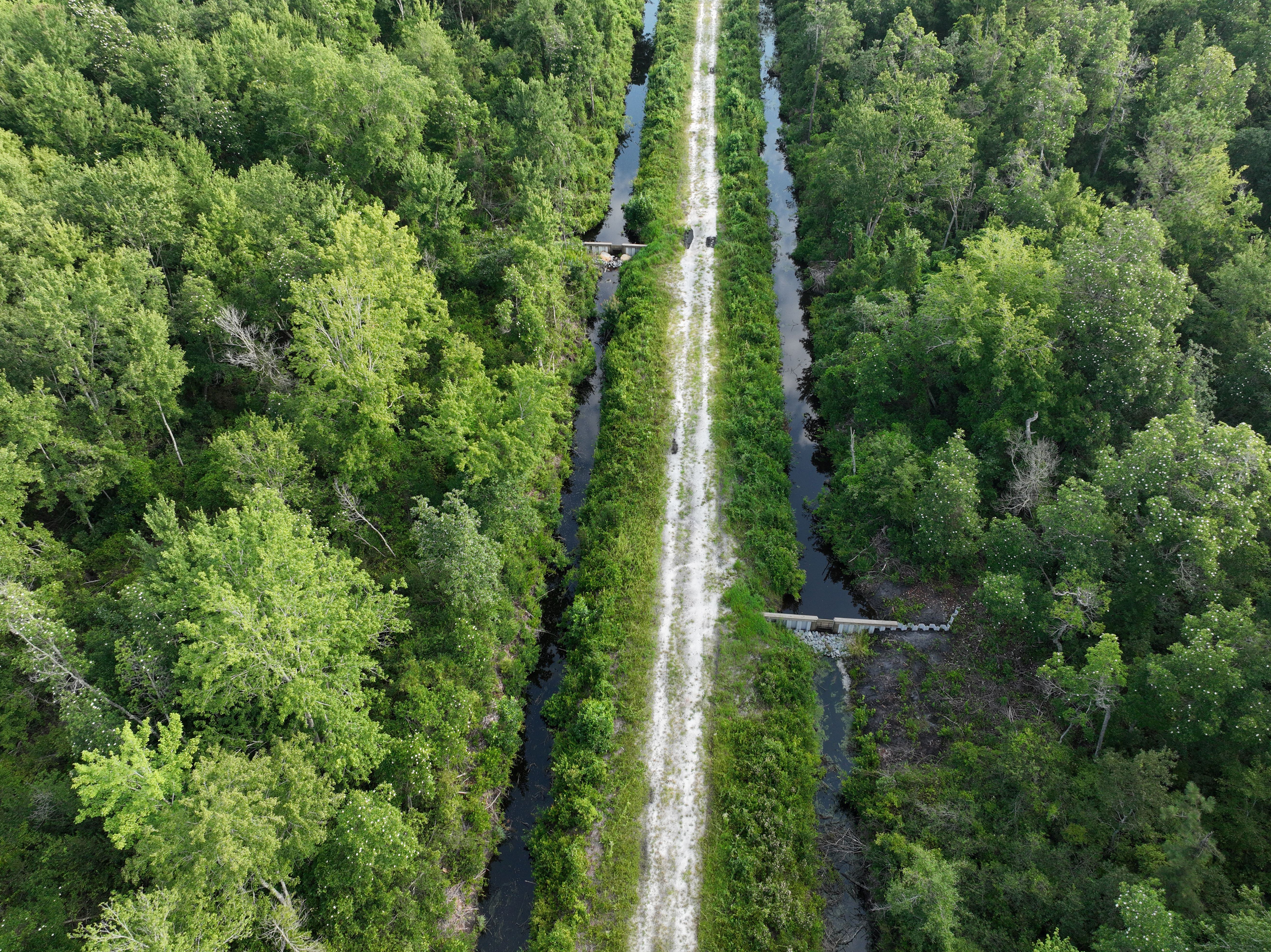
TNC and the North Carolina Wildlife Resources Commission (WRC) completed hydrological restoration of 7,500 acres of ditched pocosin in Angola Bay Game Land. Installation of 37 water control structures across 140 miles of ditches started in spring 2023 and was completed in 2024. These structures allow peat soils in this higher-elevation headwater area to once again absorb rainwater, which for the past four decades had been diverted through ditches toward low-lying communities.
In 2025, we launched the second phase of restoration, which involved planting nearly 250,000 seedlings of Atlantic white cedar, cypress and buttonbush. These native species provide valuable wildlife habitat, help stabilize streams and reduce soil erosion, further strengthening the resilience of the landscape.
This innovative work was highlighted in The New York Times article, “North Carolina’s Bogs Have a Dirty Secret.” Eric Soderholm, Coastal Wetlands Restoration Manager, took the story's photographer on a two-day photo tour to capture and illustrate the restoration efforts.
3
500,000 Acres Burned Across North Carolina
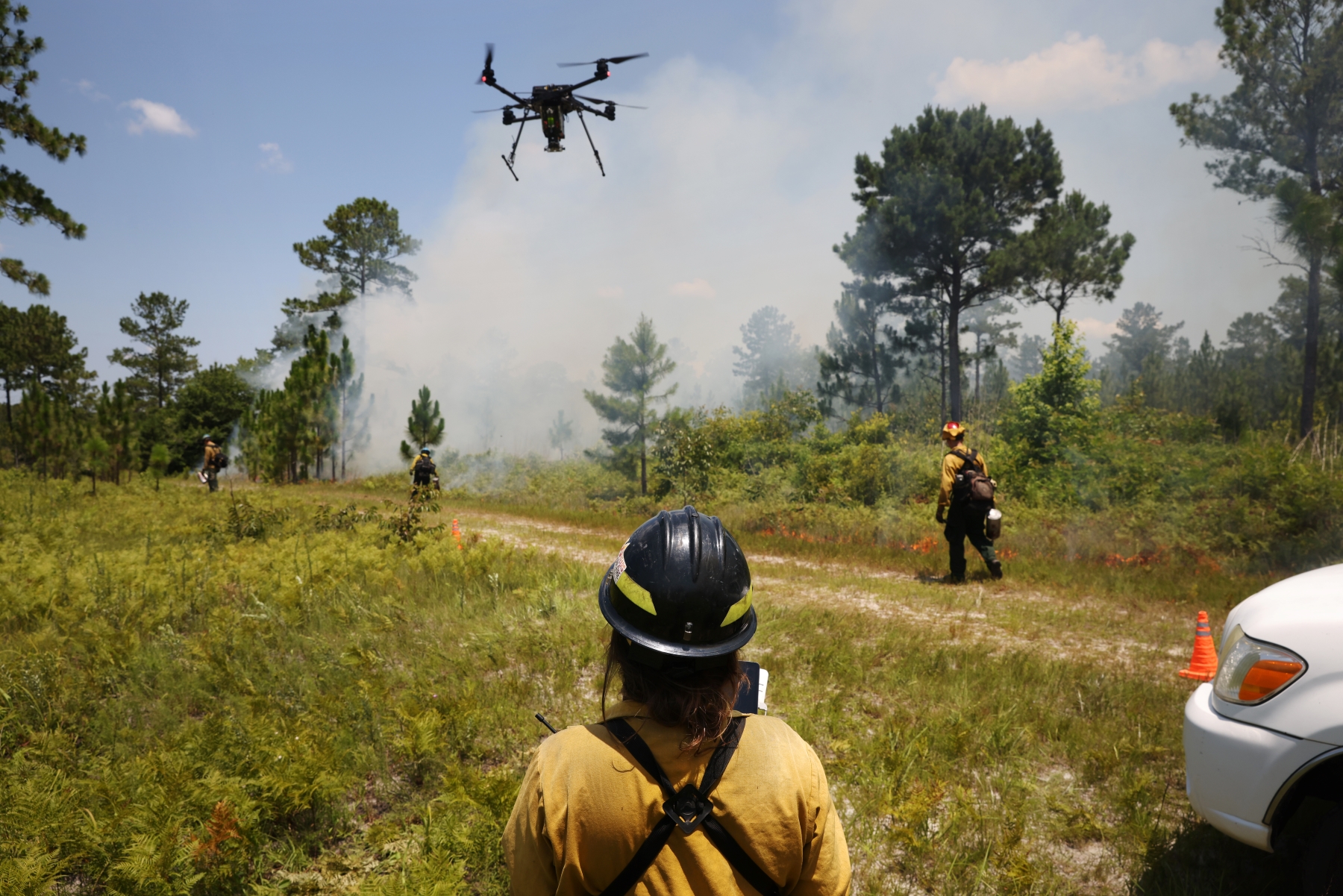
Since 1989, TNC has led the way in restoring fire to North Carolina’s landscapes—beginning with just three burns across 81 acres that first year. Today, thanks to the dedication of TNC fire leaders, strong partnerships, sound science and investments in training, equipment and new models of operation, we have the capacity to burn up to 40,000 acres each year. This year, we reached a huge milestone: 500,000 acres have been safely burned across TNC lands and partner properties.
Controlled burning is only conducted under the right weather conditions by highly trained professionals who prioritize safety before, during and after every fire. Our latest innovation—the use of fire drones—allows crews to ignite the interior of forests while reducing risks to team members.
The need for regular controlled burning across the state is immense, and our goals are ambitious. Achieving them requires collaboration with conservation nonprofits, government agencies, Indigenous communities and universities. Together, we share training and capacity to expand our collective impact.
Were you inspired by our work?
When you become a NC donor, you joins us on our mission of preserving our home.
Become a Donor2024
Conservation Wins

1
Peatlands Restoration Gets a Boost
This year we celebrated a historic $421 million award from the Environmental Protection Agency’s Climate Pollution Reduction Grant (CPRG) Program that will fund both state-led and TNC-led projects across Maryland, Virginia, North Carolina and South Carolina. In North Carolina, the grant is focused on expanding our peatlands restoration work portfolio.
Peatlands are a type of wetland whose soils contain a high proportion of partially decayed organic matter. In eastern NC, large areas of peatlands have been degraded from centuries of ditching and draining. When re-saturated with water, peat soils are much less flammable, which reduce wildfire risk, contribute to flood resilience and create conditions for more diverse and resilient forest communities.
2
Protecting the State’s Water Resources
Our freshwater work continues to grow thanks to two awards this year:
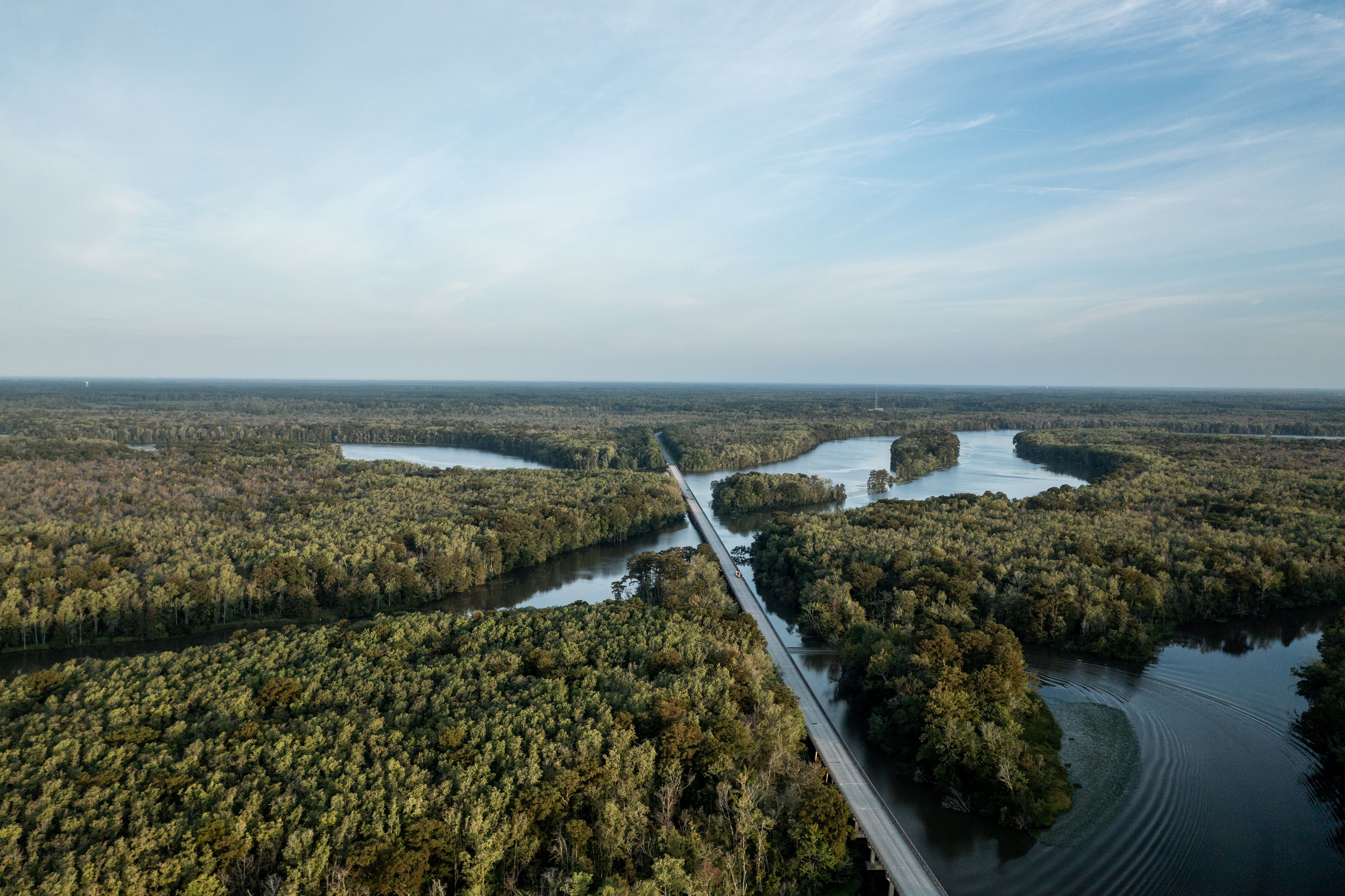
The U.S. Fish and Wildlife Service provided $7.7 million for TNC to work across four National Wildlife Refuges—Roanoke River, Pocosin Lakes, Pea Island and Cedar Island—focused on floodplain restoration, building oyster reefs and peatland restoration to benefit people and nature.
The National Oceanographic and Atmospheric Administration (NOAA) awarded TNC a $7.8 million grant to restore 17,000 acres along the Cape Fear River and its tributaries, as well as conduct fisheries research. The Cape Fear is the state’s biggest water basin—it makes up about 17% of North Carolina’s land mass and is about the size of the State of New Jersey.
It's encouraging that the federal government saw value in the initial research and restoration funded by our donors and are now leveraging those dollars with these important grants.
Related Articles

Understanding Water Pollution in the Cape Fear River
Creating a model that gives a better picture of water quality and how to manage pollution in the Cape Fear River basin.

Monitoring Conservation Easements
Easements are a hallmark of TNC's work across North Carolina, and Conservation Coordinator Lauren Goodman’s job is to make sure we’re caring properly for these protected lands.

Sustainable Rivers Program
The Nature Conservancy and the U.S. Army Corps of Engineers are finding new ways to strike a sustainable balance in how people use and protect the many benefits that rivers provide.