

2025 Nebraska Annual Report
Explore the year’s conservation successes with state director John Cougher.

Dear Friends,
There’s a challenging juxtaposition in conservation: everything is urgent, and everything takes time.
The Nature Conservancy’s 2030 Goals are driven by urgency. We MUST tackle climate change and address the biodiversity crisis in our world. This is a deciding decade for nature. We all feel that there’s absolutely no time to lose.
Yet, most of our work takes time. It is oft-repeated wisdom around here that conservation moves at the speed of trust.
For example, in this last year we have celebrated:
the return of 270 bison in collaboration with the InterTribal Buffalo Council and the Tanka Fund. This brings the total number to 1,106 animals transferred from the Niobrara Valley Preserve to Indigenous hands. The success of these partnerships stems from a foundation of mutual trust.
the final enrollment class of the Nebraska Soil Carbon Project, which brings our program total to 100 farmers on 35,000 acres. We got there with the support of the Central Platte and Upper Big Blue Natural Resources Districts, the Natural Resources Conservation Service (NRCS), Cargill, McDonalds and Target. Farmers enrolled in cost-share programs for adoption of soil health practices including adoption of cover crops, reduction of tillage and/or diversifying crop rotation. Again, trust and time were the key ingredients for bringing so many stakeholders and farmers to the same kitchen tables.
the creation of 63 ranch plans impacting 127,620 acres in the eastern Sandhills. We talked to ranch families about how to “keep grass in grass” rather than converting prairie to cropland, protecting habitat, preserving soil carbon and slowing further chemical application. We worked with 17 families on prescribed fire. These are deeply personal decisions, and we don’t take that trust lightly.
Not one of those projects was quick or easy, but they mattered—not just in Nebraska, but as pieces of a network of connected contributions of not only local partners but TNC colleagues and partners worldwide.
This is not just about our work with landowners. We know, too, that urgency is felt by our field staff, as they work relentlessly to stay ahead of invasive species and deploy fire and grazing techniques at the Niobrara Valley Preserve and Platte River Prairies. These special places are havens for wildlife and for people because they have committed their careers to them.
I do not pretend that TNC has discovered the perfect way to balance urgent needs with deliberate work. I do know one thing: loyal and generous members like you make it possible for us to address the most pressing challenges with patient, intentional progress.
Please enjoy the stories in this annual report and know that your support is working in fast, slow and thoughtful ways in our beautiful state.
John Cougher, Nebraska State Director
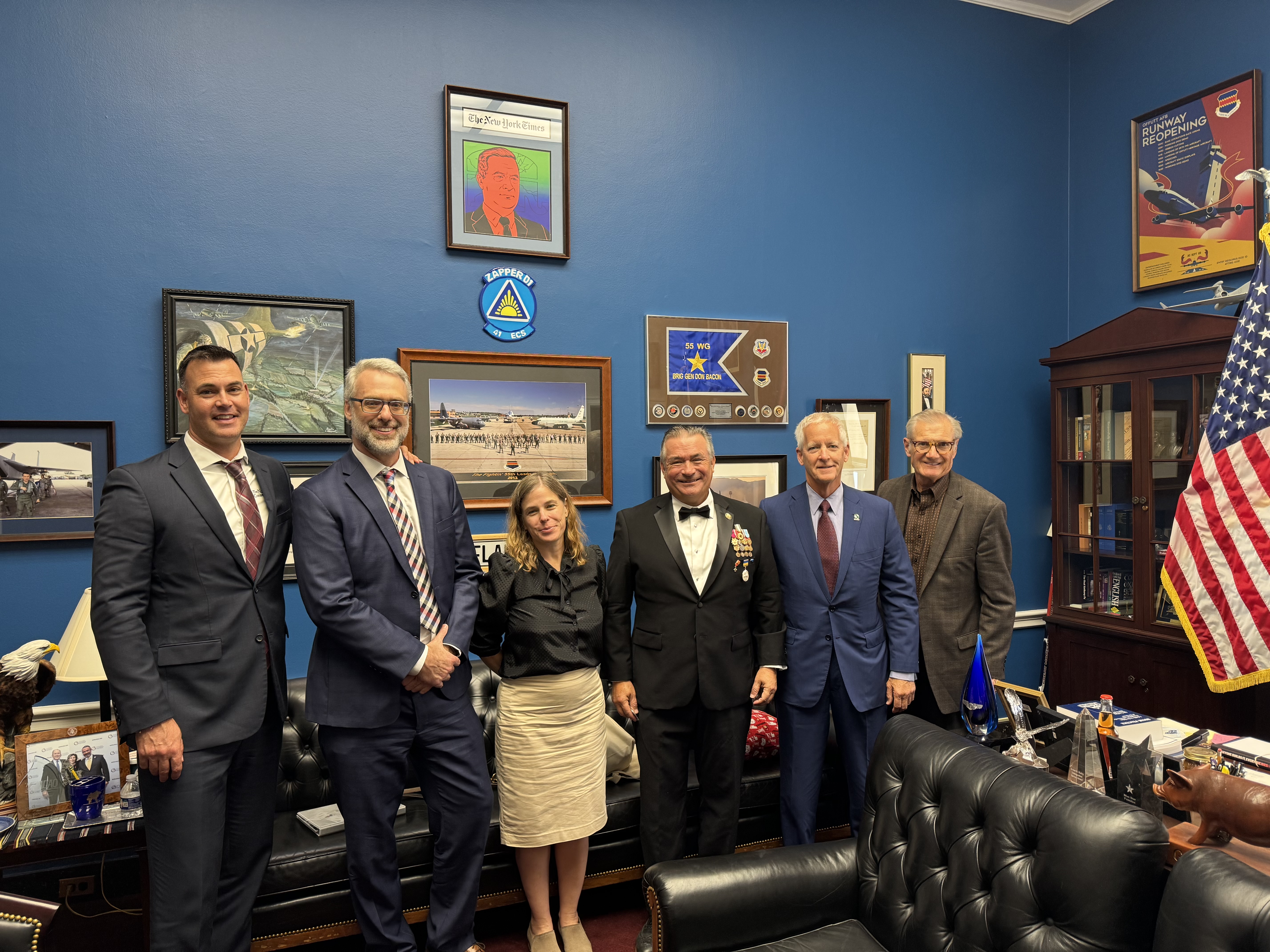
Five Questions with Katie Torpy
Writer Jill Wells sat down with Katie, TNC's director of external affairs and climate policy, to talk about her work in Nebraska and beyond.
How do you describe your role at TNC?
I’m on point for helping communicate our conservation priorities and objectives to policy makers at the state and federal levels. As a science organization, we often have solutions to bring to bear—either through testing hypotheses on our own preserves or by co-creating strategies with input from the farmers and ranchers with whom we often collaborate.
When does TNC get involved in a policy issue?
Generally, this is a high bar. Our engagement is triggered when it is both germane to our mission and our voice is uniquely additive to the deliberation. Our approach to policy is nonpartisan, grounded in science and rooted in the perspective that nature unites us. Four out of five Nebraskans think more needs to be done to protect our lands and waters—this holds true across political parties.
Tell us about a recent issue you’ve advocated for in the state legislature.
Last session, we helped successfully defend the Nebraska Environmental Trust from structural changes that would have halved its operating budget; however, this effort will continue to need public engagement and support. The Trust is funded by Nebraska Lottery proceeds. In spite of this being a constitutionally mandated competitive grant agency, it continues to be targeted as a means through which to backfill the everyday responsibilities of state agencies.
What’s a federal issue that you’d consider a win this year?
Nebraska played a role in helping get the U.S. Foundation for International Conservation Act enacted into law. This legislation establishes a groundbreaking fund to support local communities and Indigenous Peoples in managing protected and conserved areas. FY26 Appropriations permitting, the fund will leverage up to $100 million annually in federal dollars and incentivize a 2:1 match in private and philanthropic investments to help address critical challenges, such as biodiversity loss and the degradation of natural habitats, while contributing to global security and resilience.
What gives you hope?
The people with whom we work. Each of us is rooted to place in meaningful, authentic ways, and we channel the purpose and intention we find in our home and this landscape to communal action. We offer clear-eyed, actionable pathways and forge our way with the tools we have before us.
Doing More with Less
TNC Staff Partner with Farmers on Conservation Practices
TNC has an ambitious set of 2030 goals—which includes a mission to build sustainable food systems for both people and nature.
The Nebraska row crop team thinks about what this means on the farm…a lot. The team consists of Jacob Fritton, who directs the program and strategy, Nick Arneson leading on-the-ground relationships with farmers and partners, and Sara Cahill maintaining operational efficiency.
Current programs include:
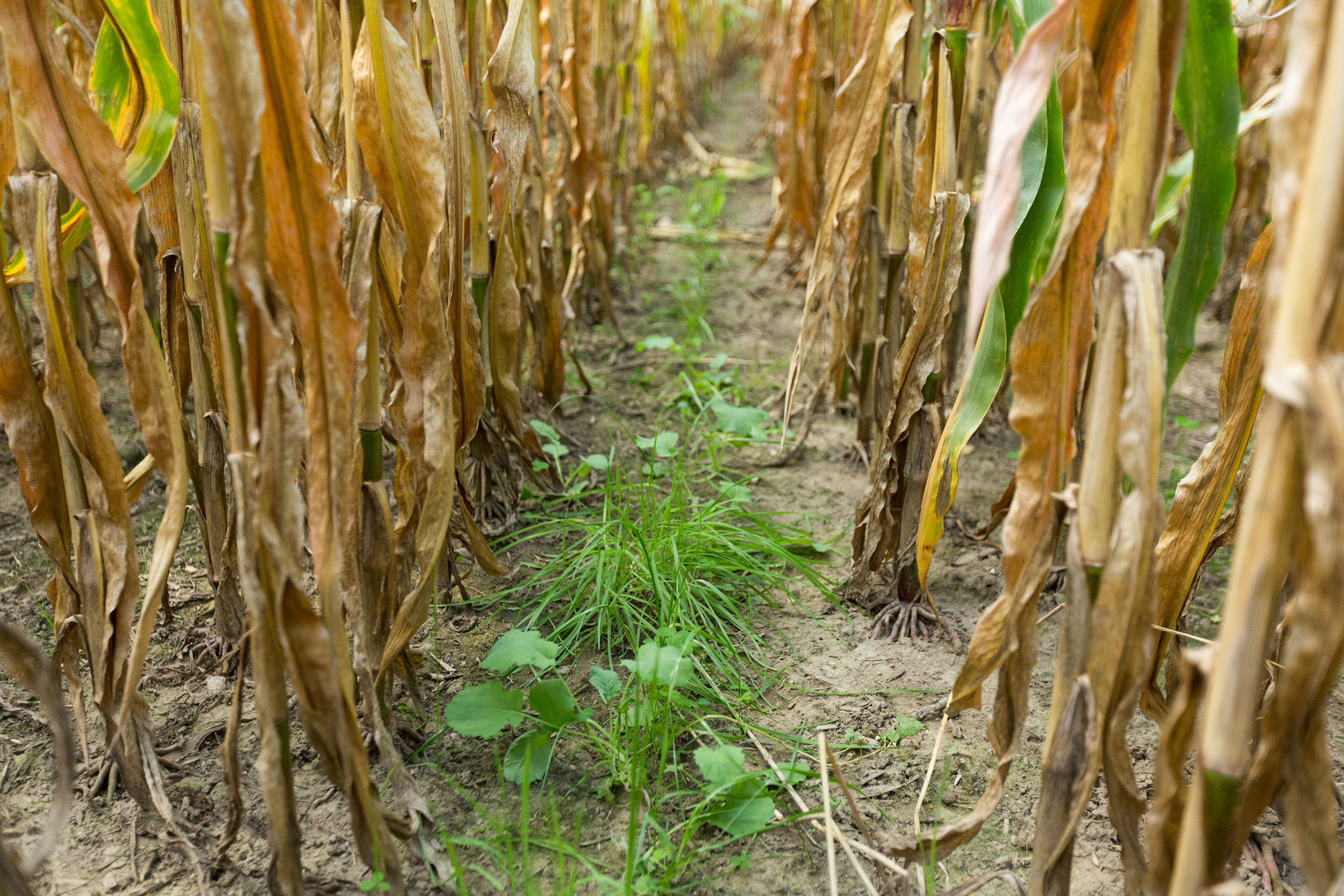
The Nebraska Soil Carbon Project: Launched in 2021, the Nebraska Soil Carbon Project is a TNC-led public-private collaboration with the Natural Resources Conservation Service (NRCS), the Upper Big Blue and Central Platte Natural Resource Districts, the Ecosystem Services Market Consortium (ESMC), Cargill, Target and McDonald’s. The goal is to work with 100 Nebraska farmers to understand how adoption of no-till, diversified rotations and/or cover crops impacts carbon storage while unlocking opportunities for local farmers through corporate sustainability efforts. Practices have been implemented on 35,000 acres throughout central Nebraska croplands.
Farming for the Blue River: The Farming for the Blue River project is a partnership between the Little Blue Natural Resources District (NRD), Lower Big Blue NRD, the National Fish & Wildlife Foundation and TNC. The goal of this project is to co-learn with 30 farmers to develop nutrient management plans to reduce nitrogen losses and improve nitrogen use efficiency across 4,800 acres. Project partners work with farmers to create a nutrient management plan in line with the plant’s nitrogen needs, provide farmers technical assistance in adopting precision nutrient management and participate in a peer-to-peer learning network to scale practices regionally. TNC presence on the ground working on nitrogen management with farmers in Nebraska has enabled influence on statewide nutrient stewardship policy providing additional support for farmers to meet the pressing need of addressing water quality.
This is “The Why”
“Farmers are among our greatest conservation allies. We are proud to work side by side with the families who care for our natural resources, so that as rapid change comes, there are tested tools at the ready,” said Jacob.
One of those farmers, Hank McGowan, was recently recognized with a statewide Outstanding Soil Conservation Award. Hank is enrolled in the Nebraska Soil Carbon Project. “These things will test your faith,” said McGowan of cover crops and no-till practices. “It’s been working better than I expected it to. I was told it would take five years before I saw improvement, but it’s not true. I saw some benefits immediately.”
“With the price of farm ground being what it is, topsoil is expensive. Try to keep it. That’s what we’re doing,” said McGowan.
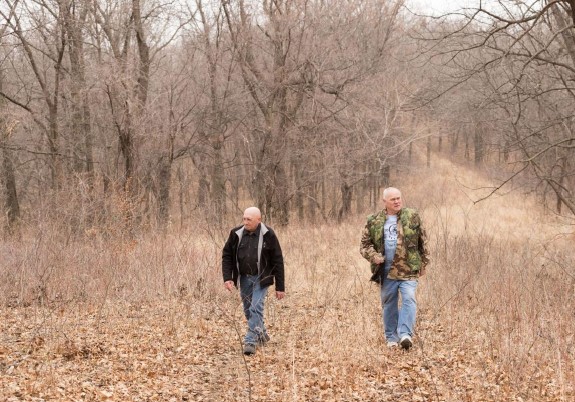
Lance's Legacy
TNC Mourns the Loss of Trustee Lance Foster
Lance first became involved with the Nebraska program during a land transfer from TNC to the Iowa Tribe of Kansas and Nebraska. In 2018, he was vice-chair of the Tribe and was instrumental in 444 acres of land in the Rulo Bluffs returning to Tribal control. At that time, Lance said, “To be somewhere where it’s quiet, that’s one of the things I enjoy about being here…and the fact that our ancestors are here. In our private moments we hear them sometimes. We communicate with them. You just feel that this place is part of you, and you’re part of this place.”
Building on that relationship, Lance agreed to join TNC’s board. State Director John Cougher asked him how TNC could increase collaboration with Tribal nations as conservation partners. “Lance told me that we need to be working together urgently to halt biodiversity loss,” said Cougher. “He encouraged us and offered to help us connect with leaders of other local Tribal nations.”
Foster suggested convening a gathering of conservation leaders of Nebraska’s Tribal nations. Brandon Cobb (then a Claire M. Hubbard Young Leaders in Conservation Fellow) took this suggestion and held the Nebraska Intertribal Conservation Summit in April of 2023, bringing together the six landholding Tribes and the Maya community.
“This gathering, which set a number of successful collaborations in motion, would not have happened without Lance’s encouragement, leadership and effort,” said Cobb.
In fact, the summit sparked the Nebraska program to add a new position built on the advice that Lance had given the chapter—an Indigenous Partnerships Program Manager. Cobb, a citizen of the Cherokee Nation, stepped into that role and has developed partnerships based on shared conservation goals and Lance’s vision for more connected, supported and stewarded Indigenous lands in Nebraska and beyond.
When Lance passed away in January, his loss was deeply felt around the nation. As Tribal Historic Preservation Officer since 2013, Lance served as a leader, mentor and role model in historic preservation on a regional and national level, as well as within his Tribal community. He had tremendous impacts in the fields of language, sociology and archaeology.
“We are so much better for Lance’s leadership,” said Cougher. “I miss not just his counsel but his unique perspective and sense of humor. He will never be forgotten.”
A Family Legacy
Bruce Edward Stephens Prairie Dedicated at Platte River Prairies
July 11th was a warm, beautiful day to be in the prairie, as friends and family gathered near Wood River to celebrate the naming of the Bruce Edward Stephens Prairie.
Bruce grew up on a farm—the same farm his family cared for over four generations, more than a hundred years. Bruce’s great-great grandfather came from Wales, taking a covered wagon from Red Oak, Iowa, to Waco, Nebraska in 1874. He recalls watching the sunset after chores while petting the dog and listening to the birds and just enjoying the sights and sounds of nature.
Bruce has been a member of TNC for many years and got involved in the ’90s as a volunteer, harvesting and scattering native seeds at the Platte River Prairies. Now, he has made a lifetime gift to protect them.
He wanted to do something that would leave a lasting legacy for his family. Although he has traveled extensively all over the world helping with research on various conservation projects, Bruce still counts the sandhill crane migration as one of his top nature destinations.
“The Nature Conservancy best fit my ideals,” Bruce said. “TNC does nature preservation, acquiring property and managing it. Chloé (Sweet, associate director of philanthropy) told me about this prairie. I came out and looked at it and thought, ‘yep, this is what I want to do.’”
The sign on the prairie includes Bruce’s middle name for a special reason—Edward was his father’s name. “This isn’t about me,” said Bruce. “This is about my family.”

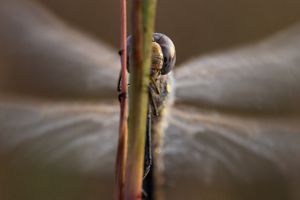


Variegated meadowhawk: Variegated meadowhawk (migratory) on a dewy morning. East Dahms Prairie. 2025 Post Grazing Photography Project. The Nature Conservancy's Platte River Prairies, Nebraska © Chris Helzer
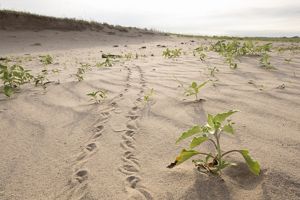
Box turtle tracks (probably): Box turtle tracks (probably). The Nature Conservancy's Niobrara Valley Preserve, Nebraska. © Chris Helzer
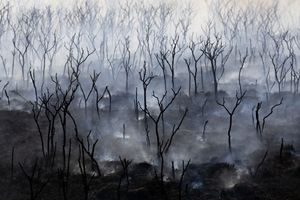
Yucca and smoke: Yucca and smoke. Prescribed fire at The Nature Conservancy's Niobrara Valley Preserve. Blake and Hazel units - east end. © Chris Helzer
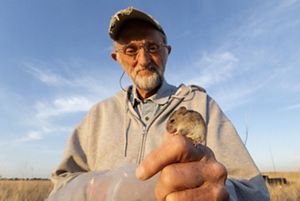
Mike Schrad with pocket mouse: Plains pocket mouse with volunteer Master Naturalist Mike Schrad. © Chris Helzer
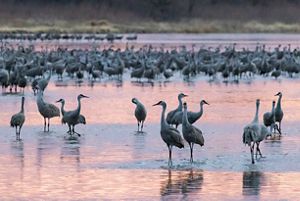
Cranes at sunrise: Sandhill cranes at sunrise. The Nature Conservancy's Platte River Prairies, Nebraska. © Chris Helzer
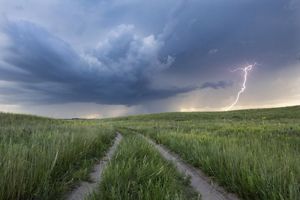
Nebraska lightning at NVP: Lightning and coming rain. The Nature Conservancy's Niobrara Valley Preserve. Nebraska. © Chris Helzer
Bull frog in wetland: Bull frog in wetland. The Nature Conservancy's Platte River Prairies, Nebraska © Chris Helzer
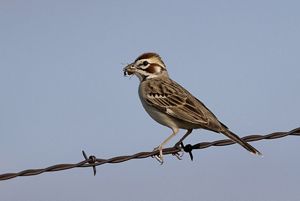
Lark sparrow on barbed wire: Lark sparrow. The Nature Conservancy's Niobrara Valley Preserve, Nebraska. © Chris Helzer
Kojo watching bison at NVP. : Hubbard Fellow Kojo Baidoo watching bison. The Nature Conservancy's Niobrara Valley Preserve, Nebraska © Chris Helzer
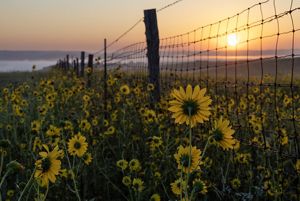
Sunrise, sunflowers, and fence: Sunrise, sunflowers, and bison fence. The Nature Conservancy's Niobrara Valley Preserve, Nebraska © Chris Helzer

Stay in the Know!
Sign up to receive our monthly Nature News email.
Download
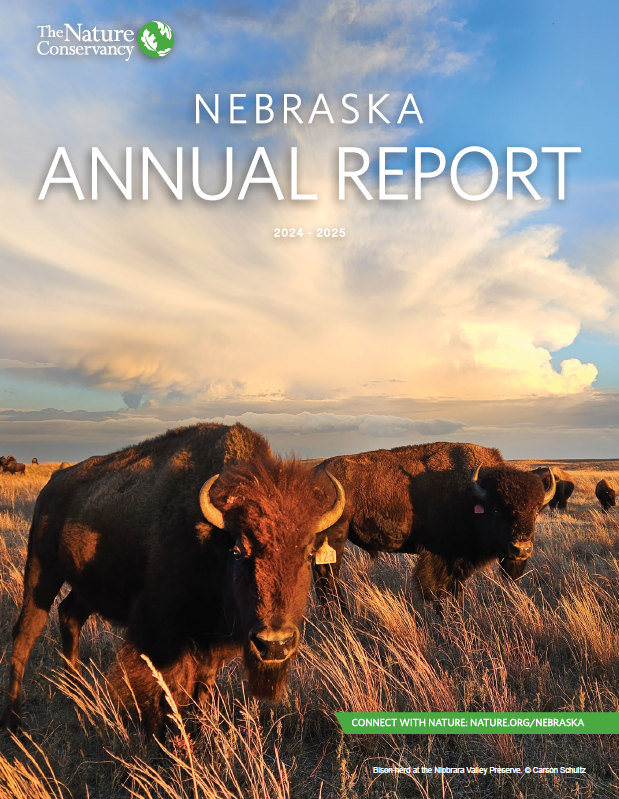
There’s more to explore—including a comprehensive list of our generous donors and supporters! Take a look at the full report here.
DownloadMake a Difference in Nebraska
The Nature Conservancy's mission is to preserve plants, animals and natural communities that represent the diversity of life on Earth by protecting the lands and waters they need to survive. We’ve been working in Nebraska to do just that.
Related Stories

12-million acres: Protecting Nebraska’s Sandhills
The Nature Conservancy is working to conserve grasslands on a global scale. Here's how Nebraska's iconic Sandhills are playing a key role.

March Magic in the Platte River Valley
As they have for millennia, hundreds of thousands of sandhill cranes visited Nebraska’s Platte River Valley this spring. Explore the migration!

Introducing Our 2025 Hubbard Fellows
TNC in Nebraska is proud to host The Claire M. Hubbard Young Leaders in Conservation Fellowship Program. Get to know our 2025 Hubbard Fellows, Kojo Baidoo and Noelle Schumann!