


Midwest Migratory Birds
Millions of migratory birds are using TNC sites to rest and refuel as they migrate through the Midwest.

Discover the hardy birds that bring life to the Midwest winter landscape—from familiar favorites like cardinals to rare visitors like snowy owls.
Click below to jump ahead to any section you're interested in!
Winter in the Midwest isn’t for the faint of heart. But some bird species embrace the chill and call the heartland home, either all year or just for the winter. And with the leaves gone from the trees, these winter birds are easier than ever to spot—especially if you're able to put out a feeder or two to attract them. Scroll on to find out what birds to look for, how you can help them and why winter birdwatching might just be the coolest hobby around.

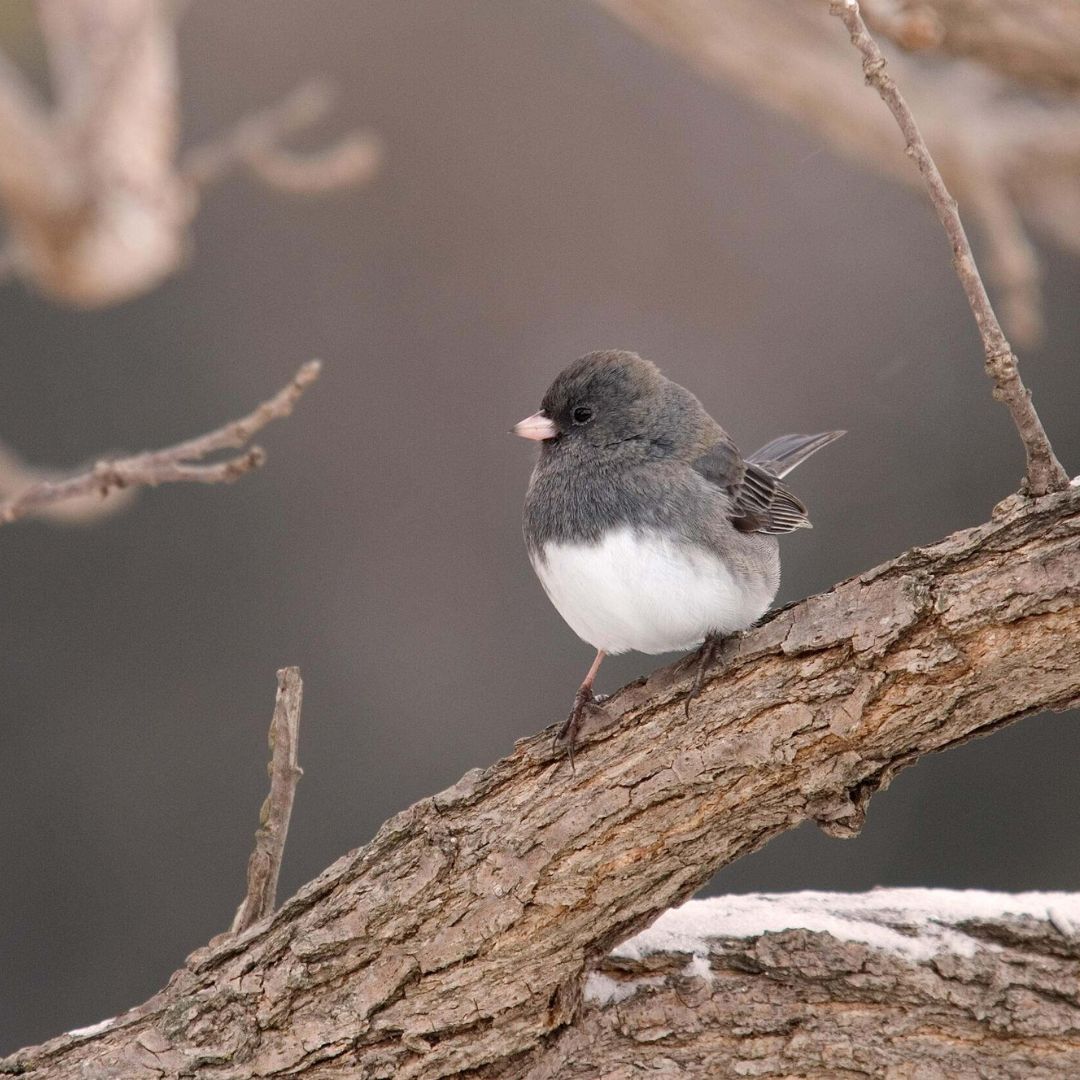
Found year-round only in the most northern parts of the Midwest, the dark-eyed junco is most often spotted in winter around the region as it settles here from Canada for the colder months. While they can have rather variable coloration, in the Midwest they most often look like a gray sparrow with a bright white belly. They often come to bird feeders, looking for sunflower seeds, millet, cracked corn or safflower seeds. Dark-eyed juncos often forage on the ground, finding spilled seeds from feeders.
Here are the songs and calls to listen for when you're looking for dark-eyed juncos.
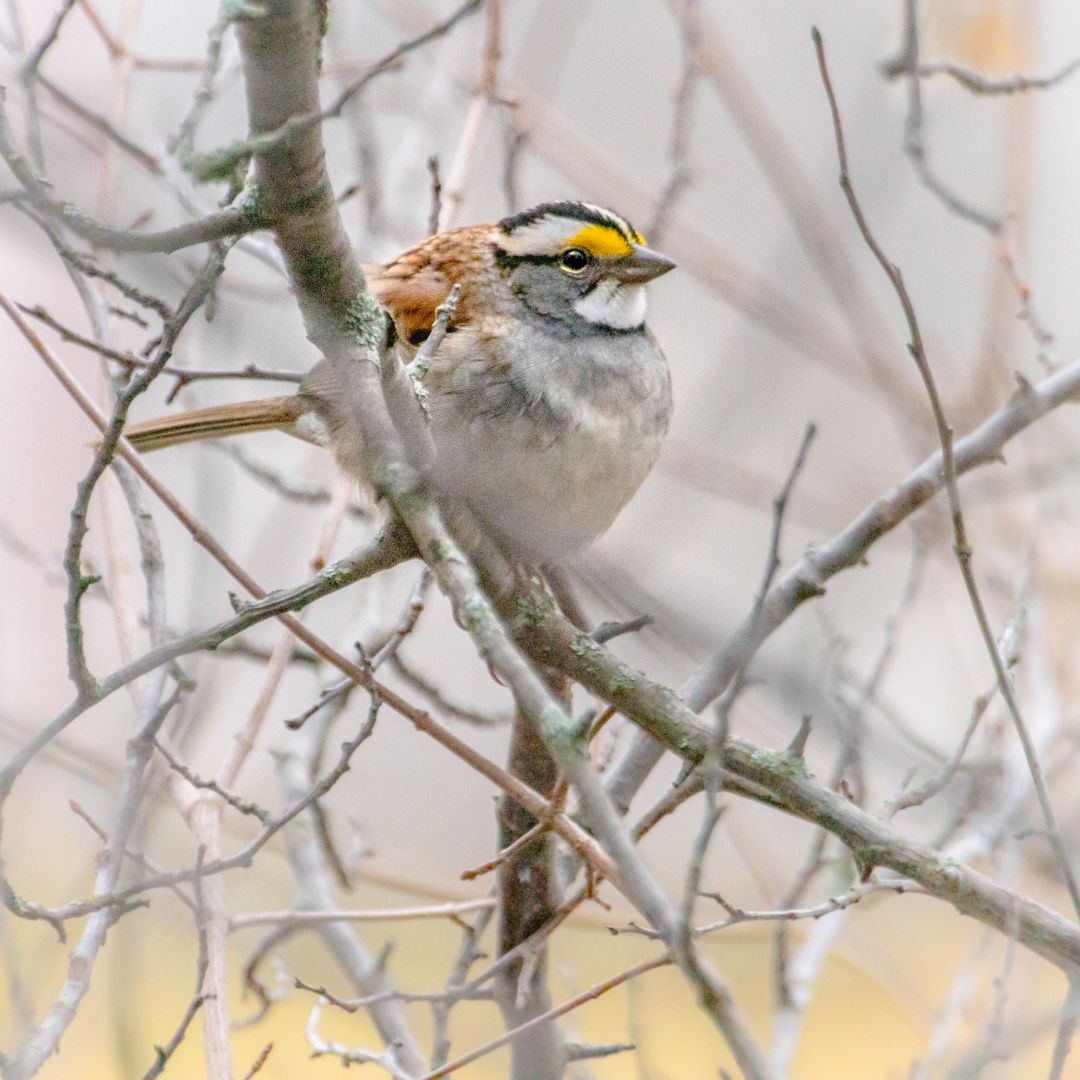
Spending their breeding season in the northernmost edges of the Midwest and up into Canada, most folks in the Heartland only see white-throated sparrows when they head south to our region in the winter. They will readily come to feeders, especially those that have millet or sunflower seeds. Look for them foraging for spilled seeds under the feeders, as they often feed on the ground.
Here are the songs and calls to listen for when you're looking for white-throated sparrows.
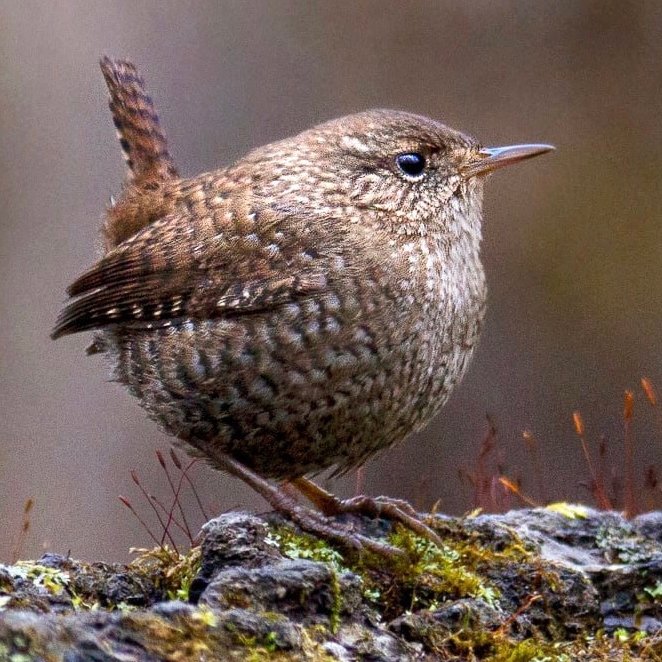
Almost a perfectly spherical brown ball of feathers, winter wrens show up in the Midwest when the temperatures start to dip. You'll find them in forests and woods, often hopping along the ground or singing loudly. In fact, per unit of weight, a winter wren sings louder than a crowing rooster! Planting native plants and having brush piles around your yard may draw this winter visitor to your home.
Here are the songs and calls to listen for when you're looking for winter wrens.

Join the flock and fly into fresh nature stories monthly in your inbox!
Here are four native birds to look for in winter—and they will all readily come to feeders. These birds are year-round residents and common backyard visitors, providing you with the opportunity to observe them progress through all their various life stages throughout the year.
Click each photo to learn a quick tidbit or two about each bird!
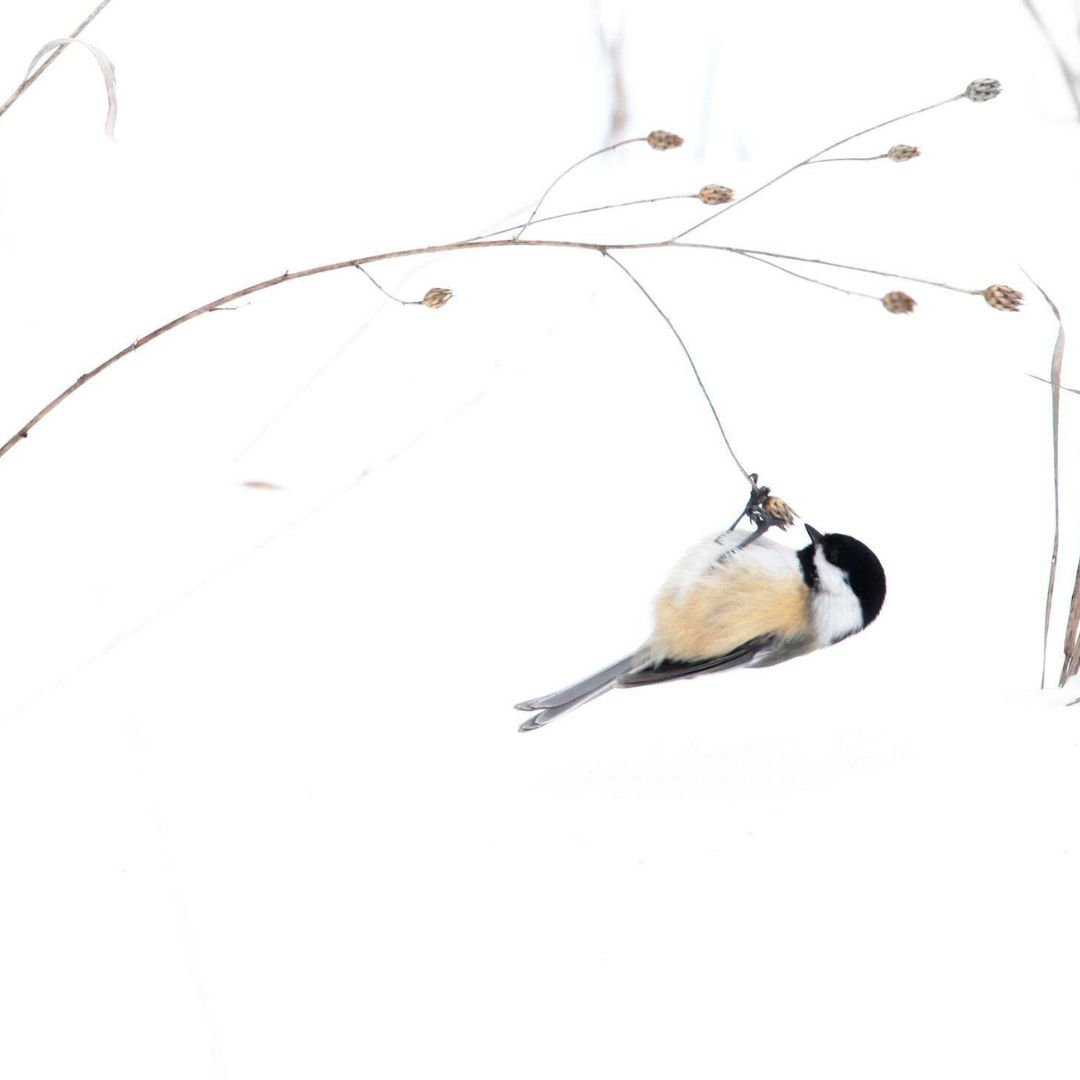
These common Midwest birds may be tiny, but they have an amazing ability. Every autumn, they allow neurons in their brain with old information to die and replace them with new neurons that let them remember food caches, new social rules to follow in large flocks and other skills needed for winter. These birds eat a lot in the winter—20 times more than in the summer. Keep your feeders full of sunflower, safflower, nyjer seeds and suet to help this inquisitive little bird make it through the winter.
Here are the songs and calls to listen for when you're looking for black-capped chickadees.
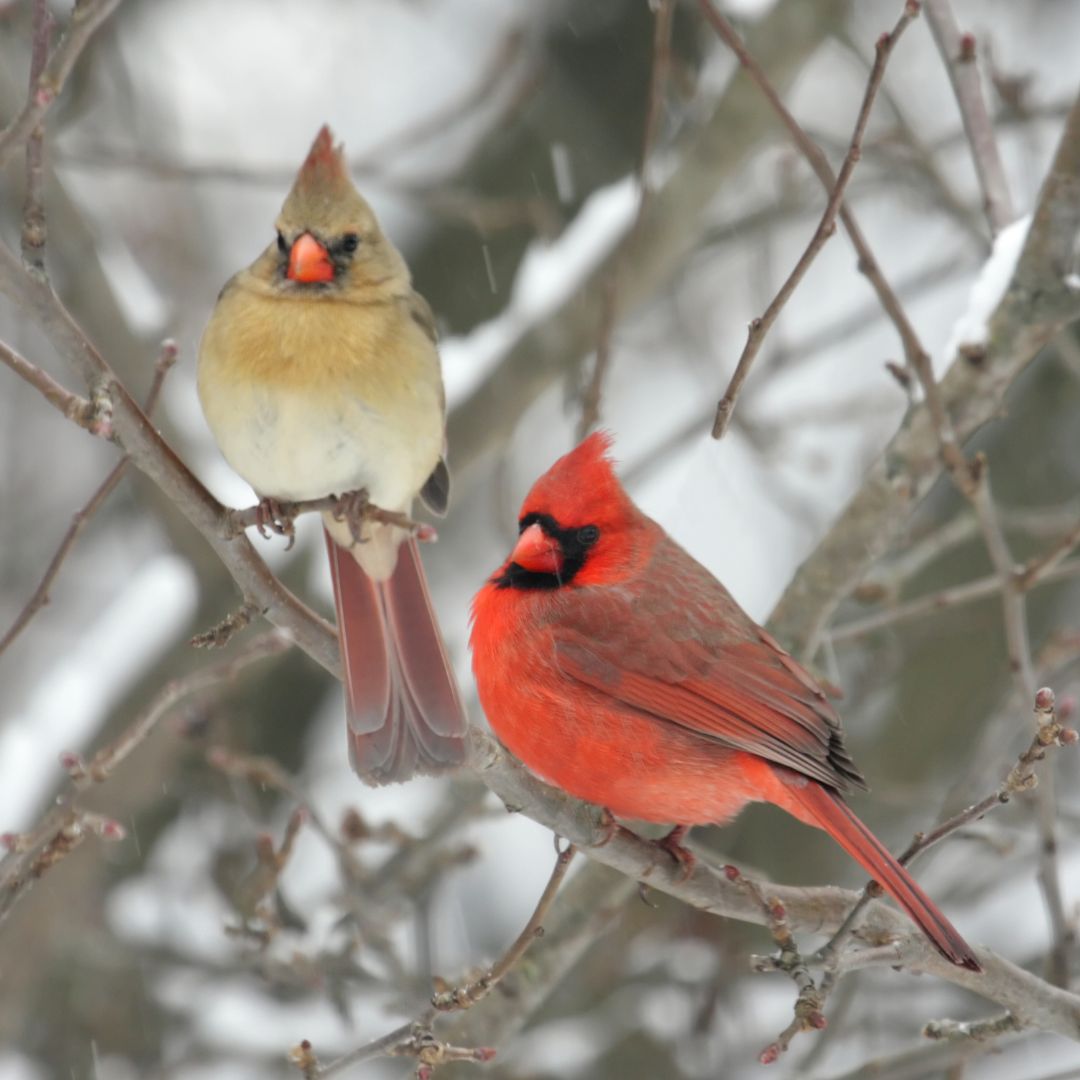
Spotting a male Northern cardinal's bright red feathers among the muted landscape of winter is a highlight of any chilly day in the Midwest. Often overlooked, the females are no less stunning, with bright orange beaks and red highlights on their heads, tails and wings. Keep your feeder filled with black oil sunflower seeds, a favorite of cardinals to bring them to your yard. Both males and females will sing, brightening up winter days.
Here are the songs and calls to listen for when you're looking for Northern cardinals.
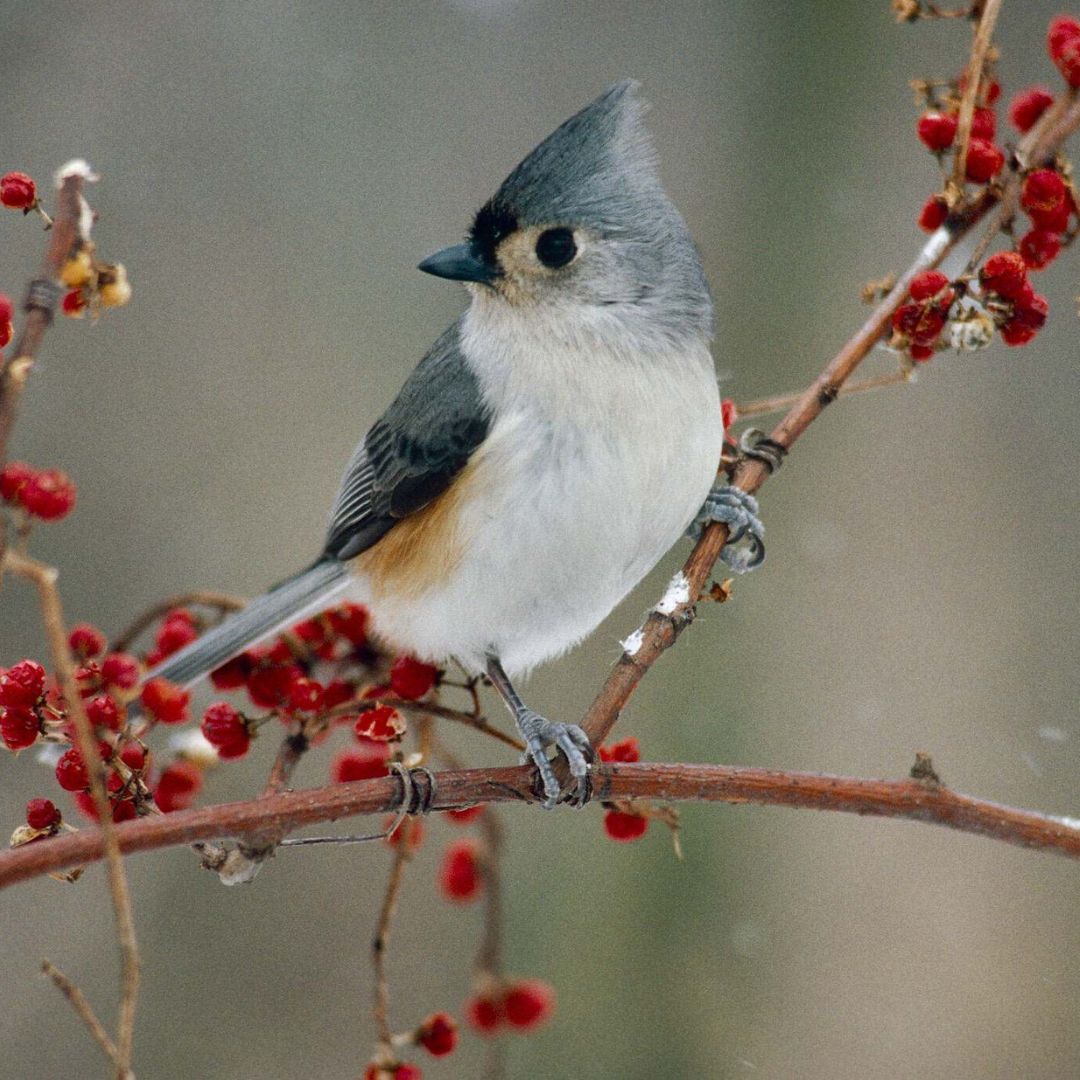
Related to chickadees, tufted titmice are a common sight during the winter months. A mated pair will remain together in their territory in the winter, often with one of their young. They’re frequent feeder visitors, preferring sunflower seeds, but also taking peanuts, suet or other seeds. Keep an eye out to see what happens when they get a large seed; they’ll carry it to a tree limb or other perch and crack it with a few whacks of their bill.
Here are the songs and calls to listen for when you're looking for tufted titmice.
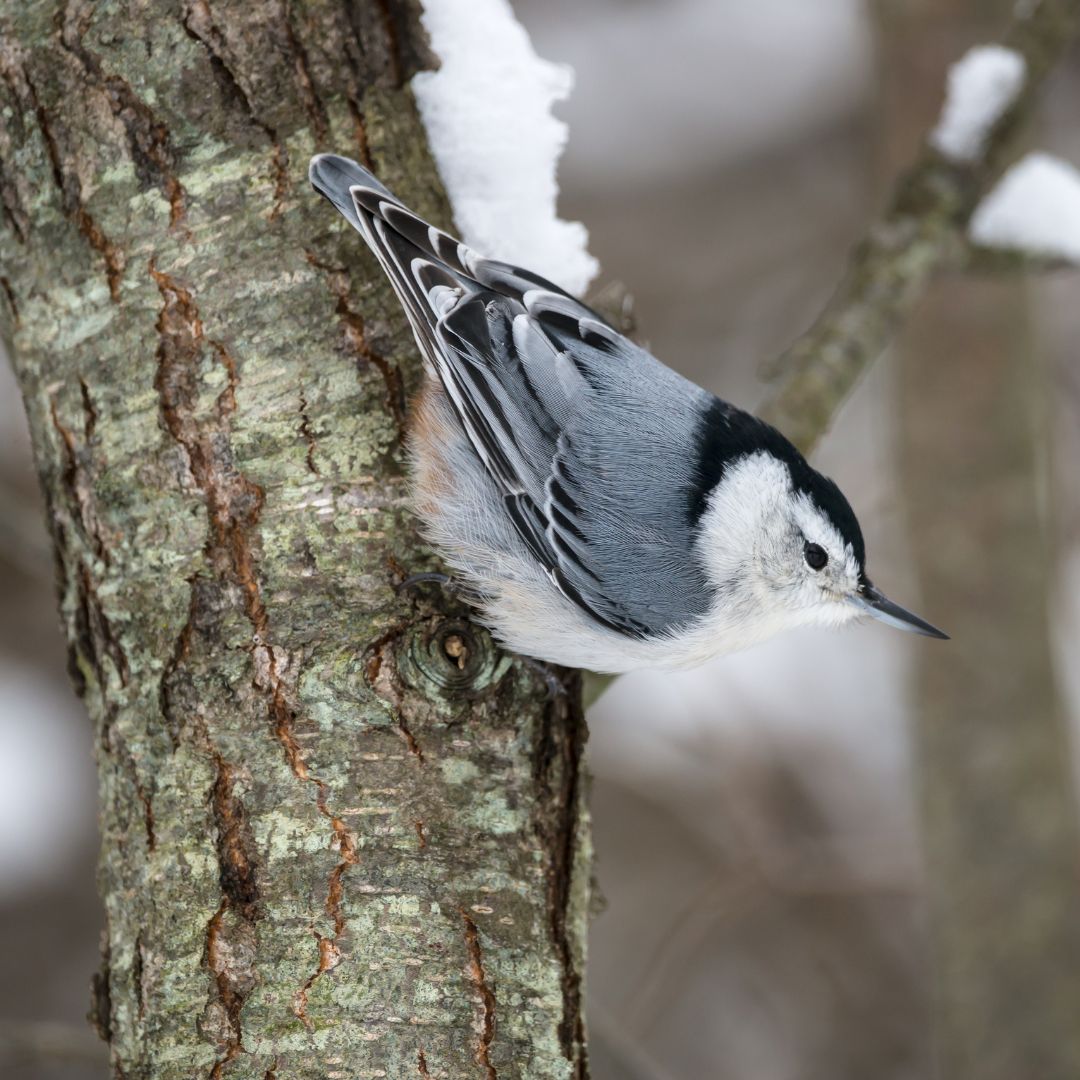
Often spotted clinging vertically to trees, white-breasted nuthatches are insect hunters in the warmer months and look for meaty seeds in the winter. You'll see them hopping up and down trunks and branches, turning sideways or upside down as they look for food or store seeds. Offer up large nuts like peanuts and sunflower seeds, and you’re likely to attract them to your feeders.
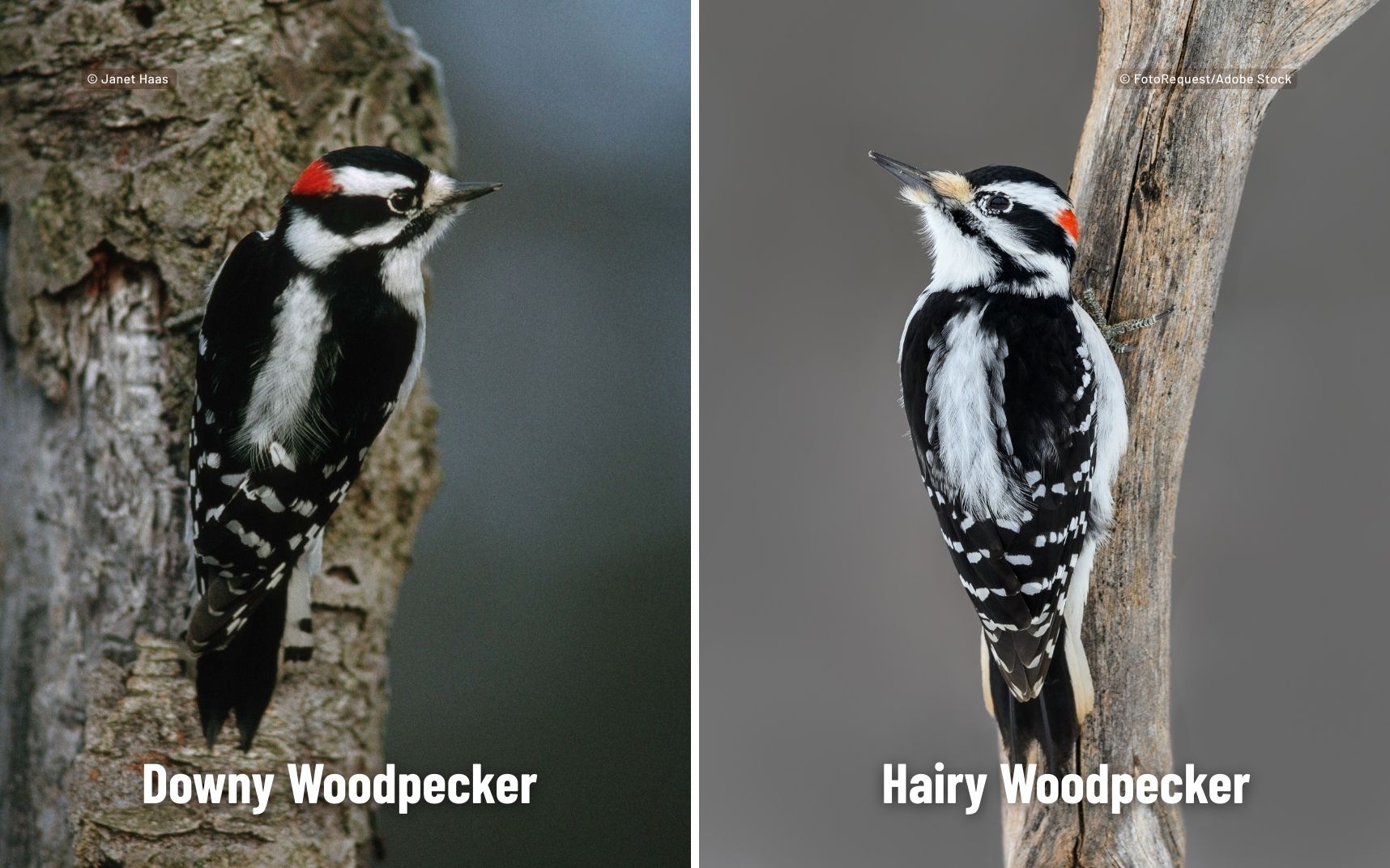
Of the seven common species of woodpeckers in the Midwest, there are two that look so much alike that it can be hard to tell them apart—the downy and the hairy woodpecker. Both of these small native woodpeckers are year-round residents in the Midwest and often visit feeders that offer suet, black oil sunflower seeds or peanuts.
So, how do you tell which small, black-and-white woodpecker is hanging out on your suet feeder? We've got you covered below—just click each spot to learn the differences and you’ll be telling downy and hairy woodpeckers apart in no time!
Bonus ID tip: If you spot one of these birds with a bright red patch on the back of its head, that’s a male. If the patch is solid, it’s a downy woodpecker; however, if the patch is in two halves, it’s likely a hairy woodpecker.
Downy woodpeckers have short beaks, less than half the length of their head.
Hairy woodpeckers have long beaks that are about the same length as their head.
Downy woodpeckers are smaller than hairy woodpeckers. They're between a sparrow and a robin in size.
Hairy woodpeckers are larger than downy woodpeckers. They're about the size of a robin.
Downy woodpeckers have black spots or bars on their white outer tail feathers.
Hairy woodpeckers have solid white outer tail feathers.

 Return
The bare trees and muted landscapes of Midwest winters make this time of year prime for spotting raptors (or birds of prey). There are several raptor species that you should look for in the Midwest, including bald eagles, great horned owls, barred owls, barn owls, red-tailed hawks, Cooper’s hawks and American kestrels. A handful of raptor species also migrate to the Midwest during winter, including rough-legged hawks, merlins and short-eared owls.
In fact, January and February are prime owl-spotting time, especially around the Great Lakes and the northern areas of the Midwest. There you may be able to spot some rare visitors to the region, including boreal owls, great gray owls and snowy owls. Throughout the Midwest, January, February and early March are also great times to spot bald eagles, great horned owls and red-tailed hawks, as they begin their breeding and nesting season.
Click on each photo below for some fast facts about a few of these hunting birds!
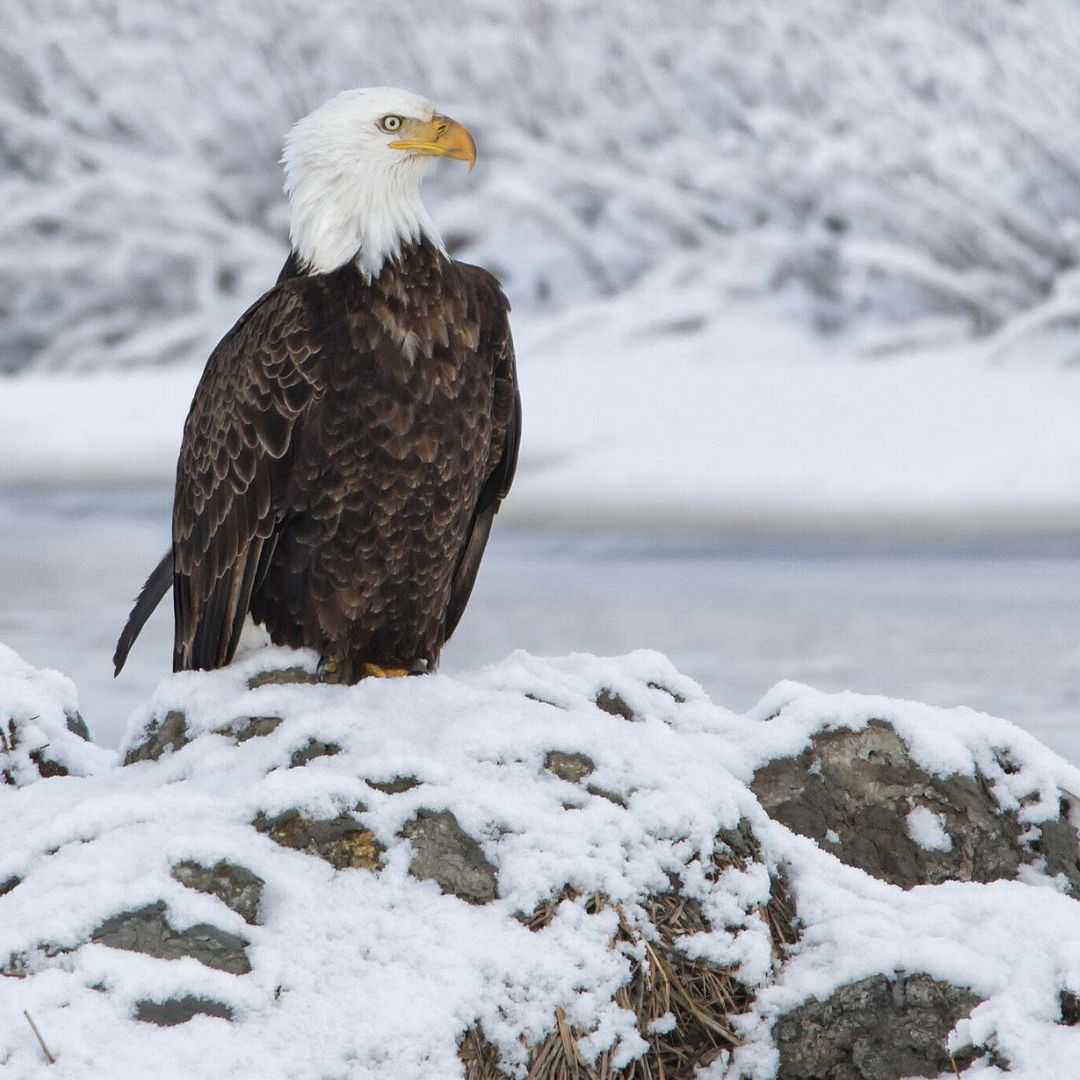
Winter is a great time for eagle watching. When lakes and rivers freeze over, bald eagles congregate in large trees along shorelines where dams and power plants provide open water where they can fish. In late January and February, they will begin their breeding season, reusing and adding to old nests. Bald eagles have been known to be playful, using sticks or other objects as toys. Sometimes they will pass these items to each other in midair.
Here are the calls to listen for when you're out looking for bald eagles.
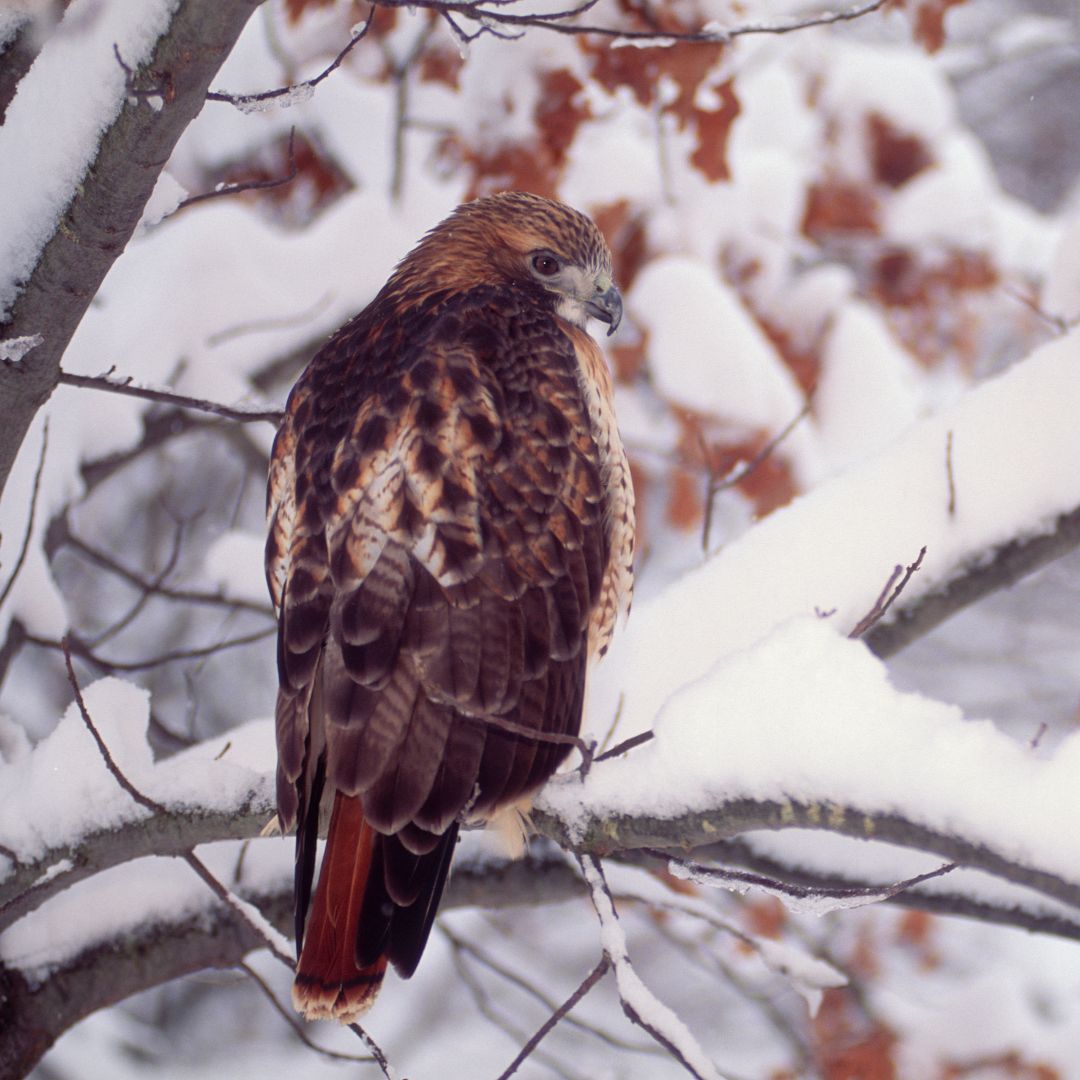
Red-tailed hawks are likely the most common hawk in North America and certainly in the Midwest. One of the best ways to see them in the Heartland is to take a long drive—you're likely to see them perched along roadside fenceposts, signs or telephone poles as they scan the area for prey.
Red-tailed hawks are year-round residents in the Midwest, but winter is an especially good time to spot them. They're extremely adaptable birds, living in nearly any type of open habitat, from rural fields and open woodlands to city and suburban parks. They primarily hunt mammals, such as voles, mice, rabbits and squirrels, but will also eat birds if given the opportunity.
One last thing: You know that iconic raptor scream that's often used with bald eagles and hawks in movies and TV? That's actually a red-tailed hawk vocalization!
Here are the calls you want to listen for when you're out looking for red-tailed hawks.
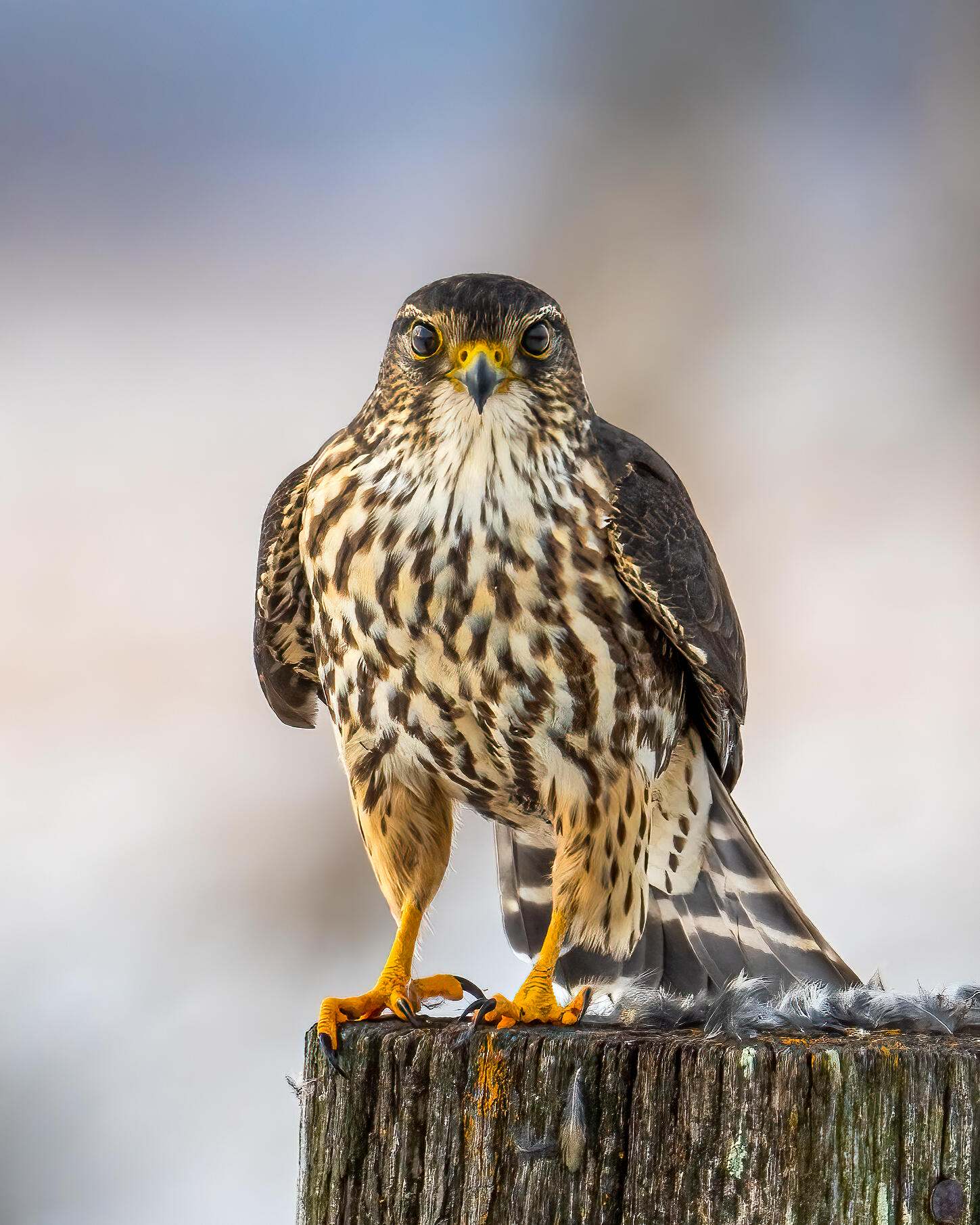
Merlins are small falcons, just slightly larger than American robins. Their small size, however, doesn't diminish their ferocity or hunting prowess, as they use sneak attacks to catch small birds. They will even pair up to hunt large flocks of waxwings, with one merlin startling the flock into flight from below while the other dives in from above.
Merlins are winter visitors to the Midwest, spending the season in open woodlands, grasslands and water bodies like lakes and rivers. Once the weather begins to warm, they migrate north to Canada for their breeding season.
Here are the calls to listen for when you're looking for merlins.
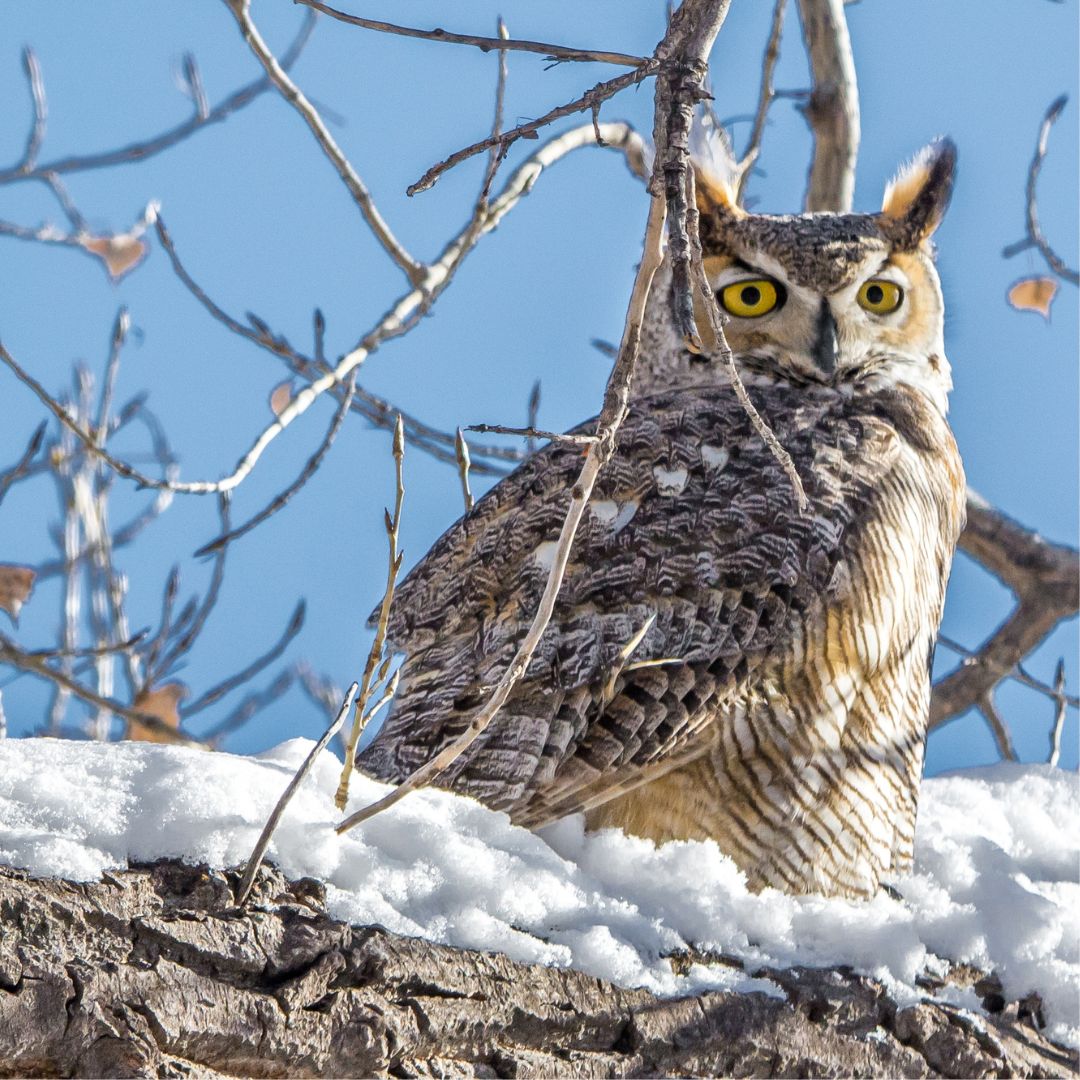
One of the most common owls in the Midwest, the great horned owl has extremely soft feathers that insulate it against the cold and help it fly silently while hunting. Great horned owls typically begin their breeding and nesting season in late January and February, so that they have a long time to raise their young to independence each year.
Learn what calls to listen for when you're looking for great horned owls.
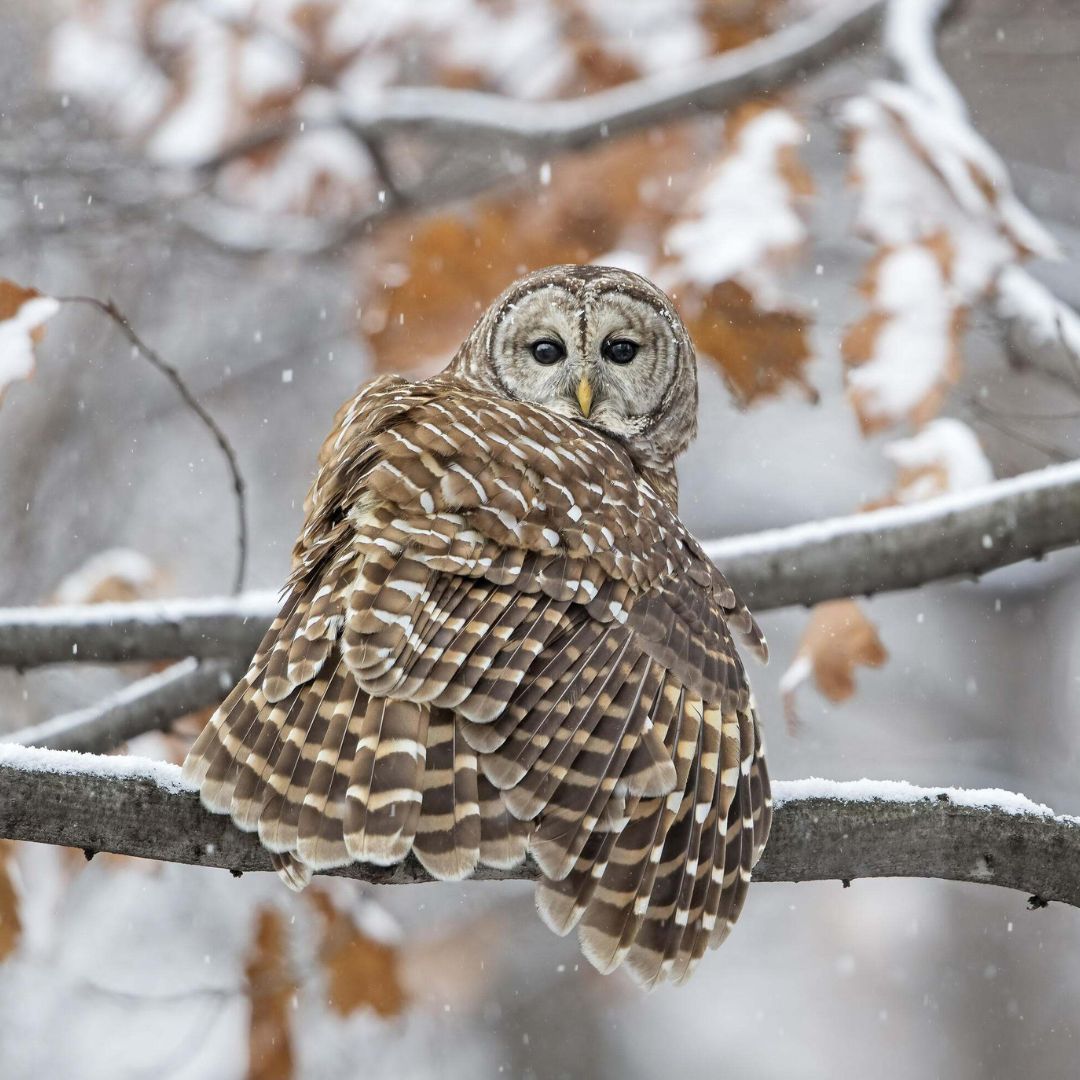
It's easy to listen for barred owls in winter. Their hooting “who cooks, who cooks, who cooks for you all” is distinctive and carries well in the still winter air among the bare trees.
Barred owls can be found throughout the region in mature forests and woodlands with large trees, typically near water. Year-round residents of the Midwest, barred owls are relative homebodies, staying within their territories most of the time. In fact, one study found that out of 158 barred owls, none moved more than six miles away from where they were originally caught and banded.
Unlike some raptors, barred owls are more generalist hunters, eating just about anything they can catch, including small mammals, reptiles, amphibians and birds. They've even been observed dropping or wading into shallow water to catch fish or crayfish.
Here are the calls to listen for when you're looking for barred owls.
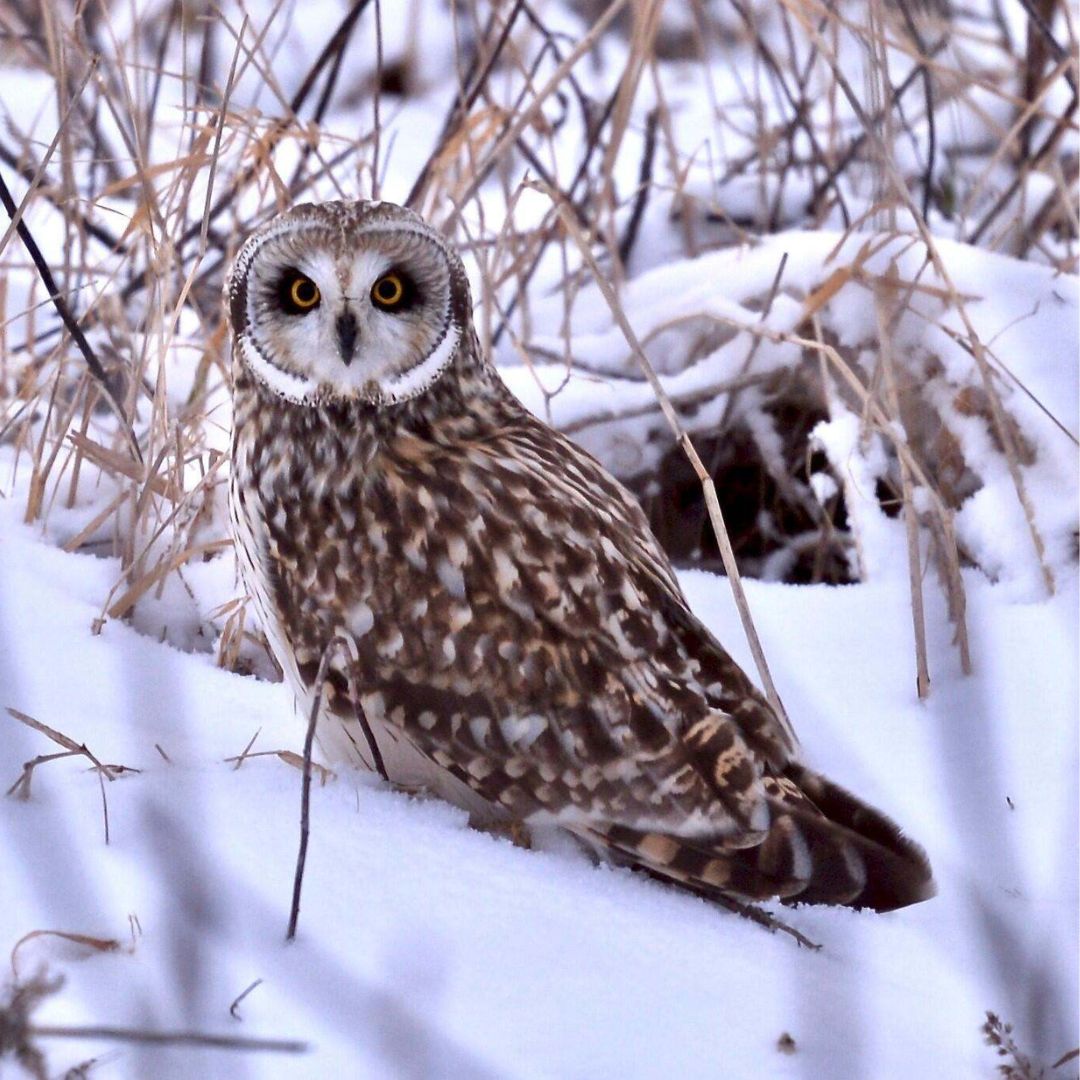
Short-eared owls are one of the most widely distributed owls in the world, found from North America to the easternmost parts of Asia.
These owls are winter visitors to the Midwest, coming to our region from Canada in the colder months. To spot them here, your best bet is to visit open grasslands, fields or any other large open area with low vegetation at dawn or dusk. You might see them flying low or circling as they hunt, but also look at the ground—these owls often sit directly on the ground.
Short-eared owls mostly hunt small mammals such as mice, voles, lemmings and rabbits. They will also hunt songbirds and shorebirds.
In spring, they'll head back to the northernmost parts of the Midwest and up into Canada to mate and raise their offspring.
Here are the calls to listen for if you're looking for short-eared owls.
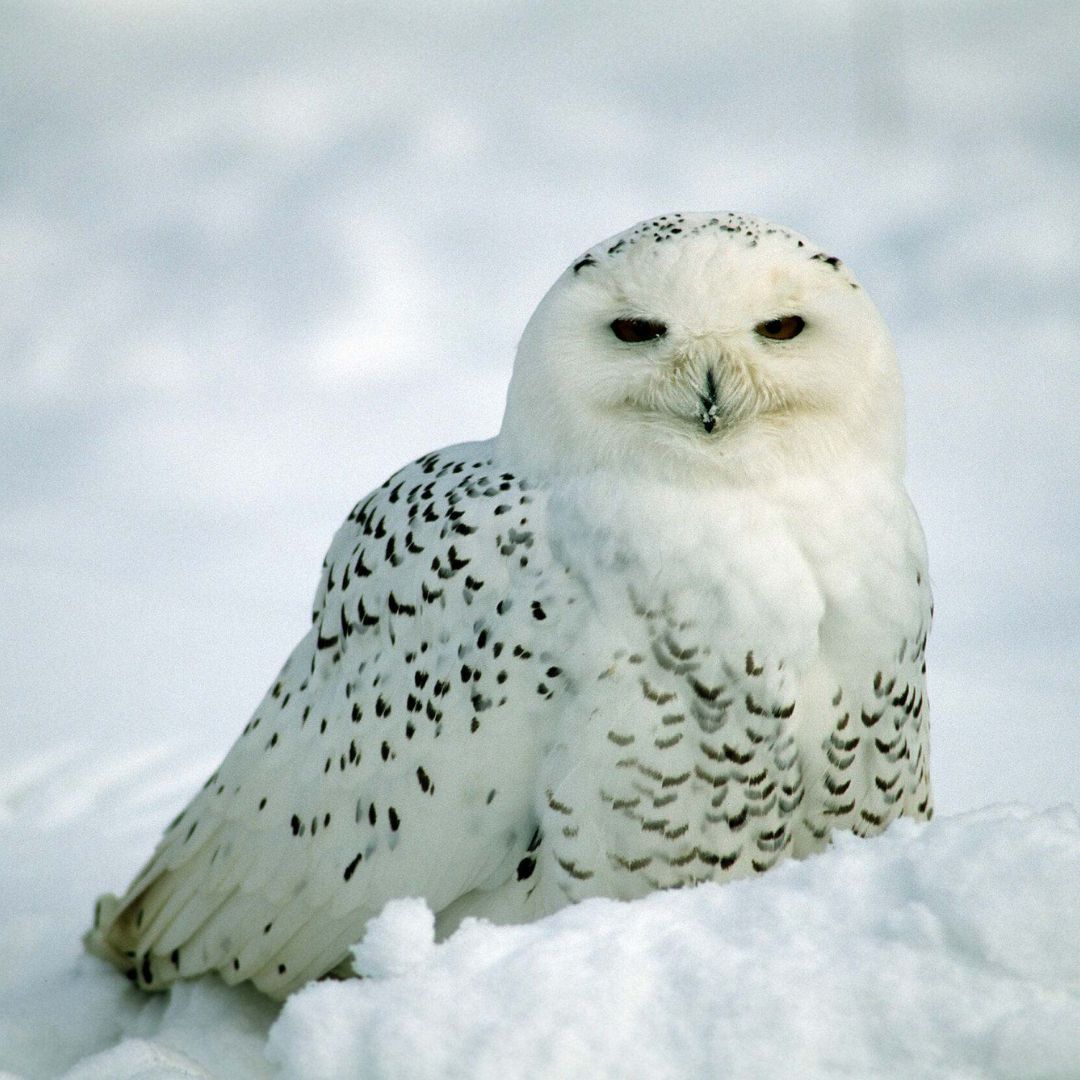
An irruption year occurs when there is an overabundance of food for birds in their northern breeding regions, resulting in a surge in bird populations. When winter arrives, many of these birds must migrate farther south to find sufficient food and habitat to survive. These irruption years usually occur every four to five years but are often unpredictable. But when they happen, the Midwest gets to welcome rare bird visitors like snowy owls, evening grosbeaks and more.
Whether you buy or make your own feeder, providing a place for birds to find easy food is one of the best ways to help birds during the winter. And you don't necessarily need a backyard to do this—small window feeders are great options for those in apartments!
Birds such as cardinals, sparrows and finches are fond of seeds. Black-oil sunflower seeds, nyjer or thistle seeds and peanuts are excellent options for feeding a diverse range of birds.
Suet is also a great food to put out for birds and will often attract several different species of woodpeckers.
Be sure to clean feeders every one to two weeks. Scrub off any visible debris, then soak the feeders in a solution of nine parts water and one part bleach. Let them hang and dry out completely before refilling them. Also be sure to clean up any seed hulls or other debris you find under the feeder.
During the cold winter months, it can be challenging for birds to find water sources that aren't frozen over. Place a shallow pan, no more than two inches deep, and fill it with water. Toss in a few small pebbles or rocks so that the birds can gauge the depth. Set the pan out in a sunny area to prevent (or slow) it from freezing.
To keep your water source clean, rinse and refill it daily. Once a week, scrub it with a mild soap or a solution of nine parts water and one part white vinegar. Rinse it thoroughly before refilling it.
This is one of our favorite tips because it's basically: let yourself be a lazy gardener. A messy yard is one of the easiest ways to help birds in winter. Leaving the leaves helps enrich the soil and gives birds places to find insects and other critters to snack on.
Leaving dead plants–especially native ones—up throughout the winter gives the birds seeds to eat and places to find shelter for sleeping and protection against cold temps and precipitation.
In a corner of your yard, away from your house, start with a foundation of larger logs. Then layer branches, leaves and other yard trimmings over the top. This will provide shelter for birds like American tree sparrows and black-capped chickadees and give them a place to hunt for insects and other food.
If you want to begin birdwatching, you don't need any special equipment—just get outside to look and listen for the birds around you! But, if you want to really dive into birdwatching, we have a couple of tips below for you. Read through them, then safely bundle up, go visit a nearby TNC preserve and find some winter birds!

Having a pair of binoculars to help you see birds up close is important as you’re learning how to identify bird species. The good news is that any kind of binoculars will work—as long as they make faraway things look closer!

Field guides and bird ID apps help you identify birds and give you basic information on them. Plus, some mobile apps, like Merlin Bird ID from Cornell Lab of Ornithology, give you the opportunity to identify birds by sounds! Check Out Merlin Bird ID

Writing down the birds you’re seeing and hearing each day can help you learn to identify birds faster and help you get a sense of when to expect which species.
Click through the stories below to explore more about birds in the Midwest and how TNC is helping them to thrive.


