interstitialRedirectModalTitle

interstitialRedirectModalMessage

Places We Protect

Spring Green Preserve

Wisconsin

A dirt trail leads through open prairie toward a steep green bluff in the distance.
Hiking Trail The trail at the preserve will take you through the prairie and to the top of the bluff. © Emily Mills/TNC

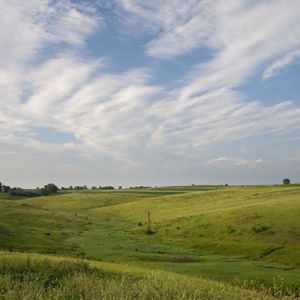
Spring Green Prairie is known as the Wisconsin Desert and is a land of cacti and lizards.

Overview

Description

Spring Green Preserve harbors some of Wisconsin’s rarest plant communities, including sand prairie, dry bluff prairie, and black oak barrens. Due to changes in land use, all these communities, which once covered thousands of acres across the state, have almost completely disappeared.

Known as the “Wisconsin Desert,” the preserve is a place where forest meets bluff, and bluff levels off into plains and dunes.

Visit Spring Green Preserve and get a taste of the American West—a land of cacti and lizards, sand dunes and dry grasses—without going far from home.

Access

OPEN TO THE PUBLIC

Hours

Open year-round, dawn to dusk

Highlights

Prickly pear cactus, bird-watching, hiking trail

Size

1,362 acres

Explore our work in Wisconsin

Photos from Spring Green Prairie

From beetles and cacti to butterflies and sparrows, this preserve is home to a diverse array of species for visitors to enjoy.

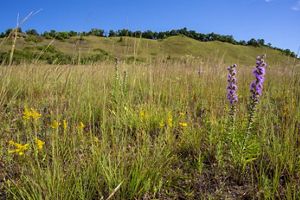
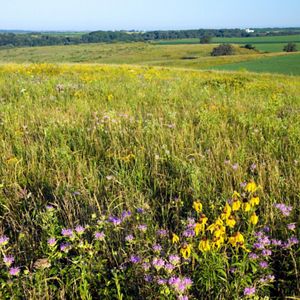
Purple and yellow wildflowers grow in the foreground of a green field under a bright blue sky.
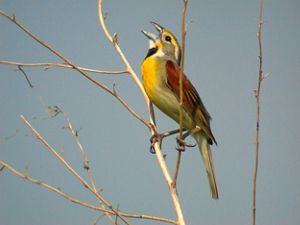
A small bird perches with its legs across two bare branches, its beak open to sing. The bird has brown wings with yellow and black markings across its face and chest.
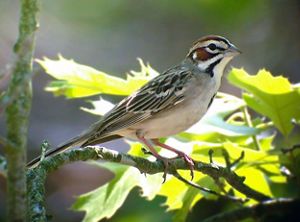
A lark sparrow bird standing on a branch.
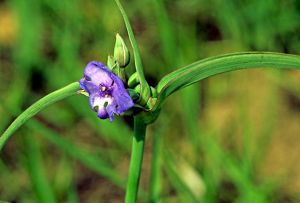
A close-up of a purple spiderwort plant.
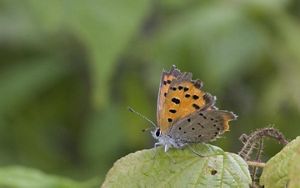
An American Copper Butterfly sits on a leaf.
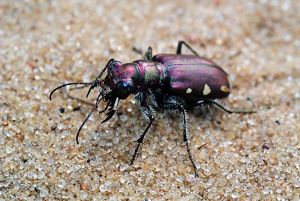
Close-up of a small, shiny purple beetle with hairy legs standing on sandy soil.
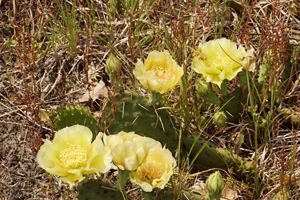
A cluster of small, rounded cactus leaves are light green against brown and red grasses. Several yellow flowers are blooming.
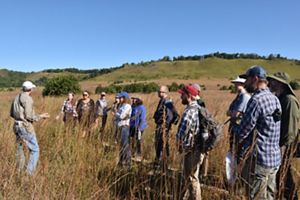
A group of people wearing outdoorsy clothing stand listening to a man who stands facing a tall bluff and grassy prairie.
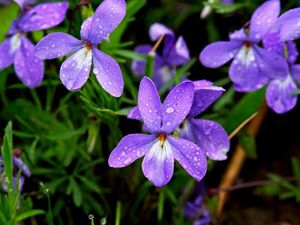
A close-up of purple bird’s foot violet flowers.
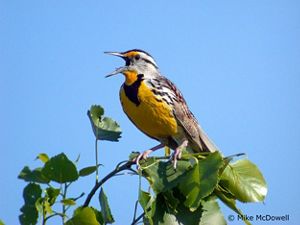
A small bird opens its beak to sing out into a blue sky. The bird is brown and white freckled, with bright yellow markings on its belly and face.

Things to consider when visiting

  • In the spring months, you’re likely to find early wildflowers. You may also see many species of grassland birds that arrive in spring and stay through summer, including Eastern and Western meadowlarks; Henslow’s, vesper, savannah, grasshopper and lark sparrows; and dickcissels. Habitat fragmentation and loss on both their breeding and wintering grounds is causing the decline of many species of grassland birds.

    During the summer growing season, Spring Green is home to many beautiful and interesting plants that thrive in this sandy prairie. Some of these include compass plant, dwarf dandelion, leadplant, puccoon, blazingstar and Venus looking glass. Though uncommon in Wisconsin, prickly pear cactus is abundant here. It blooms in late June, producing many large yellow flowers.

    During the warm months you can also see 16 species of tiger beetles. The small creatures are voracious hunters and fast runners. Ten species of wolf spiders have also been found at the preserve, although they are harder to see because they hunt at night, either by waiting near their burrows until unsuspecting insects walk past or by venturing out to seek prey. Eastern pocket gophers, which tend to be solitary creatures, dig and form tunnels about one foot below the surface of the soil at the preserve. Their digging enriches the soil by mixing plant material and oxygen.

    As fall approaches, the summer colors fade to red, orange and gold. Migratory birds such as warblers are on the move, and you’re likely to spot raptors such as red-tailed hawks.

    When winter arrives, snow and ice blanket the area, making it a welcome respite for visitors seeking the peace and quiet of the season. But winter is still a busy time in nature; watch for great-horned owls, bald eagles and potentially even snowy owls.

    Many of our preserves allow deer hunting from October through the first week of January, so wearing blaze orange is suggested when hiking in these areas during hunting season.


  • Spring Green Prairie is a wonderful place to hike, watch for birds and wildlife, take photos and enjoy the sights and sounds of nature.

    The Spring Green area is also a great place for bicycling. One of our favorite bike routes is the Spring Green Cactus Cruise, which goes right by our Spring Green Preserve. Grab your bike and your binoculars for a day of biking and bird-watching in this spectacular part of Wisconsin.

    The preserve also offers hunting opportunities; you can learn more about hunting on our Wisconsin preserves here.

    Trails

    There is a walking trail at the eastern portion of the preserve, which you can access off Jones Road. The sandy trail goes through the prairie paralleling the bluff and eventually climbs up the hill to the top of the bluff, where there is a beautiful view back over the prairie and the surrounding landscape. The first part of the trail is a flat, easy walk. Once the trail starts to climb upward, it is fairly steep and a bit rocky in some spots. Hiking sticks would be helpful on this part.

    • Hours: Sunrise to sunset

    • Restrooms: There are no restrooms available.

    • Visitor center: There is no visitor center.

    • Picnic area: There is no designated picnic area.

    • Wildlife viewing areas: While you can view wildlife throughout the trail, there are no designated overlooks, platforms or wildlife viewing areas.

    • EV Charging: EV charging is not currently available.

    • Cell phone and wifi service: Most TNC preserves are located in remote areas, meaning cell phone and wifi service may not always be available.

    • Wear comfortable footwear suitable for natural trails, but please do not wear heavy, cleated boots that can damage them.

    • To protect yourself from ticks, poison ivy or poison sumac, wear long pants and tuck them into your socks.

    • No matter the season, each person in your party should bring a full water bottle. Dehydration is a serious risk at any time of the year.

    • To get the most from your visit, you may want to bring some or all of the following items:
      • Snacks
      • Camera

      • Insect repellent

      • Rain gear

      • Sunscreen

      • Binoculars

      • Compass

      • Field guides (wildflowers, birds, butterflies & other natural features)

    • Our vision is of a world where people and nature thrive together. The Nature Conservancy encourages people of all ages, experiences and abilities to visit our preserves and has a zero-tolerance policy for discrimination of any kind.
    • Service animals specifically trained to aid a person with a disability are welcome.
    • We encourage you to hike open trails and enjoy bird and wildlife watching and other permitted activities. Please do not trespass (or park) on private property adjacent to TNC preserves. Property lines are clearly marked with yellow signs featuring TNC’s logo. To protect the plants and wildlife that call the preserve home, TNC prohibits the following:
      • Biking and mountain biking

      • Camping, campfires and cooking

      • Caving

      • Fishing (except by permit on designated preserves)

      • Geocaching (except by permit on designated preserves)

      • Horseback riding

      • Hang gliding or paragliding

      • Ice skating

      • Hunting (except by permit on designated preserves)

      • Picking flowers, berries, nuts or mushrooms

      • Removing any part of the natural landscape (shells, rocks, etc.)

      • Rappelling

      • Rock climbing

      • Snowmobiling

      • Swimming

      • Firewood collecting

      • Littering (please remove all trash)

    Drones

    Drones—aka personal aircraft, unmanned aircraft systems (UAS) and unmanned aerial vehicles (UAV)—Self-propelled or other aircraft are prohibited from taking off, landing or being operated on any TNC preserve except for official TNC purposes, approved research or in an emergency landing situation. We prohibit the private use of drones on our preserves for the following reasons:

    • Privacy and enjoyment of other preserve visitors—In order to avoid capturing images of people who are not related to TNC, and from whom a necessary photo release has not been obtained.
    • Wildlife disturbance—To make sure drones will not disturb resident wildlife, especially areas with many birds or ground-based nests.
    • Preserve management—Unauthorized drones operating in areas where active land management is taking place, such as prescribed burning, could lead to potentially dangerous interactions.
    • Respecting neighboring property—Preserve boundaries are not always apparent from the ground. We wish to be good neighbors and minimize the risk of drones accidentally crossing over from our preserves to non-TNC property.
  • If you are experiencing an emergency, please call 911.

Our Work

This preserve began as part of a 480-acre joint management agreement between The Nature Conservancy, the Head Foundation, the Wisconsin Natural Areas Preservation Council, and local landowners. TNC acquired its first parcel of land at Spring Green Preserve in 1971.

Since those early days, we have added more than 800 additional acres to the preserve, and the preserve now encompasses land on both sides of Hwy 23.

Staff and volunteers manage the land to keep the diverse prairie and oak barren habitats healthy. Two primary types of land management activities occur here:

  • Removal of red cedars that invade the prairies and shade out native plant species.
  • Use of controlled fires to suppress competing trees and shrubs, and to stimulate the growth of native grasses and wildflowers.

At Spring Green Prairie, we are managing for open woodlands, and dry prairies. Fire is an integral process within these natural communities and we use controlled burns to promote the health of the ecosystems.

The following groups have worked together to understand and protect the preserve’s rare and interdependent communities of plants and animals: TNC staff and volunteers, local landowners, researchers, Wisconsin Department of Natural Resources Natural Areas Program and the Wisconsin Conservation Corps.

Nearby Preserves

Need more nature? Visit one of The Nature Conservancy’s other nearby preserves.

Find More Places We Protect

The Nature Conservancy owns nearly 1,500 preserves covering more than 2.5 million acres across all 50 states. These lands protect wildlife and natural systems, serve as living laboratories for innovative science and connect people to the natural world.

See the Complete Map

We need your help protecting the natural treasures of Wisconsin.