
interstitialRedirectModalTitle

interstitialRedirectModalMessage

Places We Protect

Rodman’s Hollow Nature Preserve

Rhode Island

Wide view of a lush, rolling coastal shrubland atop high sandy bluffs with the ocean beyond.
Rodman's Hollow The birthplace of conservation on Block Island, Rodman’s Hollow has a fairy-tale quality that keeps visitors coming back. © Tim Mooney/TNC

No visit to Block Island is complete without a stop at Rodman's Hollow.

Overview

Description

Rodman's Hollow is considered the birthplace of conservation on Block Island and home to one of the most spectacular landscapes in New England. From the bottom of the hollow to the top of the Black Rock bluffs, it's a nature lover's delight.

Rodman's Hollow is located on Cooneymus Road, about three miles southwest of Old Harbor. (See below for details.) Follow the mile-long Black Rock Road for sweeping views of the Block Island coastline. Scenic side loops offer even more chances for exploration and keep visitors coming back season after season. 

Dogs must be leashed at all times. Bikes are not allowed on the Rodman's Hollow trails.

Ticks are very common on Block Island. Tuck long pants into socks and check for ticks at the end of every hike.

Rodman's Hollow is owned and managed by the Block Island Conservancy, the Department of Environmental Management, the Town of New Shoreham and The Nature Conservancy. 

Deer hunting is allowed (by permit only) on the state-owned portion of the preserve. Hikers are required to wear fluorescent orange from late January through February.

Access

OPEN TO THE PUBLIC

The birthplace of conservation on Block Island.

Hours

Sunrise to sunset

Highlights

Hiking, birding, panoramic ocean views

Size

230 acres

Explore our work in Rhode Island

Things to consider when visiting

  • The parking area is located about 3 miles from Old Harbor, on the south side of Cooneymus Road. Look for the trailhead approximately 500 feet from the Rodman's Hollow overlook.

  • The Rodman's Hollow Nature Preserve has just over 3.5 miles of walking trails. Ticks are very common on Block Island; please take precautions, such as tucking your pants into your socks.

    Black Rock Road Trail (0.9 miles one way): Starting from the trailhead, a sandy path winds through open fields and lush green shrublands. To reach the bluffs and their panoramic ocean views, proceed straight down the trail, walking toward the sound of the crashing surf.

    Plover Hill Loop: To return to the parking lot by a different route, turn right at the end of the Black Rock Road Trail and follow the grassy path along the bluff. This trail climbs toward Plover Hill, the preserve's highest point, with beautiful views of the fields and bluffs.

    Ridge and Hollow Loops: To explore the hollow instead, start from the trailhead and turn left at the stone marker honoring the Greenberg and Nevas families. A series of unmarked, interlocking trail loops wander through the bottom of the hollow and back up to the ridge tops, with views of the rolling topography.

    Another option is to walk the Black Rock Road Trail to the end, turn left and return via the ridge and hollow hollow trails.

    See the Block Island Trails Map to extend your hike along the Greenway, via Turnip Farm or the Fresh Pond Preserve. Printed, full-color trail maps showing all 28 miles of walking trails are available for $3.00 at TNC's office on High Street, at a drop box near the shed. Maps are also available at the Tourist Information Building in Old Harbor.

  • Plants: Rodman's Hollow is famous for its impressive stand of shadbush, which covers the landscape with white flowers in May.

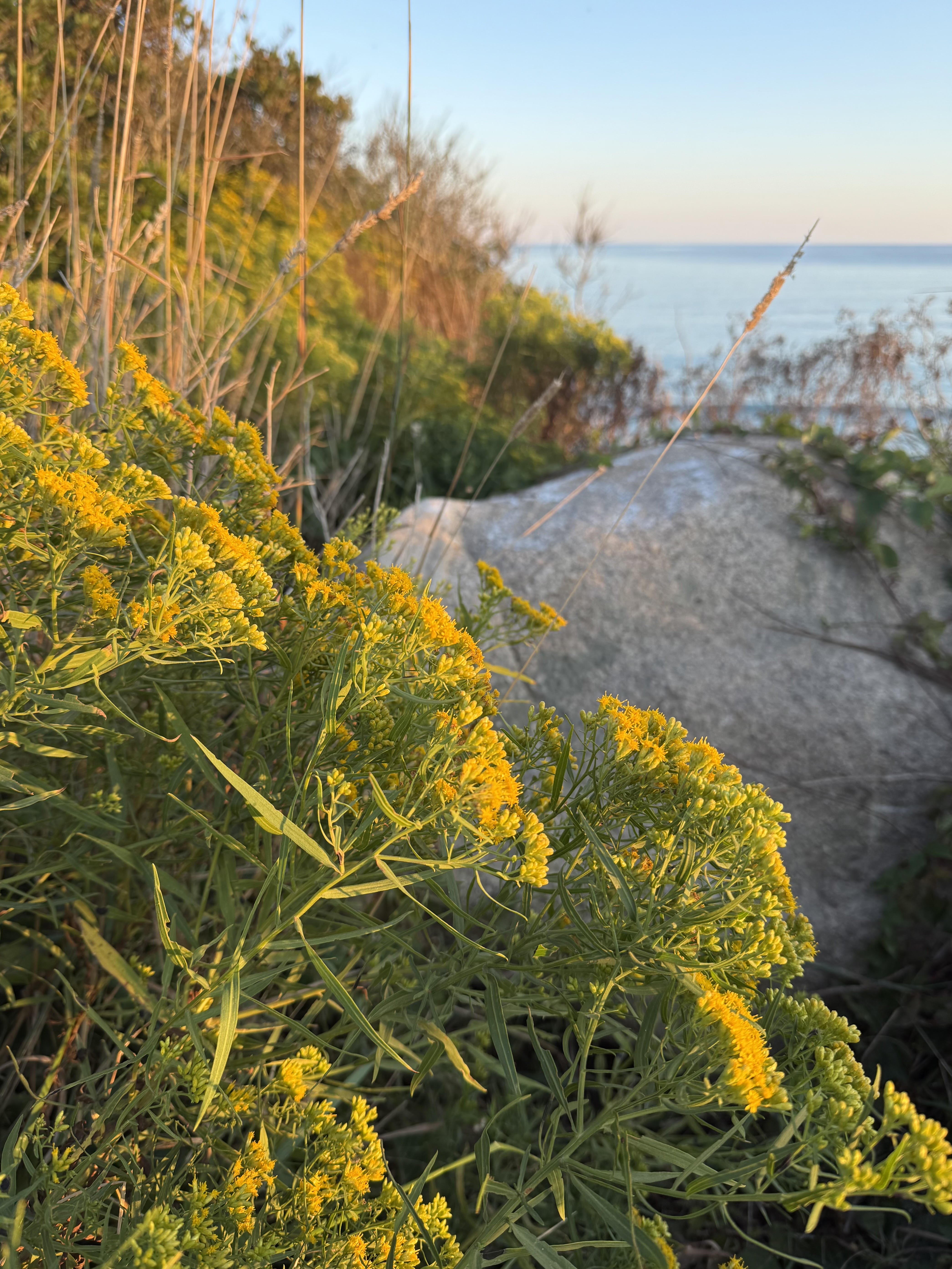
    The fields are a mix of goldenrod, sumac, blackberry and grasses, including switchgrass, little blue stem and broom sedge.

    Along the bluff, the shrub layer is largely comprised of northern bayberry and poison ivy., with pockets of arrowwood and occasional eastern red cedar along the Black Rock Road trail.

    Birds: Rodman's Hollow provides excellent habitat for northern harriers, a large hawk that nests nowhere else in Rhode Island. Other common birds include gray catbirds, barn swallows, gulls and ring-necked pheasants. Watch for merlins and peregrine falcons streaking across the sky in September and October.

  • We hope you enjoy visiting TNC’s preserves in any season.

    Please be aware that ticks are very common on Block Island and can transmit several diseases. Wear long pants tucked into socks and consider treating your clothing with permethrin or other repellants.

    We ask that you please observe the following guidelines:

    • Stay on established trails, respect all "private" signs  and avoid the fragile edge of the bluffs for your safety.
    • Dogs are permitted but must be leashed at all times.
    • Bikes are not permitted.
    • Respect preserve hours (one hour before sunrise to one hour after sunset). Overnight camping is not allowed.
    • Do not ride horses or any motorized vehicle through the preserve or on the trails.
    • Do not remove plants or other living materials from a preserve, and do not disturb any stone walls or other historic features.
    • Remove any trash you create and, if possible, any garbage that you see left by someone else.
    • Be careful! Your safety is your responsibility.
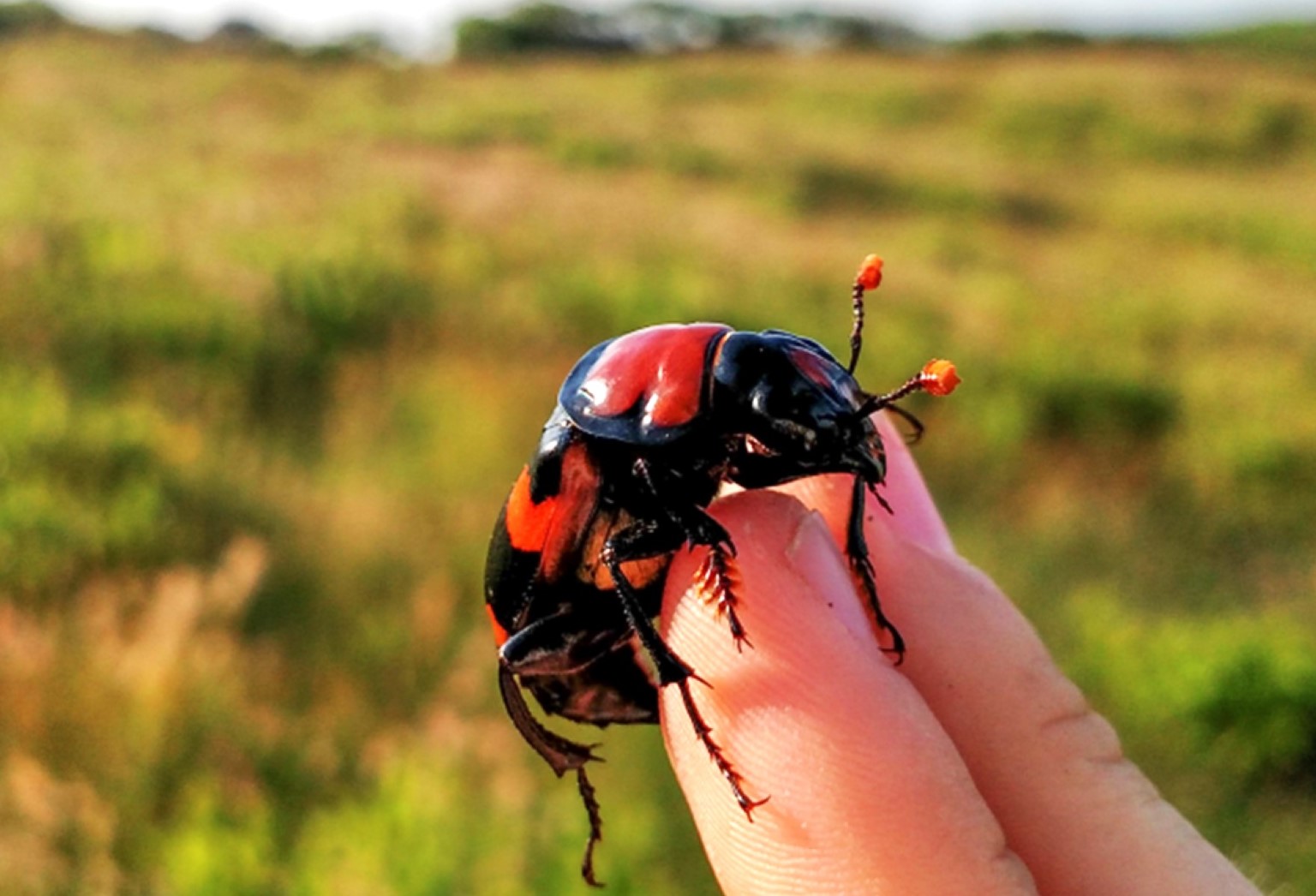
A large, shiny black-and-orange beetle held between two fingers against grassy backdrop.
American Burying Beetle Block Island has the only natural population of American burying beetles in the eastern U.S. © Clair Comings

American Burying Beetle

The American burying beetle is the largest carrion beetle in North America, and Block Island is home to their only natural population east of the Mississippi River. Protected by the Endangered Species Act since 1989, it’s known as “nature’s undertaker,” burying and laying eggs on other dead animals. Like honeybees, they show a high degree of parental oversight while raising their young. It was named Rhode Island’s state insect in 2015.

For nearly 35 years, TNC, DEM and the U.S. Fish and Wildlife Service have been monitoring American burying beetles at Rodman's Hollow while conserving and managing critical habitat. Recent surveys have found that the Block Island population is stable but still highly dependent on habitat management and direct human intervention (providing carcasses). Nevertheless, the Block Island population is one of the largest and healthiest in the world and is being used as a source population to recolonize other locations in partnership with the Roger Williams Park Zoo in Providence.

A cluster of goldenrod frame an exposed, light-colored boulder with a view of the ocean in the distance.
Timeless Beauty Narrow-leaved goldenrod frames a scene of stone and sea. © Tim Mooney/TNC

History

The Rodman’s Hollow Nature Preserve is part of the traditional homelands of the Manissean people and other Indigenous Tribes.

The large “hollow” in the landscape was formed thousands of years ago at the end of the last Ice Age as meltwater was released from a retreating glacier.

The area is named for John Rodman, a physician and Quaker minister, who lived on Block Island in the late 1600s.

In the early 1970s, Rodman’s Hollow was threatened by development, sparking a grassroots movement to save this special place, led by Captain John “Rob” Lewis. This successful campaign prompted the establishment of the Block Island Conservancy (BIC) and the formation of an enduring land protection partnership between BIC, DEM, TNC and the Block Island Land Trust.

The Block Island Greenway opened in 1989, connecting Rodman’s Hollow with Turnip Farm. The trail network has gradually expanded over time and now covers more than 28 miles of walking paths open to the public.

Nearby Preserves

Need more nature? Visit The Nature Conservancy's other preserves.

Find More Places We Protect

The Nature Conservancy owns nearly 1,500 preserves covering more than 2.5 million acres across all 50 states. These lands protect wildlife and natural systems, serve as living laboratories for innovative science and connect people to the natural world.

See the Complete Map

Support Our Work

Your contributions help us continue our conservation work in Rhode Island.