interstitialRedirectModalTitle

interstitialRedirectModalMessage

Places We Protect

Lulu Lake Preserve

Wisconsin

A silhouetted bird flies over a lake in front of a pale orange sky.
Lulu Lake Preserve Sandhill cranes make their homes along the wetlands surrounding Lulu Lake. © Fauna Creative

Lulu Lake Preserve in the southern Kettle Moraine is home to wetlands, oak openings and rare fish and mussels.

Overview

Description

Lulu Lake glitters amidst the rich marshes of the upper Mukwonago River watershed. When viewed through the lens of species richness and water quality, this 95-acre kettle lake (a lake created by the glaciers) and its watershed comprise one of Wisconsin’s highest quality natural areas.

The preserve’s high-quality stream, wetlands and oak openings provide habitat for rare fish and mussels and many native plants and animals.

Before European settlement, there were more than 5.5 million acres of oak openings in Wisconsin. Today only about 500 acres survive. Between 50 to 80 of these acres are found around Lulu Lake. The Nature Conservancy is using fire and manual removal of invasive plants to restore and maintain them.

Scientific researchers interested in several topics—oak openings; the hydrology of sedge meadows and fens; and rare species of fish, amphibians, reptiles, bees and butterflies—have used the preserve as an outdoor laboratory.

Access

OPEN TO THE PUBLIC

Hours

Open year-round, sunrise to sunset

Highlights

Glacial kettle lake, Crooked Creek, fens and bogs, wildflowers, birds

Size

632 acres

Explore our work in Wisconsin

Photos from Lulu Lake

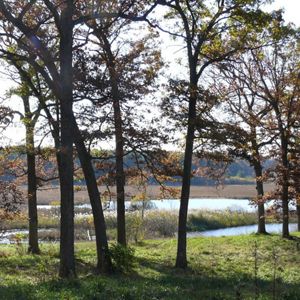
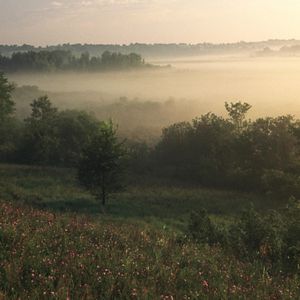
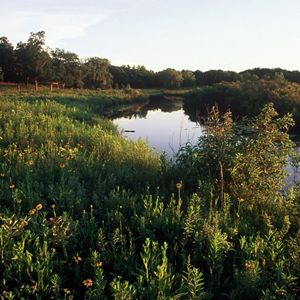
Thanks to habitats ranging from wetlands to prairie remnants, Lulu Lake has a wide diversity of plants, birds, and wildlife to see year-round.

A grassy prairie dotted with wildflowers growing in front of a still lake with gentle forested hills on the horizon, all under a blue sky dotted with white puffy clouds.
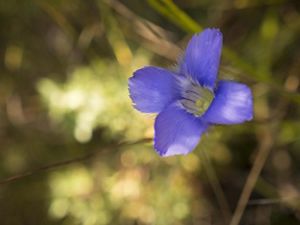
A lesser fringed gentian flowering in dappled sunlight.
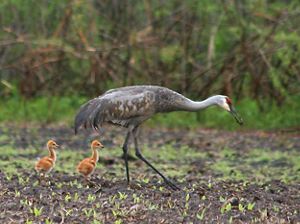
A close-up of a sandhill crane and two chicks walking along a wetland area.
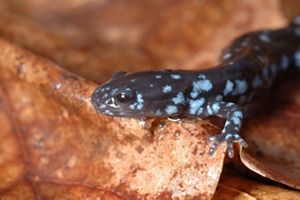
A blue-spotted salamander on a brown fallen leaf.
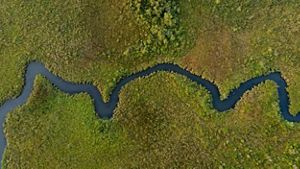
A bird's eye view of a blue winding river running through a green field.
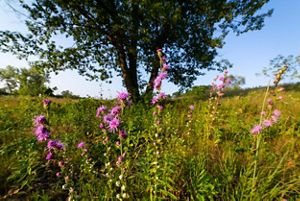
Purple wildflowers grow in a green field in front of a big tree under a blue sky.
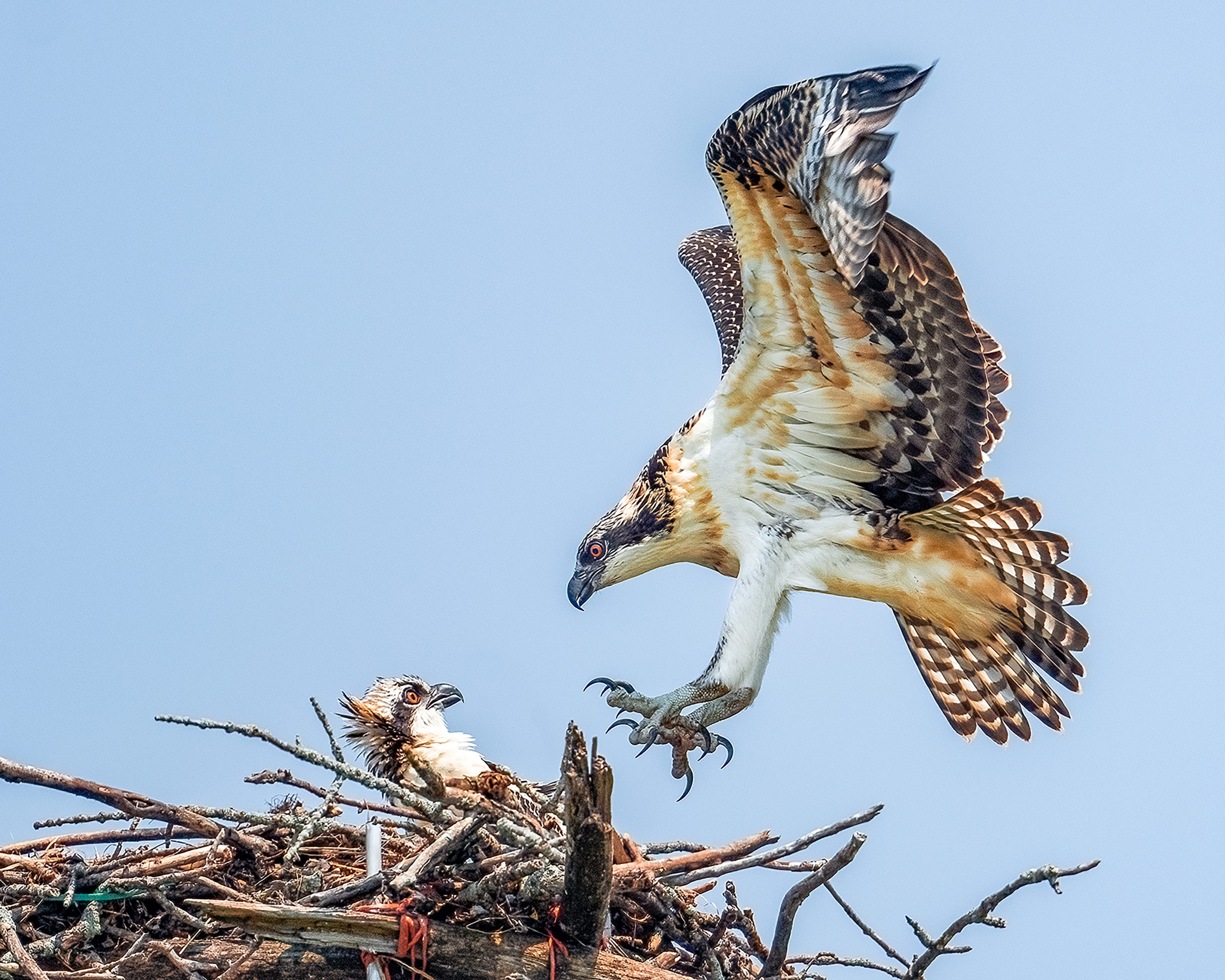
An osprey.
An ovenbird on the ground among the underbrush.
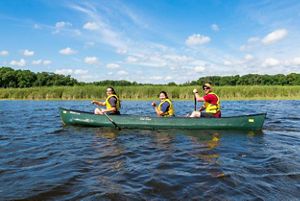
Three people in yellow life jackets kayaking in Lulu Lake Preserve.
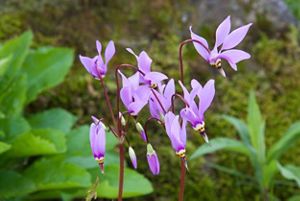
A group of light purple flowers, shaped like arrows.

Visit

  • Surrounding the lake and along the river are various types of wetlands including fens, bogs and sedge meadows. Plants found in the sedge meadows include blue flag iris, tussock sedge and Joe-Pye weed.

    Calcareous fens are rare plant communities bathed by calcium-rich groundwater. On the higher ground, you will find prairie remnants and oak openings.

    In the spring months, you’re likely to find early wildflowerssuch as spring beauty, bloodroot, trout lilies and large-flowered trillium.

    The northern kitten tail is this preserve's most endangered plant. In the spring, this plant produces foot-high flowering stems resembling—you guessed it—the tail of a young feline.

    Lulu Lake Preserve is a great place for birdwatching. A few of the species you can see are osprey, sandhill cranes, great-horned owls, common yellowthroats, ovenbirds and yellow warblers.

    In summer, shooting stars, blazing star, lesser fringed gentian, grass-of-Parnassus and other wildflowers are abundant. Wildlife such as red foxes, beavers, muskrats and even badgers frequent the preserve.

    Of the 150 fish species native to Wisconsin, 59 can be found in Lulu Lake and the Mukwonago River! The river is home to several rare fish species, including the longear sunfish. The clear, deep lake water provides habitat for glacial relict fish such as the blackchin shiner and the Iowa darter.

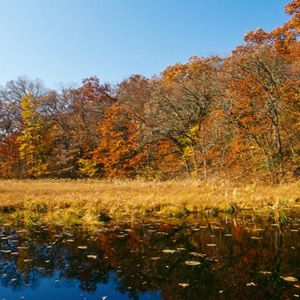
    As fall approaches, the summer colors fade to red, orange and gold as plants like Ohio goldenrod bloom. Migratory birds are on the move, and you’re likely to spot raptors such as broad-winged and red-tailed hawks.

    When winter arrives, snow and ice blanket the area, making it a welcome respite for visitors seeking the peace and quiet of the season. But winter is still a busy time in nature; watch for great-horned owls, bald eagles and potentially even snowy owls. Winter is a great time to snowshoe or cross-country ski on the ungroomed trails. 

    Many of our preserves allow deer hunting from October through the first week of January, so wearing blaze orange is suggested when hiking in these areas during hunting season.


  • Lulu Lake is a wonderful place to hike, watch for birds and other wildlife, snowshoe, cross-country ski, take photos and enjoy the sights and sounds of nature.

    Trails

    The Legacy and Shaddock Memorial trails provide two miles of hiking on mostly gravel with sections of grass and rolling hills.

    Fishing

    Fishing is allowed at most publicly accessible sites in Wisconsin.

    Hunting

    Deer hunting is permitted at Lulu Lake. Click here to learn more about hunting opportunities on Wisconsin preserves.

    Permitted Activities

    The following activities are permitted on TNC preserves in Wisconsin:

    • Birdwatching
    • Cross-country skiing
    • Hiking
    • Nature study
    • Photography
    • Snowshoeing
    • Videotaping for personal use (if for commercial use, you must obtain permission from the Wisconsin Chapter office in Madison-see below for contact information)
    • EarthCaching and geocaching are allowed on our preserves in Wisconsin. Caches should be placed at parking lots and entry ways or along trails. Objects placed for geocache sites should be no larger than the size of a coin, film canister or a tube of lip balm. See geocaching.com for additional guidelines and recommendations. Please contact our TNC office near you prior to placing a cache.
  • Hours
    Sunrise to sunset

    Parking
    Parking is provided at the TNC parking lot located at N9564 Nature Rd, Eagle, WI

    Restrooms
    There are no restrooms available.

    Visitor center
    There is no visitor center.

    Picnic area
    There is no designated picnic area.

    Wildlife viewing areas
    While you can view wildlife throughout the trail, there are no designated overlooks, platforms or wildlife viewing areas.

    EV charging
    EV charging is not currently available.

    Cell phone and wifi service
    Most TNC preserves are located in remote areas, meaning cell phone and wifi service may not always be available.

    • Wear comfortable footwear suitable for natural trails, but please do not wear heavy, cleated boots that can damage the natural habitats. 
    • To protect yourself from ticks, poison ivy or poison sumac, wear long pants and tuck them into your socks.
    • No matter the season, each person in your party should bring a full water bottle. Dehydration is a serious risk year-round.

    To get the most from your visit, you may want to bring some or all of the following items:

    • Snacks
    • Camera
    • Insect repellent
    • Rain gear
    • Sunscreen
    • Binoculars
    • Compass
    • Field guides (wildflowers, birds, butterflies & other natural features)
    • First aid kit
  • Our vision is of a world where people and nature thrive together. The Nature Conservancy encourages people of all ages, experiences and abilities to visit our preserves and has a zero-tolerance policy for discrimination of any kind.

    We encourage you to hike open trails and enjoy bird and wildlife watching and other permitted activities.

    Please do not trespass (or park) on private property adjacent to TNC preserves. Property lines are clearly marked with yellow signs featuring TNC’s logo.

    Service animals
    Service animals specifically trained to aid a person with a disability are welcome.

    Dogs and other pets
    In general, we do not allow pets (even on a leash) on our preserves in Wisconsin, except for service dogs as noted above. There are some exceptions for dogs during hunting season; see the Wisconsin hunting program page. Information is also posted on the sign at each preserve entrance.

    OPDMD use
    The use of Other Power Driven Mobility Devices (OPDMD)s (utility vehicles, ATVs, Segways, golf carts, etc.) on this property is permitted under the following conditions:

    • Southern Unit: OPDMDs are permitted on the existing gravel road that starts at the preserve entrance on Nature Road and goes to the Mukwonago River lookout and to the lake. ADA visitors who would like access should call the local project office, 262-642-7276, during regular business hours to ask about the trail conditions and request the combination of the gate, which changes monthly.
    • Northern Unit: OPDMDs are permitted on the existing paved road that starts at the preserve entrance on Highway LO and goes to the turnaround inside the preserve. 
    • NOTE: OPDMDs are prohibited on other maintenance roads, fire breaks and foot trails.

    To protect the plants and wildlife that call the preserve home, TNC prohibits the following at Lulu Lake:

    • Biking and mountain biking
    • Camping, campfires and cooking
    • Caving
    • Horseback riding
    • Hang gliding or paragliding
    • Ice skating
    • Picking flowers, berries, nuts or mushrooms
    • Removing any part of the natural landscape (shells, rocks, etc.)
    • Rappelling
    • Rock climbing
    • Snowmobiling
    • Swimming
    • Firewood collecting
    • Littering (please remove all trash)

    Drones
    AKA personal aircraft, unmanned aircraft systems (UAS) and unmanned aerial vehicles (UAV)

    Self-propelled or other aircraft are prohibited from taking off, landing or being operated on any TNC preserve except for official TNC purposes, approved research or in an emergency landing situation. We prohibit the private use of drones on our preserves for the following reasons:

    • Privacy and enjoyment of other preserve visitors—In order to avoid capturing images of people who are not related to TNC, and from whom a necessary photo release has not been obtained.
    • Wildlife disturbance—To make sure drones will not disturb resident wildlife, especially areas with many birds or ground-based nests.
    • Preserve management—Unauthorized drones operating in areas where active land management is taking place, such as prescribed burning, could lead to potentially dangerous interactions.
    • Respecting neighboring property—Preserve boundaries are not always apparent from the ground. We wish to be good neighbors and minimize the risk of drones accidentally crossing over from our preserves to non-TNC property.
  • Our management of the preserve is supported in part by volunteers. Learn more about volunteer opportunities on our volunteer webpage.

  • If you are experiencing an emergency, please call 911.

    We hope that you will enjoy a safe, interesting visit.

    If you experience any vandalism or other problems, please contact our office by phone at (608) 251-8140 or email at wisconsin@tnc.org.

Our Work

Lulu Lake Preserve has a rich human history. The Mukwonago River Watershed is part of the ancestral homelands of several native peoples, including the Sauk and Meskwaki, Ho-Chunk, Kickapoo, Miami, Peoria and most recently the Potawatomi. A Potawatomi village was located on the Mukwonago, and after the Treaty of Chicago in 1833 the Potawatomi and other Native people were forcibly removed to make way for Euro-American settlement.

Euro Americans began settling the area surrounding Lulu Lake in the mid 1800s. The land was homesteaded, farmed and grazed. In the 1870s a railroad was built near the west shore of the lake, and the Knickerbocker Ice Company operated at Lulu Lake from about 1898 until 1921. The company’s warehouse was located approximately where the boathouse is today, and remains of the operation can still be seen in the lake and uplands.

The land was later owned by the Milwaukee Boys’ Club and used as an outdoor conservation camp called Camp Fred Loock. In 1980, the Boys’ Club sold the land to Baxter Travenol, a medical products company based in Illinois, and it was used as a corporate retreat.

The Nature Conservancy (TNC) first protected Lulu Lake through an easement with Baxter Travenol in 1985, acquiring the bulk of the land in 1995.

Today, it is one of four TNC preserves in the Mukwonago River watershed, where we are working with many different partners to protect globally threatened oak openings, healthy wetlands and one of the cleanest rivers in southeast Wisconsin.

Nearby Preserves and Protected Areas

Need more nature? Visit The Nature Conservancy’s other preserves or other local protected areas.