
interstitialRedirectModalTitle

interstitialRedirectModalMessage

Places We Protect

Kitty Todd Nature Preserve

Ohio

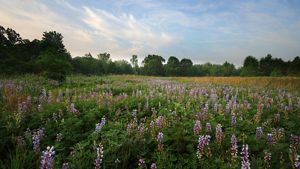
A field of purple lupine stretches to a border of trees in the background.
Kitty Todd Preserve Located in Northwest Ohio. © Randall Schieber

Our nearly 1,500-acre Kitty Todd Preserve is a centerpiece of the Oak Openings Region.

Overview

Description

The 1,300-square-mile Oak Openings Region is a complex of oak savanna and wet prairie that developed on sand and clay deposited by glacial Lake Warren, the ancient predecessor of present-day Lake Erie. The combination of porous sandy soils of the former beach ridges and an impervious clay layer beneath those soils creates an unforgiving environment that fluctuates from flooding in the spring to arid in midsummer.

The Nature Conservancy’s nearly 1,500-acre Kitty Todd Preserve is a centerpiece of the Oak Openings Region and a model of land management practices. TNC is a leader in the Green Ribbon Initiative, an important regional partnership of conservation groups working together to protect the region's natural beauty and biological diversity.

Visitors can enjoy exploring three areas of the Kitty Todd Nature Preserve, including the Oak Savanna and Cactus Loop trail, as well as the Salamander Flats Wetland trail and Sandhill Crane Wetlands viewing area.
Access

OPEN TO THE PUBLIC

Hours

Sunrise to sunset

Highlights

Spring boasts abundant populations of blooming wild blue lupine. Year-round activities include hiking, birding, wildlife-watching, nature photography and observing native plants. Other notable species include sandhill crane, red-headed woodpecker, lark sparrow, orange-fringed orchid and Michigan lily.

Size

1,464 acres

Explore our work in Ohio

Photos from Kitty Todd

The preserve’s nearly 1,500 acres are comprised of low-lying wetlands and windblown sand dunes populated by prairie, oak savanna, woodland and forest in a rural suburban area.

Lupine flowers in a grassy field under a blue sky.
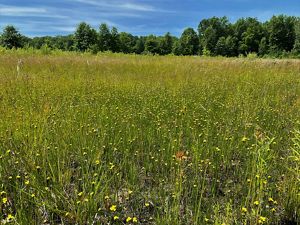
A field of twisted yellow eyed grass and a blue sky.
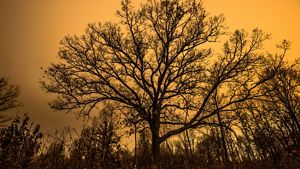
A tree silhouette against an orange sky at dusk.
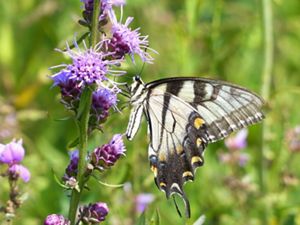
A close-up shot of a Swallowtail butterfly on a Blazing Star Liatris flower.
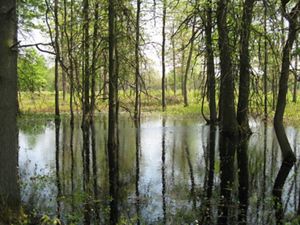
Wetlands habitat: trees sitting in shallow water.
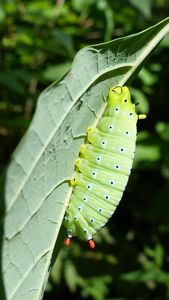
A Promethea caterpillar climbing a leaf.
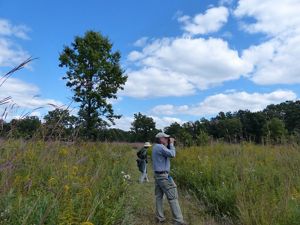
Hikers looking at wildflowers and wildlife in a grassy field under a blue sky.
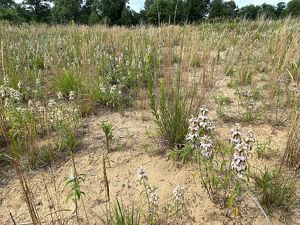
Dotted horsemint plants in a sandy field.
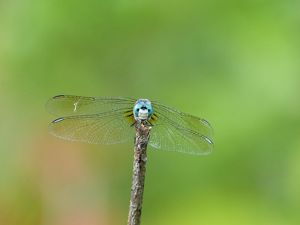
A blue dasher dragonfly perched on a blade of grass.
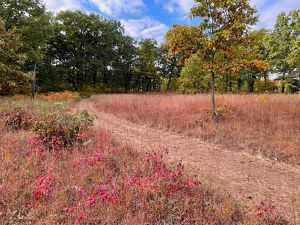
An open field and trees in fall.

Visit

  •  

    Kitty Todd Preserve is one of the best remaining examples of the Oak Openings region—a prairie/oak savanna dominated landscape found in Northwest Ohio and Southeast Michigan. The preserve is composed of ancient, vegetated sand dunes interspersed with low lying wetlands that support a mosaic of prairie, oak savanna, oak woodland and swamp forest habitats. Home to one of the best examples of globally rare black oak savanna, the preserve also has one of the highest concentrations of rare species of any nature preserve in Ohio. A few notable species include the lark sparrow, orange-fringed orchid and wild blue lupine. 

    In the late spring, dry sandy areas of the preserve support large patches of wild blue lupine—one of the signature species of the Oak Openings Region. You might also spot migratory birds such as blackpoll warbler, Cape May warbler, blackburnian warbler, green-winged teal and northern shoveler passing through on their way to summer breeding grounds further north. 

    During the summer growing season, impressive wildflowers such as blazing stars, prickly pear cactus, western sunflower, colic root and grass pink orchid are on display, and wildlife such as blue racer, eastern hognose snake, spotted turtle, eastern box turtle, chorus frog and green tree frog frequent the preserve. Birds you may encounter include bald eagle, northern harrier, wood duck, American woodcock, blue-winged warbler, blue grosbeak, grasshopper sparrow, lark sparrow and Baltimore oriole.

    During the fall, the leaves of various oaks, sassafras, aspen, blueberries and huckleberries are a blaze of red, orange and gold, while the blooms of occasional gentians provide a splash of deep blue.

    When winter arrives, periodic snowfalls provide a welcome respite for visitors seeking the peace and quiet of the season. But winter is still a busy time in nature; watch for wild turkey and coyote.


  • Kitty Todd Preserve is a wonderful place to hike, watch for birds and wildlife, take photos and enjoy the sights and sounds of nature. 

    Trails 
    Oak Savanna and Cactus loop trail: This trail passes through one of the finest examples in Ohio of globally rare black oak savanna and Midwest sand barrens. Hikers will cross over 15,000 year-old sand dunes and observe plants such as prickly pear cactus, wild blue lupine and grass pink and orange fringed orchids, while potentially catching a glimpse of unusual savanna/prairie birds such as the red headed woodpecker and the lark sparrow. 

    • Length of the trail: .85 mile round trip

    • Type of trail surface: Mowed grass on firm sandy soil with occasional low areas of standing water or saturated soil in the spring.

    • Typical and minimum trail tread width: Three feet

    • Typical and maximum trail grade:  Less than 5% (est.)

    • Typical and maximum trail cross slope:  Less than 2% (est.)

    Salamander Flats Wetland trail: Hikers can observe globally rare mesic sand prairie, which was previously an agricultural field, restored by The Nature Conservancy. In the spring, thousands of the rare twisted yellow-eyed grass bloom along the trail bed in shallow vernal pools. These pools also provide breeding habitat for spring peppers, chorus frogs and salamanders. Leaving the prairie, the trail travels through a section of swamp flatwoods, then loops back through the prairie to the starting point. 

    • Length of the trail: .75 mile round trip

    • Type of trail surface: Mowed grass on firm sandy soil with occasional low areas of standing water or saturated soil in the spring/winter.

    • Typical and minimum trail tread width: three feet

    • Typical and maximum trail grade:  Less than 5% (est.)

    • Typical and maximum trail cross slope:  Less than 2% (est.)

    Sandhill Crane Wetland viewing area: A 300-foot-long trail leads to a viewing area that provides an extensive overview of a 280-acre wet and dry prairie landscape. Named after the four-foot-tall sandhill cranes that have recolonized the area, this site is very attractive to a wide variety of bird species.

    • Length of the trail: 600 feet round trip

    • Type of trail surface: packed gravel

    • Typical and minimum trail tread width: three feet

    • Typical and maximum trail grade:  Less than 2% (est.)

      Typical and maximum trail cross slope:  Less than 2% (est.) 


    Guided hikes can be arranged for visiting groups. Contact the preserve for details at +1 567-703-4257.  
     
    Kitty Todd is a stop along the new Lake Erie Birding Trail. See what other sites are on the route.


  • Hours: Sunrise to sunset

    Parking: There is a parking lot at 10420 Old State Line Road for the Oak Savanna and Cactus loop trail. There is also parking at the Salamander Flats and Sandhill Crane trailheads.  

    Restrooms: There are no restrooms available.

    Visitor center: There is no visitor center.

    Picnic area: There is a pavilion at the Kitty Todd office at 10420 Old State Line Road.

    Wildlife viewing areas: There is a short, 300-foot path to Sandhill Crane Wetland viewing area that provides an expansive view of this 280-acre addition to the Kitty Todd Nature Preserve. This site is part of the historic Irwin Prairie, a large wet-prairie complex that once covered 5,000 acres. Trail maps can be found in the Resources section of the Overview tab. 

    EV Charging: EV charging is not currently available.


    • Wear comfortable footwear suitable for natural trails.

    • To protect yourself from ticks, poison ivy or poison sumac, wear long pants and tuck them into your socks.  

    • No matter the season, each person in your party should bring a full water bottle. Dehydration is a serious risk at any time of the year.

    • To get the most from your visit, you may want to bring some or all of the following items: 

    Snacks

    Camera 

    Insect repellent

    Rain gear

    Sunscreen

    Binoculars 

    Compass

    Field guides (wildflowers, birds, butterflies & other natural features) 

    First aid kit

  • Our vision is of a world where people and nature thrive together. The Nature Conservancy encourages people of all ages, experiences and abilities to visit our preserves and has a zero-tolerance policy for discrimination of any kind.  

    Service animals specifically trained to aid a person with a disability are welcome. 

    We encourage you to hike open trails and enjoy bird and wildlife watching and other permitted activities. Please do not trespass (or park) on private property adjacent to Conservancy preserves. To protect the plants and wildlife that call the preserve home, TNC prohibits the following:

    • Biking and mountain biking

    • Camping, campfires and cooking

    • Caving

    • Geocaching (except by permit on designated preserves)

    • Horseback riding

    • Hang gliding or paragliding

    • Ice skating

    • Hunting (except by permit on designated preserves)

    • Picking flowers, berries, nuts or mushrooms

    • Removing any part of the natural landscape (shells, rocks, etc.)

    • Rappelling

    • Rock climbing

    • Snowmobiling

    • Swimming

    • Firewood collecting

    • Littering (please remove all trash)

    • Drones – aka Personal aircraft, Unmanned Aircraft Systems (UAS) and Unmanned Aerial Vehicles (UAV) — Self-propelled or other aircraft are prohibited from taking off, landing or being operated on any TNC preserve except for official TNC purposes, approved research, or in an emergency landing situation. We prohibit the private use of drones on our preserves for the following reasons:

    Privacy and enjoyment of other preserve visitors – In order to avoid capturing images of people who are not related to TNC, and from whom a necessary photo release has not been obtained.

    Wildlife disturbance – To make sure drones will not disturb resident wildlife, especially areas with many birds or ground based nests.

    Preserve management – Unauthorized drones operating in areas where active land management is taking place, such as prescribed burning, could lead to potentially dangerous interactions.

    Respecting neighboring property – Preserve boundaries are not always apparent from the ground. We wish to be good neighbors and minimize the risk of drones accidentally crossing over from our preserves to non-TNC property.

  • Please call the Kitty Todd office with questions at +1 567-703-4257.
     

    If you are experiencing an emergency during your visit, please call 911.

Current Conservation Work

Residential and industrial development in the area is accelerating, resulting in habitat loss and fragmentation. The region also has suffered from cessation of natural disturbances such as fire and changes in hydrology caused by drainage ditches and filled wetlands. The Nature Conservancy has been working to combat these threats through land acquisition, education, and restoration efforts.

  • In 2022, TNC completed restoration work at Sandhill Crane Wetlands, which restored 280 acres of marginal farmland to native wet prairie habitat.
  • In 2019, old sand borrow pits were retrofitted to create rare wetland and vernal pool habitat to benefit amphibians and reptiles. Staff transformed a series of these borrow pit ponds—areas where material was excavated for use elsewhere—by regrading steep banks and planting wetland vegetation. The project not only created high-quality habitat for native wildlife, but also promotes groundwater infiltration and helps to trap sediments and nutrients before they enter streams. Building on the effort, TNC partnered with the Ohio Department of Natural Resources to create a guidebook for private landowners that details best practices for pond restoration.
  • In 2017, TNC completed its Salamander Flats Wetland Restoration Project, which returned former farm fields to a habitat type that ecologists call lake plain wet prairie. The project earned funding through the EPA's Great Lake Restoration Initiative because it not only provides habitat for rare species, but also captures and stores sediment and fertilizers. Within months of the restoration, species like western chorus frogs and marsh birds began visiting the property to use the space for breeding and foraging.
  • In 2007, TNC restored 100 acres of wet prairie at Kitty Todd Preserve.
  • In 2003, the Kitty Todd Preserve began taking part in a statewide butterfly monitoring program to identify the abundance of Ohio’s rare and common butterflies.
  • In 1998, the preserve was selected as the first location for the reintroduction of the Karner blue butterfly, an endangered species whose caterpillar will feed only on wild blue lupine, which thrives at Kitty Todd.
  • Because most Oak Openings species are dependent on frequent disturbance, especially fire, TNC routinely employs specific management techniques such as mowing to control woody succession.
  • TNC and the partners of the Green Ribbon Initiative educate the public and landowners through Blue Week, an annual spring event that offers hikes, lectures, and family events.
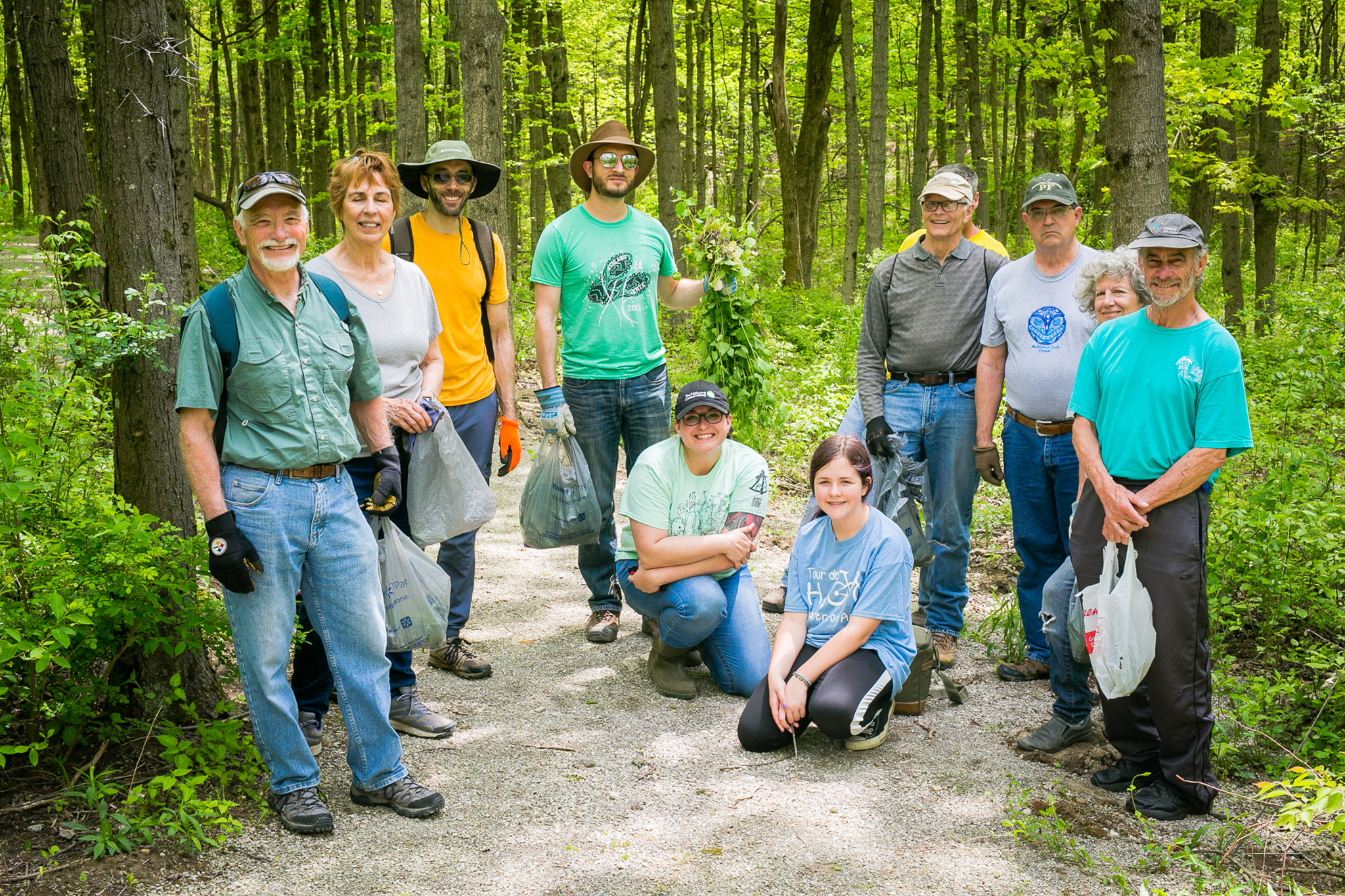
Volunteers hold bags of garlic mustard in forest.
Volunteer Work Day Volunteers pull garlic mustard at Big Darby Headwaters Nature Preserve © David Ike

Volunteering in Ohio

When you sign up to volunteer for The Nature Conservancy in Ohio, you will be welcomed into a family of dedicated individuals committed to protecting our state's finest natural areas. Whether you are interested in getting your boots dirty on our trails or organizing data at our office, we have a role for you.  For interest in volunteering at sites across Ohio, visit the Ohio Volunteer Program webpage.

We need your help protecting the natural treasures of Ohio.