
Places We Protect

Bridgestone Nature Reserve Chestnut Mountain

Tennessee

A green field full of wildflowers and a mountain in the background.
Chestnut Mountain A view from the Bridgestone Nature Reserve at Chestnut Mountain in Tennessee. © The Nature Conservancy/Paul Kingsbury

This diverse mountain forest constitutes the largest land donation in The Nature Conservancy’s history of working in Tennessee.

Overview

Description

The Bridgestone Nature Reserve at Chestnut Mountain is a 5,763-acre conservation landscape on Tennessee's Cumberland Plateau, part of the globally significant Appalachian region and one of the world's most biologically diverse temperate forest ecosystems. The reserve helps connect forests, streams and wildlife corridors across the region, supporting wildlife movement, biodiversity and climate resilience.

In 2018, Bridgestone Americas donated the property to The Nature Conservancy (TNC), creating the largest land donation in the history of TNC's work in Tennessee. This landmark gift permanently protected one of the state's most significant natural landscapes and created new opportunities for long-term conservation and scientific research.

Access

CLOSED TO THE PUBLIC

Location

Sparta, TN

Map with marker: Stay tuned for more information about low-impact public access and the creation of connector trails.

Highlights

Habitat for more than 100 species of conservation concern, including the golden eagle, the Eastern slender glass lizard, the barking tree frog and the green salamander, and rare plants including Cumberland rosemary and white prairie clover.

Size

5,763 acres

Explore our work in Tennessee

Home to the headwaters of the Caney Fork River, diverse hardwood and pine forests, wetlands, caves and dramatic overlooks, the Reserve supports more than 100 species of conservation concern. Its cave and karst systems are part of Tennessee's extensive underground landscape and contribute to research on groundwater, biodiversity, bat populations and freshwater connections.

Recognized as one of Tennessee's most climate-resilient landscapes, Chestnut Mountain provides refuge for wildlife and native plants as habitats shift in response to a changing climate. From golden eagles soaring above rugged ridges to rare plants, bats and salamanders found among sandstone cliffs and shaded coves, the reserve protects critical habitat while helping safeguard water resources for people and nature.

Today, TNC is advancing a bold vision for Chestnut Mountain: restoring resilient ecosystems, honoring the stories held in the land, advancing science and learning, and deepening connections between people and place. Through restoration, research, stewardship and partnership, the Reserve serves as a living landscape where conservation solutions can be developed, tested and shared across Tennessee and the broader Southeast.

A waterfall flows over rocks.
Panther Creek Falls The Bridgestone Nature Reserve at Chestnut Mountain is a 5,763-acre conservation landscape on Tennessee's Cumberland Plateau. © Terry Cook

Strategic Plan

Dive into our plans to preserve and steward this important place. 

Click here

Our Vision

Chestnut Mountain will be:

A restored and resilient landscape where oak-pine woodlands, native grasslands, caves, streams and wetlands support thriving wildlife and diverse native species.

A place that honors cultural heritage by protecting archaeological and historical resources while elevating the perspectives and stories connected to the land.

A living laboratory for applied science where students, researchers and partners generate knowledge that advances conservation across the Cumberland Plateau, Appalachian region and beyond. 

A hub for community engagement and environmental learning that inspires people of all ages and backgrounds to connect with nature and participate in conservation.

A model of stewardship excellence where restoration, conservation management and thoughtful planning support the reserve's long-term ecological health and impact.

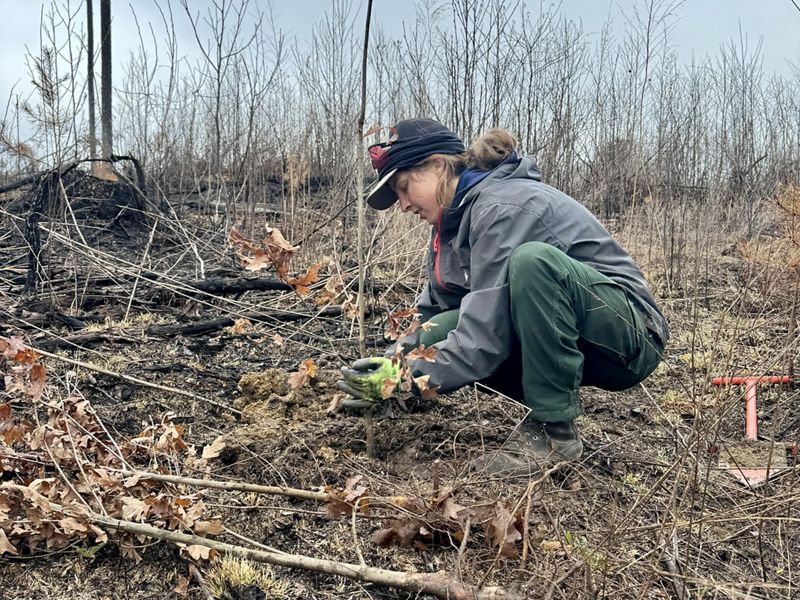
Tree Planting The Nature Conservancy is planting white oak trees in places where they would have historically occurred at the Bridgestone Nature Reserve at Chestnut Mountain. © The Nature Conservancy
An aerial photo features a forest during a prescribed burn.
Prescribed Fire These efforts help improve habitat, support biodiversity and strengthen the landscape's ability to adapt to changing conditions. © Terry Cook

Big Picture

The Mountain's Song

The Mountain's Song begins with a simple belief: healthy forests, clean water, thriving wildlife and connected communities are inseparable.

At Chestnut Mountain, that work extends beyond the boundaries of a single reserve. As part of the Appalachian region, the property contributes to one of the world's most important temperate forest systems, helping maintain habitat connectivity, freshwater resources and ecological resilience across a much larger landscape. The Reserve's forests, streams, caves and wetlands play an important role in supporting biodiversity and strengthening the natural systems that people and wildlife depend on throughout the region.

At Chestnut Mountain, TNC is restoring oak and shortleaf pine woodlands, protecting streams and wetlands, conserving cave and karst systems, managing forests for resilience and applying science to understand what works best for nature and people. These efforts help address some of the region's most pressing challenges, from habitat loss and invasive species to climate change and declining biodiversity.

Chestnut Mountain Through the Seasons (3:06) Check out the view from one trail cam, positioned on one tree, at our Bridgestone Nature Reserve at Chestnut Mountain.

The Reserve also serves as a hub for scientific discovery. Researchers and partners are studying wildlife movement, groundwater systems, forest restoration and biodiversity to better understand the connections that sustain the Appalachian landscape, from the forests and streams of the Cumberland Plateau to the broader network of habitats across the region. Lessons learned at Chestnut Mountain help inform conservation strategies across Tennessee, the Appalachian region and the broader Southeast.

But the Reserve is more than a conservation project. It is a place where research informs action, where students gain hands-on experience in the field, where communities help shape stewardship and where people build meaningful connections to the natural world.

As restoration work expands and new partnerships emerge, Chestnut Mountain will continue to demonstrate how conservation, science and community can come together to create a more resilient future for the Cumberland Plateau and the Appalachian region.

Writings on a cave wall are identified as created by Indigenous peoples.

A Lasting Conservation Legacy

For decades, Chestnut Mountain remained largely undeveloped, allowing its forests, streams, caves and wildlife habitats to remain intact. In 2018, Bridgestone donated 5,763 acres to TNC, creating the largest land donation in the history of TNC's work in Tennessee and ensuring the property's permanent protection.

Today, that gift supports conservation, research, restoration and environmental education across the Cumberland Plateau. As TNC advances its long-term vision for the reserve, Bridgestone's extraordinary act of generosity remains the foundation for the work taking place today.

Fast Facts

  • Chestnut Mountain lies within the Appalachian region, one of the most biologically diverse temperate forest systems in the world. Protecting and restoring forests here supports wildlife movement, climate resilience, clean water and biodiversity far beyond the boundaries of the reserve. As part of a larger connected Appalachian landscape, Chestnut Mountain helps sustain the forests, freshwater systems and wildlife corridors that link Tennessee to the broader region and Southeast.

  • TNC is restoring oak-pine woodlands, native grasslands, streams and wetlands across the reserve through prescribed fire, invasive species management and science-based stewardship. These efforts help improve habitat, support biodiversity and strengthen the landscape's ability to adapt to changing conditions.

    Restoration work is helping return native woodland and savanna habitats to the mountain while improving conditions for the plants and wildlife that depend on them.

  • Chestnut Mountain serves as a living laboratory where researchers, students and conservation practitioners work together to advance applied conservation science. Ongoing monitoring, restoration experiments and long-term ecological studies help guide management decisions while generating knowledge that can benefit landscapes throughout the Cumberland Plateau, Appalachian region and Southeast.

    Scientists are studying wildlife movement through the MOTUS Wildlife Tracking System, conducting biodiversity inventories, evaluating restoration outcomes and monitoring changes across forest, stream and wetland ecosystems. The reserve provides a place to test and demonstrate conservation strategies that can be applied throughout the Appalachian region, with lessons that inform stewardship across the Cumberland Plateau and beyond.

  • Beneath the forests of Chestnut Mountain lies a complex network of caves and karst systems that help shape the region's ecology, hydrology and human history. These underground landscapes provide important habitat for wildlife, influence the movement of groundwater and contain cultural and archaeological resources that help tell the story of people who have lived on and interacted with this landscape over time. Tennessee is home to more caves than any other inland state, and understanding these underground connections is essential to protecting water resources, biodiversity and significant cultural resources.

    TNC and its partners conduct groundwater dye-tracing studies to better understand how water moves through these subterranean systems, helping inform conservation and stewardship decisions. This work supports the protection of water resources, cave-dependent species and sensitive archaeological and cultural resources found throughout the landscape. Researchers are also studying cave-dependent wildlife, groundwater resources and the connections between surface and underground habitats.

    The reserve includes artificial bat roost structures and monitoring efforts that support bat conservation and improve our understanding of species that rely on cave and forest habitats throughout the Appalachian region.

    Learn more about TNC's cave and karst conservation work in Tennessee.

  • From environmental education and student field experiences to community science and volunteer opportunities, Chestnut Mountain is helping connect people with nature and inspire future conservation leaders.

    Through partnerships with schools, universities, researchers, local communities and conservation organizations, the reserve serves as a living classroom where people can experience conservation firsthand and contribute to the future of the Appalachian landscape and the communities that depend on it.

By The Numbers

  • 5,763

    acres of protected forestland

  • 40

    miles of streams and waterfalls

  • +100

    species of greatest conservation need

  • 250

    acres of shortleaf pine savannas

2030 Goals

  • Restore 1,000 acres of oak and shortleaf pine woodlands and savannas through prescribed fire and strategic forest management.

  • Protect and steward 5,763 acres within the Appalachian region, one of the world's most biologically diverse temperate forest ecosystems, while contributing to landscape-scale conservation, climate resilience and habitat connectivity across the Appalachian landscape.

  • Conserve 40 miles of streams and more than 100 acres of lakes and wetlands that support water quality and aquatic biodiversity. 

  • Increase long-term carbon storage through forest conservation and improved management.

  • Help safeguard drinking water resources that support nearly 5,000 residents in the BonDeCroft community.