
The Kittatinny Ridge

- Phone: 717-232-6001
- Email: pa_chapter@tnc.org
-
Follow


A vital wildlife corridor in Pennsylvania’s Appalachian Mountains.
Blue Mountain. Kittatinny Ridge. Endless Mountains. Great Mountain.
Known by many names, this remarkable ridge forms a 185‑mile curving spine across Pennsylvania, stretching from the Mason‑Dixon Line to the Delaware Water Gap. It is a defining feature of the state’s landscape and one of its most important natural assets.
The Kittatinny Ridge is part of an unbroken chain of forested mountains forming a critical link in the 1,500‑mile‑long Appalachian Mountain Range. Its rugged terrain, steep slopes and varied elevations create a mosaic of habitats that make the ridge one of the most biologically diverse landscapes in eastern North America.
_1640x1230.jpg?wid=800)
A Climate‑Resilient Superhighway for Wildlife
Identified by scientists as the most resilient landscape in Pennsylvania for adapting to climate change, the Kittatinny Ridge functions as a biodiversity superhighway. This forested corridor allows plants and animals to move within and between climate‑resilient areas as temperatures rise, flooding increases and droughts become more frequent.
By staying connected across the ridge, species can shift their ranges safely to find suitable habitat—making the Kittatinny Ridge critical to the long‑term survival of hundreds of bird and wildlife species in a changing climate.


Protecting the Ridge Through Partnership
The Nature Conservancy leads the Kittatinny Ridge Conservation Landscape’s Land Protection Partnership, a coalition of nonprofit organizations, local conservation groups, recreation clubs, educational institutions, and county, state and federal agencies.
Together, partners combine resources, set collective goals and work toward a shared vision for a protected, connected Kittatinny Ridge that benefits both people and nature. TNC’s primary role in this partnership is protecting priority lands along the ridge through direct acquisition and conservation easements.
In February 2021, TNC completed the purchase of 1,200 acres adjacent to Hamer Woodlands at Cove Mountain, closing a major gap between existing protected lands and completing a 14‑mile connected corridor along the Kittatinny Ridge.
This once‑in‑a‑generation opportunity serves as a model for large‑scale land protection in the Central Appalachians and preserves habitat within one of the most important wildlife corridors in the northeastern United States.

Why It Matters: Resilient and Connected Landscapes
Landscapes with diverse physical features, such as steep slopes, deep ravines, high elevations and varied soil types, create many different microclimates. These conditions allow plants and animals to move locally to find shelter, food and suitable habitat.
Connected forest corridors act as natural highways, enabling species to move safely between these climate‑resilient areas. Contiguous mountain chains like the Kittatinny Ridge provide many of the conditions wildlife need to survive and adapt as the climate changes.

TNC’s Resilient and Connected Landscapes project was the first comprehensive effort to map climate‑resilient lands and wildlife corridors across North America. Released in 2016 after eight years of research involving 60 scientists, the study now guides conservation strategies at local, regional and continental scales.
As habitats are altered by warming temperatures, extreme weather and flooding, resilient landscapes like the Kittatinny Ridge are expected to continue supporting diverse plant and animal communities while also providing clean drinking water, outdoor recreation and economic benefits to nearby communities.
The Kittatinny Ridge is also designated as a Conservation Landscape by the Pennsylvania Department of Conservation and Natural Resources. It is one of eight large regions across the state where partners coordinate conservation, recreation, sustainability and community revitalization efforts.
If we work to keep places like the Kittatinny Ridge protected, connected and strong, they will keep nature thriving.
What We're Doing: Safeguarding a Wildlife Superhighway
The Kittatinny Ridge is also a major migratory stopover for birds of prey such as broad‑winged hawks, as well as songbirds, hummingbirds and monarch butterflies. Because of its importance to bird migration, the ridge has been designated a Globally Important Bird Area.


To safeguard this largely intact wildlife corridor, The Nature Conservancy is working with landowners and partners to protect 15,000 acres of critical, connected land on and adjacent to the ridge over the next three years.
At least nine species of bats live on the ridge, along with wide‑ranging mammals such as black bears, bobcats and fisher. Protecting continuous forest habitat is essential to supporting these species and maintaining the ecological integrity of the ridge.
In addition to the expansion of Hamer Woodlands at Cove Mountain, TNC completed 20 land protection projects totaling more than 5,800 acres between 2020 and 2025.
Recent Land Protection Wins

1,158 Acres on the Allegheny Front
This acquisition protects habitat for endangered bat species and secures a migration corridor from the Pennsylvania Wilds to West Virginia. Now part of State Game Lands 82, it also expands public access and climate‑resilient wildlife pathways.
Explore Allegheny Impact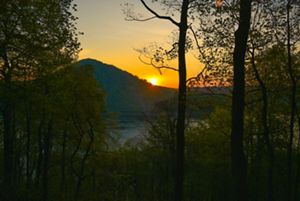
509 Acres Along the Susquehanna
Added to State Game Lands 211, this project opens access to formerly landlocked acreage and strengthens a 30‑mile wildlife corridor along the Kittatinny Ridge and Second Mountain.
See Susquehanna Win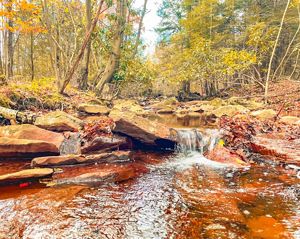
279 Acres in Gallitzin State Forest
By linking three sides of Gallitzin State Forest, this protection secures a missing piece of a Globally Important Bird Area. Rare grasslands and accessible roads offer both habitat benefits and scenic views for visitors.
Read About Gallitzin ForestBeyond Protection: Managing the Ridge for the Future
Protection alone is not always enough. Many sites require active management to recover from past land use, invasive species and increasing climate stress.
To address these challenges, TNC and partners lead coordinated habitat management across more than 150,000 acres of State Game Lands, State Forests, TNC preserves and municipal lands. By working across ownership boundaries, partners ensure the diverse habitats wildlife depend on are available throughout the ridge.
Nature does not recognize political or property boundaries. Without intact connections between protected landscapes, even resilient places can fail. That is why protecting, restoring and managing the Kittatinny Ridge as a connected system is essential to the future of wildlife, people and Pennsylvania’s Appalachian landscapes.
Download
-
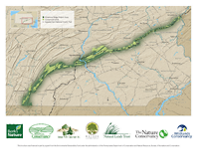 Kittatinny Ridge Map
Pennsylvania is only part of the story! The Kittatinny Ridge stretches for 185 miles. Explore a map to discover it's reach.
Download
Help protect the Kittatinny Ridge
The Kittatinny Ridge connects wildlife, people, and wild places across Pennsylvania. Your donation keeps this natural corridor intact and thriving.
Protect the Ridge


