

How The Nature Conservancy Helped Grow Nature Preserves and Parks Across Ohio
Learn about some of the significant parks and preserves that TNC helped create through land transfers around the state.

Dating back to the 1960s, The Nature Conservancy in Ohio has purchased land not only to be protected by our organization, but also to assist government and nonprofit conservation organizations to do the same. TNC calls these purchases assists—when we buy the land to quickly protect it and then transfer it to an appropriate conservation organization at the original price, plus any closing costs we incur, or as an outright donation. An example of this is our work with Baker Swamp—a 181-acre wetland in Jackson County, Ohio. There, we completed restoration work and later donated the land to Ohio Department of Natural Resources (ODNR) at no cost. “ODNR has had a long partnership with TNC working collaboratively to conserve Ohio’s best and most important natural places. The recent transfer of Baker Swamp in Jackson County to ODNR management is just one of many conservation ventures we have done together,” says Steven Gray, assistant director for ODNR.
Statewide Protection
Learn more about just a few of the many significant parks and preserves that TNC in Ohio has helped create through land transfers.

Southeast Ohio
Parks: Wayne National Forest
Total acres: 5,492 acres
Year(s) transferred: 1989 to 2008
TNC in Ohio completed land transfers
to the Wayne National Forest to help
the Forest Service acquire land before
it was sold and developed.

Southwest Ohio
Parks: Great Parks of Hamilton
County (Richardson, Withrow, Winton Woods and Warren Wells Preserve)
Total acres: 268
Year(s) transferred: 1977 to 2013
TNC in Ohio bought some of these acres to later transfer when Great Parks acquired grant funding.

Northwest Ohio
Parks: Metroparks Toldeo (Wildwood Metropark)
Total acres: 495
Year(s) transferred: 1975
TNC in Ohio bought this land at the request of Metroparks Toledo to save it from development. Once a local levy was passed, the Metroparks acquired the land from TNC.

Northeast Ohio
Parks: Cleveland Museum of Natural History (Mentor Marsh State Nature Preserve)
Total acres: 295
Year(s) transferred: 1965 to 1988
These portions of Mentor Marsh State Nature Preserve were bought by TNC in Ohio and given to Cleveland Museum of Natural History to maintain.

Central Ohio
Parks: Metroparks of Columbus and Franklin County
(Battelle-Darby Creek, Prairie Oaks, Pickerington Ponds and Clear Creek)
Total acres: 733
Year(s) transferred: 1983 to 2021
Metroparks of Columbus and Franklin County requested TNC in Ohio’s help to create these parks.
Why does TNC in Ohio help with these land protection efforts?
TNC in Ohio is committed to conserving high-quality habitats for all Ohioans to enjoy—regardless of who will eventually own the land. By helping consolidate preserves, parks and forests, we all benefit from improved recreation opportunities and preserving biodiversity statewide.
According to Terry Seidel, director of land protection for TNC in Ohio, it’s important to take the opportunities when they arise to increase connected intact habitats.
“It’s not a random approach. For example, by helping to fill in the Wayne National Forest, we’re helping to establish an interconnected area of 240,000 acres of habitat,” says Seidel.
Safeguarding Biodiversity
Nearly 40% of Ohio’s Appalachian region is covered in mixed hardwood forest, which harbors more than 62 species of trees, hundreds of herbs and shrubs, countless songbirds and globally imperiled mammals such as the Indiana bat and Allegheny woodrat. As the forests recover, large mammal species like black bear and bobcat are also making a comeback.
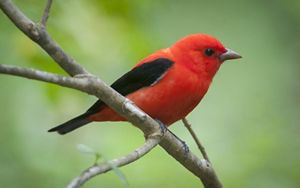

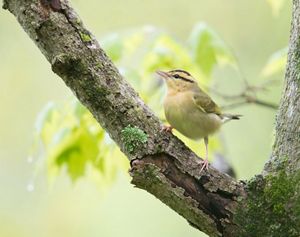
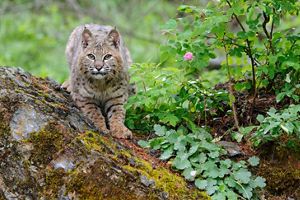
Scarlet Tanager: Habitat corridors help migratory birds. © Scott Whittle
Black Bear: Black bear are endangered in Ohio. © Scott Suriano/TNC Photo Contest 2019
Worm-eating Warbler: Worm-eating warblers are mature forest birds that prefer steep slopes and move into young forest and shrubby areas during portions of its life. © Matt Williams
Bobcat: Connecting habitats helps large mammals like bobcats. © Jeff Wendorff
How do these land protection efforts benefit Ohioans?
TNC in Ohio’s help in land transfers goes beyond helping local organizations—it provides real benefits to both people and nature.
This work to conserve, restore and connect larger tracts of forest helps to provide higher quality habitat for native plants and animals, enhance water conservation, improve recreational opportunities and ensure Ohio’s forests are resilient to threats including invasive species and climate change.
“Larger protected areas are going to be more resilient to invasive species and better support species like various warblers, salamanders and black bear,” says Seidel.


Explore Our Work in Ohio

Seeing the Forest for the Trees
Discover how The Nature Conservancy is protecting and restoring Ohio's forests for people and wildlife.

10 Endangered Species Crucial to Ohio’s Biodiversity
A diversity of wildlife supports lives and livelihoods across our state—here’s how we're ensuring it thrives for generations to come.

Forged in fire: How a 905-acre prescribed fire at The Wilds will benefit people and nature
In March 2026, a 905-acre prescribed fire at The Wilds was led by The Nature Conservancy in Ohio and U.S. Fish and Wildlife Service - Partners for Fish and Wildlife Program.