


Diving Deep on Oyster Aquaculture and Restoration
To safeguard the health of the coast, TNC is both restoring natural shellfish reefs and working directly with shellfish farmers.

Estuaries—the transition zone where fresh water meets salt water—are incredibly valuable to people and nature for their environmental, economic and cultural benefits. These coastal areas, home to critical habitats like saltmarshes, eelgrass and shellfish reefs, are some of the most imperiled habitats on the planet. They are under increasing stress from climate change, pollution and land use practices.
Shellfish, especially reef-forming species like oysters, play a critical role in the function of estuaries, improving water quality, providing habitat and in some cases protecting the shoreline. More shellfish in the water means healthier estuaries. In New England, shellfish reefs are largely gone, leading to degraded estuaries.

To address the challenges facing the coast, The Nature Conservancy is working on both restoring natural oyster reefs and directly with shellfish farmers on their practices and involvement in restoration.
“We are simultaneously working on habitat restoration and sustainable shellfish farming, because we know that both can provide similar and complementary benefits for water quality and community resilience,” says Steve Kirk, coastal program director for TNC in Massachusetts.
What is aquaculture?
Farming shellfish (or seaweed or finfish) in the water is known as aquaculture. In Massachusetts, oyster farming has long been an important part of the coastal economy, and when done right, it can improve the condition of estuaries.

Want to hear about our latest underwater projects?
Sign up for our monthly e-newsletter.
Restoring Oyster Reefs
As filter feeders, shellfish clean the waters in which they live. They eat by pumping large volumes of water through their body, removing algae and nutrients. Adult oysters can filter up to 50 gallons of water a day—a bit more than a bathtub’s worth of water. And just as humans enjoy them as food, they are food for small fish and other species.
Much like coral reefs in the tropics, reefs formed by shellfish provide shelter and habitat for marine life, as well as buffering and stabilizing the shoreline, protecting the coast from erosion and storm surges. Maintaining estuaries is critical as we continue to experience sea-level rise and more frequent and severe storms.

TNC has been a leader in shellfish restoration efforts in Massachusetts for many years. In the 2010s, we led several oyster reef restorations in Buzzards Bay, in the towns of Bourne, Fairhaven and Wareham, as a natural solution to strengthen this critical ecosystem.
In 2025, TNC partnered with the Massachusetts Division of Marine Fisheries (DMF), the U.S. Department of Agriculture’s Natural Resources Conservation Service and the Cape Cod Conservation District on a new program to develop a statewide critical coastal habitat restoration plan. Alongside that, the goal is to identify, permit and plan at least five new restoration sites for oysters, eelgrass or salt marsh in the state—for improved water quality, enhanced estuary health and thriving fisheries. This expansion of habitat restoration also supports the Commonwealth’s aims to increase biodiversity and strengthen climate resiliency, key components of Massachusetts' recently established Biodiversity Goals.

Coastal Project Manager Dan Goulart is at the helm of the project, collaborating with a new full-time staff member at DMF, funded through the grant.
“We’re thrilled that DMF is now leading the state’s shellfish restoration work, which TNC has invested in for years,” Goulart says. “Restoration at a system scale will ideally help build up self-sustaining oyster populations, improving coastal ecosystems while supporting local aquaculture and fisheries, economic growth and resilience.”
Restoration in Mashpee
In November 2025, TNC teamed up with the Town of Mashpee and DMF to begin an oyster restoration project at Hamblin Pond in Waquoit Bay.
Quote: Steve Kirk

We are working on both habitat restoration and sustainable shellfish farming, because we know that both can provide similar and complementary benefits for water quality and community resilience.
A Sustainable Food Source
Food production can have impacts on ecosystem balance, and TNC is working to improve practices throughout the food sector, from agriculture to seafood farming and harvesting. Aquaculture can be an efficient way of growing food compared to terrestrial agriculture, using less fresh water, land and fossil fuels, making farmed shellfish a great environmental food choice.
Since it is the fastest growing form of food production on the planet, TNC is working in partnership with shellfish farmers to ensure that aquaculture development is done as sustainably as possible to maximize social, economic and environmental benefits.
Aquaculture is an important local industry in Massachusetts. Farmed oysters are the third-highest-value seafood product in the state, behind large, federally managed fisheries in sea scallops and lobsters. Up and down the Bay State’s coast, family-run shellfish farms—with roughly 1,400 acres between them—supply sought-after oysters for raw bars, restaurants and kitchens, locally and throughout the country.
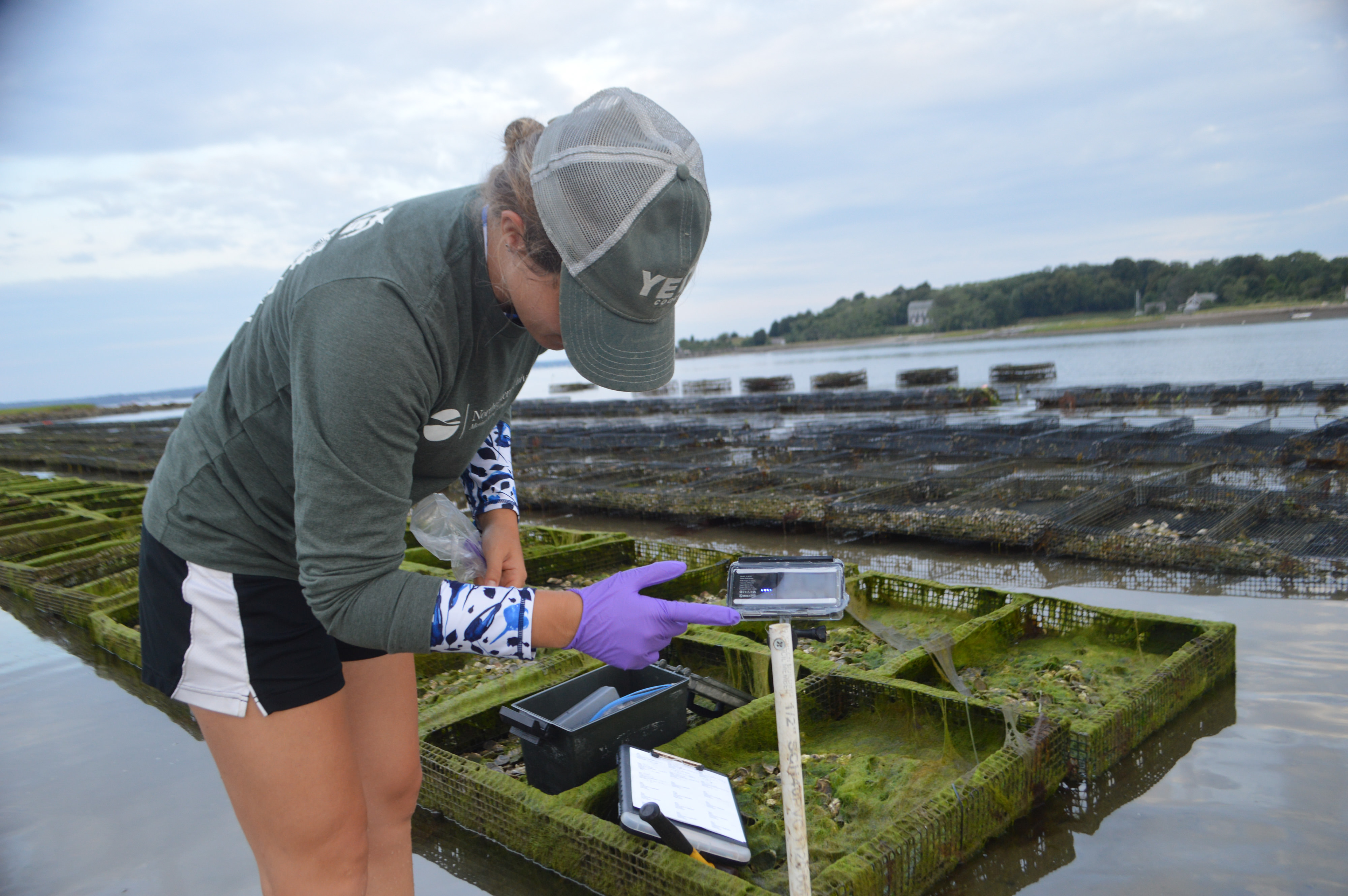
Diving Underwater for Research
TNC in Massachusetts has a research collaboration with Northeastern University, Cotuit Oyster Company, Island Creek Oysters and the National Oceanic and Atmospheric Administration’s (NOAA) Northeast Fisheries Science Center to quantify the environmental benefits oyster farming can provide.
For three summers from 2019 to 2021, underwater cameras were deployed by Northeastern researchers at oyster farms in Cotuit and Duxbury, to capture underwater video of the farming gear being used. The video was then analyzed by the team to determine how other marine species, like fish and crustaceans, might have been benefiting from the oyster farms. The collected data provided a year-over-year comparison for analysis in a forthcoming peer-reviewed paper.
“Fisheries managers and the regulating community need robust scientific data to inform their decisions about siting new or expanding aquaculture farms,” says Kirk. “This research provides that data and ensures expansion of aquaculture is done sustainably.”
Building on a research program that has been in place in Connecticut since 2017, the collaboration will provide a broad regional picture of potential aquaculture infrastructure benefits.
“We’ve heard from oyster growers for many years that they see lots of fish swimming in and around their gear,” says NOAA Milford Lab researcher Julie Rose. “It’s very exciting to have research projects in multiple states collecting scientific data to investigate these reports.”
Evaluation of the data showed underwater animals gathering in and around the farming gear. A good number of juvenile fish across a variety of species were captured on video at Cotuit Oyster Company’s farm, indicating the potential value the gear holds for enhancing the fish population.
Findings from the study will be shared with shellfish farmers, natural resource managers and the general public to support sustainable seafood production going forward.
Publicly owned coastal waters are busy places with many types of users. So, the collaboration also included a social science research component focused on better understanding what drives coastal communities’ perceptions of aquaculture to help shape future opportunities for its growth in the U.S.
Results from this study found that 65% of survey participants would support aquaculture expansion in their state. While positive perceptions around its impact on the local economy were the strongest driver of support for aquaculture expansion, positive perceptions about the economic and ecological sustainability of industry growth, as well as aquaculture’s ability to provide shoreline protection, were also significant drivers. The researchers concluded that improving public understanding of the environmental and local economic benefits of aquaculture could increase support.


Oyster Aquaculture for Restoration
The oyster industry in Massachusetts was growing fast prior to 2020, doubling in size every five years. It landed about $30 million worth of oysters in 2019. But the COVID-19 pandemic hit the industry hard. Between March and October 2020, oyster sales in Massachusetts dropped by 50% compared with the same time frame the previous year.

TNC’s existing partnerships with oyster farmers uniquely positioned us to support those impacted by the pandemic. To help address some of the problem, TNC partnered with the Pew Charitable Trusts and launched an innovative program—Supporting Oyster Aquaculture and Restoration (SOAR)—in late 2020 in several coastal eastern U.S. states and Washington state.
With our partners, TNC purchased surplus oysters from growers who saw a greatly reduced demand from restaurants and distributors and placed them on nearby oyster restoration projects. This way, growers received much-needed economic relief and one of our ocean’s most imperiled ecosystems got a boost.
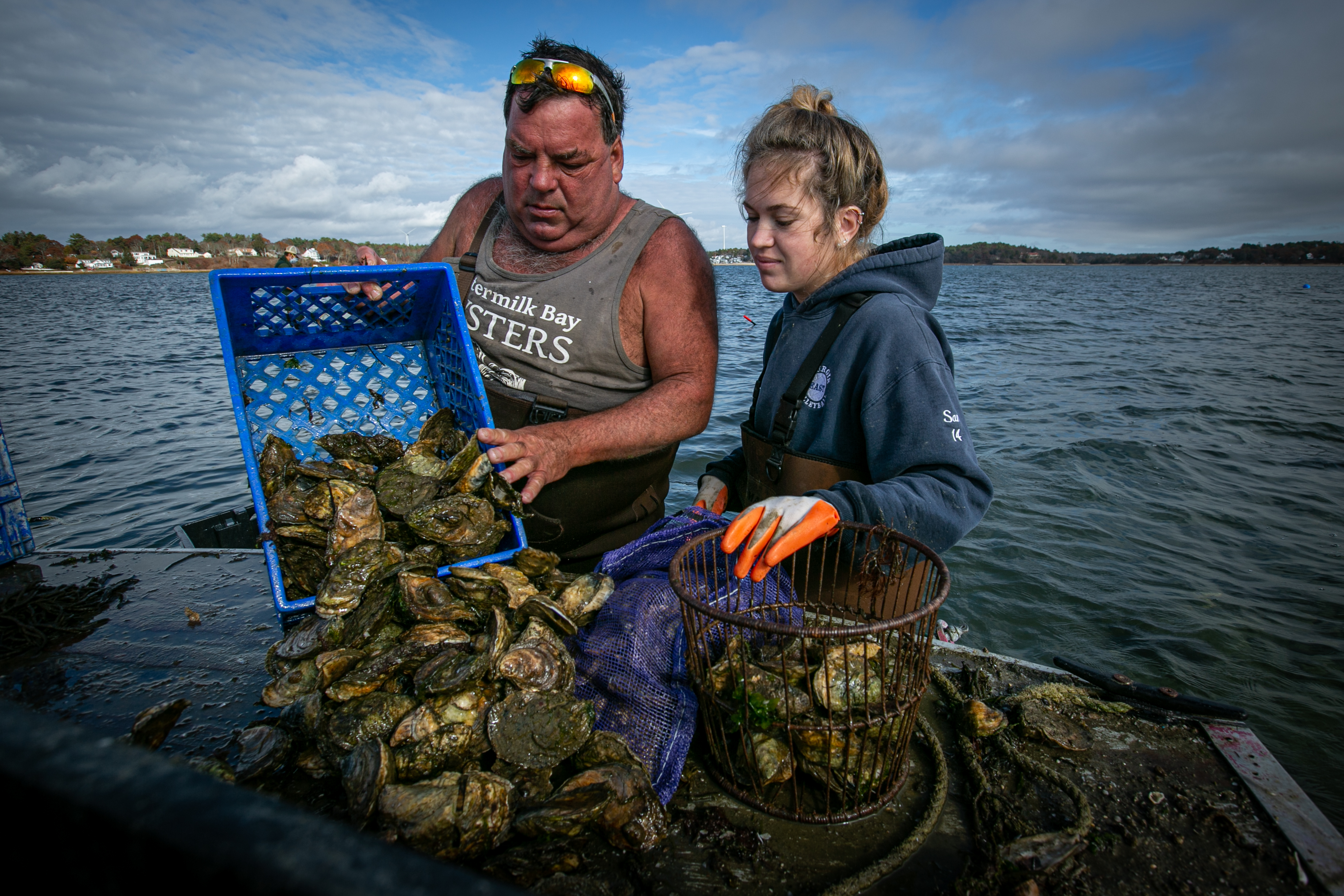
Support For Oyster Growers in an Uncertain Time
For many oyster growers in Massachusetts, much of their business disappeared overnight in March 2020 when restaurants across the United States shut down. It’s estimated that more than 10 million oysters in the state weren’t sold that year because of the pandemic.
“We’re looking at a $50,000 loss this year. We went from selling 5,000 oysters a week to nothing,” said Bruce Silverbrand at the time, an oyster farmer and owner of Buttermilk Bay Oysters in Bourne, Massachusetts. That’s a big impact for small businesses like his. “We are tied at the hip to the restaurant business. No restaurants, no oysters.”
Guy Rossi, manager at Taylor Cultured Seafood in Fairhaven, said in November 2020 that his business would fall short on sales that year by nearly half a million oysters. “In our industry, we have to keep these oysters moving,” he says, describing the unique difficulty growers face because of their process. “For us, it really hasn’t changed except we don’t have any place to sell them. We’ve had to look outside the box for solutions.”
Without buyers, these farmers’ oysters sit in their cages and keep growing, taking up valuable space needed for planting new oysters. Additionally, larger oysters are unsellable—restaurants aren’t interested in buying oysters larger than about three-and-a-half inches.
That’s where the SOAR program comes in—repurposing these larger oysters for reef restoration. By keeping the oysters in the water, they continue filtering water, improving water quality and providing habitat and food for fish and other species.
“We needed shellfish farmers’ businesses to survive through the pandemic because their farms can improve the conditions of surrounding coastal waters,” says Kirk. “This program has been a win-win: benefitting the environment and providing economic relief for farmers.”
A New Restoration Strategy Formed
In Massachusetts, from mid-2020 through November 2025, TNC has purchased more than $500,000 worth of oysters—more than one million of them—from 18 farmers and has worked with two additional businesses in the process. The oysters were distributed across two restoration sites in Fairhaven and Bourne, as well an in Edgartown Great Pond on Martha’s Vineyard.
Monitoring data is collected at each restoration site to determine whether the reefs are sustaining themselves and how the oysters are impacting the environment. A post-doctoral fellow with TNC and Northeastern University is analyzing the data to better understand the impacts of restoration, for a best management practices report and research article.
“What started as a program to support oyster growers in the pandemic is now an ongoing effort,” says Kirk. “Through it, we’ve been able to model how shellfish aquaculture and environmental restoration can go hand-in-hand, a strategy we’re now working to scale up further.”

Supporting Oyster Growers Across the U.S.
Learn about the efforts of the Supporting Oyster Aquaculture and Restoration program and how to get involved.
Read more on SOARCollaborating for Coastal Health
TNC was a key partner in developing the Massachusetts Shellfish Initiative, which aimed to maximize the environmental, economic and social benefits of shellfish resources in the state. The process resulted in a holistic statewide strategic plan and recommendations on how the state can balance growing and competing demands for shellfish resources, as well as the formalization of the Shellfish Advisory Panel.
Resilient Coasts

Ocean and Coasts
TNC in Massachusetts is improving the health and resilience of ocean and costal ecosystems.

Harnessing Nature’s Designs Along the Shore
Nature-based solutions can help reduce coastal erosion and flooding to protect coastal infrastructure and communities.

Proactive Relocation Away from Rising Waters
What can we do for Massachusetts communities on the front lines of flood risk to set them up for a safer, more resilient future?
Dive Even Deeper

The Aquaculture Opportunity
Using science, collaboration and innovation to provide food for a growing population.

Aquaculture by Design Chesapeake Bay
Can oyster aquaculture help make the Chesapeake Bay cleaner, faster?

Oyster Restoration in New Hampshire
Improving the health of New Hampshire's Great Bay Estuary one oyster at a time.