

Washington, DC View of DC in the evening © Shutterstock
The Nature Conservancy helps create, implement and defend policies related to conservation and climate action around the world. Our nonpartisan policy solutions are drawn from what we have learned from projects on the ground—guided by partners and grounded in science. This is our approach at all levels of government. TNC's Maryland/DC Government Relations team works at the state level to advance forward-thinking policies on conservation and climate issues such as climate change mitigation, climate resilience and investments in nature.
How it works
To advance policies that favor conservation and climate issues, we follow a three-phased approach to shaping and implementing policy:
Step 1: Policy Development
As we’re a science-based organization, science informs TNC’s conservation and policy priorities and helps make the case for policy change. We are known for the relationships that we build with community partners, other NGOs, agency staff and elected officials. Through these coalitions, we help shape environmental policies that align with our local, national and global priorities.
Step 2: Advocacy
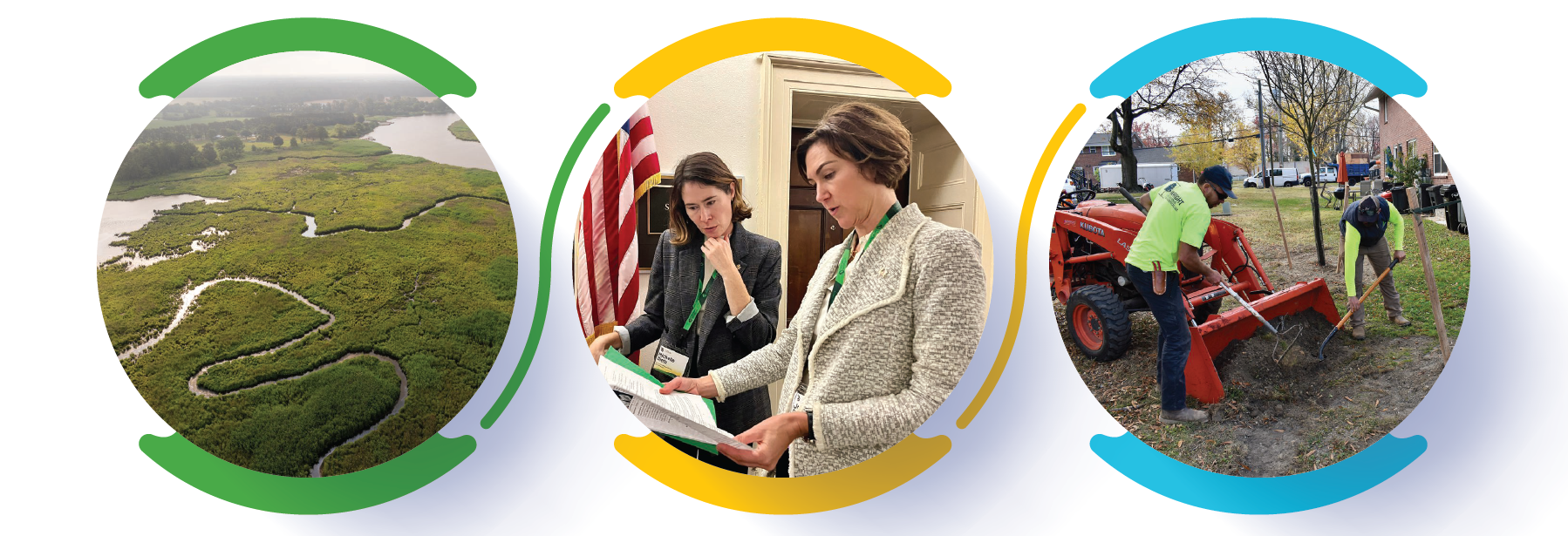
In addition to developing policy that supports our conservation goals, we also stand up and speak for it. Through meetings, broad communication and in-person testimony, our team works to make sure lawmakers understand the benefits provided by nature-positive legislation so that it is passed into law and protected once it’s established. Our local Government Relations team coordinates with our federal team to do this advocacy at both the state and federal level.
Step 3: Policy Implementation
It’s not enough for new policy and programs to be signed into law; they also need to be funded and implemented. TNC advocates for resource allocation for conservation programs through state and federal budgets, as well as new funding streams. We also work with our agency partners to implement conservation programs when we have a niche role to play or when we are able to act more nimbly and rapidly than our government partners.

 Return
Use Your Outside Voice
Do you want to be an advocate for Maryland’s environment but aren’t sure where to start? Find your representatives here and ask about what their plans are for 2026 to reduce emissions, build climate-resilient human and natural communities, and invest in nature!
Find Your Representative
2026 Legislative Session in Review
TNC MD/DC Advancing policies that allow people and nature to thrive together
TNC's Maryland/DC Government Relations team advances conservation and climate policies that invest in nature, reduce emissions and strengthen climate resilience. During the 2026 Maryland Legislative Session, TNC worked with our advocacy partners to advance practical, science-based policy solutions to address current challenges while preparing Maryland for the future.
In the 2026 session, we focused on building durable support among lawmakers to protect the lands and waters that sustain Maryland’s communities and economy. At a time of fiscal constraint, this work is especially important. We advocated to protect funding for core environmental programs that keep the state moving forward on our climate commitments.
Environmental protection and robust climate programs are a fraction of the state’s budget but provide outsized benefits for all Marylanders and our state’s irreplaceable natural heritage. Funding for these programs should be treated as an essential part of the solution to preserve our state’s economic wellbeing, and the path towards achieving Maryland’s climate mitigation, adaptation, water quality enhancement and land protection commitments.
Investing in Maryland’s Future: Lands, Water, Climate & Communities
Investing in nature creates tremendous economic benefits for Maryland. The state’s farms, coasts, wetlands and parks are the foundation of Maryland’s economy and residents’ quality of life. With strategic conservation and thoughtful planning and management, Maryland’s healthy lands and waters can provide even bigger economic benefits in the future. Throughout the 2026 session, TNC supported a balanced approach to the state budget, with protections for natural resources, follow-through for our climate mitigation and resilience commitments, and assurances that state agencies are equipped to deliver results. Environmental protection and robust climate programs are a fraction of the state’s budget, but provide outsized benefits for all Marylanders and our state’s irreplaceable natural heritage.
Lands
Maryland’s food and agricultural sector employs 688,804 people, generating $39.4 billion in wages and $126 billion in output. The forest products industry employs 6,025, generating $351 million in wages and $2.4 billion in manufacturing output. Investing in nature also supports outdoor recreation, which boosts the economy, attracts businesses and tourists, and supports quality of life. Nearly 3 million Marylanders (53%) participate in outdoor recreation, and the outdoor recreation economy generates $9.4 billion in value added annually, supporting 81,615 jobs and $4.5 billion in wages.


Water
Spending on conservation provides a strong return on investment in the form of natural goods and services, and support for thriving local economies. The value of goods and services provided by the Maryland Coastal Bays watershed ecosystems is nearly $12 billion, and the watershed filters drinking water for nearly 13 million people. The Bay has also been the outdoor playground for generations who vacation on its beaches, boat on its waters and watch the sunset from its shorelines.


Climate Resilience and Adaptation
Communities and ecosystems in Maryland are facing increasingly harmful impacts of flooding. Rising sea levels cause sunny day flooding in coastal communities and higher storm surge during tropical storms. More intense precipitation brings flooding further inland, overwhelming creeks and stormwater systems. Floodwaters can disrupt transportation systems, damage agricultural and natural landscapes, degrade soil quality and threaten homes, businesses and public safety. Many of the communities impacted by coastal and riverine flooding have historical and cultural assets which face risk, in addition to the aging and failing infrastructure which threatens local resources.


Climate Resilience in Maryland
To prepare for Maryland's changing climate, TNC is helping to shape state policies and programs to created sustained investments in climate resilience and adaptation.

Looking Ahead
TNC enters the 2026 legislative session focused on protecting core environmental investments, advancing climate solutions and ensuring that nature remains central to Maryland’s policy decisions. With continued engagement from partners and supporters, we can help secure a more resilient future for communities across the state.
Related Articles

Powering the Future
Working with governments to show how renewable energy development can grow economies while reducing carbon emissions.

Strengthening Maryland's Coasts
Helping Maryland’s critical coastal habitats and historic communities adapt to the effects of climate change.

Building Green Cities
Using the power of nature to make cities in the capital region more resilient and livable places.