

The Green River The Green River in Kentucky, surrounded by a landscape of forests and farms. © Mike Wilkinson

Flowing through the heart of Kentucky, the Green River is one of the most biologically diverse river systems in North America. For more than 25 years, The Nature Conservancy (TNC) and our partners have worked to restore its natural flows, reconnect habitat and improve the health of the lands and waters that sustain people and wildlife.
What makes the Green River so important?
Protecting the Green River helps safeguard clean water, biodiversity and the natural heritage of the entire region.
Green River Flow
The Green River flows into the Ohio River and then the Mississippi, meaning its water quality affects not only Kentucky but also seven other states and the Gulf downstream. Because it is connected to the world's 2nd largest flowing freshwater system, the health of the Green River has impacts that reach far beyond Kentucky.
History
The Nature Conservancy has worked in the Green River for more than 25 years.
Threats
Threats to this ecosystem include:
-Forest loss
-Erosion
-Water demand
-Increasingly volatile cycles of flood and drought caused by a changing climate
Did you know?
Kentucky has more miles of navigable water than any state other than Alaska.
Mussels
The Green River features 70+ mussel species.
Special Species
The Green River supports 42 endemic species that are found nowhere else in the world. It's also home to 9 endangered species.
Fish
The Green River is home to 150+ fish species.

 Return
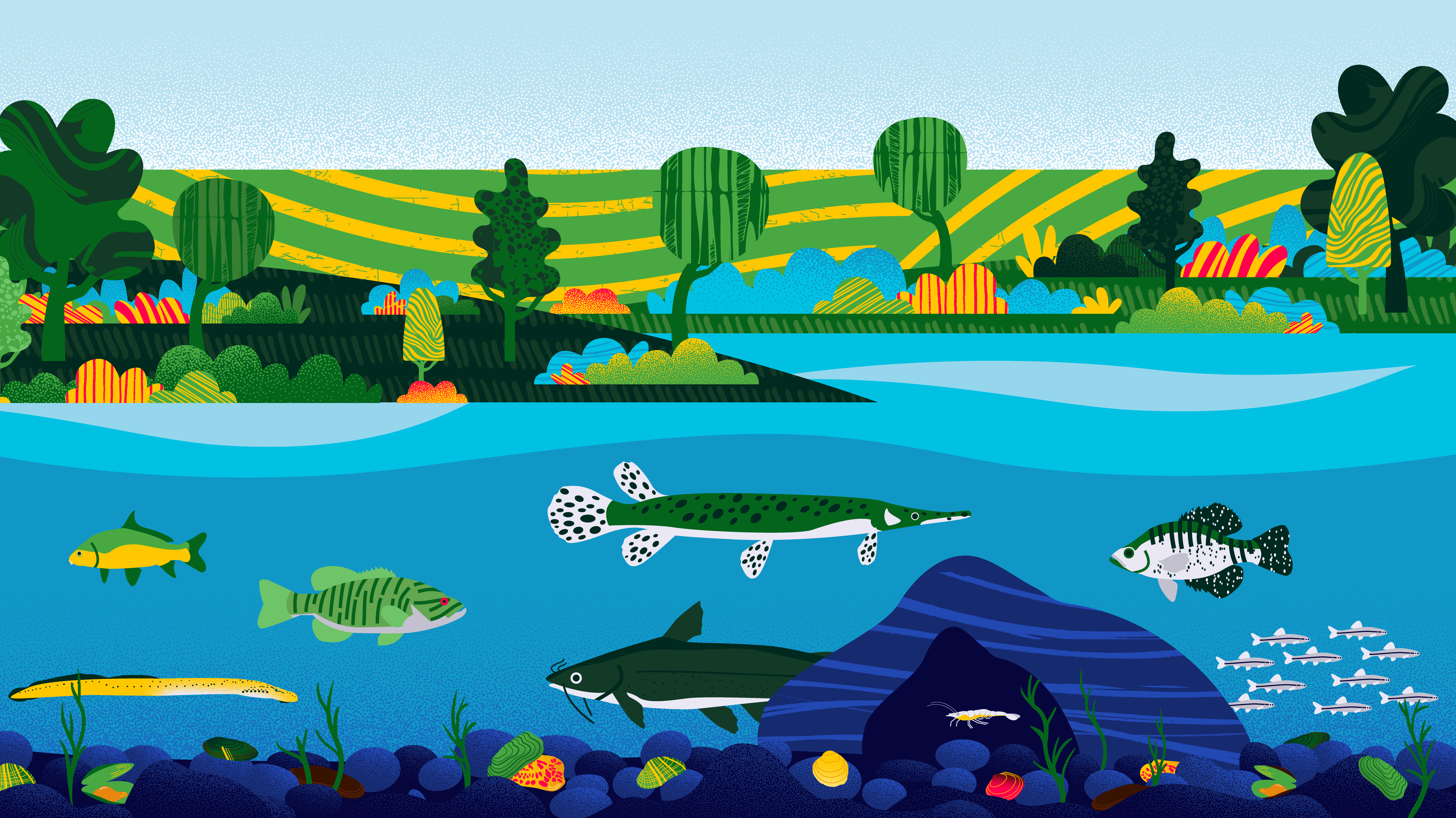
The Green River isn’t simply another Kentucky river. Its waters connect forests, farms, communities, caves and some of the richest freshwater habitat in North America. The river is intimately connected with the Mammoth Cave system, including the delicate karst landscapes around it, which feature networks of caves, sinkholes and springs formed by mildly acidic water slowly dissolving soluble rocks such as limestone and creating a unique habitat for especially rare species of fish and freshwater mussels. The seasonal rises and falls along the greater Green River help cue events ranging from fish spawning to floodplain tree regeneration.
Water Connects Us
What happens along a riverbank or farm field in Kentucky doesn't necessarily stay in Kentucky. Water from the Green flows into the Ohio River and eventually the Mississippi, carrying water and sediment to the Gulf.


Our Work at the Green River

Restoring Floodplains and Wetlands
Give Water Room to Move
Floodplains are the lands alongside rivers that naturally hold water when rivers rise, while wetlands are areas with saturated soils and standing water that persist year-round or for extended periods. Together, they act like natural sponges, absorbing and storing excess water across the landscape. Floodplains and wetlands slow floodwaters, trap sediment and nutrients, filter water, provide critical wildlife habitat and strengthen the resilience of the entire river system. By holding and gradually releasing water, they also help reduce flooding risks for nearby farms and communities.
In western Kentucky, we work with farmers to remove frequently flooded land from agricultural production and restore it to healthy, functioning floodplain habitat by planting native trees and restoring its natural hydrology. We are also partnering with the Green River National Wildlife Refuge to restore wetlands on the refuge’s largest tract, improving habitat for wildlife while supporting a healthier and more resilient river system.

Reconnecting the River
A Free-Flowing River
After more than a decade of work with government and community partners, TNC completed the Green River lock-and-dam removal project in fall 2024, the largest river restoration project in Kentucky history. The removal of these aging, obsolete structures restored the river’s natural flow, improved fish passage, reconnected habitat and enhanced the river’s ability to support healthy floodplains and wetlands. Together, these benefits strengthen ecosystem resilience, improve connectivity and help the river function more naturally for both wildlife and people.

Farming With the River in Mind
Working With Sustainable Agriculture
Agriculture is a major part of the lower Green River watershed and an economic driver for its communities. TNC works with farmers on land-management practices intended to reduce the amount of nutrients entering and polluting the river while also supporting soil health and crop production. Some of those practices include edge-of-field vegetation buffers, cover crops and equipment cost-share opportunities.
Engineering Natural Solutions on the Mississippi
The Green River is connected to one of the U.S.'s largest river networks, the Mississippi.
Dive Into TNC's WorkEstablished in 2019, the Green River National Wildlife Refuge (NWR) is one of the newest refuges in the U.S. and only the second such refuge in the state. Restoration of this important area where the Green meets the Ohio is a partnership between TNC, local farmers, the U.S. Fish and Wildlife Service and Friends of the Green River NWR. The refuge is a vital wildlife habitat for hundreds of species, especially shorebirds and waterfowl traveling the Mississippi Flyway. This area is also a conservation priority for protecting drinking and irrigation water for millions of Kentuckians.
Who Relies on a Healthy River?

Smallmouth Bass
Micropterus dolomieu
Free-flowing stretches of river provide a healthier habitat, and TNC's fish surveys show more plentiful and healthier sportfish in free-flowing Green River sections compared with impounded pools.

Pink Mucket
Lampsilis abrupta
The pink mucket is a federally endangered freshwater mussel found in Kentucky’s Green River, which supports one of the most diverse mussel communities in North America. The Green River Basin is home to more than 70 species of native mussels, which play a vital role in maintaining water quality by filtering large volumes of water and helping keep the river ecosystem healthy.

Waterfowl
Anseriformes
Waterfowl are a familiar sight along Kentucky’s Green River, where wetlands, floodplains and quiet backwaters provide important habitat for migratory and resident bird species. Ducks, geese and other waterfowl rely on these healthy river ecosystems for feeding, nesting and resting during migration, making the Green River an important stopover and year-round refuge for a variety of birds.

Gar
Lepisosteidae
Gar are among the Green River’s most remarkable native fish. Often called “living fossils” because they have changed little over millions of years, species such as the longnose gar and spotted gar thrive in the river’s backwaters, floodplains and slow-moving channels. The Green River’s healthy habitats support these ancient predators, which play an important role in maintaining balanced fish communities and are indicators of a functioning river ecosystem.

Indiana Bat
Myotis sodalis
Even cave-dwelling species can depend upon the timing and character of the Green's flows. The endangered Indiana bat relies on the Mammoth Cave system for hibernation and on healthy surrounding habitats for feeding and migration. Bats are crucial to Kentucky’s agriculture, as they are great pollinators and help control pests.
Green River Water Management
In the late 1990s, TNC scientists and the U.S. Army Corps of Engineers, the largest water manager in the world, began exploring a deceptively simple question: Could a working dam be operated differently to help restore the natural flow wildlife need?
That collaboration eventually helped launch the Sustainable Rivers Program in 2002, using science to identify the flow needs of rivers for fish migration, healthy mussel populations and water quality, and then incorporating those parameters into dam operations. The Green became the program’s first river, and TNC describes the work here as a model for efforts elsewhere in the United States and around the world.
Our Green River Story: 25+ Years of Progress
1999
TNC has been conserving nature in the Green River for more than 20 years.


TNC began working on a 125-mile stretch of the upper Green River.
2000-2015
TNC's work expands beyond Kentucky.


TNC made history by working with the U.S. Army Corps of Engineers to change operations at the Green River Lake Dam to mimic natural flows that support the river’s ecology.

Sustainable Rivers Program was established at the Green River, the collaboration between TNC and the U.S. Army Corps of Engineers aimed at finding more sustainable dam management. This is now a nationwide program.

Work expands beyond the upper Green to tributaries and the lower watershed, incorporating land protection, agriculture and river restoration.

TNC launches CREP with NRCS and landowners to secure easements near Mammoth Cave. The program restores flood-prone farmland to grasslands, improving water retention, reducing flood impacts and benefiting wildlife today.
Learn about CREP
Entered into formal partnership with the Natural Resource Conservation Service to advance sustainable agriculture initiatives throughout the Green River basin.

Revisited priorities for the watershed with businesses, agencies and local residents during a Green River Summit.

Permanently protected 200 acres of high-priority riparian acreage in Hart county, covering three miles of river and stream frontage. Planted more than 100,000 native hardwood trees on the property.
2016-Present
Conservation in action.


TNC and the U.S. Army Corps of Engineers turn their attention to removing obsolete locks and dams on the Green and its tributaries, reconnecting habitat and restoring natural flows.

The last lock and dam comes out, capping off the largest river restoration project in Kentucky history to date and serving as a model for similar efforts across the country and around the world.

TNC hosted listening sessions with farmers & landowners in the Green River watershed to understand their concerns, land use practices and barriers they might face when implementing sustainable land management practices.

Work continues across the watershed through conservation, improved farming and floodplain restoration. Lower Green efforts address flooding, erosion and runoff while improving water quality and habitat health.

We Can’t Save Nature Without You
Sign up to receive monthly conservation news and updates from Kentucky. Get a preview of Kentucky’s Nature News email.
What Success Looks Like
The Green River's story belongs to farmers, anglers, paddlers, scientists, communities and everyone downstream. Its recovery shows what can happen when people work together, over decades, to give a river room to thrive.
-

Free-flowing
A river that flows more naturally.
-

Connected
A connected river and floodplain system that provides habitat for fish and other wildlife.
-

Healthy
A freshwater system that supports drinking water and long-term survival of native species.
-

Resilient
Restored floodplains that hold floodwater and provide habitat for wildlife.
-

Productive
Farmers that implement sustainable practices to reduce nutrients and soil runoff.
-

Accessible
Enable people to interact with and enjoy the river's recreation opportunities.
More Green River Stories

Green River Locks And Dams
Removing defunct locks and dams restores natural flows and gives people and wildlife new opportunities to benefit from a healthy river.

Western Kentucky Wetland Project Area
Learn about the biggest wetland restoration project in Kentucky history, taking place in the Mississippi River Basin of western Kentucky.

Sustainable Rivers Program
The Nature Conservancy and the U.S. Army Corps of Engineers are finding new ways to strike a sustainable balance in how people use and protect the many benefits that rivers provide.