


Dear Friends,
Kansas is known for its thunderstorms. The ominous dark clouds, the lightning on the horizon. Sheltering inside as the pelting rain travels across the field. Livestock standing in stoic resignation. And then that fresh evening air and birdsong after the rains have passed.
Fortunately for us at The Nature Conservancy, storms don’t distract us from what needs to be done. This year, as federal policies and funding decisions changed seemingly daily, our work continued. From protecting nearly 17,000 acres (26 square miles) to improving visitor services at Smoky Valley Ranch, we remain steadfast in conserving our Kansas prairies, streams and wildlife—and providing access for people to enjoy them—even when the forecast isn’t in our favor.
Weathering storms is not for the faint of heart. This is why I am proud of our team in Kansas. When a job needs to be done, they do it. When a problem needs solving, they put their heads together and figure it out. Policies change and the relentless news cycle can make our heads spin, but The Nature Conservancy keeps the mission front and center, always.
I’m particularly excited that we’re expanding our Generational Grasslands program to the Flint Hills. This innovative approach, which started only four years ago, has already impacted 250,520 acres of private lands, generated more than $8 million in funding for research, implementation and incentive payments, and engaged more than 300 ranching families in western Kansas. Now, we are turning east to scale this work even further.
But most of all, this work is possible because of you, our supporters who believe in us. Whether you planted a common milkweed in your garden for migrating monarch butterflies, wrote your legislators or included The Nature Conservancy in your will, your contribution is vital and appreciated. It takes all of us to conserve the lands and waters on which all life depends, and together, we find a way.
With gratitude,
Katie Roby, Kansas State Director
New Visitor Experiences at Smoky Valley Ranch
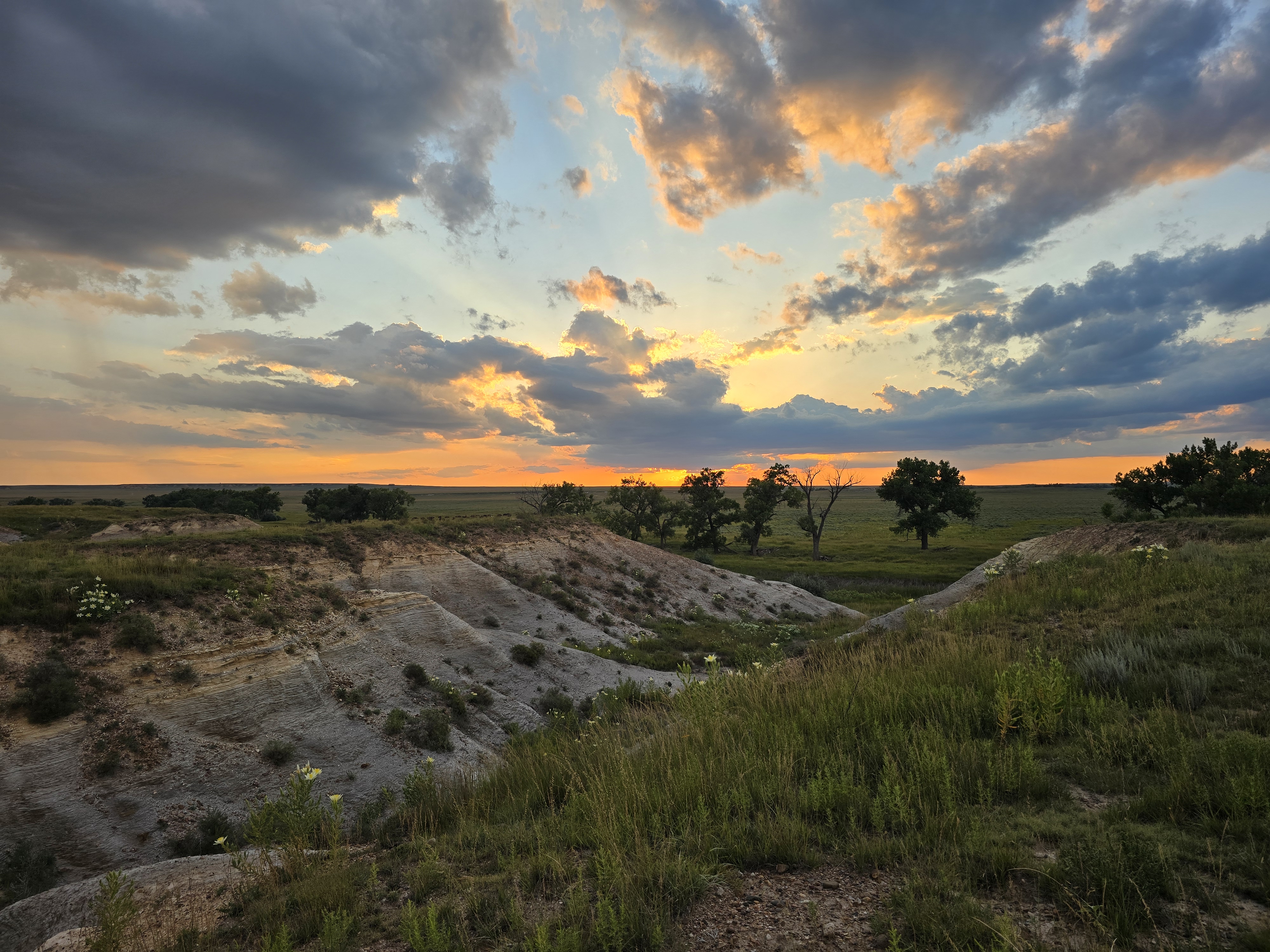
In 2025, we teamed up with TravelStorys GPS, an award-winning developer of accessible and informative multimedia tours, to create a guided audio tour of Smoky Valley Ranch. Visitors are invited to immerse themselves in the history of the land, learn about its biodiversity and discover more than ever before. The free, self-guided audio tour through Smoky Valley Ranch and Little Jerusalem Badlands offers a unique way to explore the area’s rich ecology, geology and history.
Located 30 minutes from Oakley, Kansas, along the Western Vistas Historic Byway off of I-70, Smoky Valley Ranch features remarkable rolling hills, flowing grasses and abundant wildlife, including lesser prairie chickens and herds of pronghorn, mule deer and bison.
The Smoky Valley Ranch Audio Tour was made possible with funding in part by Kansas Tourism.
Advocating for Nature in Kansas and Beyond
Policy Makes Conservation Possible
Our approach to policy isn’t just about influencing legislation—it’s about creating lasting systems that protect nature and benefit people. Whether it’s defending public lands or shaping climate policy, our strategy is built for long-term success. And right now, the policies and funding that protect our lands, waters and communities are under serious threat.
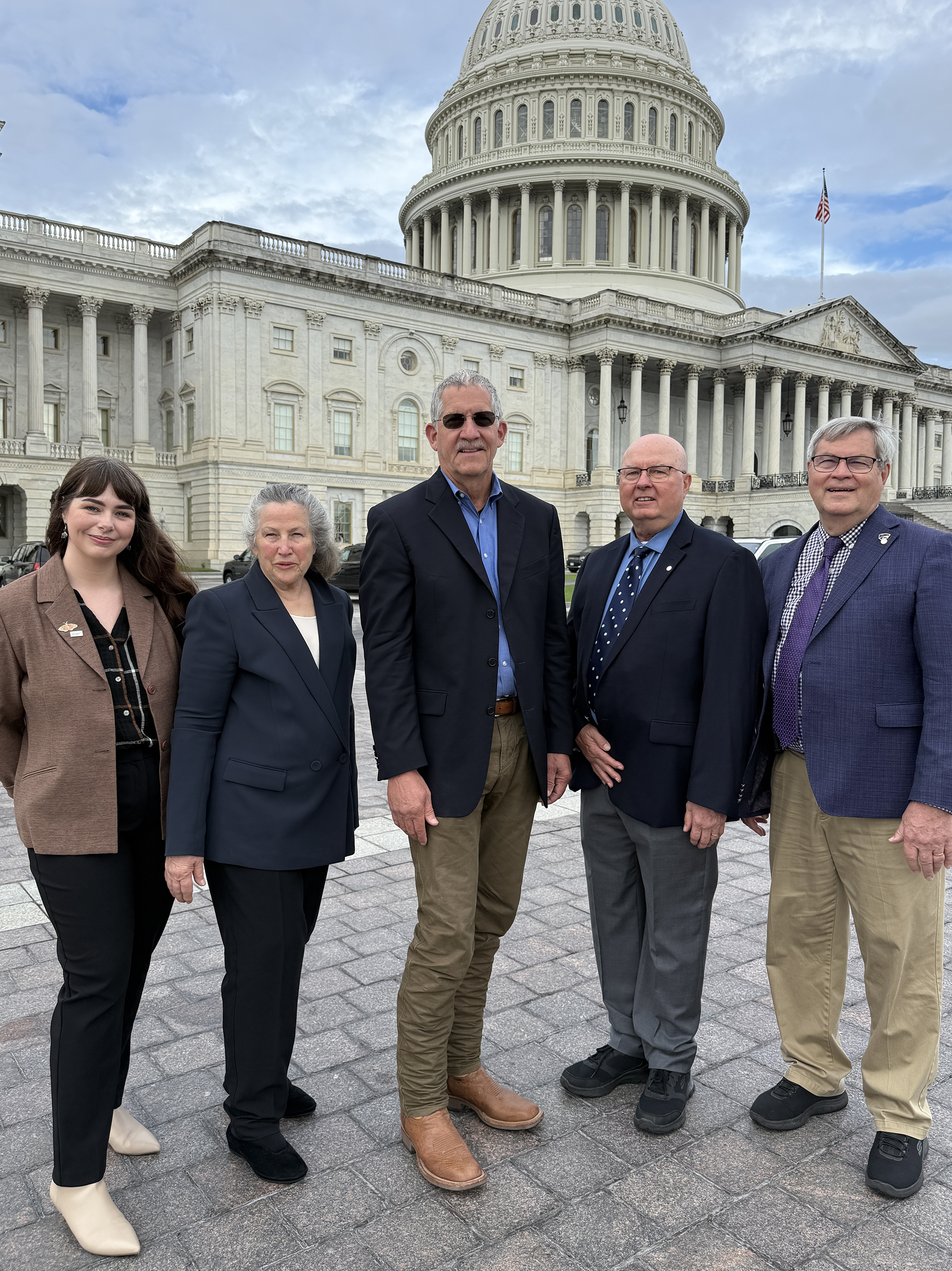
In October 2025, TNC hosted its largest-ever Advocacy Day during the biannual Volunteer Leadership Summit in Washington, D.C., despite a government shutdown. More than 340 trustees from all 50 states and 11 countries held more than 240 Hill meetings, including 131 with Republican offices and 109 with Democratic offices. Kansas staff and trustees met with Senators Moran and Marshall, Representatives Davids and Schmidt, and staff from Representatives Mann and Estes to advocate for a new Farm Bill, defend public lands and share real stories from Kansans whose lives are shaped by conservation.
Back home, The Nature Conservancy is a proud member of Kansans for Conservation—a growing coalition of more than 40 organizations representing farmers, ranchers, educators, businesses and outdoor enthusiasts. Together, we’re pushing for long-term, dedicated conservation funding in Kansas. In 2025, we mobilized more than 100 advocates for a day of action at the statehouse. After introducing bills in 2024 and 2025, we’ve refined our strategy, expanded our coalition and built momentum. In 2026, we’re advancing our strongest proposal yet to invest in working lands, wildlife and outdoor recreation.
The stakes are high—but so is our resolve. We’re committed to advancing policy that is nonpartisan, science-based and rooted in practical, on-the-ground experience.
Leveraging Local Talent
Kansas Staff Selected to Guide Conservation at Scale
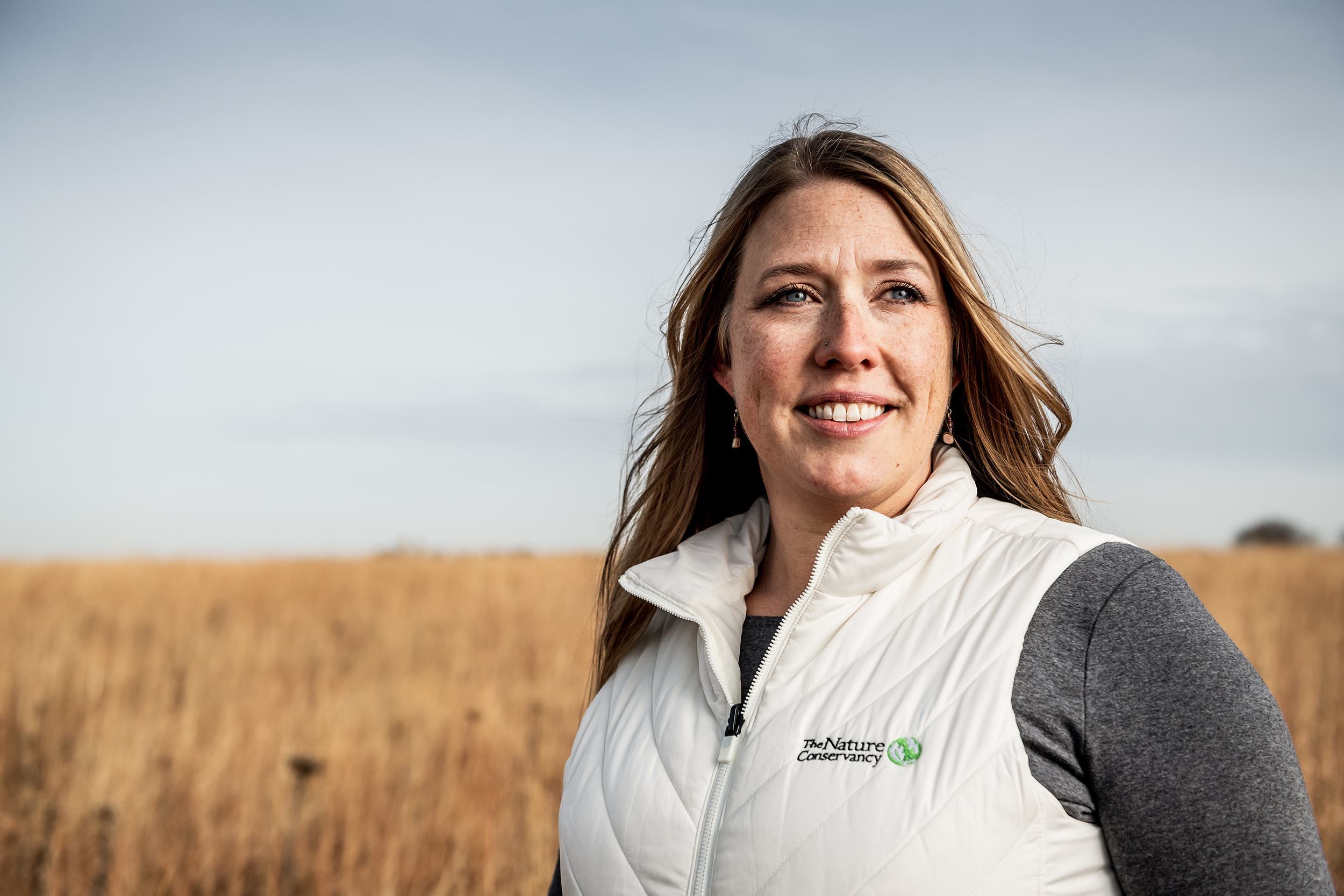
Dr. Heidi Mehl was selected for two important positions that will guide water conservation in Kansas and beyond for years to come. This year, Mehl became The Nature Conservancy’s Great Plains Division Freshwater Director, having previously served as Director of Water and Agriculture programs for Kansas. In her new role, she will coordinate water conservation strategies spanning the division’s 10 states, including Kansas.
Mehl was also appointed as a voting member of the Kansas Water Program Task Force, established by the Kansas Legislature earlier this year. With only six positions for non-legislative members, this is a big win for conservation. The task force aims to identify risks to water quality and quantity, determine approaches to manage those risks and find a long-term, dedicated funding source for water projects. The task force will submit reports of its findings and recommendations to the governor and legislature in 2026 and 2027.
“Water connects us all across communities and across landscapes. It’s a crucial element that’s needed by all living things.
“However, human activity has impacted freshwater ecosystems more than any other habitat type. Freshwater plants and animals have declined by 83% since 1970, and only a third of the world’s longest rivers remain free-flowing.
“Forging partnerships and finding pragmatic solutions that work for both people and nature is the key to reshaping the way we manage our water resources.”
Mehl holds a doctorate in geography with an emphasis on fluvial geomorphology and the cultural geography of water resources. Known for her collaborative and community-minded approach to conservation, she has worked on issues related to water quality and water sovereignty in the United States, Siberian Russia and Kenya. She is experienced in both agricultural and urban settings, working to improve water security for people and nature.
Make a Difference in Kansas
You can feel confident that your donation in support of nature will make a difference by putting you at the center of critical conservation projects underway here in Kansas and all across the globe.
Preserving the Prairie
A Legacy of Science and Stewardship at Konza
Nestled in the northern Flint Hills, the Konza Prairie Biological Station stands as a living laboratory and a testament to the power of partnership between The Nature Conservancy (TNC) and Kansas State University (K-State). Together, we are working to study and protect one of the last remaining tallgrass prairies on Earth—an ecosystem as complex as it is fragile.
K-State’s Dr. Jesse Nippert is at the forefront of this effort, tackling one of the prairie’s greatest threats: the invasion of trees and shrubs, known as woody encroachment.
In the 1960s, TNC members dreamed of establishing a tallgrass prairie preserve in Kansas. But without local staff or an office in Kansas, the vision needed a local champion. That champion was K-State professor Lloyd Hulbert, who, since 1956, had been discussing with other faculty the need for a prairie ecological research site. In 1971, Hulbert helped secure 916 acres southeast of Manhattan, Kansas, with support from The Nature Conservancy and philanthropist Katherine Ordway. By 1977, the preserve had grown to more than 8,600 acres and was officially named the Konza Prairie Biological Research Station.
Since 1980, Konza has been one of the original sites in the National Science Foundation’s Long-Term Ecological Research (LTER) program. This initiative has made Konza one of the most intensively studied grasslands in the world, generating more than 2,200 scientific publications and supporting more than 1,000 undergraduate research experiences.
From Student to Steward
For Jesse Nippert, what began as a student job collecting data at Konza evolved into a lifelong calling. Now a University Distinguished Professor in K-State’s Division of Biology, Nippert leads a team of researchers and students in exploring how prairie ecosystems function and adapt. His work is rooted in the foundational LTER research on fire, grazing and climate variability—three forces that shape grasslands globally.
The Silent Spread of Shrubs
Since 2010, Nippert has been investigating how native woody plants like American plum, rough-leaf dogwood and smooth sumac are overtaking grasslands. These species, once confined to specific areas, are now spreading rapidly. Resistant to traditional control methods, they threaten the biodiversity and resilience of the prairie.
“The problem is these woody shrubs won’t stay small,” Nippert warns. “We don’t yet have the tools to stop this threat.” The shrubs are clonal, meaning they reproduce through vegetative propagation, often via underground stems called rhizomes, to form large, connected colonies. This clonal growth gives them advantages like rapidly resprouting after disturbances and spreading to shade out competition.
His research has revealed that these plants don’t just crowd out native grasses—they alter the very soil and water systems that sustain the prairie. One of Nippert’s studies determined that, even after woody plants were removed from streambeds, water still failed to flow. The reason? The plants had changed the subsurface structure, creating deep channels that persist for decades and reduce water available to other species.
Nippert’s message to landowners is clear: early detection is critical.
“The only thing that is effective is to not ignore these species when they show up in locations where they can spread. It’s so much easier to remove an individual specimen before it takes over the landscape.”
Local Lessons, Global Impact
Nippert’s work extends beyond Kansas. For more than 20 years, he has studied bush encroachment in South Africa, comparing results across continents to better understand how clonal shrubs behave and how best to manage them. These insights are helping to inform conservation strategies not just in the Great Plains, but in grassland ecosystems worldwide.
Through his collaboration with The Nature Conservancy, Nippert is helping shape management plans for landowners that support both ecological health and community stewardship of Kansas prairies and beyond.
Burning Better Together
Preserving Nature’s Balance through Prescribed Fire
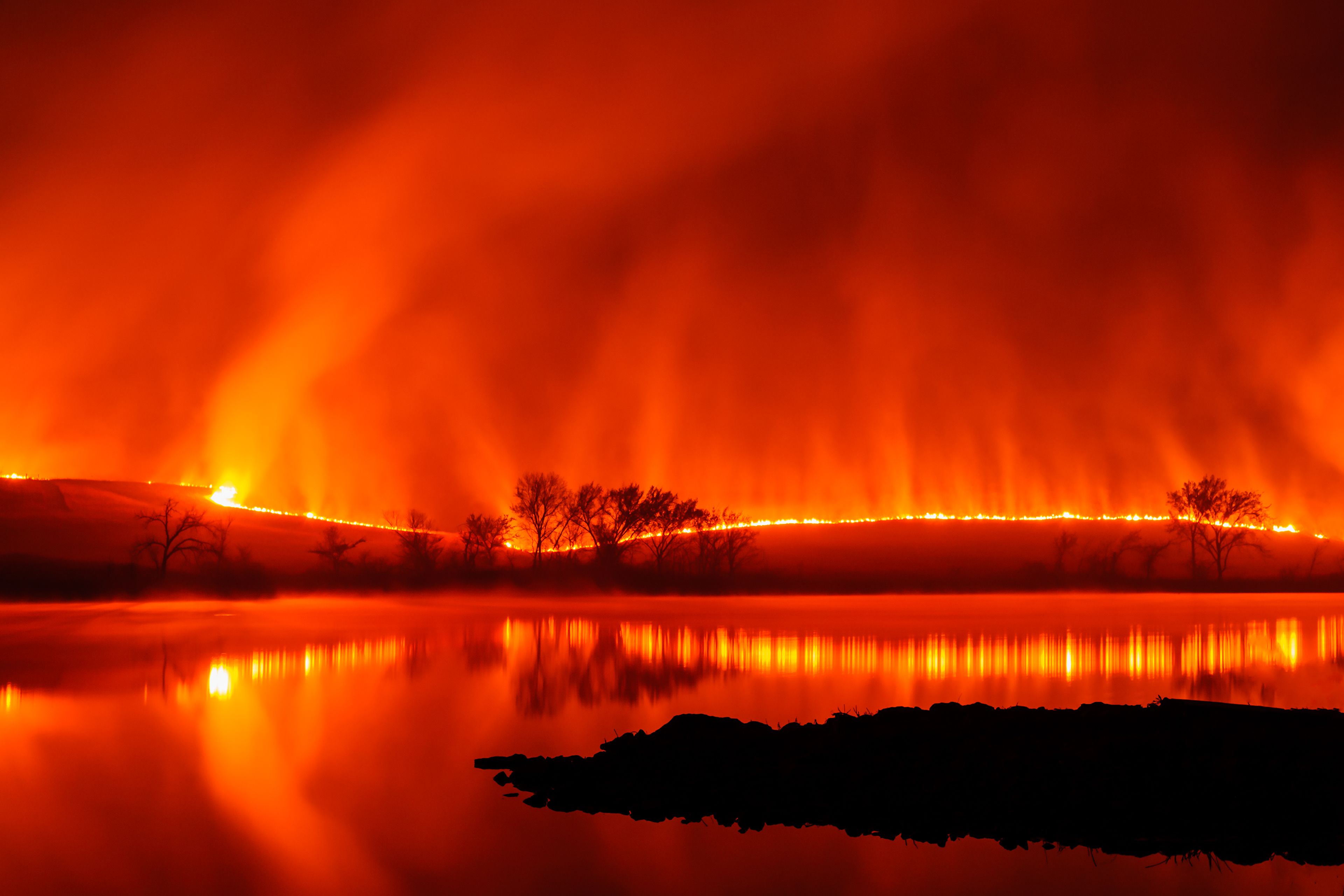
Grasslands evolved with fire—both natural wildfires and those used intentionally by Native caretakers before colonization. Today, prescribed fire remains a crucial tool for maintaining and enhancing prairie health, yet its use varies widely.
Since European settlement, fire has largely been suppressed in North American grasslands, contributing to ecological and economic degradation from woody plant encroachment.
Eastern red cedars and other woody plants now invade rangelands at alarming rates, reducing biodiversity and grazing productivity. In the Flint Hills, a strong culture of burning has helped keep cedars in check, but western Kansas faces greater challenges where fire has been less common historically.
Burning also supports economically important beef weight and prevents trees and woody shrubs from crowding out prairie plants. Research supports innovative techniques like patch burning—burning one-third of a ranch each year—to create a diverse, “patchy” landscape that benefits species such as grassland birds while maintaining cattle weight gains.
In addition to using “good fire” as a critical management tool on our own preserves, The Nature Conservancy partners with private landowners and organizations like the National Park Service and Konza Prairie Biological Station to restore fire’s natural role and help communities prepare for, manage and coexist safely with fire. We help create burn plans, share equipment and provide technical support. In western Kansas, TNC also supports community-led prescribed burn associations, who work together to put more fire on the ground and control cedar spread.
These strategies strengthen both ecology and economy, ensuring Kansas grasslands remain resilient for future generations. By promoting fire as a practical and sustainable management tool, we can protect native wildlife, improve ranching operations and preserve the unique character of Kansas prairies.
Generational Grasslands Expansion
Collaborating with Ranchers in the Flint Hills
Tallgrass prairie once stretched from Texas to Canada, a sea of grass with big bluestem that grew more than eight feet toward the sky. Today less than 4% of it remains, and the largest swath is in the Flint Hills of Kansas.
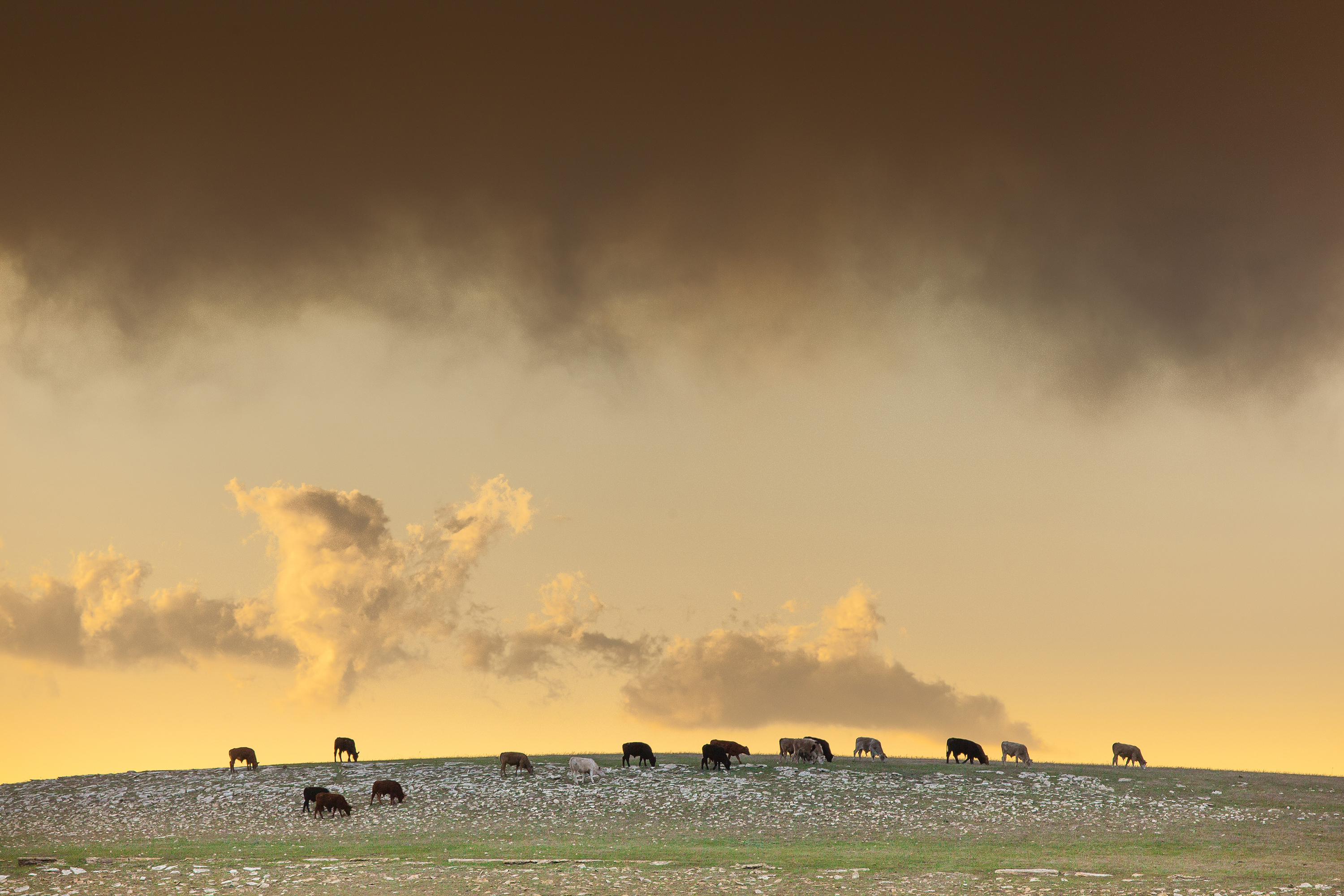
Ranching has been the backbone of the Flint Hills economy since the 1850s and has played a vital role in preserving tallgrass prairie. Cattle thrive on the nutrient-rich grasses, and their grazing allows room for other plant species, such as milkweed, and areas of short vegetation required by some birds, like horned larks. The areas cattle don’t graze can become dense thatch that provides cover for nesting birds like prairie chickens.
Recognizing that ranchers are key to the future of this endangered region, this year TNC expanded its innovative Generational Grasslands program to the Flint Hills. By keeping grasslands intact, ranchers provide an enormous benefit to society: healthy grasslands that clean our air and water, store carbon and provide food and recreation.
The goal of Generational Grasslands is to establish an economic model that partially compensates ranchers for the benefits their land is providing to society and incentivizes the long-term stewardship of grasslands. By working together, ranchers and TNC conservation specialists can preserve critical areas, make ranching more profitable and bolster rural communities.
The support we provide to participating ranch families can include:
- assistance with federal funding applications
- additional private funding and incentives
- sustainable grazing plans
- estate and generational transfer planning
- invasives removal and treatment assistance
- prescribed fire recommendations
- workshop and field demonstrations
This is the latest chapter in The Nature Conservancy’s long history of protecting special places in the Flint Hills. The Flint Hills expansion joins earlier and ongoing Generational Grasslands projects in the Chalk Bluffs of northwestern Kansas and the Red Hills of south-central Kansas and into Oklahoma. Since the program began in 2021, TNC has provided technical and/or financial assistance for more than 300 ranching families.
Create Your Own Conservation Legacy
What better legacy is there to leave than your commitment to protecting the Earth for future generations? Whether you are taking the first steps toward planning your estate or are in the process of updating your estate plan, The Nature Conservancy is here to help.
Download
Stories of TNC's work to protect Kansas's prairies and streams—and helping others manage their land with conservation in mind.
Download
Sign Up for E-News
Sign up to receive monthly conservation news and updates from Kansas. Get a preview of Kansas's Nature News email.
Explore More

Volunteer in Kansas
Join TNC and fellow conservationists at volunteer opportunities across the state!

Q&A with Tony Capizzo: Flint Hills Initiative Director
The Flint Hills of Oklahoma and Kansas nurture some of the greatest biological diversity in the world. TNC’s Tony Capizzo is leading the charge to protect and preserve this incredible ecoregion.

Collaborating for Conservation
TNC in Kansas is proud to be a member of Kansans for Conservation, a statewide coalition working to fund working lands, wildlife, outdoor recreation and education.