


Merwin Preserve at Spunky Bottoms
Spunky Bottoms is a 2,026-acre preserve that is part of the Illinois chapter's effort to restore and protect floodplain habitat in the Illinois River Valley.

Illinois’ first floodplain restoration project along the Illinois River comes back online.
TNC’s restoration and management of wetlands, a rare freshwater habitat in Illinois, supports vital biodiversity, benefits the local community and informs and inspires wetland conservation throughout the region and beyond. In this article you will:
In a pocket along the Illinois river, deep in Brown County, you’ll find a quiet wetland oasis where mossy trees grow, songbirds trill and river otters race. It was here that Denim Perry spent his first day as a staff member for The Nature Conservancy (TNC) nearly 20 years ago.
Eager to join a TNC research crew who were out in canoes testing the water quality, he yanked off his boots and waded into the heart of the Merwin Preserve at Spunky Bottoms. Moving through the mist, parting curtains of cattails, Perry arrived at the canoe only to discover—
It was the wrong canoe.
“I was so eager to participate in science and stewardship at Spunky that I didn’t realize I was heading toward a totally different group of researchers, who had no idea who I was,” Perry says. “It was a moment I never forget, and I bet they didn’t either.”
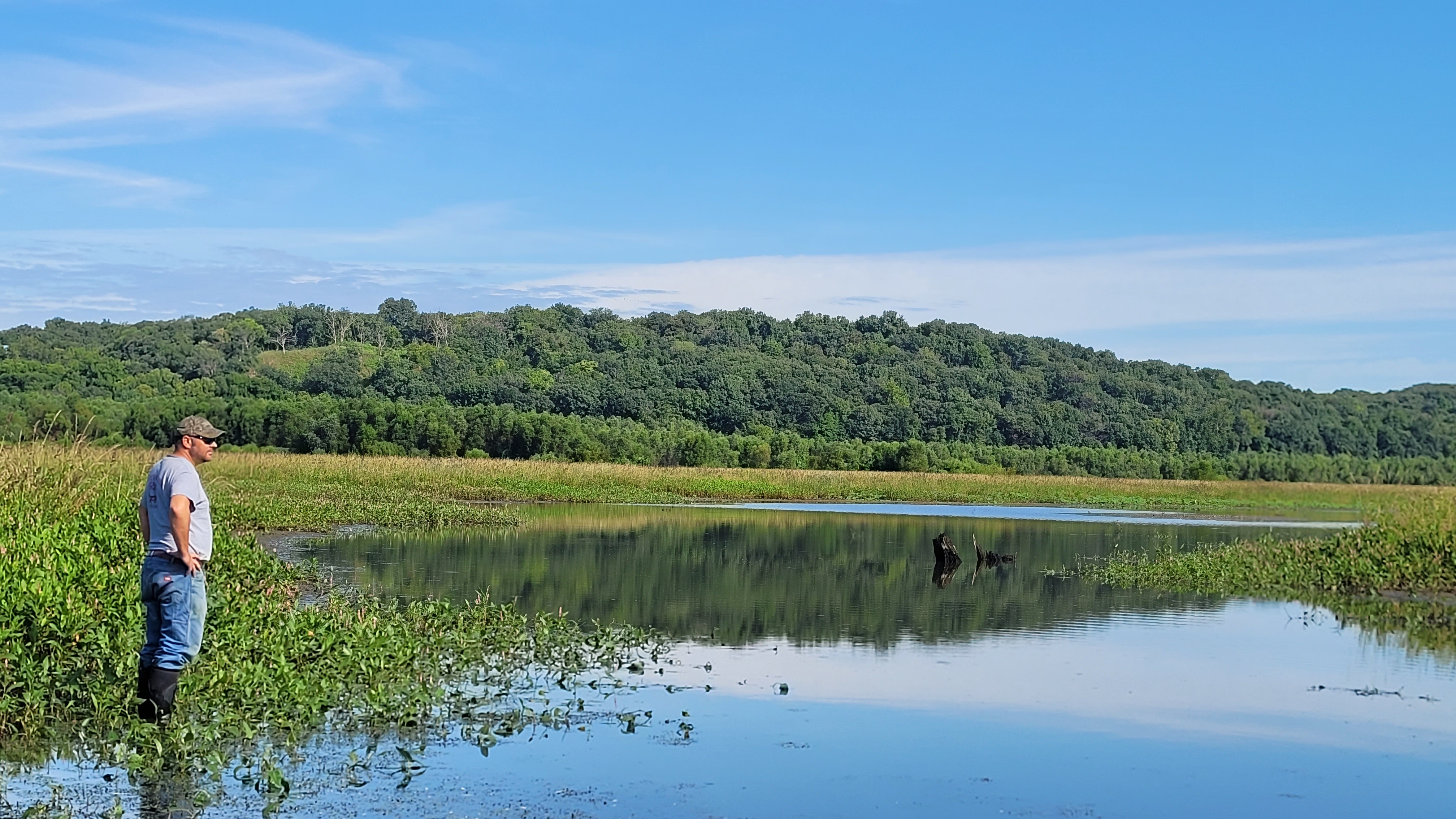
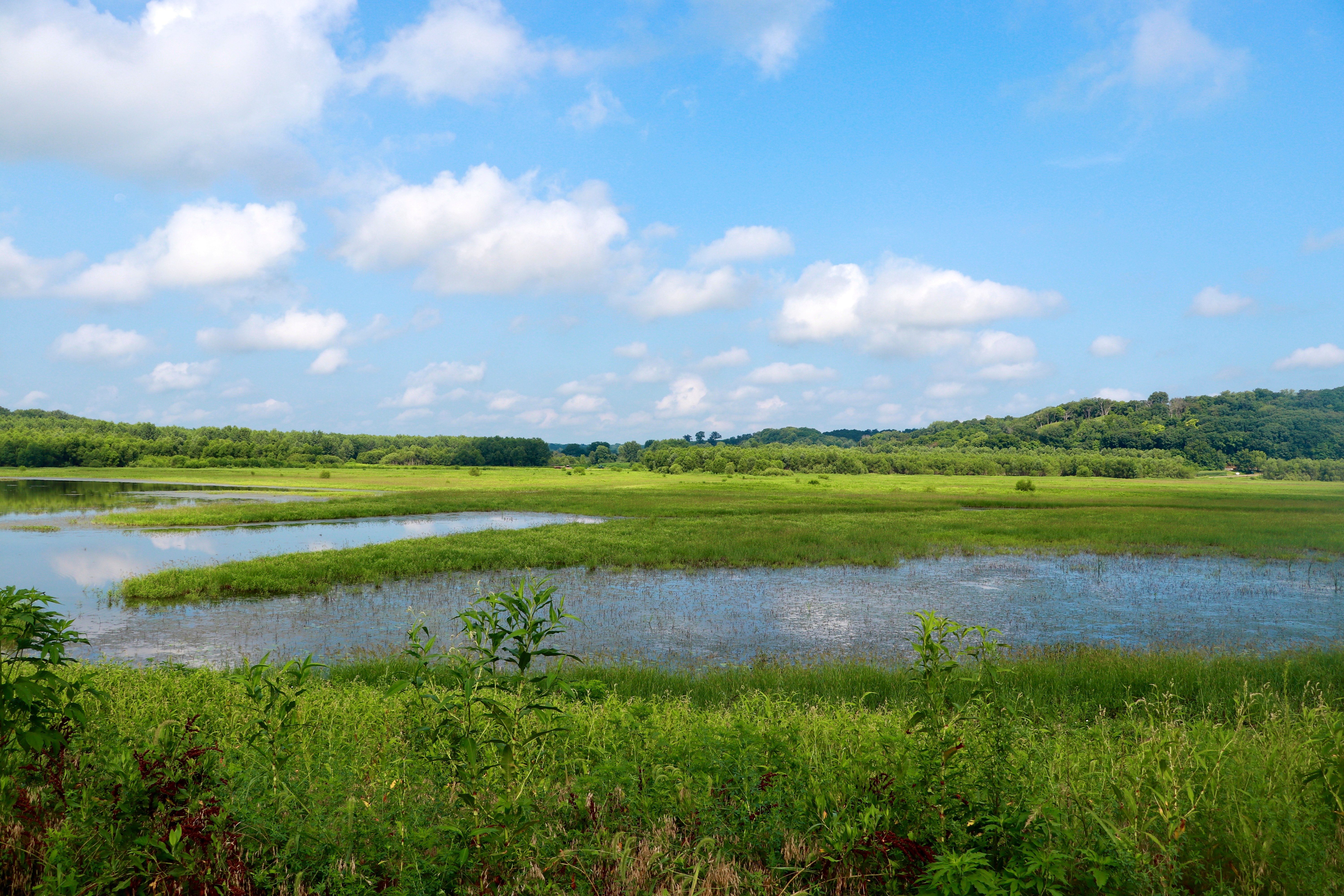
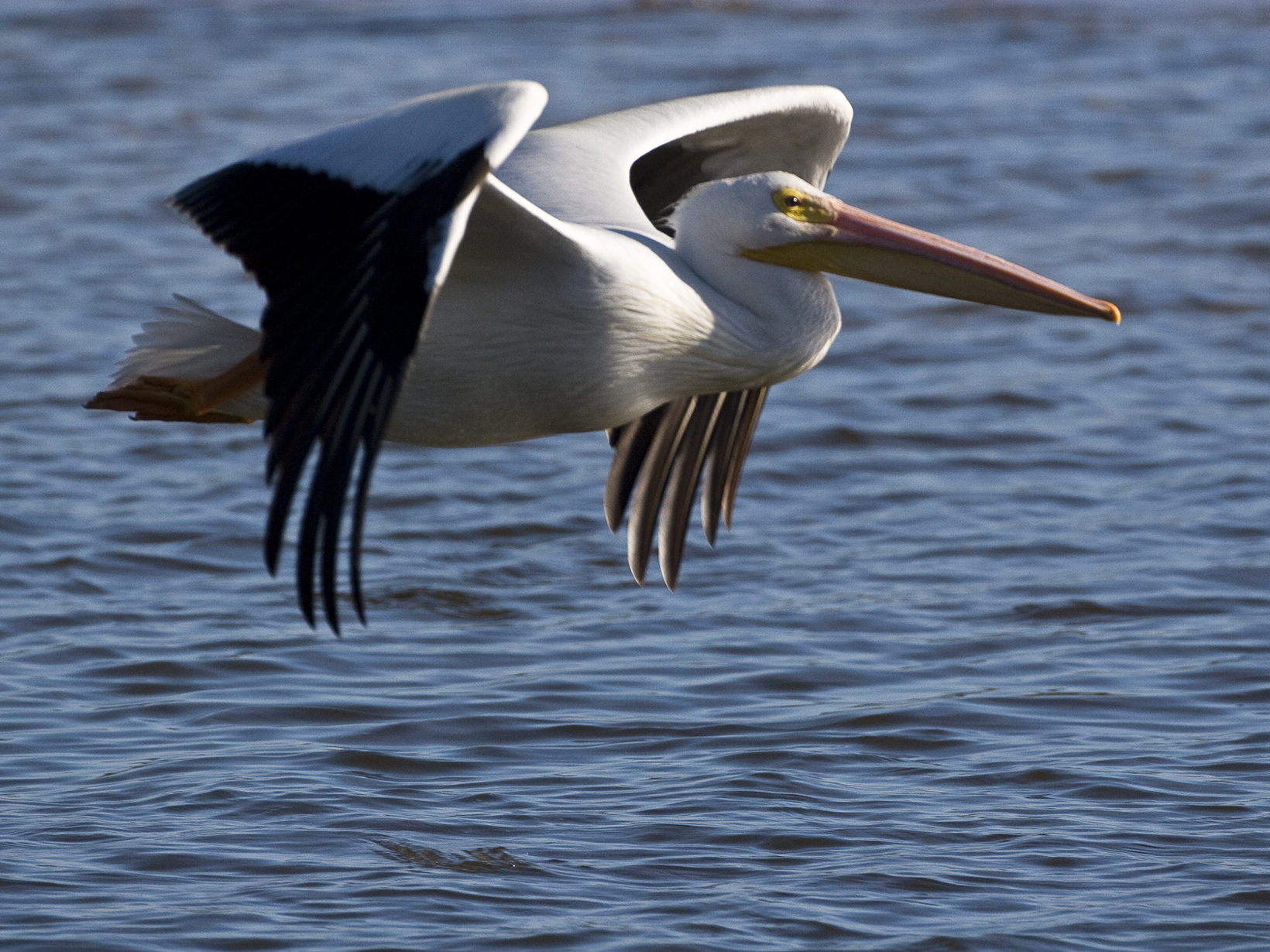
Today, Perry is the Illinois River project deputy director for TNC, and Spunky Bottoms is one of the sites he manages. This 1,300-acre preserve is a haven for vital wetland habitats like emergent marshes, as well as bottomland forest and oak-hickory forest. It supports a wide variety of wildlife, from pectoral sandpipers to cricket frogs and even mussels, which are rare today but were once abundant throughout the Illinois River valley.
“I grew up in the area, and my grandparents had a farm that was adjacent to Spunky Bottoms, so I saw firsthand the impact restoration had on the wetlands,” Perry says. “I’d go out and see these vast floating beds of big lotus flowers and all these amazing frogs and birds, like yellow-crowned night herons and black-crowned night herons. These species used to be common in the Illinois River valley, but I’d only seen them at Spunky, which is what got me interested in conservation in the first place.”
The Merwin Preserve at Spunky Bottoms, a 1,300-acre preserve, is a haven for vital wetland habitats like emergent marshes, bottomland forest and oak-hickory forest. It supports a wide variety of plant and animal life.
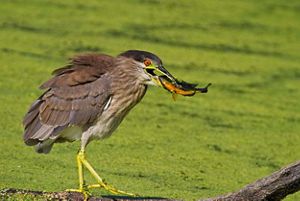

Catch of the Day: Black-crowned night herons can sometimes be seen at Spunky Bottoms. © John Absher/TNC Photo Contest 2019
American Lotus Blooming: Every summer, superblooms of American lotus cover the landscape. © Ian Adams Photography
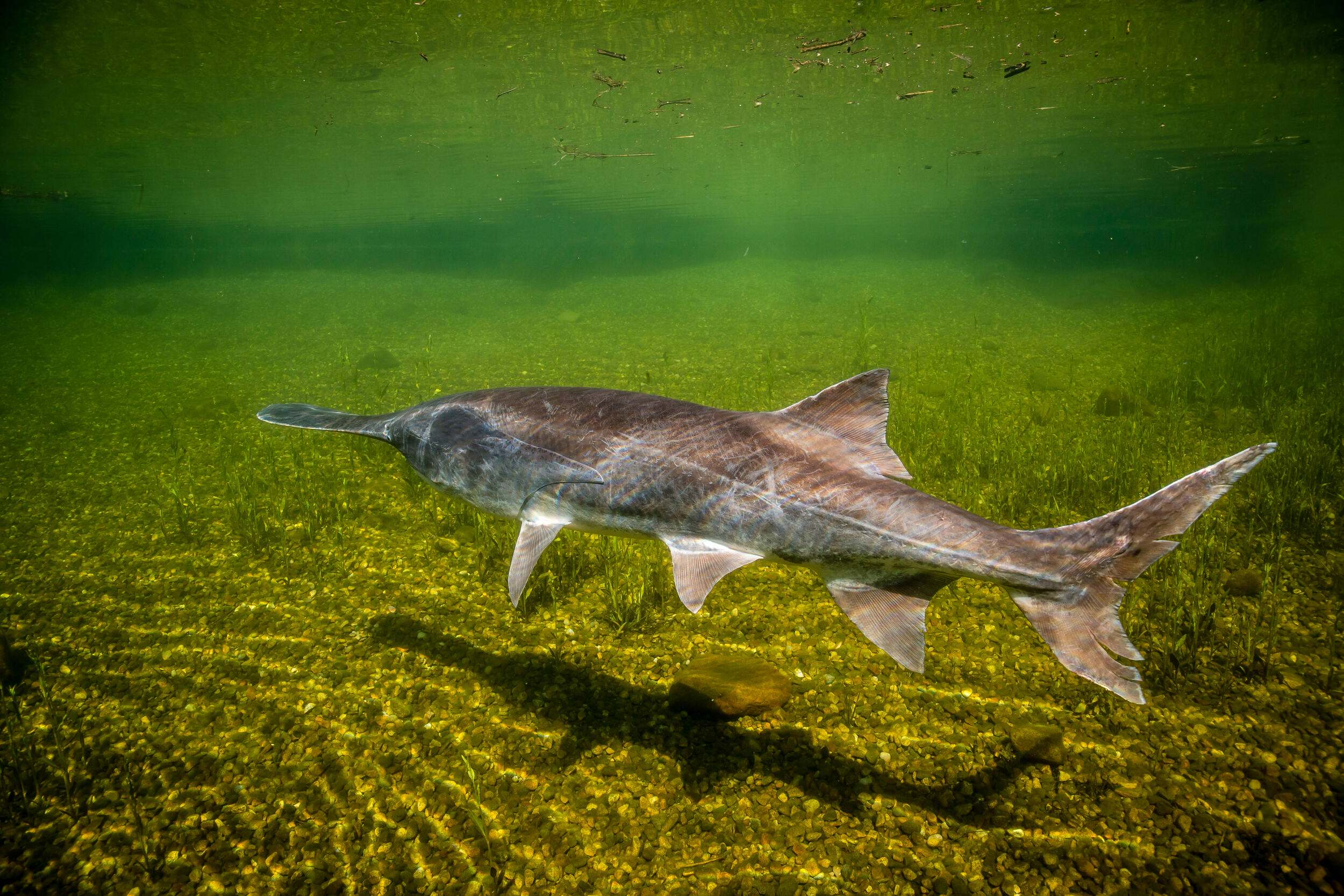
Paddlefish: Paddlefish are one of the key fish species at Spunky Bottoms. © Ryan Hagerty/USFWS
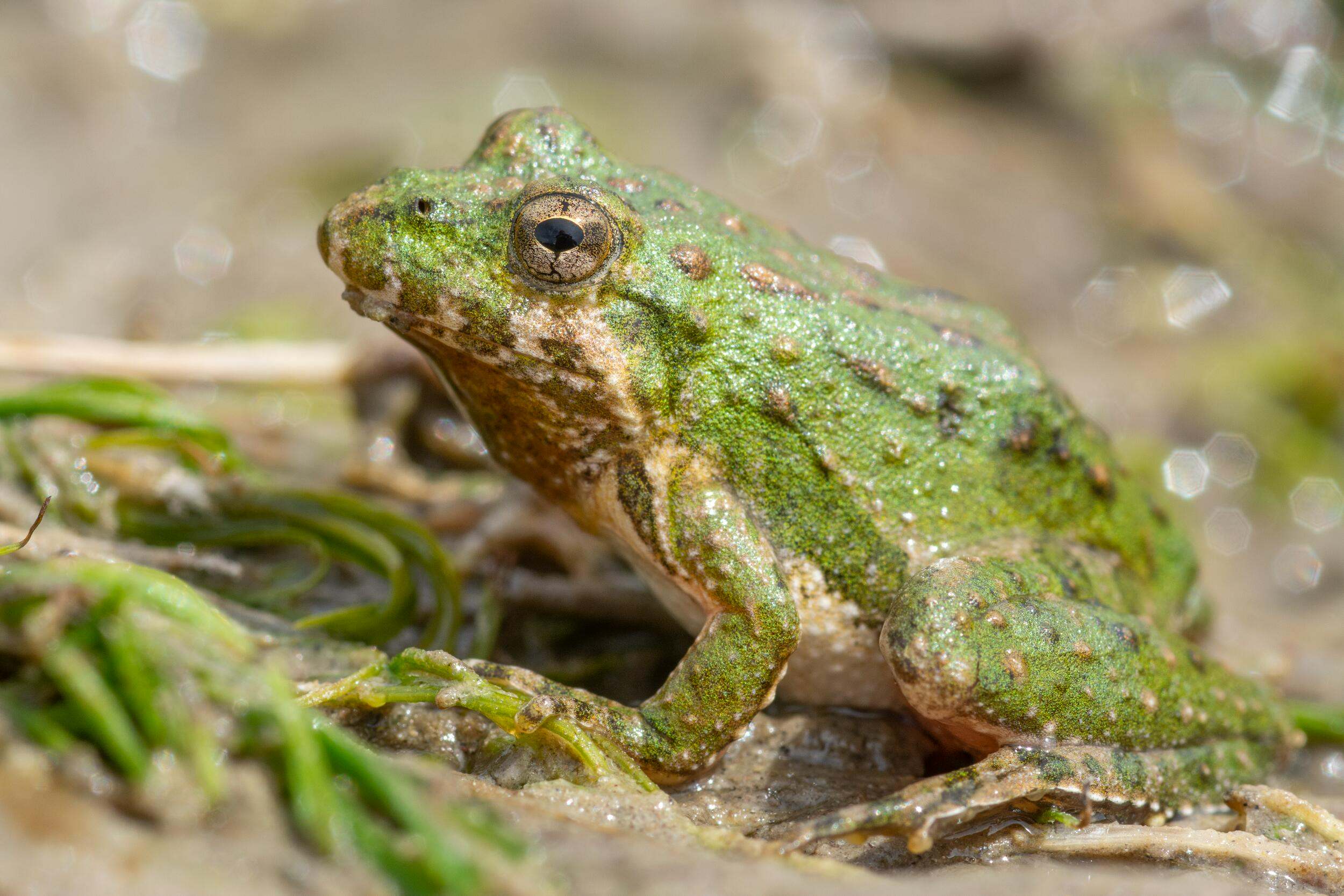
Blanchard's Cricket Frog: Spunky Bottoms has one of the most abundant populations of cricket frogs in Illinois. © Chris Helzer
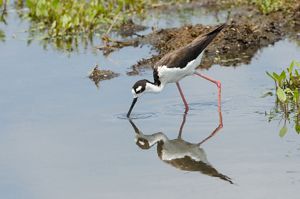
Black-Necked Stilt: Black-necked stilts are frequently seen at Spunky Bottoms. © Bill Glass
Purchased in 1997 with support from the Merwin family, Spunky Bottoms is TNC’s first floodplain restoration project along the Illinois River, although the fallout from a historic flood in 2013 halted recovery efforts until recently. It is part of our larger strategy to conserve biological diversity by restoring functional floodplain habitat throughout the Illinois River valley.
This region was once one of North America’s most ecologically and economically significant river systems, providing crucial habitats for wildlife and supported the well-being of local communities. Then—to make way for farming, communities and industry—people constructed dams and levees and drained floodplains, which are low-lying areas near rivers. These well-intended changes brought unintended consequences that altered our freshwater ecosystems on a massive scale.
As a result, the connections between the Illinois River and roughly half of its historic floodplains have been severely altered, and nearly 90% of the wetlands in Illinois have disappeared. These effects had a devastating effect on local wildlife, threatening migratory birds and contributing to the collapse of the local fisheries and mussel communities. Nearby communities continue to face an increased risk of damage from severe weather events, like floods, without wetlands to protect them, and outdoor recreation industries suffer.
Due to severity of the changes, restoration requires long-term on-the-ground stewardship activities, also known as continuing “active management” techniques.
“Everything we do, from water management to stewardship activities like prescribed fire, is because these places can't survive left totally alone anymore,” Perry says. “They need a little bit of help to recover and stay healthy.”
Actively managed wetland sites, like Spunky Bottoms, often rely on a specific intervention to manage the flow of water, as well as fish or natural materials like sediment, in and out of the habitat. This is typically a type of infrastructure installed at a connecting point between the wetland and the larger river system.
Since 2015, TNC has been designing, installing and testing a premier suite of active wetland management methods at our Emiquon Preserve in central Illinois. Using what we learned at Emiquon, we then selected a specialized suite of interventions that would be most effective and relevant for Spunky Bottoms. This targeted combination includes a large gate in the berm separating Spunky Bottoms from the river system, as well as multiple sets of stop logs, which are removeable barriers that can be placed at different heights to achieve specific goals. For example, if there is a heavy rain event forecasted, you can set the stop logs at a specific height to keep the desired water volume in the preserve, and any excess water will run over the stop log and out the gate into the larger system.
“We’re using the system to try and mimic the natural ebb and flow of historic river processes, which were disrupted a long time ago,” says Randy Smith, director of TNC’s Illinois Rivers Program. “Wetlands naturally cycle between dry periods and flooding, which is really important for ecological function, like providing overwintering habitat for fish and supporting food sources for migratory birds in spring.”
Since all the interventions at Spunky Bottoms are manually operated, they are more cost-effective than other methods that require electrical pumps to manage water levels. In addition, most wetland sites employ only one type of infrastructure, but TNC’s pioneering approach proves that adapting a suite of interventions can be far more precise and effective for restoration and recovery. This template could influence thousands of acres of wetland management within the Illinois River Valley and beyond, ultimately informing and inspiring floodplain management efforts throughout the world.


The advanced water management system at Spunky Bottoms is also a vital tool for floodplain restoration research. As an especially resilient site, Spunky Bottoms remains a close approximation of historic wetland habitats along the Illinois River. This makes it an ideal living laboratory, where we can study best practices for reconnecting healthy wetlands and managing connected wetlands in a river system that has been fundamentally altered and is experiencing more frequent and larger flooding events. The valuable insights we gain from our research projects here will be adapted and integrated at other floodplain restoration and management sites in the region and beyond.
TNC’s additional restoration work at the site includes planting more than 7,500 trees in the bottomland hardwood forest areas. These low hardwood ecosystems tolerate flooding well and can store excess water during major storms. We also manage invasive species through manual removal and prescribed fire applications.
“Today, less than 10% of the plant species we find at Spunky Bottoms are invasive, so while the habitat is still somewhat degraded, we also have a lot of hope for recovery,” Smith says.
TNC is looking into ways that can provide public access to Spunky Bottoms. Public natural areas support local outdoor recreation economies and provide people numerous physical, mental and emotional health benefits. Possible activities in the near future could include wildlife viewing and paddling, extending the site’s value beyond research.
But future visitors should be prepared—if you go canoeing, look out for Denim. He may be nearby, hidden by a cluster of cattails, tracking schools of fish and searching for the elusive native mussels.
Learn more about The Nature Conservancy's wetland restoration work in Illinois and around the world.


