
interstitialRedirectModalTitle

interstitialRedirectModalMessage

Places We Protect

Nachusa Grasslands

Illinois

A small herd of bison graze at Nachusa Grasslands.
Nachusa Grasslands Bison graze high-quality prairie restored and protected by TNC staff and volunteers. © Charles Larry

On over 4,000+ acres of restored and remnant prairie, Nachusa Grasslands is home to 245 species of birds, more than 700 native plant species and a herd of bison.

Overview

Description

Nachusa Grasslands has more than 4,000 acres of prairies, savannas, wetlands, streams and working lands in Lee and Ogle counties in north-central Illinois. Prairies are one of the most endangered ecosystems in the world. The hallmarks of the preserve are its high-quality remnant communities, re-created prairies of exceptional diversity, a community of volunteers engaged in all aspects of the project and commitment to excellence and innovation in the science and practice of natural areas management. Fire and grazing are the primary ecological drivers The Nature Conservancy uses to sustain this network of native, restored and re-created communities.

Early history

The vision for the preserve can be tracked back to the 1970s, when the whistling call of an upland sandpiper made prairie enthusiasts Dot and Doug Wade pull their car over to have a look in the pastures we now call Nachusa Grasslands. They saw heavily grazed pasture, but the plants being grazed were prairie. As they got to know the landscape, they found seeps, springs, sedge meadows, a fen and oak savannas.

A few years later, TNC staff members attended a large meeting of Illinois conservationists. The question of the day was: Should conservation put some of its resources into larger landscapes that had lower quality habitat but had areas big enough for animals to prosper and ecological processes to function? Or should they focus only on the smaller, high-quality sites?

One area circled on the map that day that all participants could agree on for a potential project was at Nachusa. Why? Because of the extensive remaining prairies, woodlands and wetlands. The Nature Conservancy team returned to their office with a mission.

First acres

In 1985, small land tracts in the heart of what is now the preserve were up for sale. With the help of various donors and supporters, TNC bought these parcels at auction. As 1986 ended, TNC owned 397 acres of this land, and Nachusa Grasslands was born.

Nearly four decades later, the project is still thriving, growing and learning.
Access

OPEN TO THE PUBLIC

Pets and Other Power Driven Mobility Devices (OPDMDs) are not allowed at Nachusa.

Hours

Open from sunrise to sunset

Highlights

Visitors can enjoy hiking, birdwatching and viewing bison herds across Nachusa’s 4,000+ acres of restored and remnant prairie.

Size

4,000+ acres

Explore our work in Illinois

Photos from Nachusa Grasslands

Visitors can see bison roam and birds flutter amongst Nachusa's rolling hills, vibrant meadows and tranquil streams.

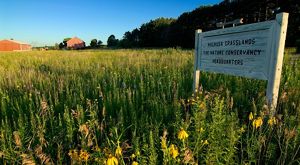
A Nachusa Grasslands sign.
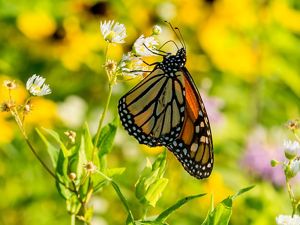
An orange Monarch butterfly sits on a flower in a grassy field.
People at Nachusa.
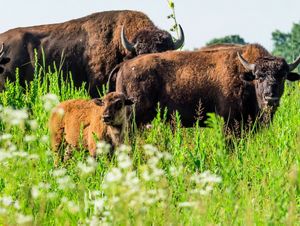
A bison family with a calf stand in a grass field at Nachusa.
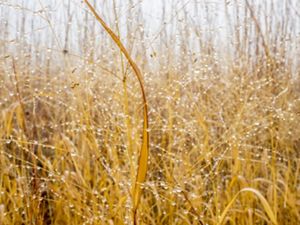
A closeup of a blade of switchgrass among a field of switchgrass.
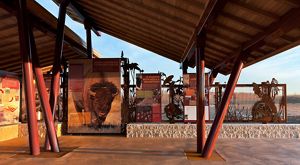
Nachusa Visitor Center.
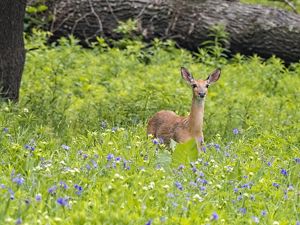
A deer stands in Spiderwort at Nachusa Grasslands.
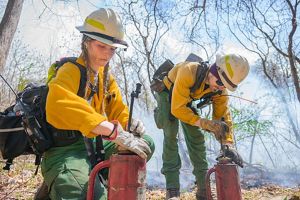
Prescribed fire burns a patch of grass at Nachusa.
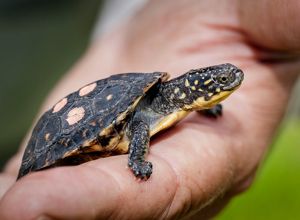
A blanding’s turtle sits in a human palm.
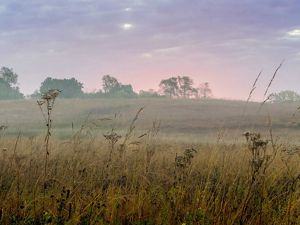
Misty horizon above Nachusa’s grassy fields at dawn.

Visit

  • At any season of the year, visitors like to catch a glimpse of Nachusa’s bison herd, which returned to the preserve in 2014. The bison roam across 1,500 acres of rolling land. Please note: they are not always visible, so bringing binoculars can be helpful. It’s also important to note that no hiking is permitted inside the fenced bison unit. Five units of the preserve are open from sunrise to sunset and are designated for hiking.

    During your visit, you can also enjoy Nachusa’s unique geological features, including steep sandstone outcrops descending into rocky meadows and streams.

    Spring

    In the spring months, you’re likely to find early wildflowers such as birdfoot violets and shooting stars. Eastern phoebes, blue-winged teals and orchard orioles are arriving to breed at the preserve. You might also spot migratory birds such as green-winged teals, alder flycatchers, ruby-crowned kinglets and palm warblers passing through on their way to summer breeding grounds further north.

    Summer

    During the summer growing season grassland birds that are regionally uncommon due to habitat loss can be seen thriving at the preserve. Look for grasshopper sparrows, dickcissels and bobolinks perched in the colorful prairie grasses and flowers. You can see Blanding’s turtles and many other uncommon or rare animals that call Nachusa home. Nachusa is home to several rare plants such as Illinois state threatened kittentails, forked asters, and Illinois endangered downy yellow painted cup. Federally endangered rusty patched bumble bee can be spotted flitting from flower to flower.

    Henslow’s sparrows can be seen in Nachusa’s prairies. They have made a comeback largely due to the U.S. Department of Agriculture’s Conservation Reserve Program, which pays farmers to rest their land. This program plants grass on farm fields that are then not plowed or mowed, allowing grassland birds such as the Henslow’s sparrow to nest successfully.

    Another success was TNC’s reintroduction of the eastern prairie fringed orchid. In 1996, we were given permission and seed to plant this threatened species, and Nachusa Grasslands now supports a robust population.

    While on a walk, look for the state-threatened regal fritillary butterfly. Seeing the reddish-orange wings, you could mistake it for a monarch, but a closer look reveals its darker hind wings. Its larvae feed exclusively on violet plants. We collect and add native violet seeds to our plantings, ensuring plenty of habitat for the fritillary.

    Fall

    As fall approaches, summer’s vibrant colors fade into shades of red, orange and gold. Visitors may see crew members and volunteers collecting seed for restoration plantings and overseeding—thousands of pounds of seed are gathered all year, with the majority of seed ripening in the fall. Breeding birds such as sandhill cranes, tanagers, sparrows and other grassland species begin migrating south, while fall migrants from the north pass through. Look for ducks like scaup and northern shovelers, trumpeter and tundra swans, Philadelphia vireos and fox sparrows. The northern harrier also arrives at the preserve to spend the winter.

    In late fall, you may notice controlled burns at the preserve, an important management tool. Fire helps control non-native species, enrich the soil with essential nutrients, stimulate plants to increase seed production, reduce accumulated thatch that can lead to uncontrollable fires and assist some species in germinating or dispersing their seeds.

    Winter

    When winter arrives, snow and ice blanket the area, making it a welcome respite for visitors seeking the peace and quiet of the season. But winter is still a busy time in nature; watch for white-tailed deer, coyotes, dark-eyed juncos, brown creepers and red-headed woodpeckers.

    Many of our preserves allow deer hunting from October through the first week of January, so wearing blaze orange is suggested when hiking in these areas during hunting season.

  • Nachusa Grasslands is a wonderful place to hike, bird watch, take photos and enjoy the sights and sounds of nature. Make sure to stop by Nachusa’s Visitor Center, which features exhibits that tell the story of the preserve. From there, you can hike around the center or drive to one of five trailheads and explore.

    Trails

    There are five trails and trailheads at Nachusa Grasslands:

    Stone Barn Savanna is a lovely and extensive oak woodland with savanna along the edges, a thriving wetland, restored prairie openings and sandstone outcrops. Using your smartphone, scan the QR codes along the trail to enjoy an online self-guided tour. Please note that reception may be limited in this remote location. The tour includes seven stops at points of interest, each marked by a numbered sign. Path is gravel and dirt.

    The Clear Creek Knolls Trail traverses beautifully restored prairie and a few remnant hill prairies. There is a creek crossing about a quarter mile into the trail. At low flow, you will get your shoes wet. At high flow, do not attempt to cross this creek. Path is mowed grass and gravel.

    Big Jump Prairie offers a long, gentle descent before it crosses a tiny creek culvert. Don’t cross the creek culvert if there is significant water running over the top of it. From there, the trail weaves up to remote hilly prairie and then further back into oak savanna. The trip out and back is roughly two miles. Path is dirt and mowed grass.

    Meiners Wetlands is a half-mile trail located in the uplands of the preserve. The path itself is mowed prairie that winds through a former prairie pasture and traverses a few gentle hills.

    The Thelma Carpenter Trail is a path that meanders up a steeper incline to a remnant hill with breathtaking prairie views. Because the trail isn’t mowed, the difficulty is ranked as “moderate.”

    The Visitor Center also offers a short, easy trail from the south side of the pavilion, as well as a half-mile loop hike that you can access from either the parking lot or the pavilion's west side. That trail is easy to moderate.

  • Hours: Sunrise to sunset

    Parking: Parking is available at the visitor center, including handicap accessible parking.

    Restrooms: Two portable toilets are available at the Visitor Center.

    Visitor center: When you arrive at Nachusa, follow a gentle paved slope to the open-air Visitor Center and pavilion, which features panels that tell the story of the preserve. From there, you can hike around the center or drive to one of five trailheads and explore. Cold, potable water is also available at the Visitor Center. The path to the Visitor’s Center and area under it is paved. Hiking trails are mowed grass with gentle slopes.

    Picnic area: There is no designated picnic area. Please take all trash with you; there is no trash service at the Visitor’s Center. Nachusa’s neighbor to the south, Franklin Creek State Natural Area, offers picnic shelters, pit toilets and trails. Additionally, their timber-framed grist mill is open to the public at certain times.

    Wildlife viewing areas: You can view wildlife throughout the trails and from the Visitor Center pavilion.

    EV charging: EV charging is not currently available.

    Cell phone and Wi-Fi service: Most TNC preserves are located in remote areas, meaning cell phone and Wi-Fi service may not always be available.

    • Wear comfortable footwear suitable for natural trails, but please do not wear heavy, cleated boots that can damage them.
    • To protect yourself from ticks, poison ivy or wild parsnip, wear long pants and tuck them into your socks.
    • No matter the season, each person in your party should bring a full water bottle. Dehydration is a serious risk at any time of the year.
    • To get the most from your visit, you may want to bring some or all of the following items:
      • Snacks
      • Camera
      • Insect repellent
      • Rain gear
      • Sunscreen
      • Binoculars
      • Compass
      • Field guides (wildflowers, birds, butterflies & other natural features)
      • First aid kit
    • Our vision is of a world where people and nature thrive together. The Nature Conservancy encourages people of all ages, experiences and abilities to visit our preserves and has a zero-tolerance policy for discrimination of any kind.
    • Service animals specifically trained to aid a person with a disability are welcome. Pets are not allowed, which helps us protect vulnerable wildlife.
    • The use of Other Power-Driven Mobility Devices (OPDMDs) (utility vehicles, ATVs, Segways, golf carts, etc.) on this property has been assessed in accordance with the Americans With Disabilities Act (ADA) regulations. OPDMDs are prohibited.
    • We encourage you to hike open trails and enjoy bird and wildlife watching and other permitted activities. Please do not trespass (or park) on private property adjacent to TNC preserves. Property lines are clearly marked with yellow signs featuring TNC’s logo. To protect the plants and wildlife that call the preserve home, TNC prohibits the following:
      • Biking and mountain biking
      • Camping, campfires and cooking
      • Caving
      • Fishing (except by permit on designated preserves)
      • Geocaching (except by permit on designated preserves)
      • Horseback riding
      • Hang gliding or paragliding
      • Ice skating
      • Hunting (except by permit on designated preserves)
      • Picking flowers, berries, nuts or mushrooms
      • Removing any part of the natural landscape (shells, rocks, etc.)
      • Rappelling
      • Rock climbing
      • Snowmobiling
      • Swimming
      • Firewood collecting
      • Littering (please remove all trash)
      • Drones—aka personal aircraft, unmanned aircraft systems (UAS) and unmanned aerial vehicles (UAV)—self-propelled or other aircraft are prohibited from taking off, landing or being operated on any TNC preserve except for official TNC purposes, approved research or in an emergency landing situation. We prohibit the private use of drones on our preserves for the following reasons:
        • Privacy and enjoyment of other preserve visitors—in order to avoid capturing images of people who are not related to TNC and from whom a necessary photo release has not been obtained.
        • Wildlife disturbance—to make sure drones will not disturb resident wildlife, especially areas with many birds or ground-based nests.
        • Preserve management—unauthorized drones operating in areas where active land management is taking place, such as prescribed burning, could lead to potentially dangerous interactions.
        • Respecting neighboring property—preserve boundaries are not always apparent from the ground. We wish to be good neighbors and minimize the risk of drones accidentally crossing over from our preserves to non-TNC property.
  • If you are experiencing an emergency, please call 911.

  • Learn about volunteer opportunities through Friends of Nachusa Grasslands. Workdays also take place on most Thursdays and Saturdays.

    You may also contact preserve staff for volunteer opportunities at Nachusa.

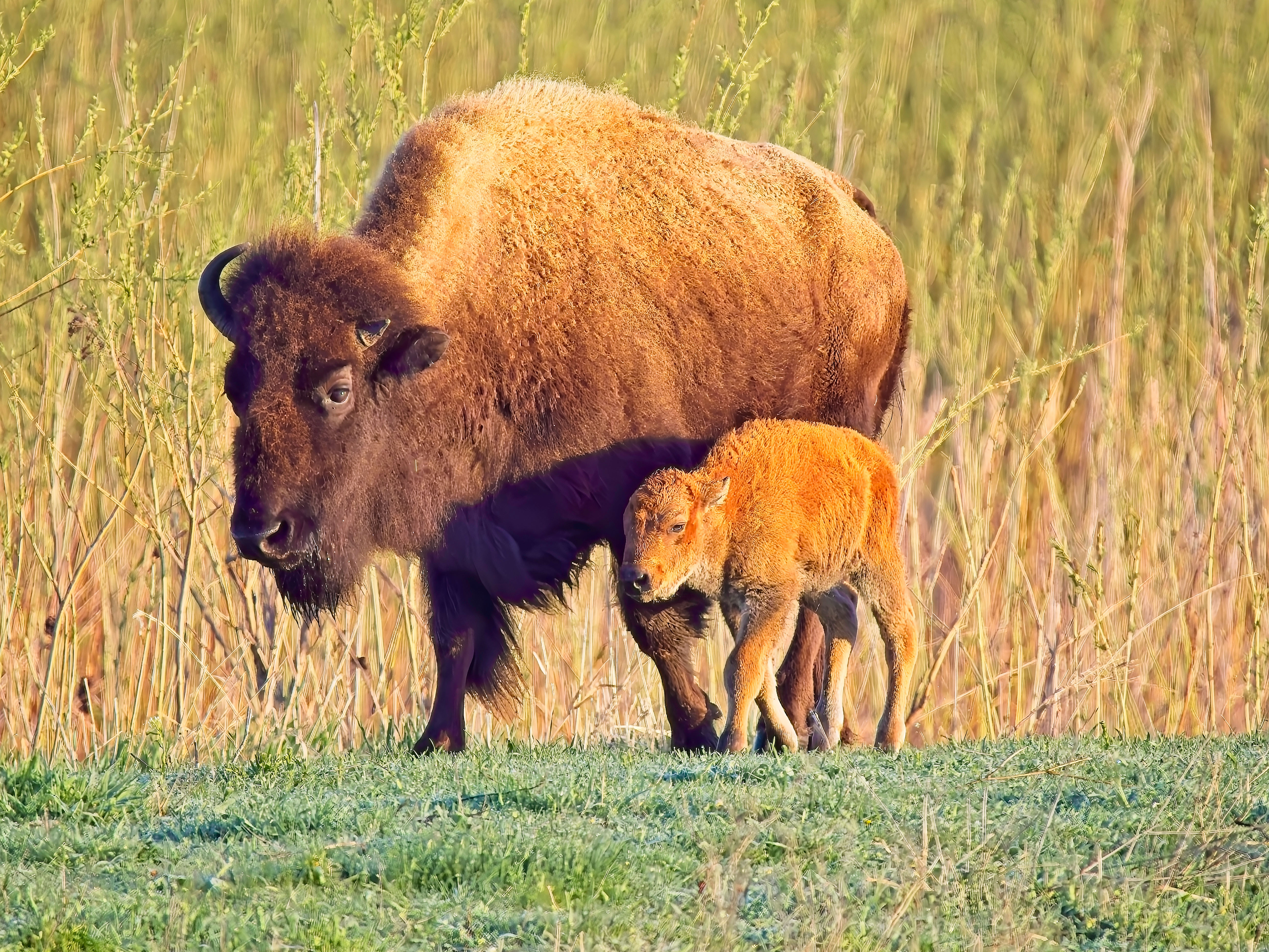
A bison calf walks next to its parent.
Calf Season Bison calves are born at TNC’s Nachusa Grasslands Preserve in the spring, typically from March to mid-May. © Charles Larry

Current Conservation Work

Protecting land and water is at the core of TNC’s—and Nachusa’s—mission, which is why the organization has been acquiring land and restoring natural communities at the preserve since 1986. TNC’s Nachusa Grasslands currently includes 4,112 acres of habitat and 690 additional acres of conservation easements. Across this acreage, Nachusa Grasslands has significant populations of rare plants and animals due to its large size and careful land stewardship.

A community of volunteers

Staff and volunteers from throughout the region work together to preserve and restore Nachusa. Volunteers have donated more than 200,000 hours of labor to the restoration and management of this marvelous example of prairie grassland. These mentored volunteers help TNC conduct controlled burns, monitor wildlife, stop the spread of harmful, non-native species and harvest thousands of pounds of seed every year. The seed is used for future prairie plantings and restorations.

Related Videos

Nachusa in Motion

20 Years of Tallgrass Prairie Restoration

Dr. Elizabeth Bach with The Nature Conservancy provides an overview of plant community responses to ecosystem restoration at the Nachusa Grasslands preserve.

(3:16)

Volunteer to Protect Nachusa Grasslands

Are you interested in preserving habitat for native plants and animals? Volunteer through our partners at the Friends of Nachusa Grasslands, a not-for-profit organization founded in 2008 by volunteers dedicated to providing for the long–term care and management of Nachusa Grasslands.

(4:25)