
interstitialRedirectModalTitle

interstitialRedirectModalMessage

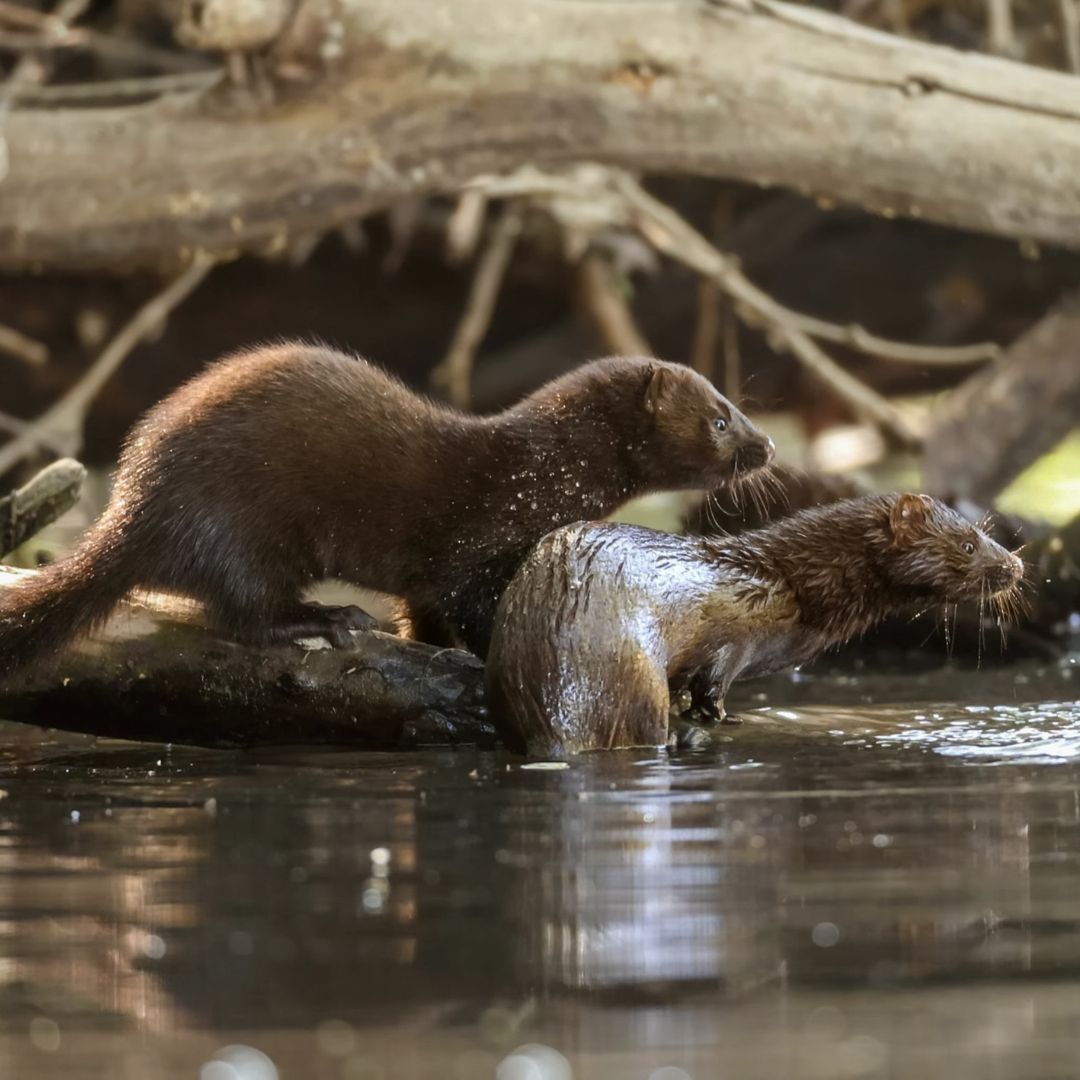
 An American mink peeks out from between deadwood and sticks out its tongue.
The Stinky American Mink For mink, love really does stink. They have two scent glands in their rear that make a foul, pungent odor, which they use for marking territory, defense and attracting mates. © Stephan Morris/Adobe Stock
Our Stories

Love Stinks...and Sings

If you think human dating is awkward, you should see how these wild things woo their mates.

Love is in the air… and in the trees, lakes, skies and burrows of the Midwest. From gentle nose touches to courtship that looks (and sounds) more like combat than connection, our native wildlife doesn’t hold back when it's time to woo a partner.

Whether you’re here for quirky animal courtship rituals or hoping to level up your own romantic playbook, these six Midwest species prove that finding a mate in the wild is loud, bold, messy—and sometimes surprisingly relatable.

Scroll or click the anchor links below to see whose moves you’d steal.
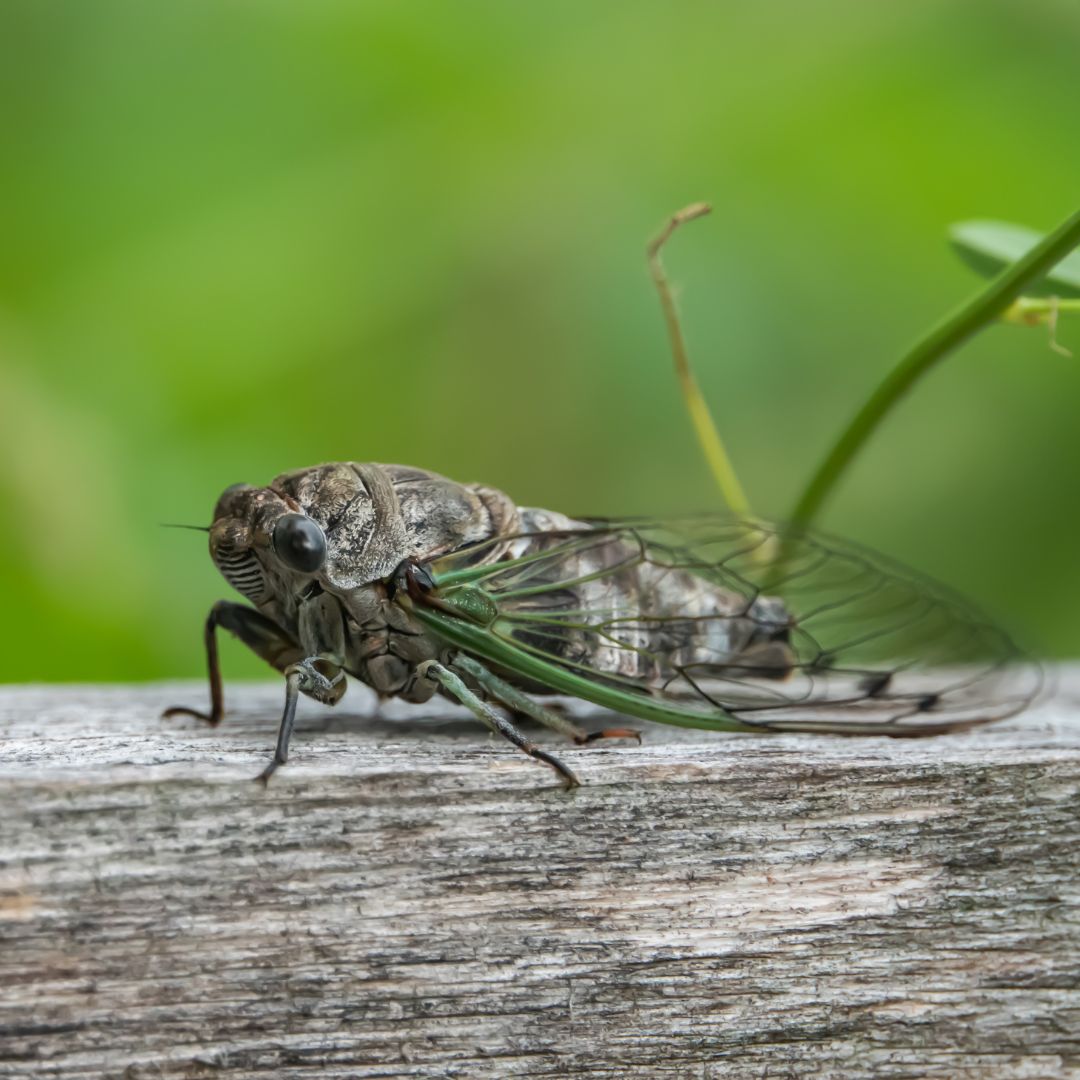
A large green and brown cicada sitting on a wooden beam against a blurry green background.
A Built-in Boombox Both male annual cicadas (like this one here) and periodical cicadas have hollow abdomens that boost the volume of their "song," to help them get noticed by females. © ErikAgar/Getty Images

The Boombox of Love

Cicadas

Summer in the Midwest comes with its own soundtrack: male cicadas (all species) buzzing their hearts out. Under their wings, they flex ridged membranes called tymbals to make that signature trill, and their hollow abdomens act like tiny guitar bodies to crank up the volume.  When a female likes what she hears, she sends back a quick wing‑flick click and the male stops the show and switches to a softer, more intimate tune to cement their mating. 

Fun fact: Each cicada species has its own unique male song and female response, including all of the 13 and 17-year periodical cicada species we get in the Midwest!

A small group of periodical cicadas, with one in the center in sharp focus, on green leaves.
A green annual cicada sitting on a green leaf.
Annual or Periodical? There are some key differences between the two types of cicadas we see in the Midwest. Annual cicadas are fairly big (up to 2.5 in long), with green-brown coloration, green wing veins and dark eyes. Periodical cicadas are smaller (up to 1.5 in long), have black bodies, orange wing veins and red eyes.
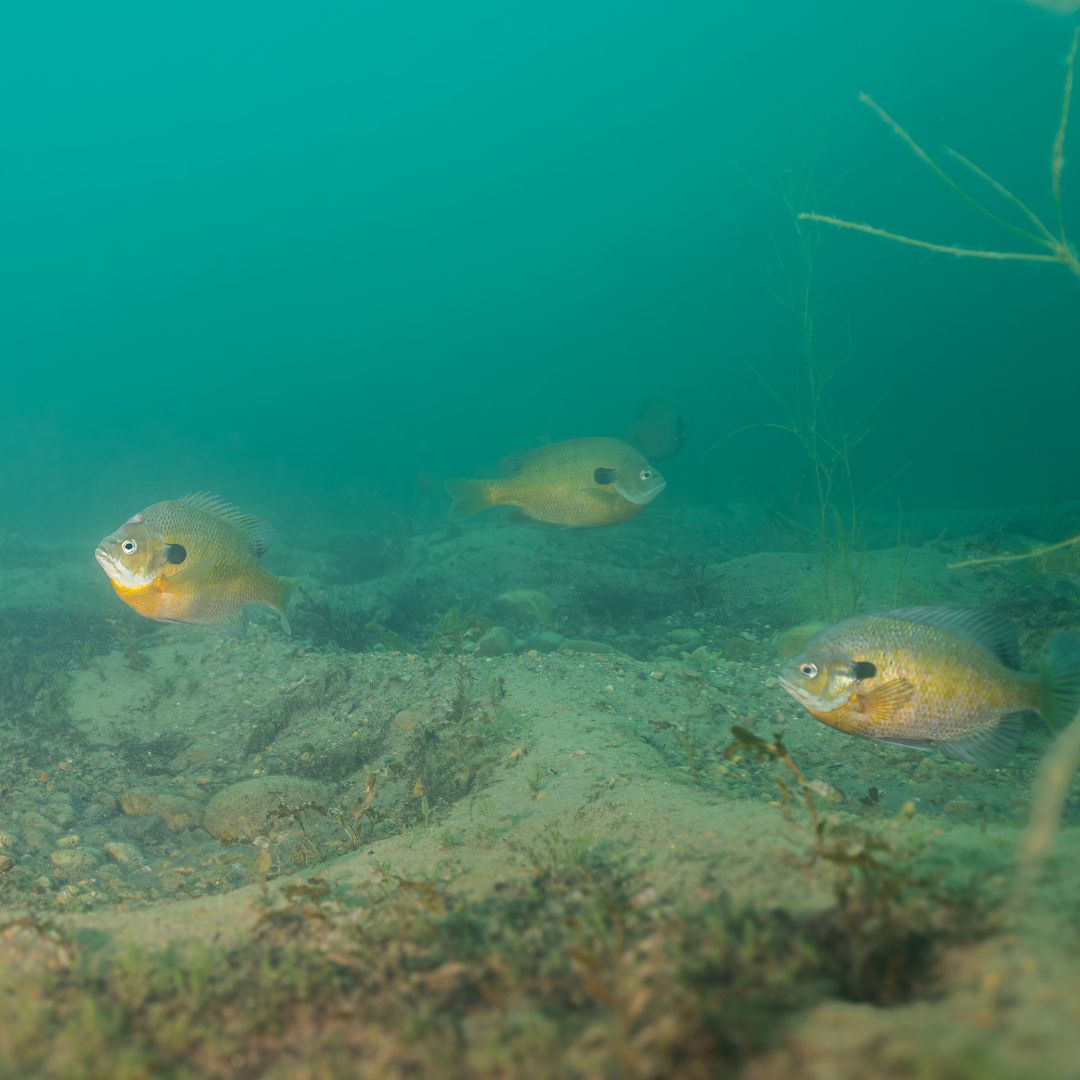
Three bluegill float above shallow depressions in the bottom of the pond.
Housekeeping as a Flex Just making a nest to impress females isn't enough—male buegills also work constantly to keep their space tidy, removing debris and making sure any "decorations" stay just so. © Focused Adventures/Adobe Stock

Nest to Impress

Bluegills

Meet the Midwest’s underwater home‑improvement hero: the male bluegill (Lepomis macrochirus). They carve out shallow, bowl‑shaped nests in huge colonies—like a whole cul‑de‑sac of hopeful fish dads. Once he's claimed the perfect spot (preferably in the most-protected middle of the colony), he uses his fins, tail and mouth to clear out silt, sticks and pebbles until the nest looks just right. Then he defends it from nosy neighbors and turns on the charm with bright colors, fin‑flaring, and grunty little love songs.

If a female likes his style, she swims over and they perform a slow yin‑yang dance above the nest while she lays her eggs. Then she heads off—and he steps into full‑time dad mode, guarding the eggs and then the young fry until they can swim.

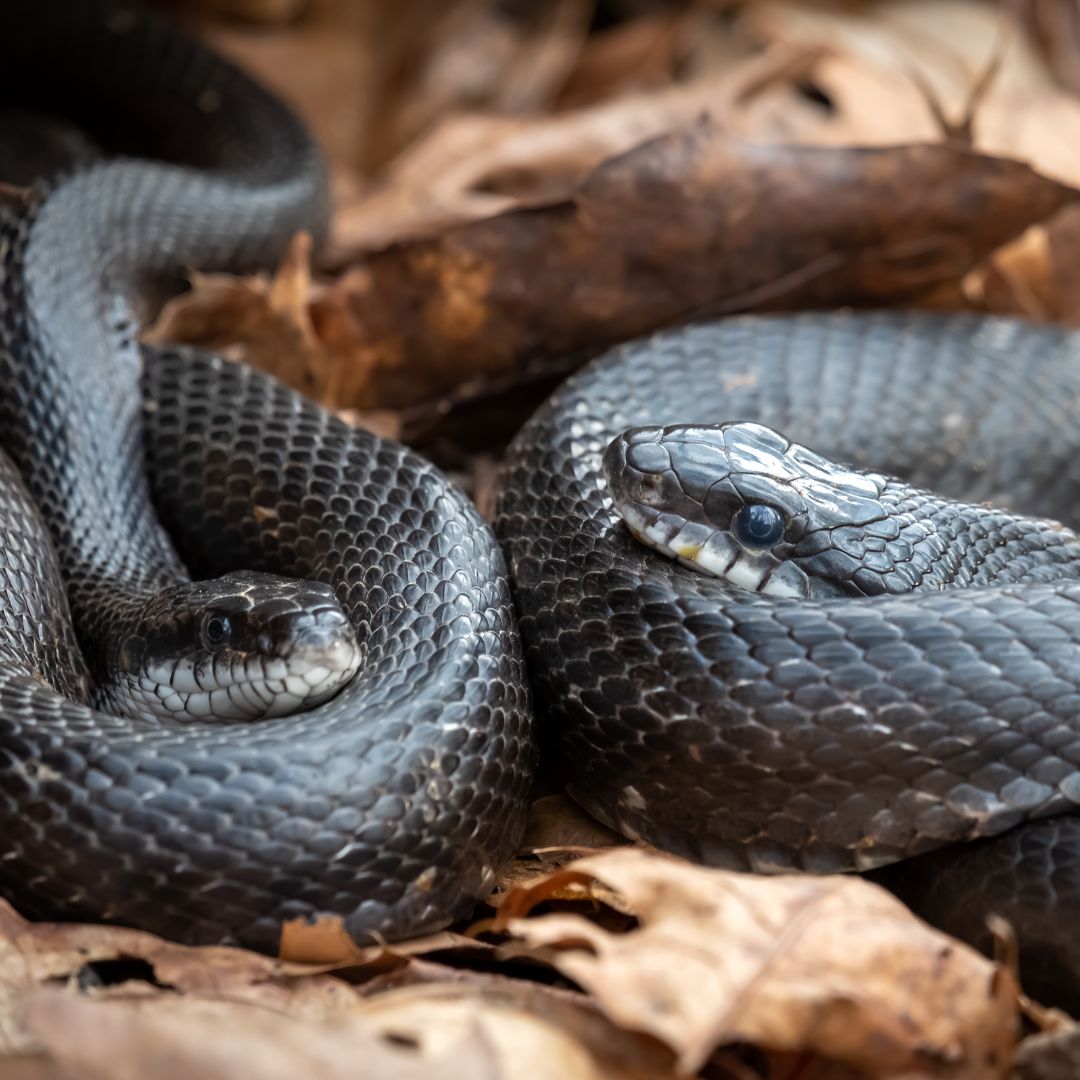
Two gray ratsnakes curled up next to one another.
At the Ready While normally solitary, during mating season, male gray ratsnakes often stay close to a female to ensure they're ready when she is receptive to mating. © Samuel/Adobe Stock

You Had Me at ... Boop

Gray Ratsnakes

Gray ratsnakes (Pantherophis spiloides) are surprisingly adorable in their approach to wooing a partner. When a male finds a female in the late spring, he greets in with a slow, gentle nose-to-nose boop. If the female isn't ready to mate, the male will hang around her for a few days, giving her time to warm up. 

If she likes his vibe, their courtship begins. He rubs his chin along her back, loops himself over her and begins to shake and shimmy as they intertwine. To initiate mating, the male gently bites the back of her neck. Once they're done, the snakes will go their separate ways, likely to find other partners to boop noses and slither-slow dance with. 

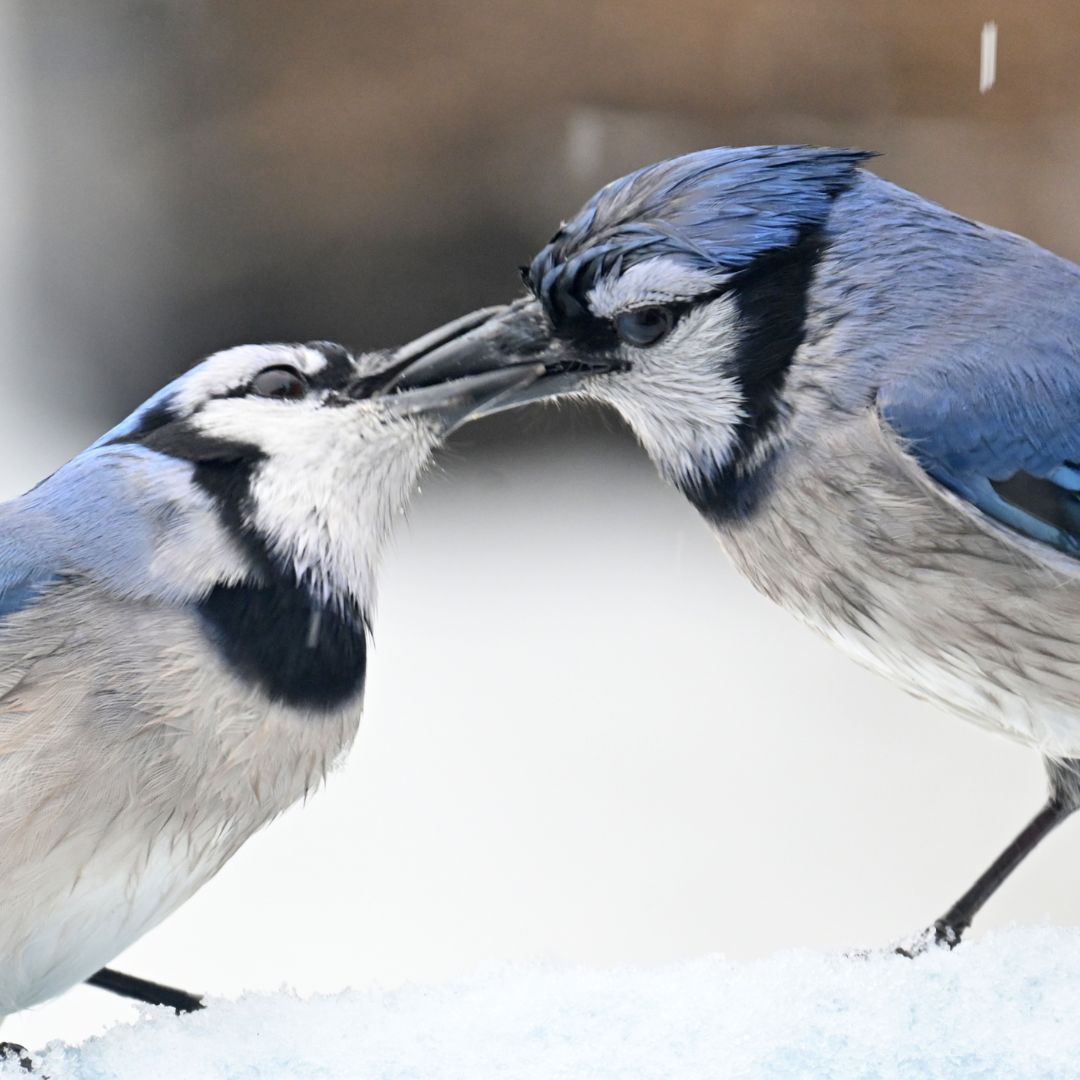
A male blue jay feeding a female blue jay in the snow.
Sealed with a Snack Throughout their lifelong pairing, male blue jays will find and feed their partner seeds to strengthen their bond and court her before mating. © Andrew Bateman

The Bird Bachelorette

Blue Jays

Female blue jays (Cyanocitta cristata) don’t wait to be wooed—they run an audition. In late winter or early spring, available females call and wait for a group of four to 10 potential mates to arrive. Then she takes to the air, with her suitors chasing.

After a short flight, she lands and the males surround her, calling and bobbing to show off. She watches… then takes off again, minus one or two contestants. She repeats this fly‑and‑land routine until only one male is left. The last male standing (winging?) is now her guy.  

The new pair will begin to bond, with the male bringing his new partner seeds and finding twigs so they can practice nest building together. Once paired, blue jays stay bonded for life—and each year, before mating season, the male will once again find and feed his partner seeds to show his devotion and strengthen their bond. 

Trust Falls

A Look at Red-tailed Hawks’ Midair Courtship

Red-tailed Hawk Courtship Flights (2:44) From peaceful soaring side-by-side to stomach-dropping free-falls as they clutch talons, red-tailed hawks have one of the most thrilling courtships to witness—as shown in this video from Nick Dunlop.
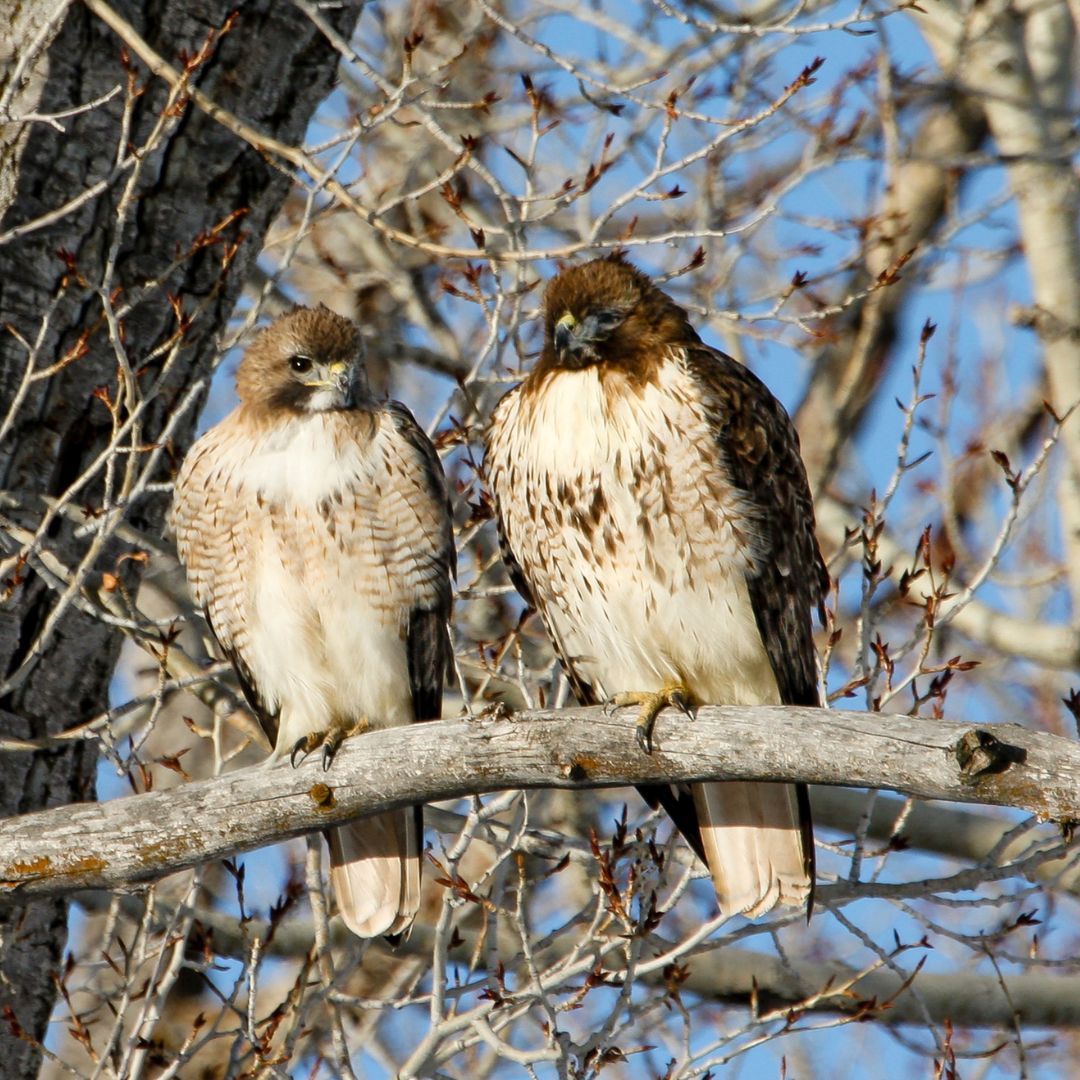
Two red-tailed hawks sit side-by-side on a bare branch in the sunshine.
Large and in Charge In red‑tailed hawks, females are a bit bigger than their male counterparts—a classic example of sexual dimorphism. © Ronnie Howard/Adobe Stock

Making Courtship an Extreme Sport

Red-tailed Hawks

Red‑tailed hawk (Buteo jamaicensis) courtship is not for the faint of heart. It starts with a male soaring over his territory, lifting and diving in big, dramatic sweeps to impress any watching females and show that he's a vigilant territory guard.

An interested female will meet him in the air, soaring with him to make a duet in the sky. The male will fly just above her, occasionally drifting close enough to gently touch her back with his talons or beak.

Then comes the showstopper: daring twists, mirrored dives, and high‑speed passes. Sometimes they even clasp talons and free-fall toward the ground in slow spins and rapid spirals—letting go at the perfect moment to shoot skyward again. Once they decide they’re a match, they pair up for life—raising families and performing their sky‑high courtship show year after year.

Two American mink standing side-by-side at the edge of a stream, looking off into the distance.
Only for a Moment Adult American mink relationships are very short—at most a few days—during breeding season. After mating, the pair separates and both seek out new partners. © Banu R/iStock

Enemies to Lovers...to Enemies Again

American Minks

If “enemies to lovers” is your favorite trope, but you prefer it loud, chaotic and very smelly—meet the American mink (Neogale vison). 

For most of the year, minks—especially the males—are fiercely solitary and territorial. During their late winter mating season, though, males mark their territory with strong (and very stinky) scent messages that invite females in and tell rival males to back off.

When a male and female mink meet, things get loud and dramatic fast. Courtship looks and sounds like a chaotic combat zone—complete with play‑fighting, wrestling, and lots of angry‑sounding vocalizations. Females may push back hard, testing a male’s strength and persistence before deciding if he’s worth her time. The whole process is brief but intense, and while a pair may hang out for a day or two before mating, they part soon after to look for other partners.