

 Common Birds
 Little Brown Birds
 City Birds
 Woodpeckers
 Hummingbirds
 Resources

Midwest Migratory Birds
Millions of migratory birds are using TNC sites to rest and refuel as they migrate through the Midwest.

Meet your local feathered neighbors, learn how to ID them, where to spot them and some birdy trivia to share!

Meet your everyday feathered neighbors—from cardinals to wrens to woodpeckers. This guide introduces the most common backyard birds of the Midwest with simple identification tips, general bird knowledge and species-by-species photos—perfect for beginners, families and anyone curious about the birds right outside their window.
You’ll also pick up fun bird trivia to share with family and friends—no bird‑nerd badge required!
Scroll down to get into it, or just click the jump links right below this box to head to the section that interests you the most!

Make bird watching a year-round habit.
Midwest birds are some of the easiest wildlife to enjoy because they're often just outside your door—no binoculars or hiking boots required.
Whether you're in a city, suburb or deep in the countryside, you've already got front row seats to see birds visiting feeders, hopping across lawns and nesting near buildings. In other words: Wherever you are, you're near a birdwatching hotspot.
Plus, birdwatching is a great way to build your connection to local nature, and many common Midwest birds are indicators of ecosystem health right around you.
Scroll on to meet common local birds, learn how to identify them and what they're all about!
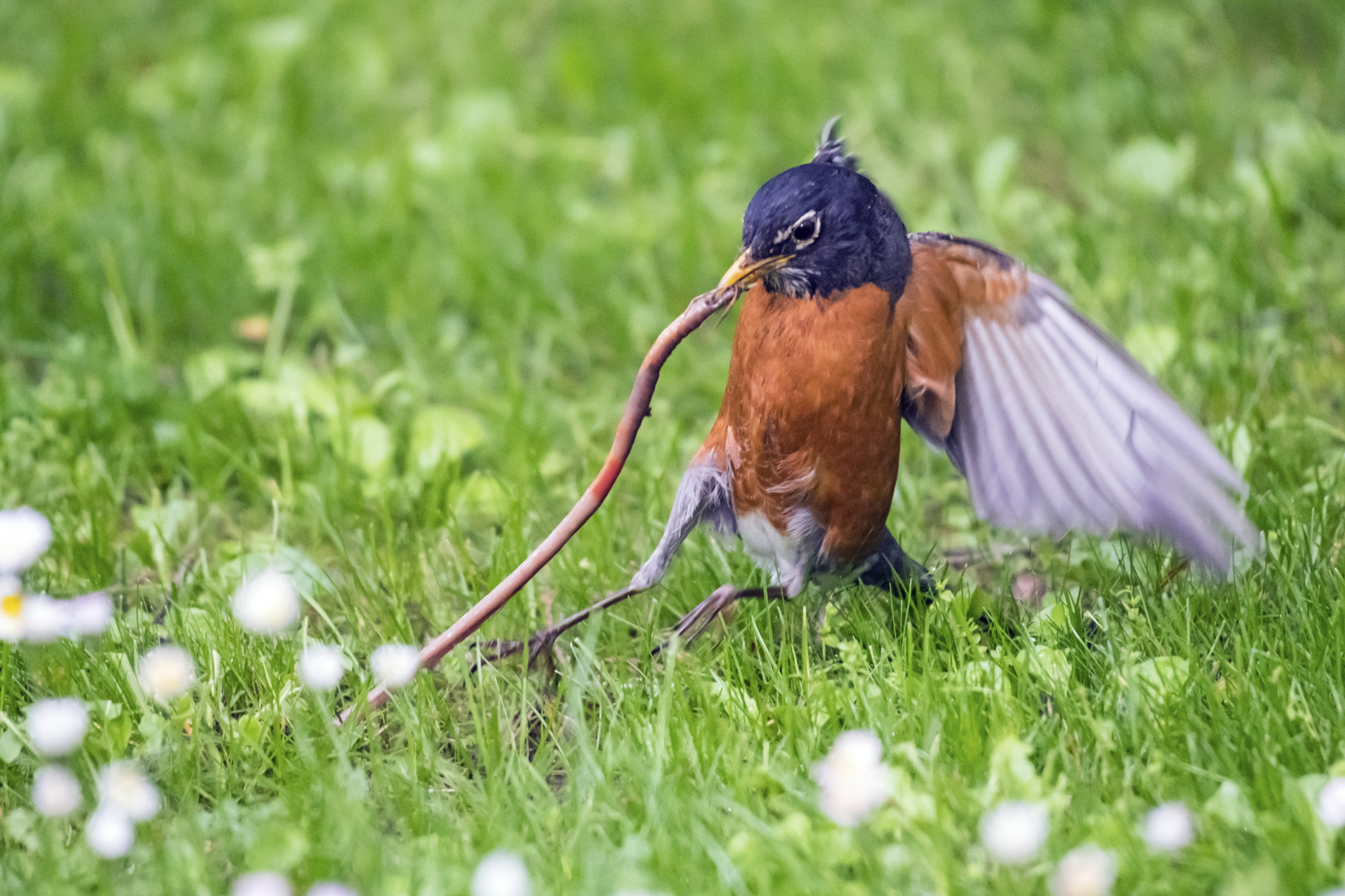
Turdus migratorius
One of the most quintessential sights in the Midwest is the red-breasted robin tugging earthworms from the ground across the Midwest. While males and females look very similar, males often have darker heads and brighter rust-red undersides.
Preferred Foods: fruit, hulled sunflower seeds, mealworms, shelled peanuts, suet
Fun fact: Two Midwest states have the American robin as their state bird—Michigan and Wisconsin.
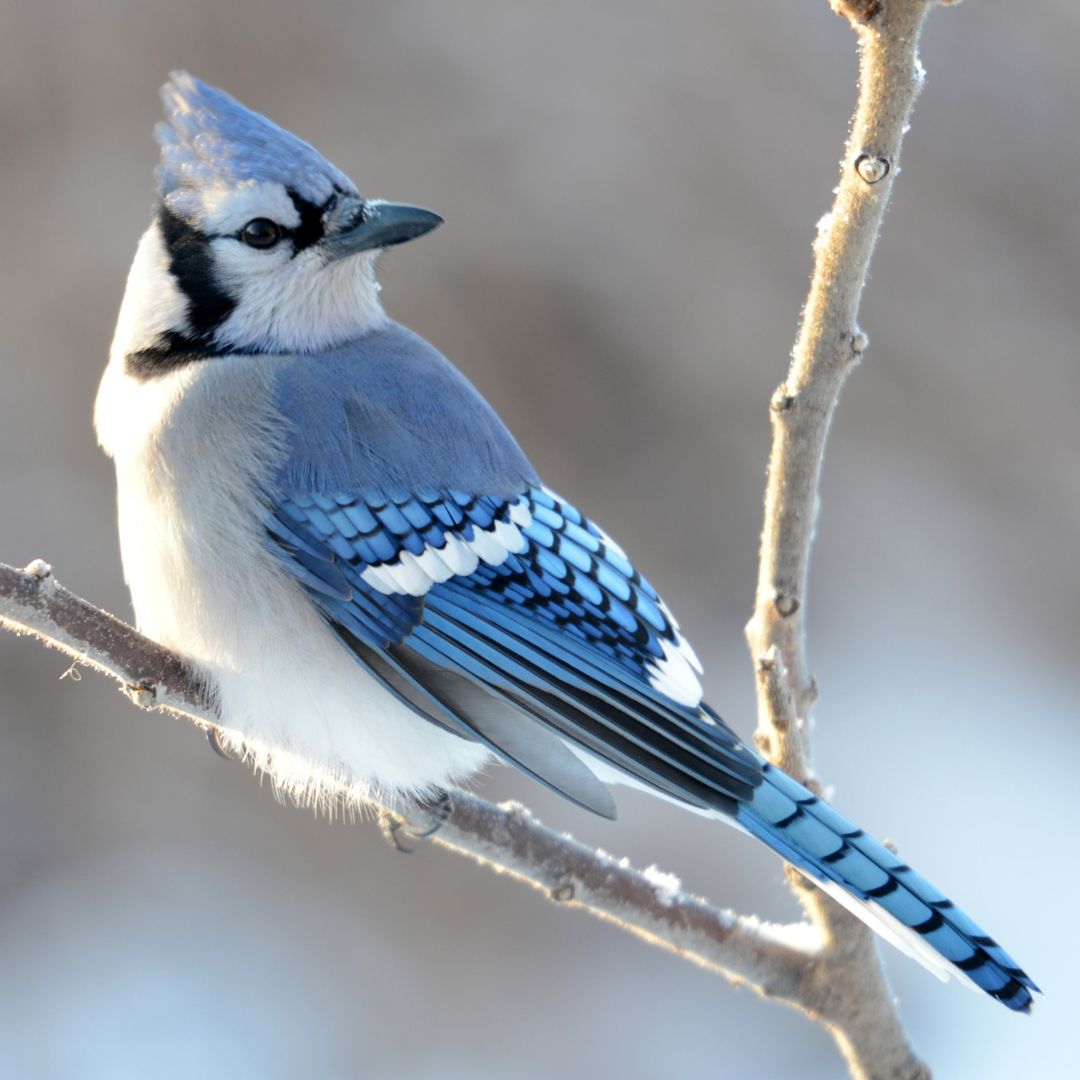
Cyanocitta cristata
Smart, loud and impossible to miss, blue jays are found throughout the Midwest. They've been known to mimic the cries of hawks to make other birds scatter from feeders so they can easily get to the food. Blue jays mate for life and are devoted parents to their young.
Preferred Foods: peanuts (both in shell and shelled), black oil and hulled sunflower seeds, mealworms, fruit, safflower seeds, suet
Fun Fact: The black facial markings on blue jays vary widely and may help them recognize each other.
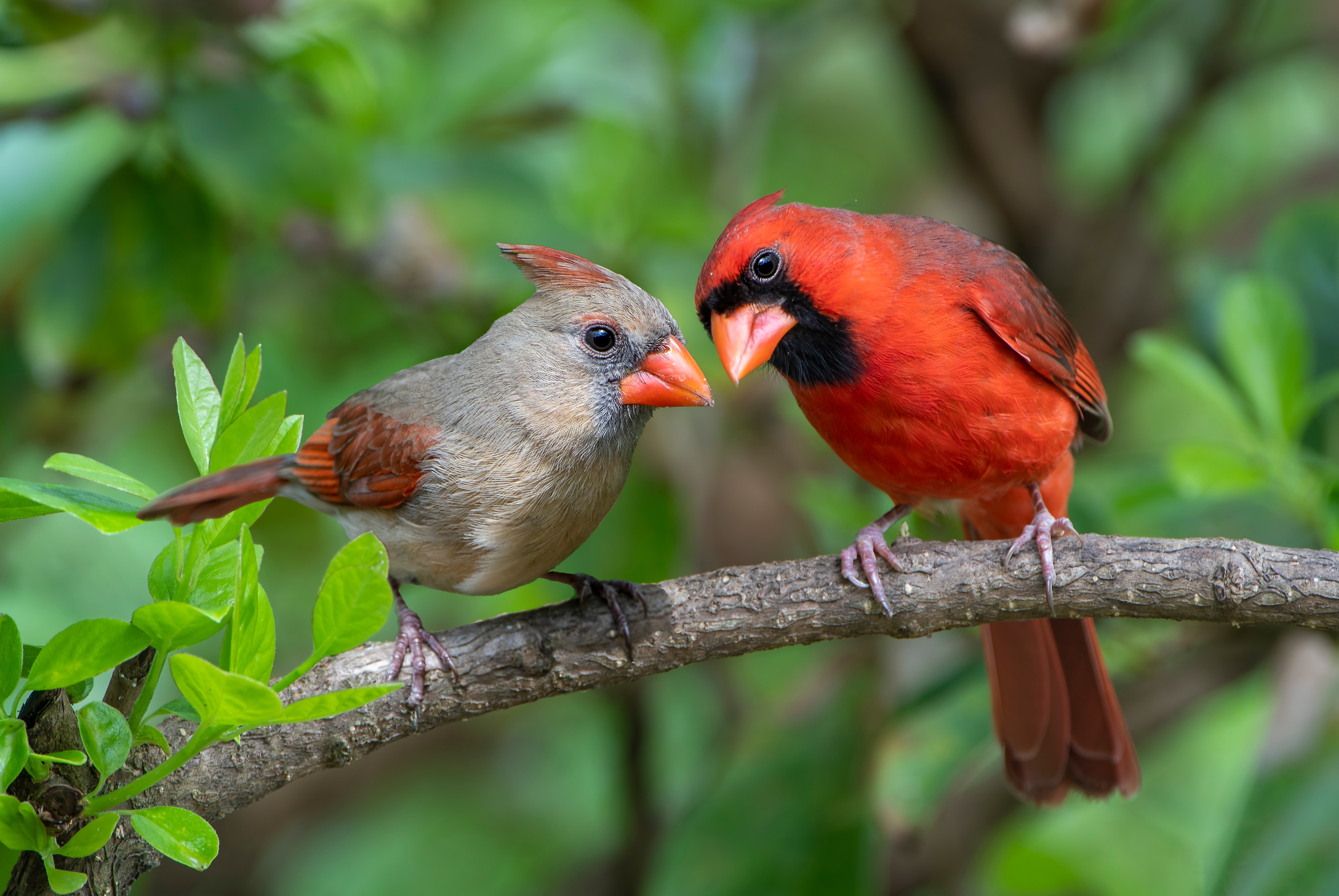
Cardinalis cardinalis
Bright red male Northern cardinals easily draw your attention, but don't overlook the more understated females. Their overall warm brown color is set off by red accents and a bold orange beak. Unlike most female songbirds, female cardinals sing frequently, often while they are incubating their eggs!
Preferred Foods: black oil and hulled sunflower seeds, cracked corn, millet, nyjer, shelled peanuts, safflower seeds
Fun Fact: Three Midwest states have the Northern cardinal as their state bird: Illinois, Indiana and Ohio.
While watching the blue jays and cardinals, keep your eyes peeled for these other commonly seen Midwest birds. Click on each photo to learn a quick tidbit about each bird.
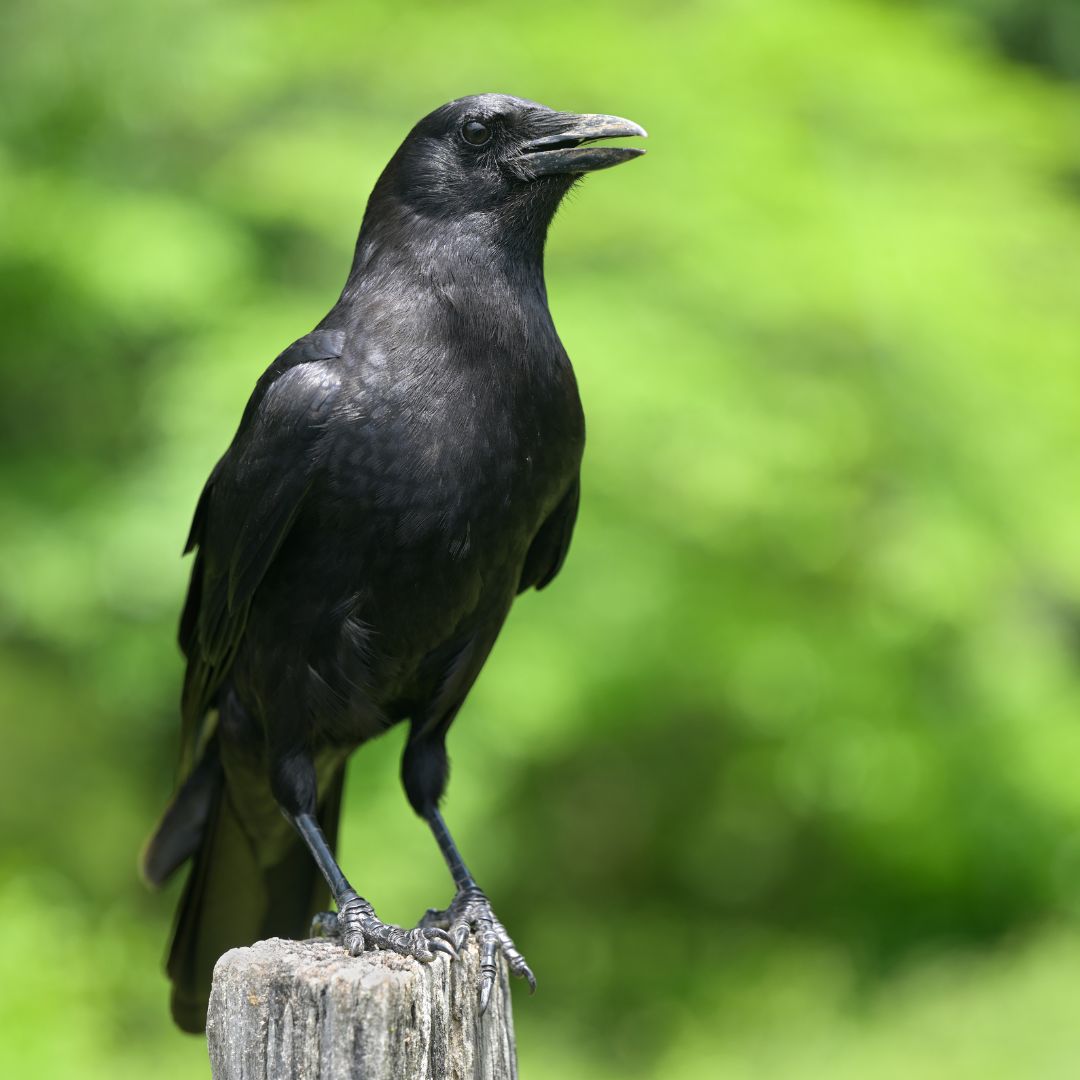
Found just about everywhere in the Midwest, American crows (Corvus brachyrhynchos) are large, all black birds known for their loud, hoarse "caw" sounds. They're highly intelligent and adaptable, able to live just about anywhere that has some open space, trees or other high places to perch and regular sources of food.
As for what they eat, the answer is ... just about anything. They're not picky birds and will eat everything from nuts and seeds to fish and young turtles. They'll dig into human garbage and carrion, too.
Because of this, crows will sometimes come to feeders, particularly platform or tray feeders. For tips on attracting crows to your yard, check out this short video on feeding crows from a crow scientist, Dr. Kaeli Swift.
Preferred Foods: black oil or hulled sunflower seeds, whole or shelled peanuts
Fun Fact: Young American crows will help their parents raise young for a few years. In fact, most American crows do not leave to breed until they are at least four years old.
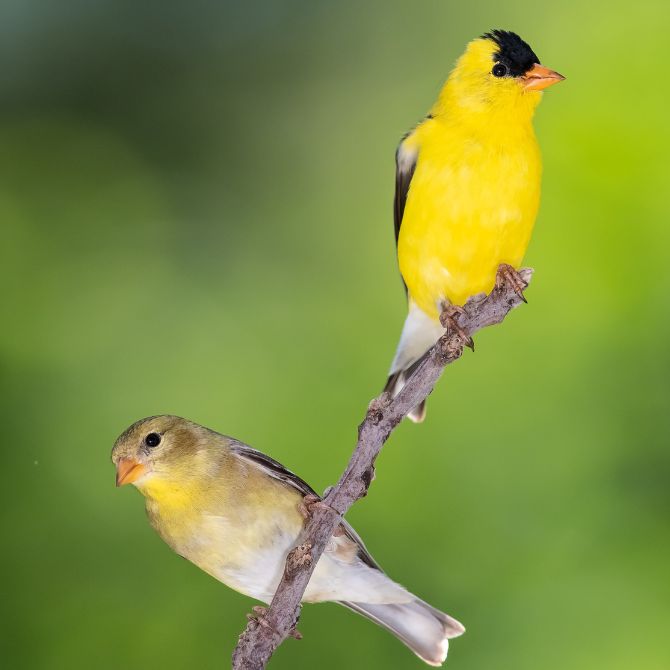
In summer, male American goldfinches (Spinus tristis) are a sunny yellow, while the females remain a drab olive. In fall, both molt into much more muted colors for winter. Plant coneflowers and native milkweed (both will work in pots) to provide blooms for pollinators and then seeds for goldfinches!
Preferred Foods: nyjer seed, black oil or hulled sunflower seeds
Fun Fact: Goldfinches are strict vegetarians, eating seeds from flowers and grasses almost exclusively.
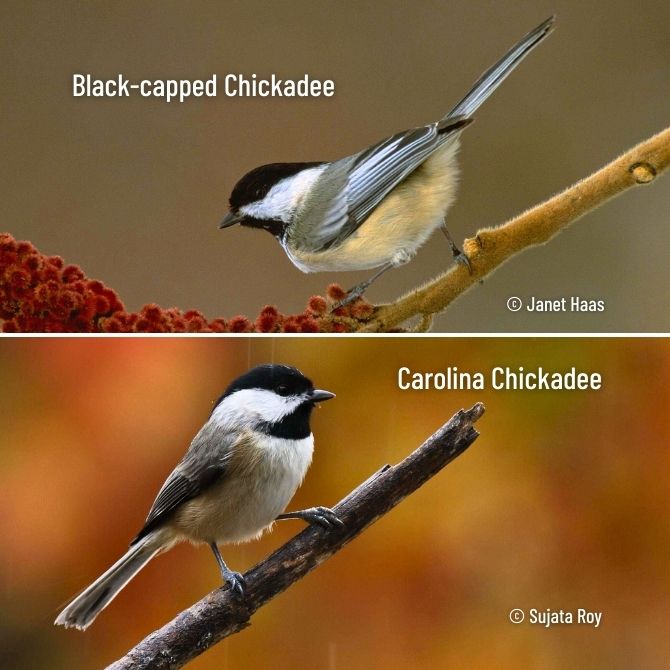
This one is a two-fer, as there are two distinct (but nearly identical-looking) species of chickadees in the Midwest: the black-capped (Poecile atricapillus) and Carolina (Poecile carolinensis).
With their adorably round heads and energetic curiosity about everything (including people!), chickadees are well-known and commonly spotted throughout the Midwest. Both species readily come to feeders and nest around human dwellings.
But how do you know which species of chickadee you’re seeing? Location and/or sounds.
Preferred Food: black oil or hulled sunflower seeds, mealworms, nyjer, shelled peanuts, safflower seeds, suet
Fun Fact: To add to the id confusion, where the two chickadee species overlap, they will sometimes mate with one another and produce a hybrid that can sing either species’ song or a mix of the two!
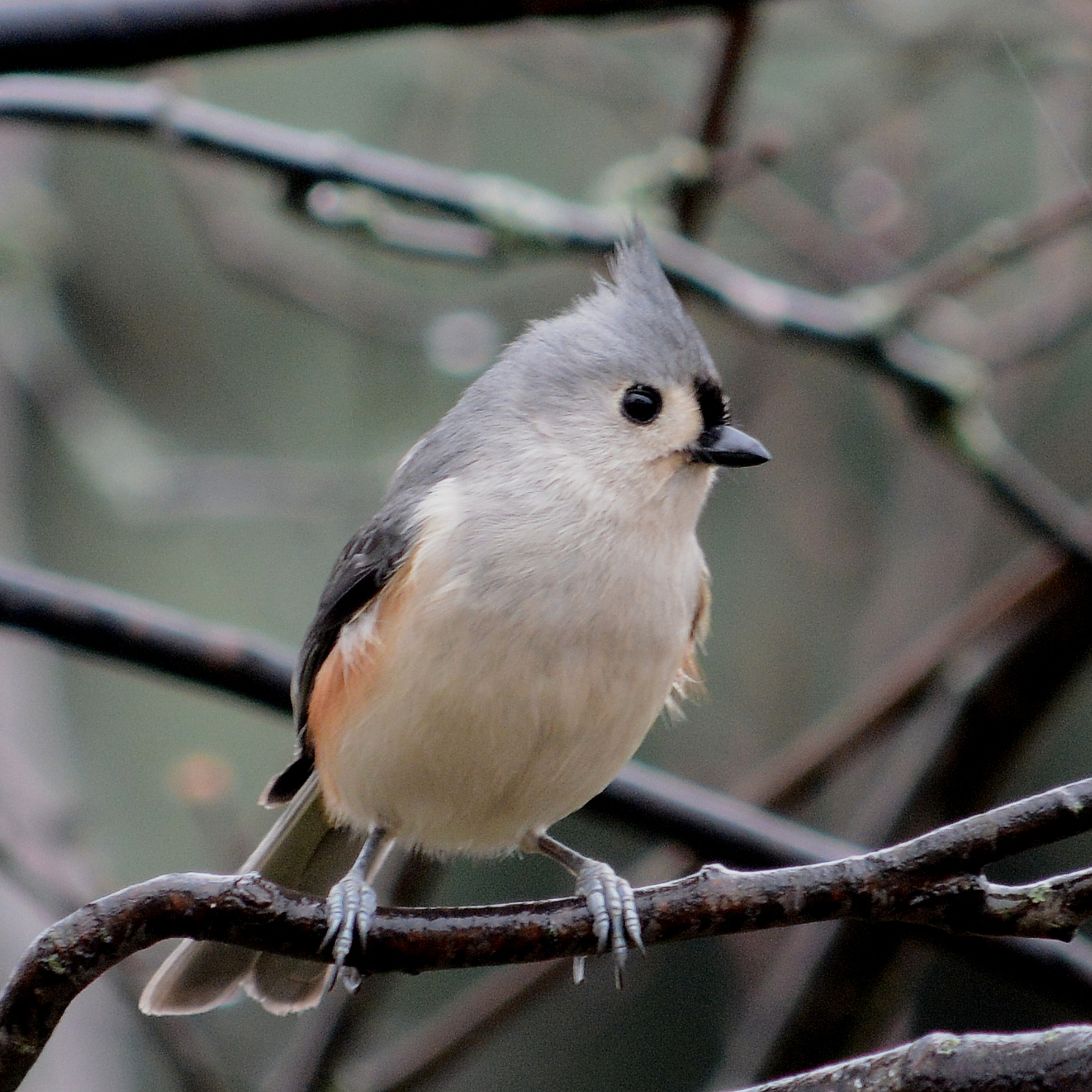
The tufted titmouse (Baeolophus bicolor) is a common bird through most of the Midwest, unless you're in the northern part of Wisconsin or Michigan's Upper Peninsula. These tiny, gray birds are found in deciduous forests, but are also familiar in backyards and urban parks. Their alarm call fades slowly, making it seem as if they're on the move, even though they're staying in one place.
Preferred Foods: black oil or hulled sunflower seeds, mealworms, nyjer, shelled peanuts, safflower seeds, suet
Fun Fact: Tufted titmice may be small, but they are bold—they will pluck hair directly from animals like raccoons or squirrels to line their nests.
Stay curious and sign up for Nature News and get inspiring and hopeful local and global stories on wildlife, nature, conservation wins and more each month!
Sign Up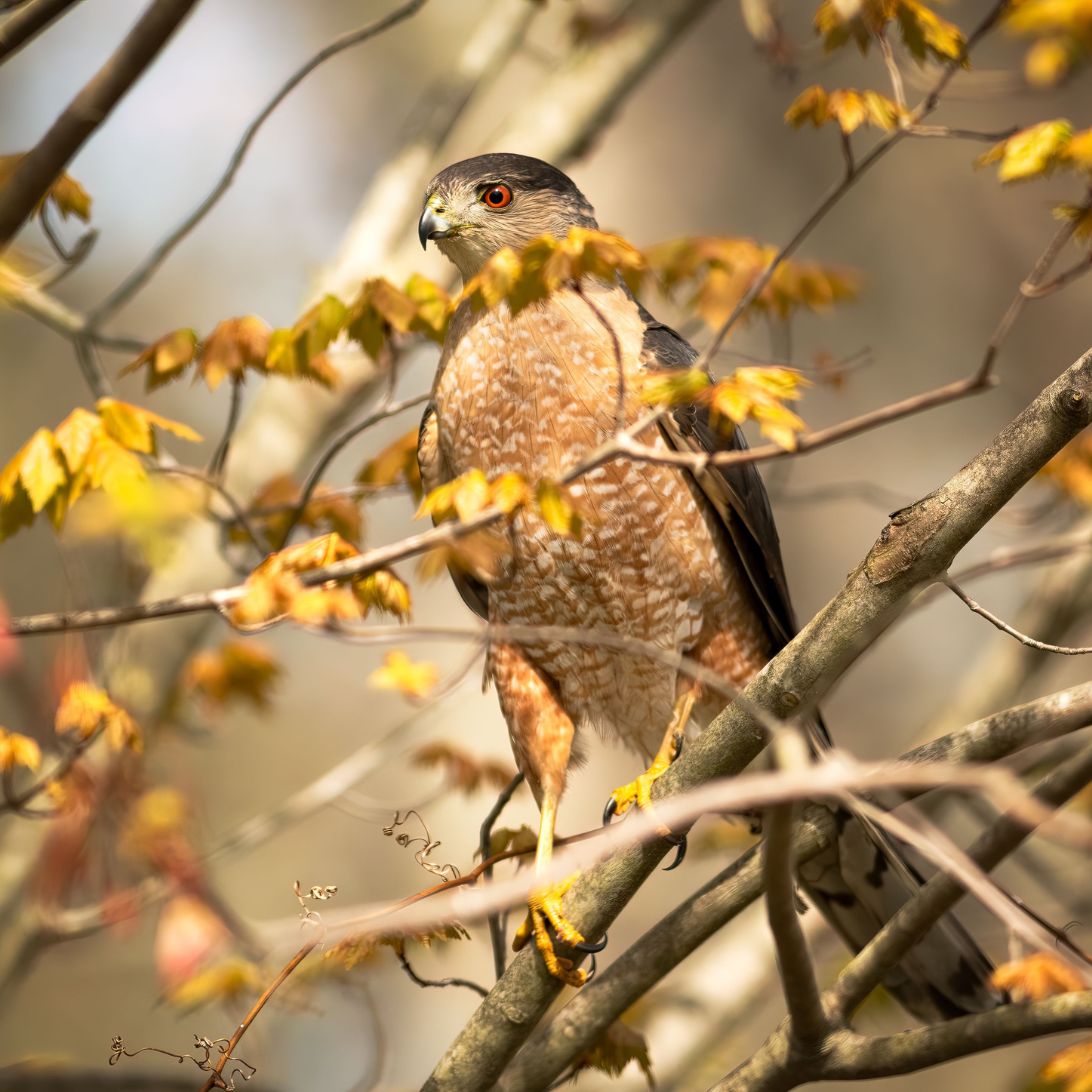
If you keep backyard feeders, you might spot an unexpected visitor—a Cooper’s hawk (Astur cooperii). These agile, medium‑sized raptors are expert bird hunters, weaving through trees at high speed as they chase prey. Feeders offer them an easy hunting spot, so they occasionally stop by for a meal. If a Cooper’s hawk starts visiting regularly, take your feeders down for a few days, and it will move on.
Preferred Foods: medium-sized birds like European starlings or mourning doves
Fun Fact: Adults have bluish‑gray backs, red‑brown barred undersides and red eyes. Juveniles are brown above with streaked white undersides and yellow eyes.
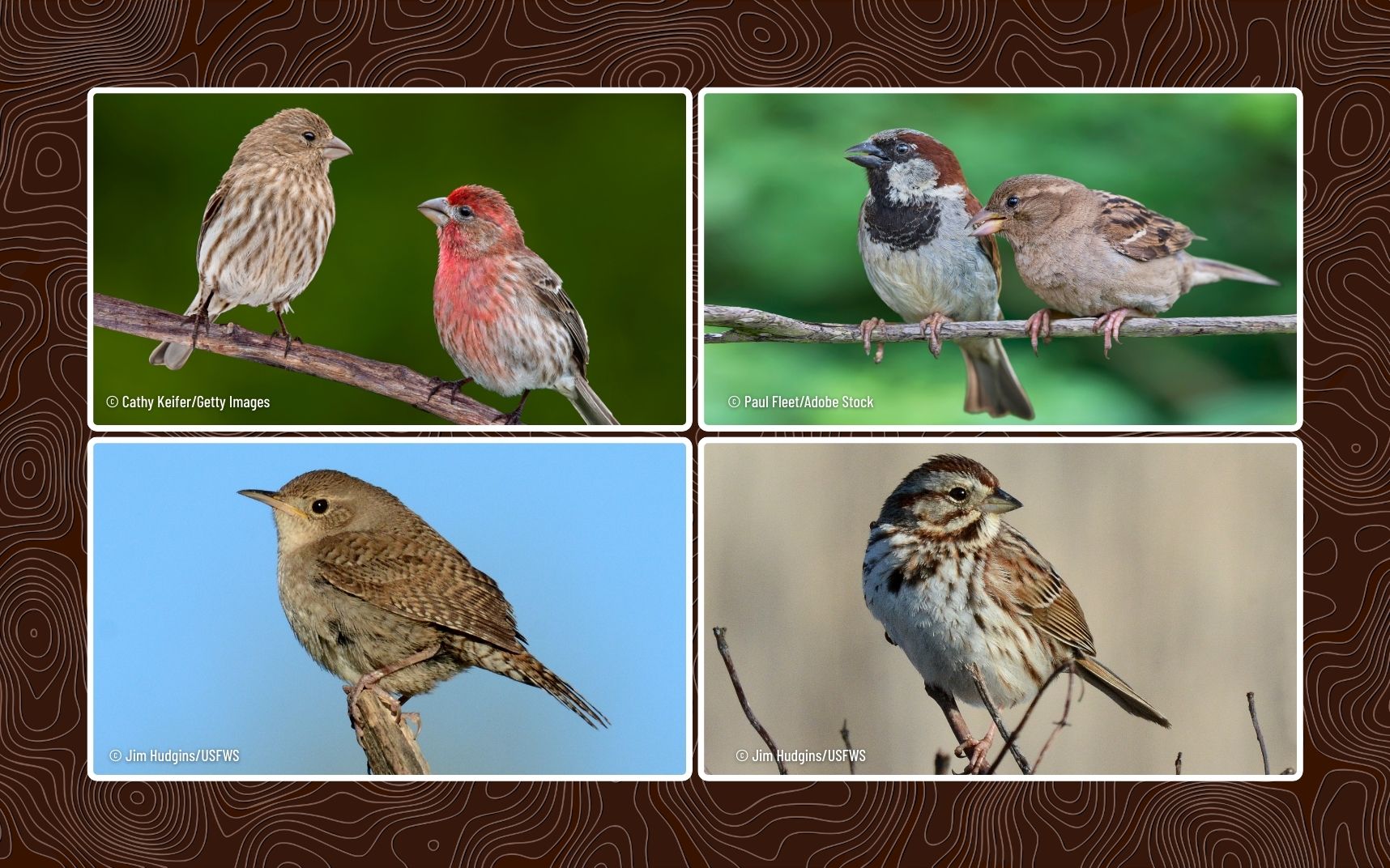
Many of the Midwest's most common birds fall into what we affectionately call "little brown birds" or LBBs. For someone just starting to birdwatch, LBBs can be frustrating to tell apart—but we've got your back.
All LBBs have distinct field marks if you know where to look. Here are four common brown birds you'll see in the Midwest—just tap each name for quick ID tips and facts.
House finches (Haemorhous mexicanus) thrive in settled habitats and often visit backyard feeders. Males are easy to spot with their rosy red face, head and upper breast, while females are plain brown. Look for:
—Conical bill
—Notched “V” tail
—Underside with blurry brown streaks
—Plain brown face with no pale stripes
—Dark gray legs
Fun Fact: Males actually get their red coloring from the food they eat—the more red in the food, the redder the male is!
Though not native to North America, house sparrows (Passer domesticus) are among the most common birds in the Midwest. Males are easily recognized by their black throats, white cheeks, and bold facial markings. However, females are various shades of brown. Look for:
—Light brownish underparts and darker brown, black and tan back
—Buff or whitish bar on the wings
—Pale beige eye stripe
—Stout beak and pinkish legs
Fun fact: Male house sparrows with larger patches of black on their throats are older and more dominant.
A summer visitor in the Midwest, Northern house wrens (Troglodytes aedon) are small, plain brown birds found in habitats from open woods to urban neighborhoods. They are cavity nesters, and you may find nests on porches, in garages or even in shoes left outside. Look for:
—Overall brown with darker bars on wings and tail
—Short tail
—Thin, slightly curved beak
—Pale throat
Fun Fact: Despite only weighing about as much as two quarters, male house wrens are mighty singers, belting out up to 600 songs an hour at volumes that rival vacuum cleaners!
Song sparrows (Melospiza melodia) are common year‑round in most of the Midwest. They're well adapted to human environments, and you can find them anywhere from the countryside to urban parks. Look for:
—Rusty-brown and gray on the back and wings
—White chest with bold, brown streaks that converge into a central spot
—Often has a plain white belly
—Red-brown stripes on head and face
Fun Fact: Like many birds, male song sparrows sing to attract females. Females tend to prefer males who use more learned parts in their songs than those who do not.

 Return
Even if you live in and never leave the bustling city, you're likely to see many of the birds we've already mentioned. But here are four that are as at home in the city as they are in the wild. Click each photo below for some fast facts about each one!
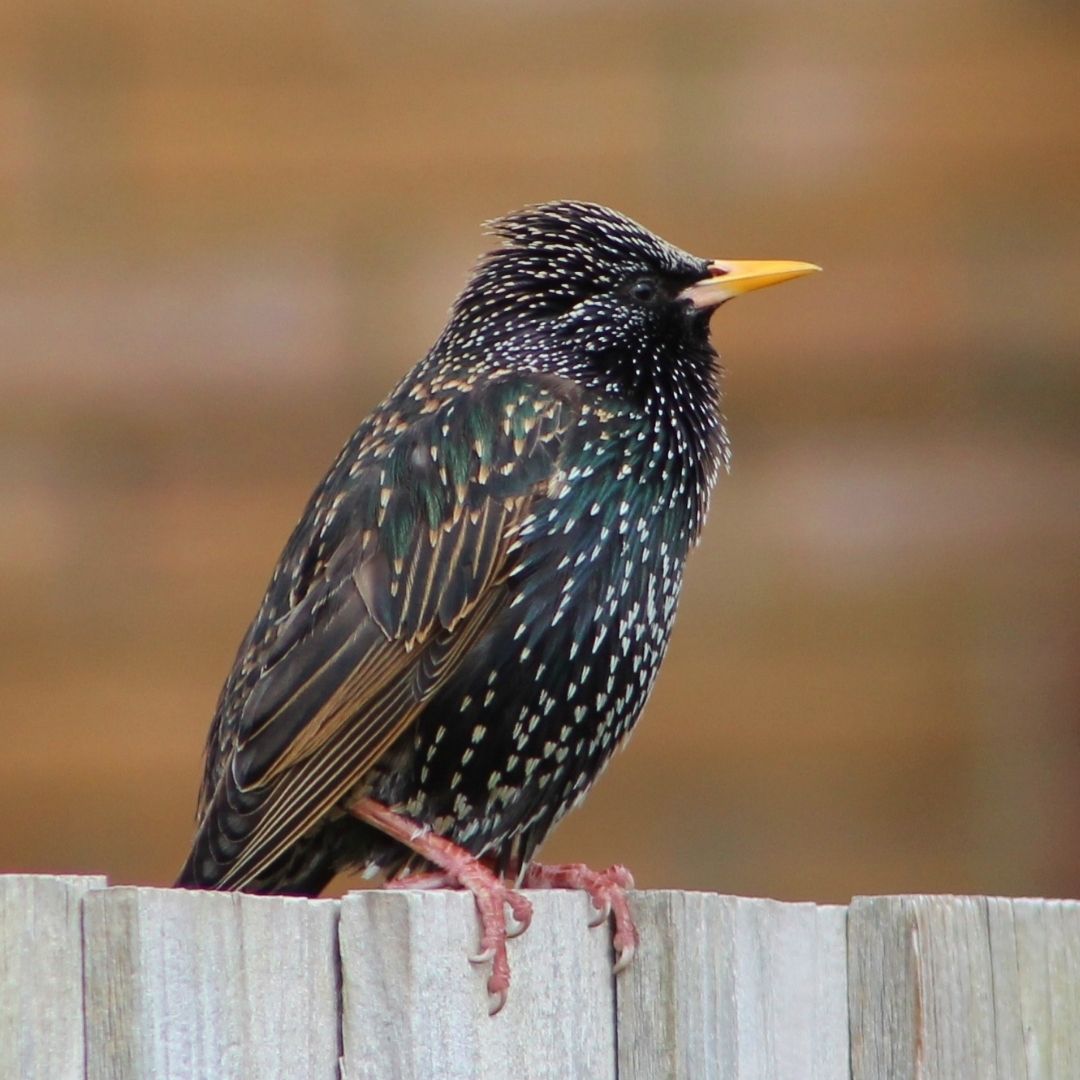
Introduced to the United States in the late 1800s, European starlings (Sturnus vulgaris) are now widespread across North America and one of the most common birds you'll see at feeders.
They're very vocal and gregarious birds. Starlings are also incredible vocal mimics, able to learn the calls of up to 20 different songbirds. Urban starlings have even been known to learn and mimic human sounds, such as car engines running.
They're all over dark birds with orange legs and yellow bills. In the fall, they will molt and grow feathers with white tips, giving them an almost starry night-sky appearance. By spring, the white tips will wear off their feathers, and the starlings will be in their iridescent, glossy dark summer colors.
Fun Fact: While starlings tend to flock together year-round, in fall and winter, they will form enormous flocks of thousands of birds. These flocks will perform intricate, swooping and arching aerial displays called mumurations. It's believed they do this to confuse and evade predators.

You may not expect to see wild ducks in the city, but if there is a park with a pond or a lake nearby, chances are mallards (Anas platyrhynchos) are there.
Mallards are among the most widespread wild ducks in the world, found throughout North America, Europe, and parts of Asia. In most of the Midwest, they're year-round residents, though in some areas they're mostly found in winter.
Male mallards are easy to identify by their metallic green heads, brown breasts, and grayish-brown bodies. Female mallards are streaky brown all over. Both males and females have white tail feathers.
While they generally form monogamous bonds, males do not help with nesting or caring for the offspring.
Fun Fact: Nearly all domesticated duck breeds were bred from wild mallards.
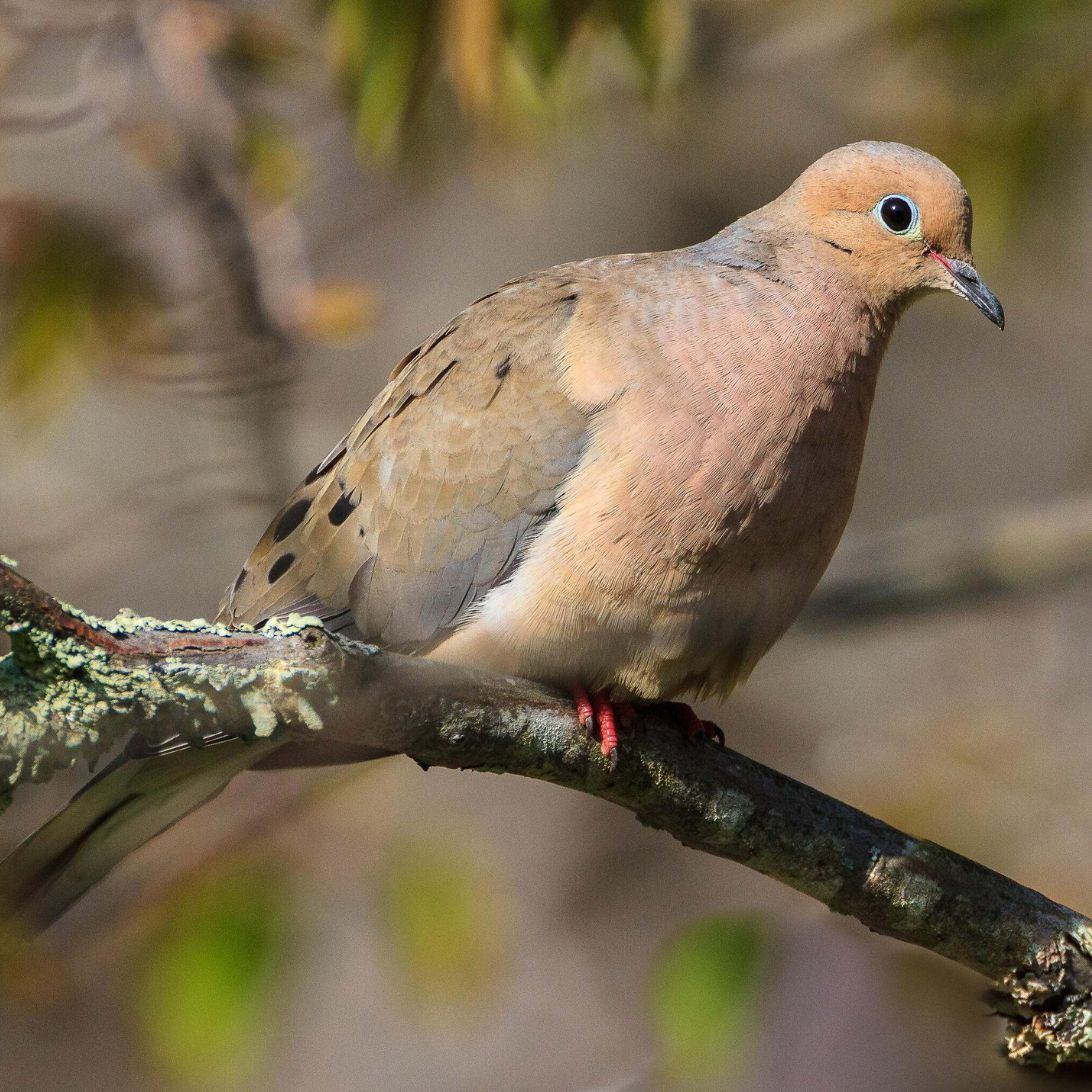
Anywhere you go in the Midwest, you're likely to see mourning doves (Zenaida macroura) perched on telephone wires, trees, fences or bobbing their heads as they forage on the ground for seeds.
Mourning doves are a medium-sized bird with a small head and a long, slim tail—similar in shape and size to their urban rock pigeon cousins. However, mourning doves lack the bold, variable colors of city pigeons. Instead, their coloration matches their natural country habitat, with both males and females being an overall peachy-brown with dark spots on their brown-gray wings.
These doves get their names from the mournful sound of their coos. They're also sometimes called "love birds," as mated pairs will cuddle, preen and grasp beaks with one another.
Fun Fact: Mourning doves will gulp down seeds rapidly as they forage, storing them in their crop—an enlarged part of their throat. Once they fill their crop, they'll fly to perch somewhere high to finally swallow and digest their meal.
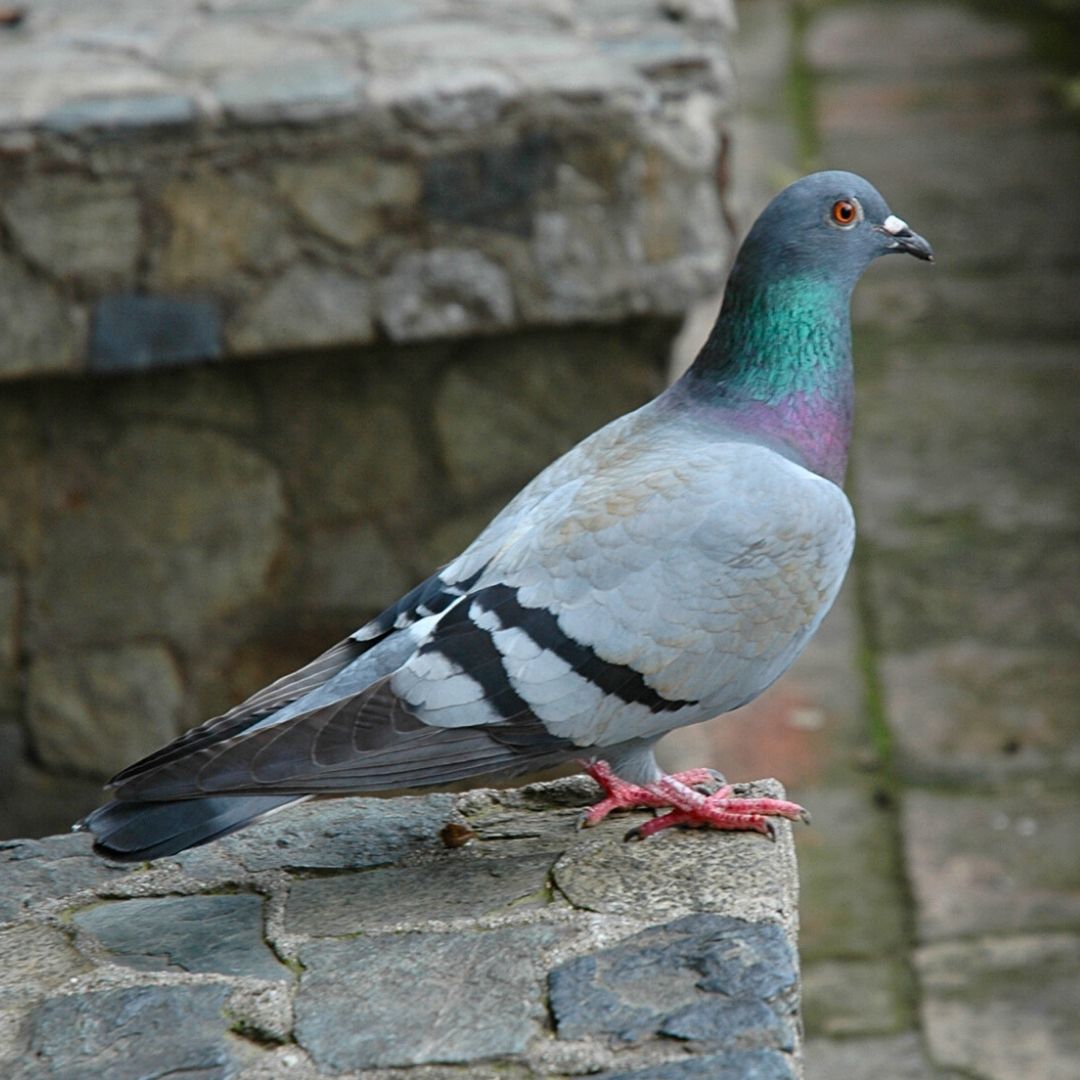
Is there a more classic city bird than the ubiquitous rock pigeon (Columba livia)? Found in cities all over the globe, pigeons are often considered more of a nuisance than a natural wonder, but they have some of the most amazing abilities of any Midwest animal.
While the typical pigeon may be a medium-sized blue-gray bird with iridescent throat feathers and dark bars on its wings, rock pigeons can come in a variety of colors and appearances. They're also a little bigger and plumper than their mourning dove cousins.
Pigeons have lived alongside humans for a very long time. Archaeological finds suggest that humans domesticated rock pigeons at least 5,000 years ago. In fact, we domesticated them so long ago that scientists can't be sure of their original, natural range!
Rock pigeons are extraordinary navigators, able to find their way home from just about anywhere—even if they were blindfolded all the way to the new place. They use Earth's magnetic fields to navigate, though scientists think they may also use sound, smell and the position of the sun to help them find their way.
Fun Fact: Because they can navigate so easily, rock pigeons were used as wartime message carriers, entrusted with carrying valuable strategic intelligence to the U.S. Army!
Chances are, there are more woodpeckers near you than you think. Many woodpeckers live in trees around human spaces. Listen for them hammering on trees to communicate—each species has its own drumming pattern, similar to how each songbird species has its own song. Below are four common woodpeckers to see—click each photo for quick facts and ID help!
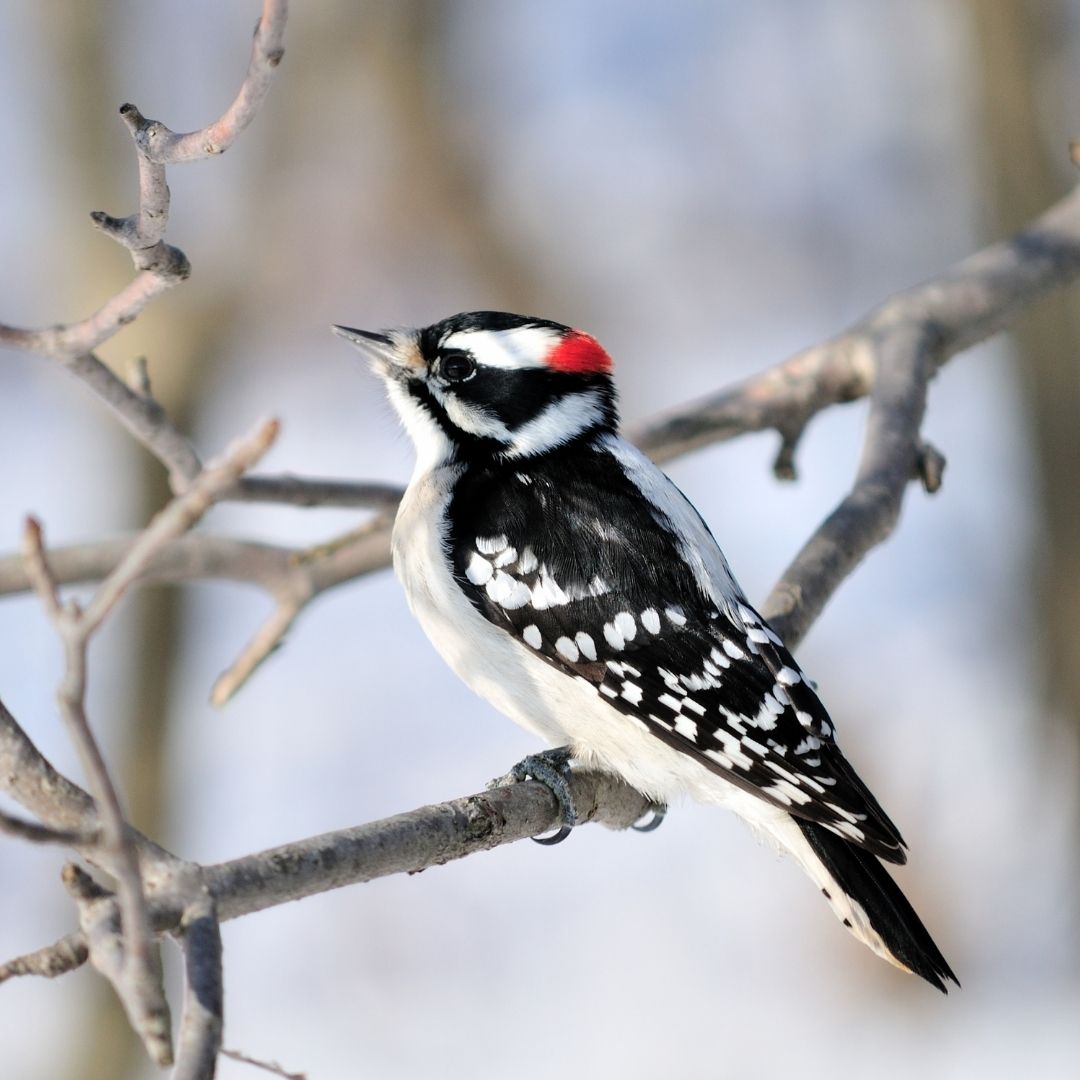
The smallest woodpecker in North America, the downy woodpecker (Dryobates pubescens), is one of the most common and widespread woodpeckers in the Midwest.
Downy woodpeckers are about the size of sparrows, with white undersides, black and white wings, and black-striped faces. Males have a red patch on the back of their heads.
These acrobatic birds readily come to bird feeders for suet and seeds, so keep an eye out for them if you've put out feeders.
In the winter, downy woodpeckers will join up with flocks of chickadees, nuthatches and other small birds. They do this for protection and finding food—having lots of eyes watching out for predators and looking for meals helps them better survive the winter.
Like other woodpeckers, downy woodpeckers drum on trees and other surfaces to communicate with one another. Both males and females will drum to attract mates and mark their territory. Their drumming consists of very rapid, steady knocks, sometimes so fast that the taps blend into a single sound.
Fun Fact: The downy woodpecker's small size allows it to forage for food where larger woodpeckers can't—like along goldenrod or other tall, stiff plant stems.
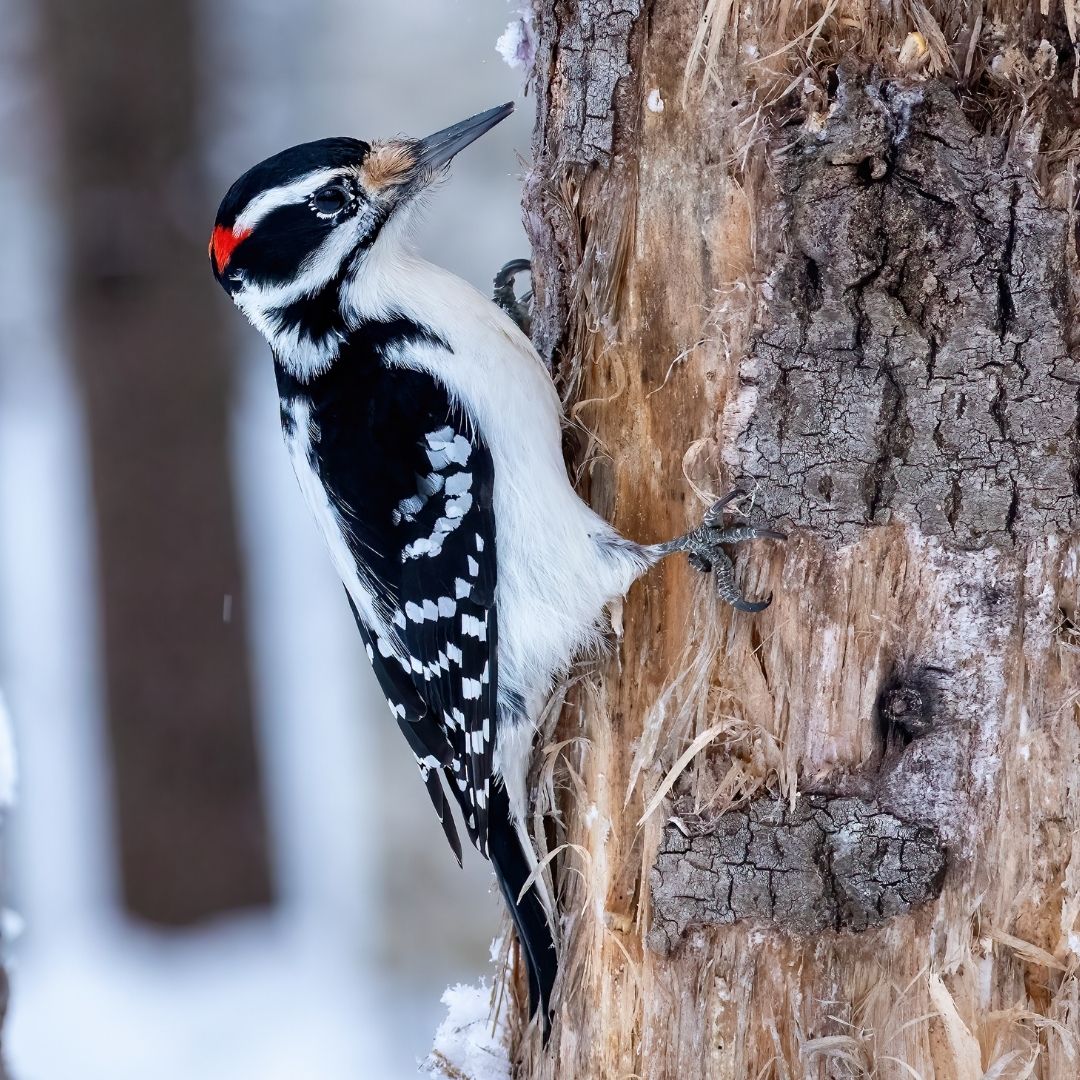
Hairy woodpeckers (Leuconotopicus villosus) can be tricky to tell apart from downy woodpeckers, as their ranges overlap and both are small, black and white woodpeckers. But, once you know a couple of easy tricks, they're as easy to tell apart as a blue jay is from a crow! Here are their key differences:
Look for hairy woodpeckers moving around on tree trunks, foraging for insects. They will sometimes follow pileated woodpeckers through forests, searching for insects in the holes they make and leave behind. They will also come to bird feeders, particularly for suet.
Both male and female hairy woodpeckers will drum to communicate, find mates and mark their territories. Their drumming "song" is a fast, steady 26(ish) beats that lasts about one second.
Fun Fact: Hairy woodpeckers will sometimes drink tree sap from holes left by other woodpeckers, like the yellow-bellied sapsucker.
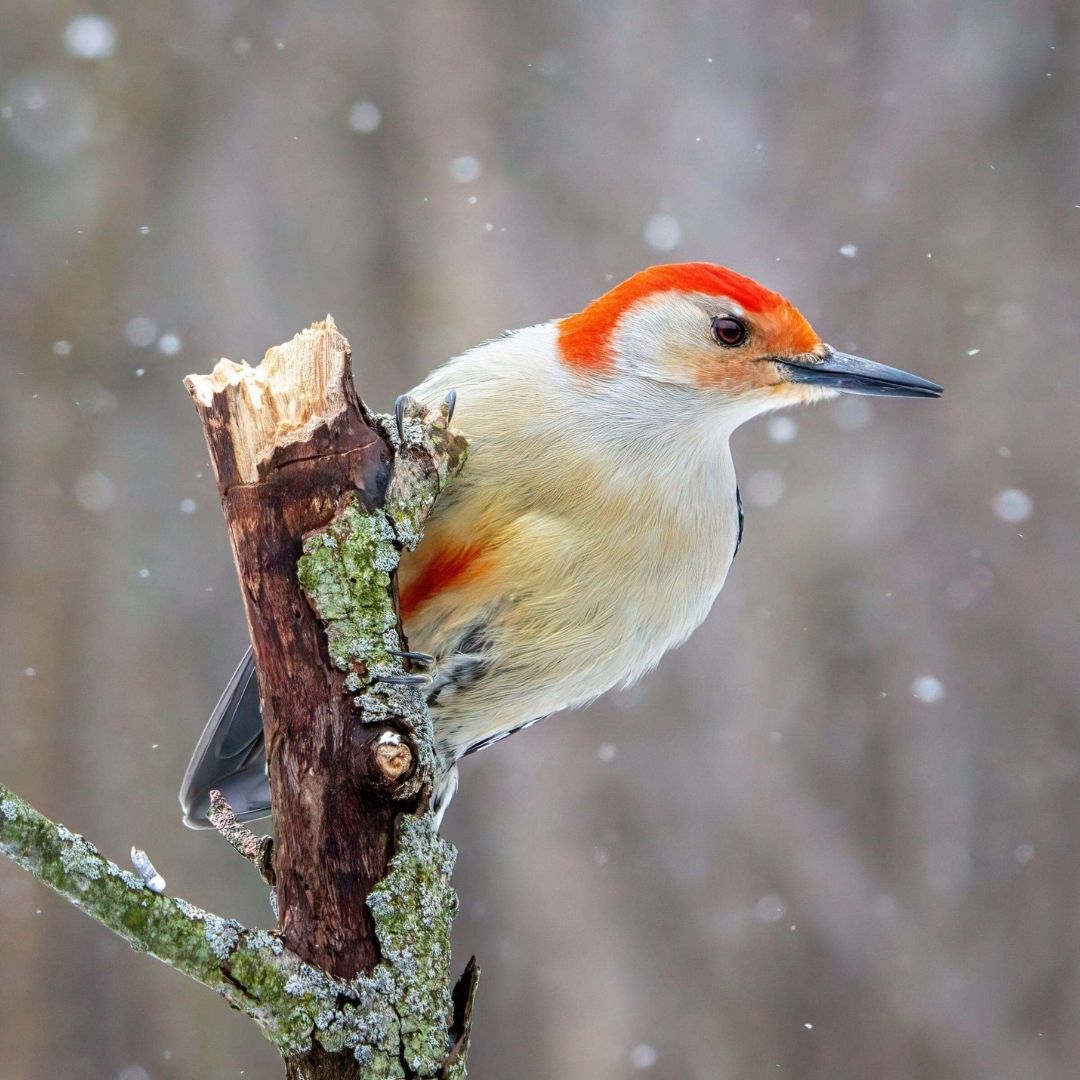
And the winner for the most seemingly misnamed Midwest bird goes to .... red-bellied woodpeckers (Melanerpes carolinus). We joke, but it can be hard to see why these zebra-backed, pale birds with bright red caps got a name like "red-bellied."
The name is not a mistake, though. While it may be hard to see unless the bird is positioned just right, these woodpeckers actually do have a small splash of red on their undersides.
Sized between a robin and a crow, red-bellied woodpeckers are one of the most ubiquitous and often-seen woodpeckers in the Midwest. They readily come to feeders and are well-adapted to living in human environments.
These birds are masters at catching insects underneath tree bark. Their tongues are long, with a barbed tip, allowing them to search and catch meals from deep holes and crevices in trees.
Red-bellied woodpeckers also use drumming to communicate with one another. Only males drum, and their pattern is a steady 19 beats per second for about one second at a time. Their drumming also sounds lower and heavier than that of hairy or downy woodpeckers.
Fun Fact: While both male and female red-bellied woodpeckers have red on the backs of their necks, only the males have a red cap that goes over their head and down to their beak.
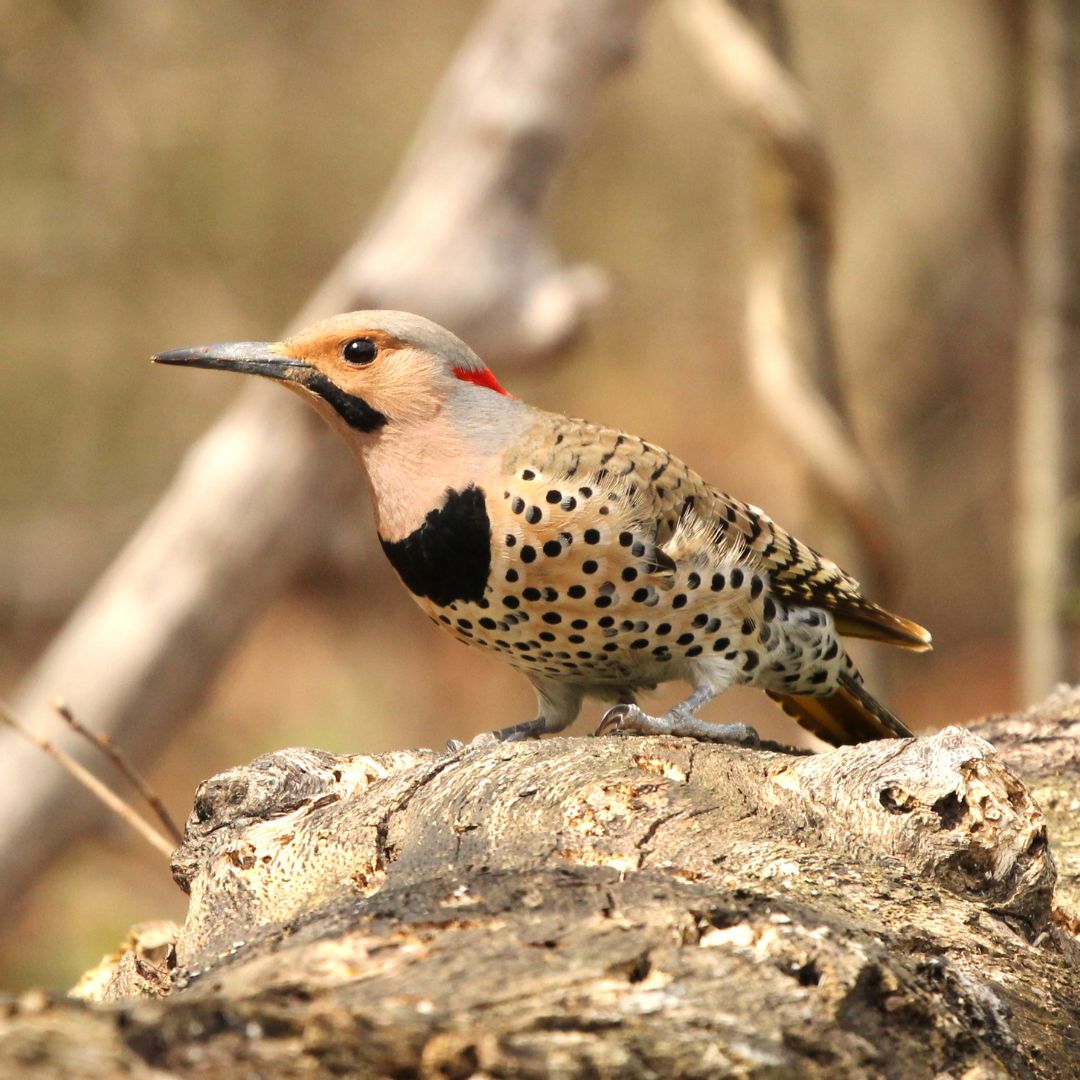
Of the four species we've listed here, Northern flickers (Colaptes auratus) are the largest, being slightly bigger than red-bellied woodpeckers.
There are two distinct color variations of Northern flickers: yellow-shafted and red-shafted. Here in the Midwest, we only see the yellow-shafted variety; the red-shafted are only found in the western United States.
Northern flickers have a black bib, a spotted, pale belly and dark back and wing stripes. Underneath their wings and tails are brilliant yellow feathers, which is why they're called "yellow-shafted." Males have red on the back of their necks and black handlebar "mustaches" (called a malar stripe) extending from the corners of their bills.
Unlike most woodpeckers, Northern flickers often choose to forage on the ground, where they hunt for ants and beetles. They will occasionally come to suet feeders during the winter.
Despite their preference for foraging on the ground, like other woodpeckers, Northern flickers will drum on trees (and sometimes metal objects) to communicate. Both male and female flickers drum about 25 beats per second, for about a second at a time. The beats are loud, fast and evenly spaced.
Fun Fact: In spring, males may compete in a "fencing duel," facing each other on a branch or fence, with their bills pointed skyward as they bob their heads and call. Usually, the female they are competing for is there to witness their competition.
Click the button below for a closer look at Northern flickers from our colleagues at TNC in Rhode Island. The video is about 1:22 long.
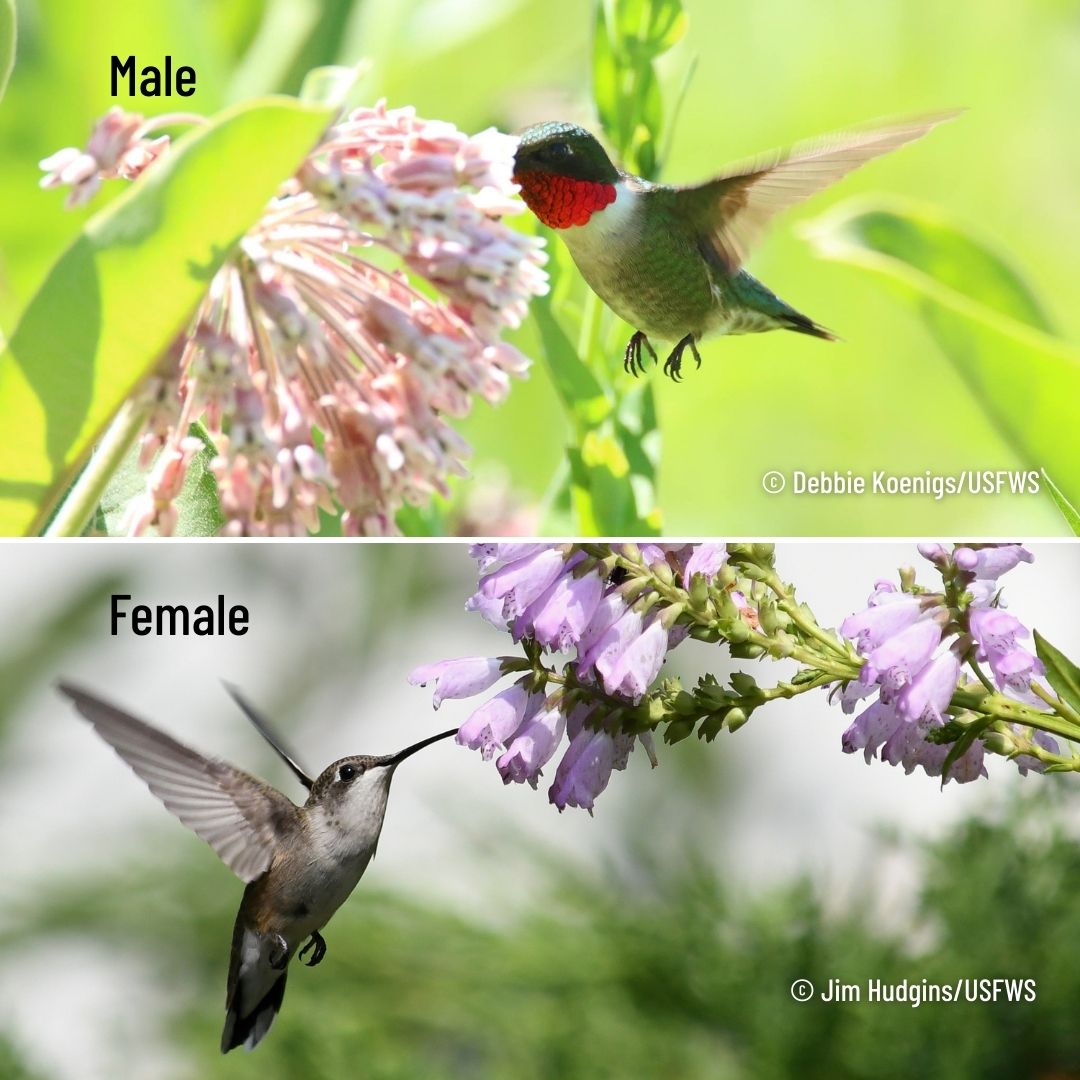
Archilochus colubris
If you see a hummingbird this summer, it's likely a ruby-throated hummingbird. These agile fliers are the Midwest's only breeding hummingbird, migrating to our region each spring and leaving in the early fall.
Male ruby-throated hummingbirds are where this bird gets its name—they have iridescent red feathers along their throats, while females do not.
These tiny birds (they weigh less than a penny!) are amazing athletes, beating their wings about 53 times per second in a figure-eight pattern. This lets them hover in place, fly forwards and backwards or even upside down. Due to their rapid wingbeats, if one flies past you, you'll hear its wings buzzing loudly like a bee.
In addition to being speedy, they're also endurance champions, traveling to and from Central America to the Midwest each year. Some ruby-throated hummingbirds even make a 500-mile trip across the Gulf in one flight!
Preferred Food: Nectar or sugar water. Planting native flowers—even in pots outside your window—is a good way to attract hummingbirds to your space. They'll also readily visit hummingbird feeders filled with sugar water.
Fun Fact: You're more likely to see female hummingbirds around, especially in late summer. Males arrive first in spring to establish territories, but once they've finished mating, they head back south, sometimes as early as the beginning of August. Males do not help with nesting or raising the young.
If your curiosity is piqued and you want to know more about birds and bird watching, here are some good sources to dive into:
Think Global
Explore birds and other wildlife in the Midwest with these stories.


