

A hundred years ago, humans traveled around the world via airplane for the very first time. Getting there took 175 days and four planes. Contrast this feat of daring and endurance with today: A round-the-world flight only takes hours.
We cannot know exactly what the world will look like in 100 years. Yet we have not let this uncertainty inhibit bold action, action that has resulted in progress. And we can’t let it stop us from investing in nature as a climate solution today.
We can’t let uncertainty stop us from investing in nature as a climate solution today.

Reducing fossil fuel emissions remains paramount in humanity’s journey to a livable future. But we must also work with nature to avoid the worst of climate change. This means protecting, better managing and restoring forests, grasslands, wetlands and agricultural lands around the world—rapidly and at scale. But these solutions only arrive through investment, and carbon markets represent an essential financing mechanism.
Carbon projects should set a high scientific bar for calculating long-term benefit for the climate. One facet under intense scrutiny is whether a forest can store carbon for 100 years. While guaranteeing 100 years of durability may seem daunting, science can help us navigate this complexity. The alternative is ignoring a three-billion-year-old technology called “photosynthesis” that uses sunlight to easily move carbon dioxide from the atmosphere into land-based carbon storage.

The alternative is ignoring a three-billion-year-old technology called ‘photosynthesis’ that easily moves carbon dioxide from the atmosphere into land-based carbon storage.
Instead of fearing that disaster will strike everywhere, let’s leverage the best-available science to focus investments on places and strategies that are more likely to remain stable. As the science improves, we can increasingly tip the odds in our favor. Here’s how:
1. Reduce the risk of carbon loss.
As the climate crisis worsens, forests should be protected, managed and restored in places where the chance of losing large amounts of carbon is low and where carbon can be recovered quickly if a natural disaster occurs. Our latest science gives unprecedented clarity on where best to restore forest cover for climate. There are even places where increased carbon storage is expected with climate change—as CO2 fertilization and warming temperatures can both boost growth.
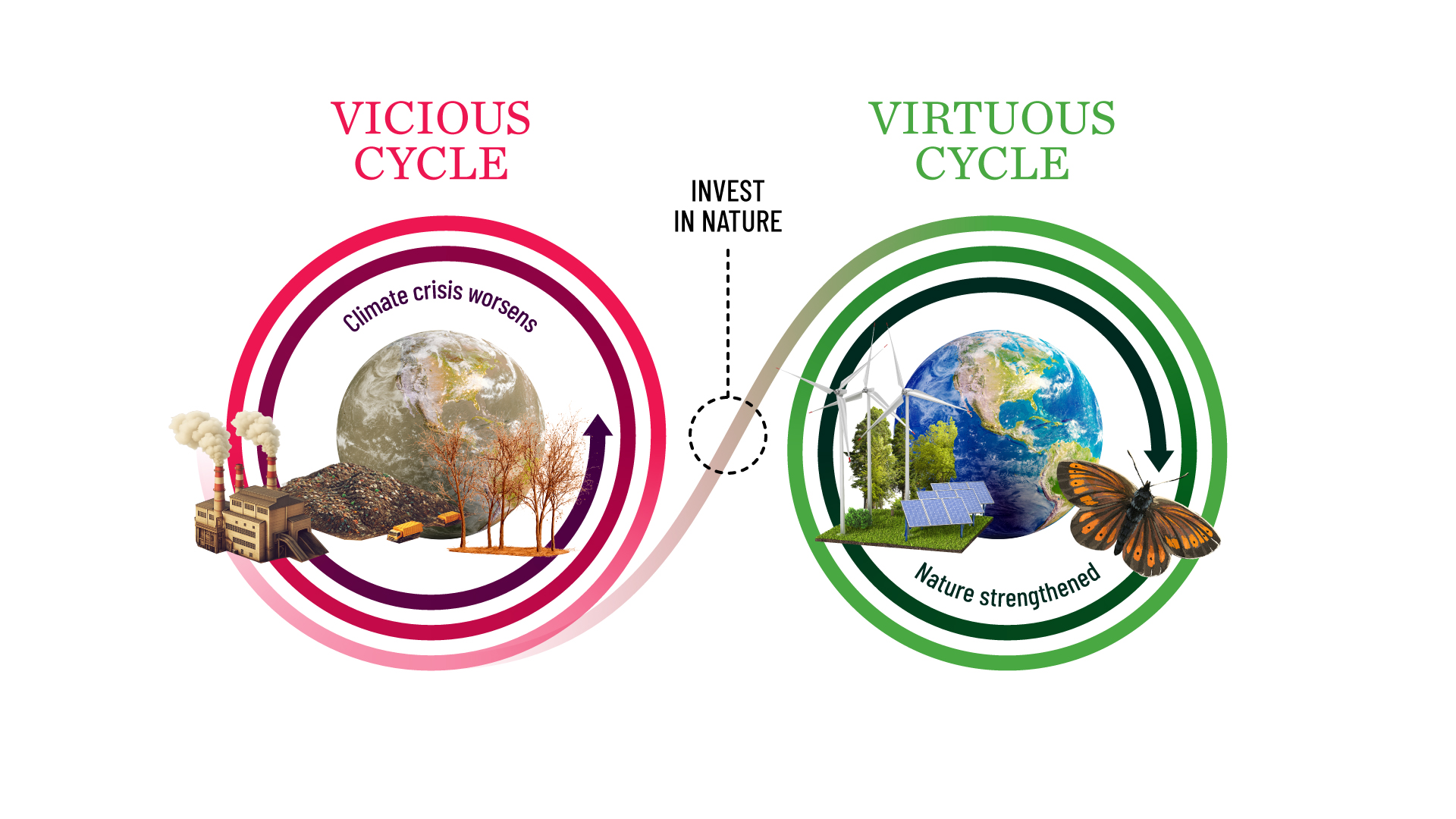
With TNC-led science we are getting better and better at predicting how much and how quickly carbon will be be recovered after disturbance. And we can design interventions with resilience in mind—for example, by planting fire-adapted species or increasing prescribed burning to set up more natural fire regimes.
2. Use risk management mechanisms to compensate.
Risk is and has been part of every aspect of life on earth. From crop and flood insurance to retirement investment accounts and long-term financial instruments like trusts, there are well-established risk control systems that allow us to handle uncertainty.
For carbon markets, simple insurance mechanisms called “buffers” already exist. They can help control the risk of losing carbon in natural disasters for some years to decades, while we develop better solutions. For example, the buffer system used by Verra, which certifies most of the voluntary carbon market, has more than 70 million credits on hand to compensate for reversals yet so far has only been called on a handful of times. These buffer systems are not perfect, and their improvement needs to be informed by better science. Fortunately, scientists are already working on it.
Risk Management Tools
Risk is and has been part of every aspect of life on earth. From crop and flood insurance to retirement investment accounts and long-term financial instruments, there are well-established risk control systems that allow us to handle uncertainty.
Buffers
Buffer pools are reserves of carbon credits not sold or traded but set aside for future use to compensate against unavoidable reversals (such as wildfires, disease, illegal logging or acts of war) that might release stored carbon back into the atmosphere. Buffer pools are already widely implemented and managed by crediting standards.
Trusts
The trust model in carbon markets is a risk mitigation tool where an independent entity charges a fee upon credit issuance from a group of projects and invests the money in a fund for it to grow over time, ensuring substantial funding exists in the future to cover reversals by purchasing future carbon credits from nature or new technologies. Permanence trusts are a new concept in the carbon market and are currently being trialed by VCM stakeholders.
Horizontal Stacking
Horizontal stacking is a model where buyers sequentially retire carbon credits after the ensured durability of the initial retired credit ends. This would extend the length of climate benefits from carbon storage to meet market durability expectations. Stacking is improved when diversifying the project types of the stacked credits, providing resiliency and allowing for the price of new crediting technologies to go down. This strategy has not yet been widely implemented or trialed in the market, given that it places the risk management burden on buyers.

 Return

3. Strengthen nature to do what it does best.

The musts of NCS
What are real, high-integrity natural climate solutions?
These principles provide guidance on what constitutes a natural climate solution so that investments can be made with confidence. Learn why NCS must be nature-based, sustainable, climate-additional, measurable and equitable.
Approximately half of the carbon from fossil fuel burning is pulled back into the land and ocean—we are already reliant on nature to protect us from climate change and to prevent crossing irreversible tipping points in the planetary system. Carbon markets, and the natural climate solutions they finance, are simply a strategy to enhance and optimize that irreplaceable natural benefit we already rely upon.
Acting now by strengthening nature gives us valuable time to address hard-to-abate sectors, form coalitions necessary to unlock political change and continue developing other solutions.
4. Follow the lead of local communities.
Local communities are at the forefront of generational leadership. Our rule of thumb at TNC is that an NCS project must make people’s lives better. If we want the carbon stored in a forest, grassland or farmland to be there decades from now, it is critical that the intervention storing that carbon is co-designed with farmers, landowners and communities to make their lives better as a result.

This is the case of the DeSeves, one of more than 1,000 families who have signed on to the Family Forest Carbon Program. They joined the program to give their land a new purpose—one that supports climate goals while staying rooted in family values. Managing their forest for carbon storage has become a shared commitment, connecting generations through practical stewardship.

Living Carbon: Stories of Nature’s Climate Solutions
October 25, 2022
In this series, we showcase innovative carbon projects in Africa, the Pocono Mountains of northeastern Pennsylvania, Chile's Valdivian Forest and the Emerald Edge of North America's Pacific Coast.
There is no time to waste.
Our global insights, straight to your inbox
Get our latest research, perspectives and solutions to today’s sustainability challenges.
Sign UpRight now, we are in a climate emergency. We should start acting like it. Climate change causes increasingly more damage with every fractional increase in warming. Nature offers ways to address carbon emissions, using methods that have been on Earth for eons. But what if the worst comes to pass? Let’s say by 2100 climate impacts are so severe that we lose a lot of the carbon we stored through the efforts above. Even in this worst-case scenario, we will have delayed peak warming, given ourselves time to develop other complementary solutions, invested hundreds of billions in sustainable economies around the world, made lives better for tens of millions of people, saved species from extinction and created a greener (yet still damaged) planet.
So let’s be bold. And let’s be smart about it. Let’s use essential solutions at our disposal today, like NCS and carbon markets, and commit to improving them in the decades that come. It’s really that simple.
About the Authors
Dr. Susan Cook-Patton leads TNC’s reforestation science as part of the NCS team. You can find her inspiring work on climate solutions anywhere from leading journals to grade school classrooms and major media outlets.
As TNC’s Managing Director of Carbon Markets, Campbell Moore works with a global team to ensure integrity in nature-based carbon market projects.
Related Features

What are carbon markets and how do we work with them?
The Nature Conservancy advances Natural Climate Solutions through many strategies, including high-quality carbon markets that effectively reduce harmful emissions and equitably benefit communities.

Natural Climate Solutions Resource Center
See the latest science on how nature can help increase carbon storage around the world.

Carbon Markets Resource Center
Find our latest resources on science, policy and implementation toward high-integrity carbon markets.