

Nature Bonds Program: Unlocking Funds for Conservation and Climate Action
TNC’s Nature Bonds Program combines debt refinancing, science, planning and policy to help countries protect ecosystems and support communities.
Media Contacts
-
Rachel Winters
Deputy Director of Global Media Relations
Email: rwinters@tnc.org -
General Inquiries
Email: naturebonds@tnc.org

$1 Billion Unlocked for Nature
Six Nature Bonds projects are now in implementation and are expected to unlock approximately $1 billion for conservation and climate action. It’s a monumental milestone. The projects will help to protect or improve the management of over 242 million hectares of ocean, land and fresh water, including 18,000 km of rivers.
Ecosystems and natural resources around the world are under threat. The climate crisis and other pressures are accelerating biodiversity loss, worsening food and water insecurity, and leading to loss of livelihoods. For many indebted countries, it’s a struggle to access the finances needed to protect communities and natural resources and address climate change, even when there is the ambition to do so.
That’s where the Nature Bonds Program comes in.
The Nature Bonds Program, now proven effective through the launch of six projects around the world, helps nations refinance sovereign debt to unlock funding and technical expertise for conservation and climate action. The model’s success has inspired new efforts to scale up its use, like through the Debt for Nature Coalition, which The Nature Conservancy helped found with six other international organizations.
Resources to Explore
-
Practice Standards
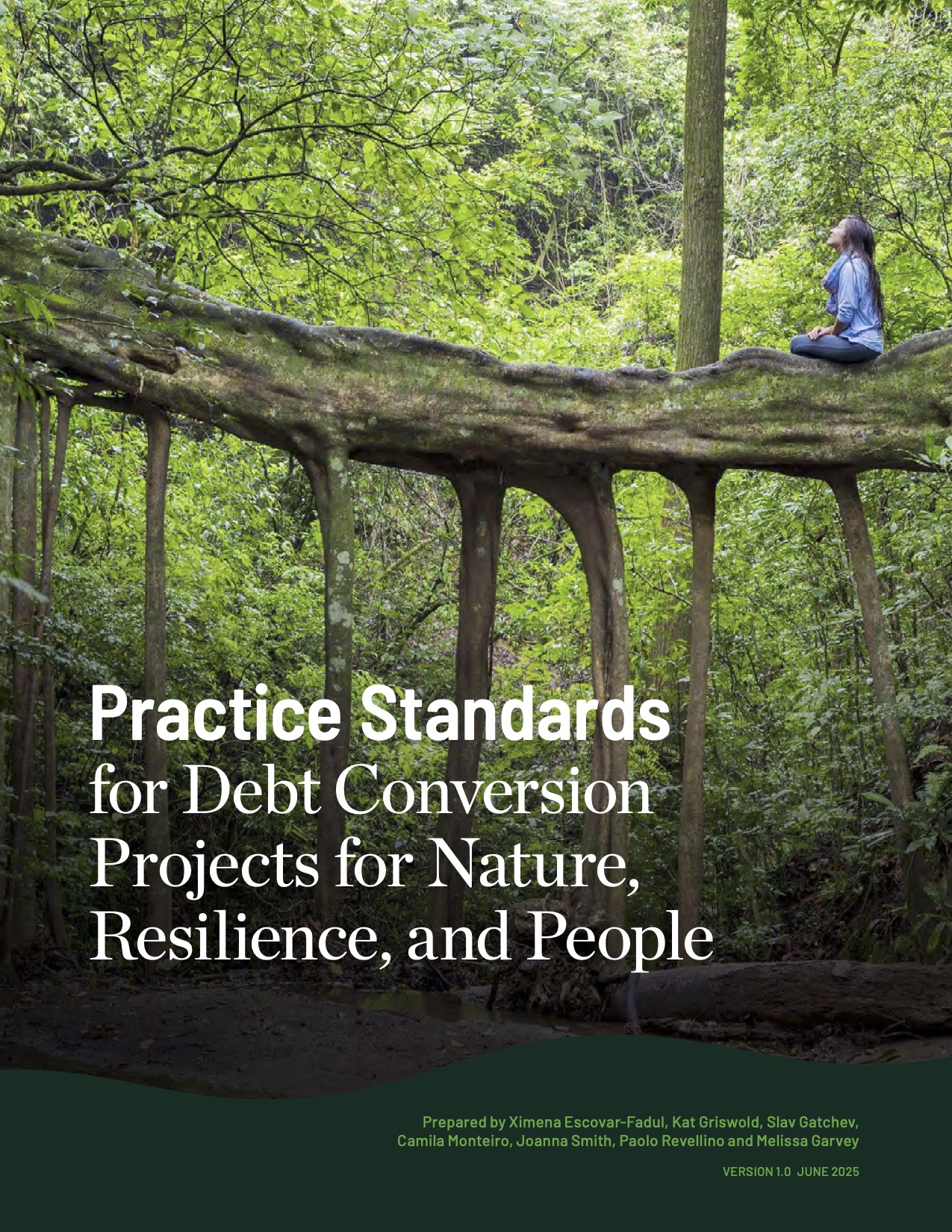
Voluntary practice standards for developing, implementing and reporting on high-quality debt conversion projects for nature, resilience and people. Download the PDF
-
Español
Estándares de Práctica Read it here
-
Português
Normas de Prática Read it here
-
Français
Normes de Pratique Read it here
Global Insights
Check out our latest thinking and real-world solutions to some of the most complex challenges facing people and the planet today.

What Is the Nature Bonds Program?
The Nature Bonds Program is a holistic approach that leverages debt financing for effective, equitable and long-lasting conservation and climate action to benefit both nature and communities. We work with governments who want to refinance their debt and generate new funding to invest in conservation, climate mitigation and adaptation measures in line with local, national and international priorities. TNC acts as a long-term partner to government, providing guidance and technical support to implement their conservation and climate commitments over the span of 15 to 20 years and deliver long-lasting and equitable conservation impact.
For more than 70 years, TNC has been pioneering initiatives to protect nature, and sustainable financing has been a core element of our work. Piloted in Seychelles in 2016, and formerly called Blue Bonds for Ocean Conservation, our approach combines debt refinancing with technical assistance and has proven highly effective. What we now call our Nature Bonds Program was recently expanded to include terrestrial and freshwater outcomes. There are six projects in implementation, including marine-focused projects in Belize (2021), Barbados (2022), Gabon (2023) and The Bahamas (2024), and the program's first-ever project focused on terrestrial and freshwater conservation in Ecuador (2024). Together, the six projects are expected to generate approximately $1 billion in conservation and climate action funding and support governments to reach new protection commitments or improved management of approximately 242 million hectares of ocean, land, lakes and wetlands, and 18,000 km of rivers, demonstrating how quickly this approach is scaling around the world.
-

Nature Bonds Project Toolkit
A step-by-step guide designed for governments, partners and other stakeholders seeking a thorough understanding of the process, best practices and crucial considerations for world-class impact. Download the PDF
Why now? Governments have pledged to protect 30% of the world’s land, fresh water and oceans by 2030 as part of the Global Biodiversity Framework (GBF). Together with the Paris Climate Accord, it sets vital goals for people and nature. The more we protect and effectively manage nature, the more we can safeguard ecosystems that are critical to supporting the well-being of communities through benefits like increased climate resilience and improved food and water security.
Protecting nature at scale also helps the world reduce carbon emissions and stem global warming. Forests and oceans soak up an estimated 11 gigatons of carbon each year—about a third of emissions from industry and fossil fuels annually.
Yet solutions are costly, and time is running out. The United Nations estimates the global gap in funding for biodiversity is at least $700-940 billion per year. Around 88% of “last chance ecosystems” are in countries with moderate to high debt distress. For many countries, debt burdens and lack of access to international capital are enormous hurdles to meeting their ambitious biodiversity and climate goals. This is where the Nature Bonds Program can help.

Belize Blue Bonds for Ocean Conservation Project
Learn more about the Belize Blue Bonds for Ocean Conservation project in the case study.
With strong partnerships and collaboration between governments, funders and multilateral development banks, the Nature Bonds Program is helping countries refinance debt and re-invest the savings in nature conservation and climate action.
Powered by Partnerships
Nature Bonds projects combine debt refinancing, science, safeguards, policy and planning to support countries in achieving their conservation and climate goals, close the nature finance gap and support local communities.
To make Nature Bonds projects possible, TNC engages with governments, financial institutions, NGO partners, and community stakeholders and rightsholders to ensure that each project’s outcomes are a win for both nature and people.
Such innovative approaches require financial resources to get off the ground. Our work is made possible by philanthropic support that enables us to develop new debt transaction projects and offer countries tailored science, policy and planning support to deliver effective, equitable and long-lasting conservation outcomes.


Communities and Stakeholders—Communities and in-country stakeholders and rightsholders have a vital role to play in the development and implementation of Nature Bonds projects. In the Seychelles, stakeholders from key marine sectors and civil society were actively engaged during the preparation of the country’s marine spatial plan, which supports the sustainable development of the Seychelles’ blue economy through activities such as fishing, tourism and more while ensuring that marine environments and ecosystems and community livelihoods are protected and effectively managed.
Country Leaders and Policymakers—Political leaders around the world are making important new commitments on funding, conservation and addressing the climate crisis. Nature Bonds projects rely on their leadership and ambition to deliver on pledges.
For example, the government of Belize is essential to the success of the Blue Bonds project that will protect up to 30% of the country's oceans. “Blue Bonds will help us support the vibrant marine life that reside here and maintain the rich biodiversity that is crucial for the health of our ecosystem and the planet,” said Belizean Prime Minister John Briceño. “We are proud to be pioneers in this work and to lead the way for other countries to join us as we conserve our oceans for Belize and beyond.”
Philanthropic Partners—Support from our philanthropic partners and other funders, including pro bono legal partners, is critical to building the capacity, expertise and convening power needed across TNC to help design and enable these complex projects.
Credit Enhancement Providers —Nature Bonds projects are made possible by the support of multilateral development banks as well as other financial partners who provide credit enhancements that allow countries to access the best outcomes and offer expert advice. Private investors and insurers are also partnering on projects in new ways.

Nature Bonds Project in the Ecuadorian Amazon
Learn about the most recent Nature Bonds project, designed to support Ecuador’s Biocorredor Amazónico Program, in TNC’s new case study.
Scaling the Nature Bonds Approach
Debt refinancing is a key tool for unlocking new funds and addressing the nature and climate finance gaps. New partners are joining in efforts to accelerate action on climate adaptation and mitigation as well as conservation. TNC worked with six other international organizations to establish the Debt for Nature Coalition, which is committed to scaling conservation outcomes through sovereign debt conversions and was a finalist for the 2025 Earthshot Prize. We worked with partners to craft practice standards for developing, implementing and reporting on high-quality debt conversion projects for nature, resilience and people.
We are also taking steps to make it easier for countries and the financial sector to use these debt conversion tools. This includes working with ministries of finance to show how climate and conservation outcomes support priorities like economic growth, fiscal stability, and resilience and to integrate these into key frameworks like debt sustainability and credit rating assessments. It also involves aligning with global initiatives, such as market-led KPIs, to increase confidence in the market. Together, these efforts make sustainable debt instruments more practical, trusted and easier to replicate across countries.

Nature Bonds Project in The Bahamas
Learn about the recent Nature Bonds project in The Bahamas in TNC’s new case study.
Now Is the Time for Action
We must act now to protect nature, support the well-being of communities and ecosystems around the world, and accelerate action on climate adaptation and mitigation and biodiversity conservation pledges at the national and international level. Global movements such as the Nairobi Declaration are also adding their voices to the call for urgent climate finance action, and Nature Bonds projects will work in cooperation alongside these types of initiatives as a part of the growing global movement for urgent action on the biodiversity loss and climate crises.
Nature Bonds projects are an exciting path to support countries in financing and accelerating projects that move the world toward reaching global biodiversity and climate commitments—but more ambition, funding and partnerships are needed to help them achieve maximum impact.
Dive Deeper

In Belize, Marine Conservation Is Fueled by Community Engagement
The implementation of a country-level debt conversion is supporting marine ecosystems and the people who depend on them.

World’s First Nature Bonds Project Reaches Final Step in Seychelles
The small island nation, located east of mainland Africa, has secured a future of marine conservation, climate adaptation and a healthy blue economy.

Ecuador Announces Its First Debt Conversion to Support Terrestrial and Freshwater Conservation in the Amazon, Supported by TNC’s Nature Bonds Program
Debt conversion for Ecuador expected to unlock approximately $460 million in funding for the Amazon Biocorridor Program over the next 17 years to support conservation and people.
Global Insights
Check out our latest thinking and real-world solutions to some of the most complex challenges facing people and the planet today.