

Coastal Resilience Methodology
TNC and partners launch first of its kind methodology, modeling the value of nature-based solutions before disaster strikes.

Media Contacts
-
Connor Nickerson Wheatley
Communications Manager, Climate and Ocean
The Nature Conservancy
Email: connor.wheatley@tnc.org
At the Nature Conservancy, we believe in proactive protection – an ecosystem shouldn’t have to be damaged in order to understand its value.
We have launched the Coastal Resilience Asset Methodology: a first-of-its-kind protocol that quantifies, in US dollars, the flood-protection value that mangroves and tidal marshes deliver to coastal property and communities.
You can now invest in nature and invest in the well-being of countless individuals, critical infrastructure and the preservation of our planet's essential ecosystems.
The Gap in our Frontline Defense
Coastlines are our frontline defense. 40% of the global population lives near coastlines, where just 100 meters of mangroves can cut wave height by 66%. Yet, they are being rapidly altered by sea-level rise, erosion and increased storm surges. ORRAA’s Coastal Risk Index calculates that 14.2 million more people would be flooded annually from coastal flooding and storm surges if they did not have the protection of mangroves and coral reefs. Costs associated with extreme weather events are also increasing. In the U.S, prices rose from USD 20B in the 1980s to around USD 120B in recent years.
The investment need for resilient coastal ecosystems has historically only been understood after storms hit. In partnership with The UC Santa Cruz Center for Coastal Climate Resilience, TerraCarbon, IH Cantabria and East Carolina University, we have released this methodology to model that value before disaster strikes. This can better unlock public and private capital for proactive protection.
Now, we finally have a standardized way to measure that protection and express it in economic and social terms that planners, investors, and governments can use to inform smarter decisions.
Protecting Our Coastlines
Climate change increases operating costs, adds to supply chain disruptions, and damages infrastructure. These changes have ripple effects at the regional and local levels as costs often get passed down to consumers. Over the past 10 years, insurers have also paid a high price. Claims have totaled more than USD 300 billion for coastal damages alone.
Grey infrastructure is frequently the chosen method of coastline defense. Governments spend tens of billions of dollars each year on hard flood protection infrastructure – levees, seawalls and related systems – with costs in the United States reaching upwards of USD 15B annually. Despite the high price tag, grey infrastructure cannot adapt to changing conditions and needs frequent repair. The American Society of Civil Engineers (ASCE) estimates direct, cumulative gray infrastructure repair needs reached $4.6 trillion through 2025.

A Natural Solution
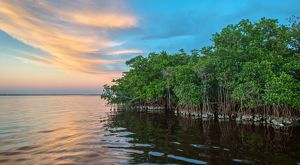
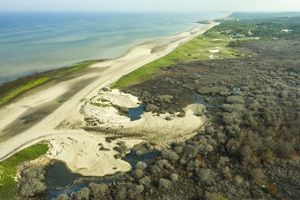
Natural protections like mangroves and tidal marshes absorb incoming wave energy at higher rates, protect against storms at lower costs, and provide co-benefits like carbon absorption that mitigates future climate impacts. If a portion of our current protection spending was shifted toward nature‑based solutions, infrastructure needs would reduce, maintenance costs would lower and future flood damages could be avoided.
- TNC research illustrates how nature-based coastal resilience can reduce flood damage by 29% and save communities USD 100M.
- During Hurricane Ian, mangroves are estimated to have averted USD 4.1B in storm surge-related property damages in Florida.
Changing the Game - Protect First and Save Later
TNC and partners developed the Methodology for Coastal Resilience Benefits from Restoration and Protection of Mangroves and Tidal Marshes (Coastal Resilience Methodology) to quantify the annual flood risk reduction benefits of coastal ecosystems, like mangroves and tidal marshes, in the face of climate change and flood events.
Until now, adaptation has been funded almost entirely by debt, which is why we don’t see much of it. These new tools create an opportunity to invest proactively in nature to help reduce climate risks to people and property.
We are modeling the resilience benefits so we can identify the right level of investment in these habitats before disaster strikes through two approaches:
- Invest before the storm: resilience modeling helps decision makers invest now in nature-based solutions, bringing them into infrastructure planning and unlocking public and private funding before these benefits are lost.
- Channel markets towards resilience: by stacking resilience benefits with carbon offsets, wetland projects can attract premium prices on voluntary carbon market and direct investment to projects that protect communities while delivering climate benefits.
With the recent approval of this protocol by Verra’s SD VISta program, for the first time ever corporations looking to mitigate their carbon footprint can also achieve quantified risk reduction goals by investing in coastal restoration and protection. Under Verra’s accreditation program, project developers can stack resilience benefits with carbon offsets to generate ‘Blue Carbon Resilience Credits’ or generate standalone ‘Coastal Resilience Assets’ - units that can be credibly quantified, verified and invested in.
Nature-based solutions have long been undersold because we lacked the tools to prove their value. This methodology helps close this gap by showing what they can be worth to a homeowner, a business, or a city facing the next major storm.
Sector Snapshot
Insurance companies
Insurance companies can invest in natural assets that reduce exposure to climate hazards while advancing community resilience and supporting sustainable development.
The private sector
The private sector can more fully account for nature and directly fund natural infrastructure as core risk reduction measures.
Project developers
Project developers can generate “Coastal Resilience Assets” through Verra’s SDVISta program as tradeable assets combined with carbon offsets to better support the long-term management and protection of projects that reduce coastal flood risks.

MDBs & development finance institutions
Multilateral development banks and development finance institutions can use this tool to integrate nature at larger scales through country-level investments and monitoring frameworks.
Story Spotlights
Innovation that brings hope to the most vulnerable.
New Jersey
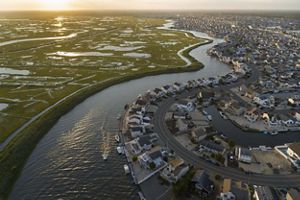
Hurricane Sandy demonstrated pervasive flooding around all grey infrastructure but not around wetlands. In New Jersey, wetlands cover just 10% of the flood plain and are estimated to have reduced damages by an average of 27%, avoiding nearly US $430 million or 3% of the state’s total losses. Had coastal wetland restoration been implemented more broadly before the storm, communities could have been better served by these ecosystem benefits. Applying this new methodology in New Jersey and other high-risk coastal areas helps put a clear value on nature’s protective role, giving communities, businesses and city planners a practical incentive to include wetlands as part of everyday resilience planning.
India
This methodology has global application. TNC is currently conducting a case study in India that highlights the risk reduction benefits of mangroves. The case study found that restoring 1200 ha of mangroves in the Sundarbans provides an annual flood risk reduction of over $15million USD in damages and reduces risk for over 37,000 people.
Join us as we work to protect coastal wetlands and improve coastal resilience.
This work is funded by AXA XL, Builders Vision, and the University of California, Santa Cruz.
The Nature Conservancy is a global conservation organization dedicated to conserving the lands and waters on which all life depends. Guided by science, we create innovative, on-the-ground solutions to our world’s toughest challenges so that nature and people can thrive together. We are tackling climate change, conserving lands, waters and oceans at an unprecedented scale, providing food and water sustainably and helping make cities more resilient. The Nature Conservancy is working to make a lasting difference around the world in 83 countries and territories (39 by direct conservation impact and 44 through partners) through a collaborative approach that engages local communities, governments, the private sector, and other partners. For more news, visit our newsroom or follow The Nature Conservancy on LinkedIn.