
interstitialRedirectModalTitle

interstitialRedirectModalMessage

A view of a waterfall.
Mianus River Gorge This preserve marked The Nature Conservancy’s first acquisition in 1955. © J.G. Coleman

Newsletter

Q&A: Taking the Long View

An interview with Nat Williams, a 34-year Nature Conservancy veteran and conservation history expert, about how TNC has grown and evolved over the decades.

About Nat Williams

Nat Williams spent 34-years with The Nature Conservancy that included founding the government relations department, serving 15 years as the state director for Maryland/DC, and leading the trustee program, all before retiring in 2017. He also became TNC’s unofficial historian, a role he relished because it gave him a chance to elevate lessons from the past that can inform our future. Nat and his wife, Annette, also a former TNC staffer, continue to support the organization as Legacy Club members.

How did your career in conservation begin?

I can’t claim it’s what I set out to do. I grew up in Boston, went to college in Illinois and then met a Congressman who offered me a job in Washington, D.C. He was appointed to a federal judgeship, so I found myself unemployed. Then, as a lot of good stories go, I ran into a friend in a bar. He introduced me to his wife, who worked with TNC, and that was it.


What was your first role with TNC?

It was supposed to be a temporary job. For years, TNC bought lands to expand national parks and wildlife refuges, holding them until federal agencies could buy them from us when appropriations from the Land and Water Conservation Fund (LWCF) were released. The Reagan administration froze LWCF funds for land acquisition, so all of a sudden, TNC had about $28 million of debt. I was hired to recover those funds, which we did. That success demonstrated the potential of advocating for conservation in a nonpartisan way, so I was asked to stay on to build a government relations team.

A man standing in front of flowers.
Q & A: Nat Williams Nat Williams spent 34-years working at The Nature Conservancy. © Nat Williams
Can you share a TNC milestone that you feel is particularly significant?
Some milestones start out quiet. They only reveal themselves over time. And others are consequential right away. I was part of the discussions around different iterations of TNC’s mission. It was profound to debate things like, do we want to say “... and water”? At that time about 350 people were on staff—including exactly one marine scientist. Adding those two words meant we had to take on an entire new way of working. Fast-forward: Today, TNC has over 5,000 staff in 83 countries, and freshwater and marine work are an enormous part of our portfolio.
 
Tell us an aspect of TNC’s history that is often forgotten but should be emphasized.
Many organizations began inside TNC. For example, the Endangered Species Act passed in 1973, yet no one really knew what species existed where and how they were doing. So TNC set out to inventory species, starting in South Carolina and Mississippi. That massive effort—the Natural Heritage Program—spread across the country and gave TNC the science to prioritize conservation. It eventually became a stand-alone organization, NatureServe, which remains the definitive source for biodiversity data.
 

What has stayed the same that matters?
Our commitment to conducting our business and our relationships with colleagues, partners, donors and the world with 100% integrity is a constant. That built trust, which affords us lasting resources that power the courage to take on big, complex issues like standardizing our conservation planning process, expanding internationally and, today, climate change. We allow ourselves to embrace the impossible—and that is more important than ever.
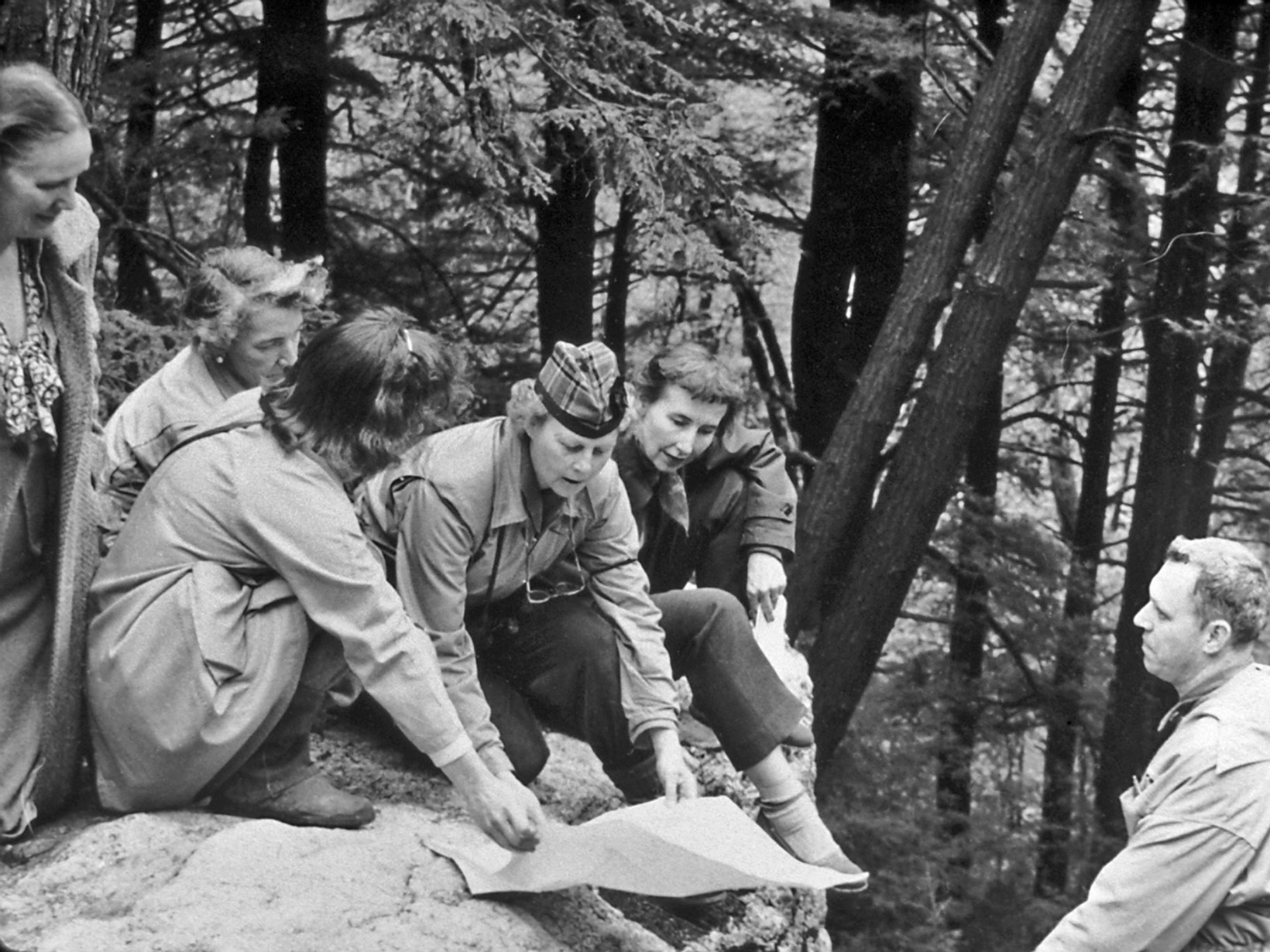

Black and white photo of a group of people looking at a map on a trail.
HOW IT STARTED Historic photograph shows a group of volunteers planning a trail at Mianus River Gorge Preserve near Bedford, New York. © TNC

HOW IT STARTED

1951 One year after changing its name from the Ecologists Union, The Nature Conservancy was incorporated as a nonprofit in 1951. This small group of scientists had a big idea: take direct action to save nature.

When a stretch of old-growth hemlock forest in New York’s Mianus River Gorge faced imminent development, private citizens rallying to save it approached a young TNC for help. With TNC’s first foray into land protection, this initial partnership not only saved a forest but sparked a movement.

A person planting seeds in dirt.
HOW IT STARTED A worker plants a willow seedling along the Colorado River in Mexico to restore biodiversity and create native habitat for wildlife. © Nick Hall

HOW IT'S GOING

2026 In the decades that followed, TNC’s approach evolved beyond land acquisition into such areas as pioneering the use of bold, innovative strategies, including conservation easements, debt-for-nature swaps and water funds to effect lasting change at a global scale. Today, Mianus River Gorge is managed as a preserve and research hub. And TNC is operating around the globe, using sound science, collaborative partnerships and decades of on-the-ground experience to tackle our biggest challenge yet: the interconnected crises of climate change and biodiversity loss.