
interstitialRedirectModalTitle

interstitialRedirectModalMessage

Places We Protect

Samuel H. Ordway, Jr. Memorial Preserve

South Dakota

A sunset over a sign in the prairie.
ORDWAY PRAIRIE Samuel H. Ordway, Jr. Memorial Preserve is located near Leola, South Dakota © Seth Owens

Ordway Prairie Preserve features sweeping grasslands and prairie pothole wetlands that sustain birds, wildlife and a rich history.

Overview

Description

At 7,800 acres, Ordway Prairie is The Nature Conservancy’s largest preserve in South Dakota and sits within the Prairie Pothole Region and the Missouri Coteau, high-priority conservation areas. 

The preserve includes mixed-grass prairie and more than 400 wetlands. Visitors will see evidence of the area’s glacial past in the prairie’s massive granite boulders and shallow ponds, called “prairie potholes.” These potholes formed when enormous ice sheets retreated and left behind large chunks of ice that created depressions in the land. Today, the potholes provide critical feeding and breeding habitat for migratory waterfowl, shorebirds, grassland birds and other wildlife.

Access

Limited Access

See visit tab below for details.

Size

7,800 acres

Explore our work in South Dakota

Sunset over a pond in the prairie.
ORDWAY PRAIRIE The preserve includes mixed-grass prairie and more than 400 wetlands.  © Seth Owens
A bison drinking water from a pond.
PRAIRIE POTHOLE Ordway’s many wetlands provide water for bison and birds. © Seth Owens

Grasslands once covered nearly one-third of North America, supporting countless plants and animals and shaping human history. Today, most of our original grasslands have been degraded by invasive species or lost to agriculture and development. 

Ordway Prairie is a unique remnant of this original prairie. Most of it has never been plowed and has been well managed with rotational grazing.

Human history 

The human history here runs as deep as the roots of the prairie. This is Yanktonai Dakota homeland. The Yanktonai people, or Iháŋkthuŋwaŋna, are one of the Seven Council Fires of the Očhéthi Šakówiŋ. For generations, Yanktonai people lived on South Dakota’s prairies and rivers, hunting bison, gathering and growing plants, and strengthening cultural lifeways, long before treaties and U.S. expansion disrupted their way of life. 

Remnants of rock prayer sites are reminders that Yanktonai people maintain an enduring connection to this land. Non-native settlers also lived on this land, and remnants of an early 1940s homestead may still be found on the preserve.

Wildlife of Ordway

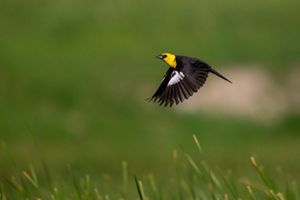
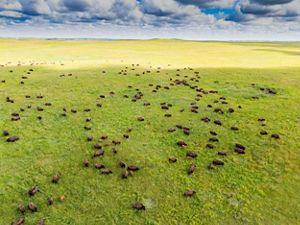
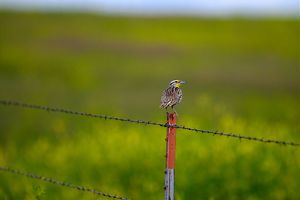
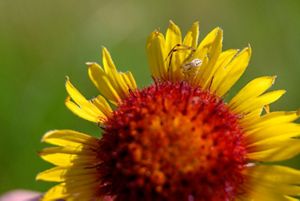
Birds, bugs and bison find refuge on the prairie.

A black and yellow bird in flight in the prairie.
Aerial view of dozens of bison in the prairie.
A meadowlark perched on a fence post.
A spider on a yellow flower.
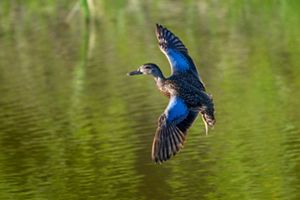
A blue winged teal in flight above a pond.

Stewardship

This land was acquired using funds provided by Katharine Ordway, a champion of prairie conservation across the Great Plains. The preserve is named after her cousin, Samuel H. Ordway Jr., who had a primary influence on her life and was an early voice for conservation. Today, stewardship of the preserve is supported by contributions from conservation-minded individuals. TNC uses several tactics to keep Ordway Prairie healthy, including sustainable grazing, invasive species management, and controlled burning. 

Three people looking at grass in the prairie.
LAND GUARDIAN Katharine Ordway (left) gave at least $64 million to conservation, including providing funding to protect Ordway Prairie. © Wallace Dayton

Visit

The portion of S. H. Ordway Prairie Preserve just south of the interpretive sign on the south side of State Highway 10 is open to the public for hiking and observing wildlife. The area does not have facilities or a maintained trail. Other portions of the preserve are enrolled in the Walk-in Area administered by South Dakota Game, Fish & Parks and can be located by referring to South Dakota Game, Fish and Park’s hunting atlas. Researchers may access the preserve with a research permit. Apply for a permit here.

Supplies and fuel can be purchased in Leola about 10 miles east, or in Eureka about 20 miles west of Ordway. A small hotel and camping facilities are available in Eureka.

Map of Ordway prairie.
Map of Ordway Preserve The blue zone is open to the public to explore, and the red zones are open to walk-in hunting according to the details above. © TNC

What to See: Plants

More than 300 plant species can be found on the preserve. Tallgrass species are in the lowland areas, mid-height species are found on hillsides, and short grass species are found on hill tops. Hillsides are covered with wildflowers from late spring through the summer.

What to See: Animals

TNC maintains a herd of more than 300 bison in the central portion of the preserve. The bison are wild animals and should not be approached. The herd can sometimes be viewed across the fence from the nature trail area. Badgers, ground squirrels, fox and coyotes may also be seen on the preserve. Ordway’s grasslands and wetlands support several thousand pairs of waterfowl along with shorebirds, grebes, rails and herons. 


Support our work in South Dakota

Help us keep South Dakota wild and beautiful. Your support will help to protect and restore some of the most ecologically important lands and waters in South Dakota and around the world.