
interstitialRedirectModalTitle

interstitialRedirectModalMessage

Places We Protect

Kanaele Bog

Island of Kaua‘i

People walking through a wet bog with blue skies and fluffy white clouds in the background.
Kanaele Bog TNC and partners in Kaua`i. © Michelle Silva

The last remaining low-elevation bog in the Hawaiian Islands.

Meet the Residents

Kanaele Bog is home to some of the world’s rarest plants. Click on the photos to learn more.

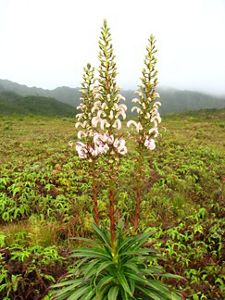
This striking plant features large, showy flower spikes with purplish-white, curved flowers that attract native birds and insects.
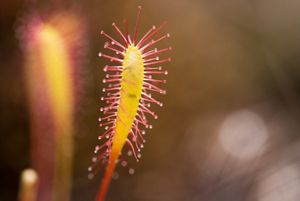
This plant's thin leaves grow like sedge in moist areas, and in summer sticky pink and red flowers attract insects to what looks like nectar but is a gluey substance that entraps them.
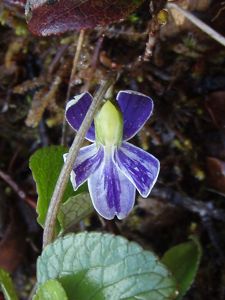
These pretty plants have small flowers that are white on their upper surface and blue to purple on the undersides.
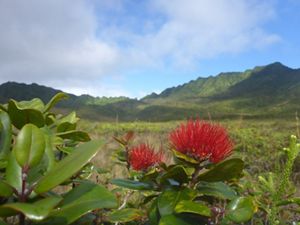
The name ʻōhiʻa lehua makanoe refers to the “misty-faced lehua,” a reference to the gentle mist found on every plant in Kanaele. 

Overview

Description

Located above the town of Kalaheo in the mountains of South Kauaʻi lies a rare ecological treasure, Kanaele Bog—a mosaic of low-growing sedges, slow-growing, stunted trees and some of the world’s rarest plants. Hawaiian bogs are relatively few in number, and among these, Kanaele is the last remaining native low-elevation bog in the state, at only 2,100 ft elevation. The Nature Conservancy manages Kanaele as part of our work coordinating the Kaua‘i Watershed Alliance, a group of landowners aligned with a common commitment: the long-term protection of Kaua‘i’s upper watershed areas. 

Bogs in Hawaiʻi are important as wetlands and are home to many unique species. Like native forests, bogs act like sponges by absorbing and filtering rain and mist, replenishing our aquifers with abundant, clean water. Today, all other lowland bogs in Hawaiʻi have been lost to development or invasive species, which means that native plants like the flowering Pu‘e and Nani Waiʻaleʻale and Hawaiʻi’s only carnivorous plant, the Mikinalo, rely on Kanaele’s rare habitat.
Access

CLOSED TO THE PUBLIC

The preserve is closed due to the delicate nature of the ecosystem.

Location

South Kaua‘i at elevation of 2,100 feet

Map with marker: Hawaiian bogs are relatively few in number – and among these, Kanaele is the only one of its kind.

Open in Maps

Size

80 acres

Explore our work in this region

From Fences to Flowers: Restoring a Living Landscape 

Active stewardship is essential to protecting Kanaele Bog, While the bog itself remains remarkably well preserved, the surrounding landscape has been heavily impacted by invasive plants and animals. Since 2003, TNC has applied our holistic approach to forest management in Kanaele Bog to protect fresh water and provide habitat for a uniquely adapted community of native plants and invertebrates. TNC's targeted restoration actions are strategically identified and implemented to ensure a cascade of positive impacts. For example, we built and maintain a 1.2-mile-long protective fence around the bog to protect the area from further deterioration. By removing invasive weeds, we encourage native plants and invertebrates to naturally regenerate. And by keeping the area protected, our staff and partners promote restoration by planting native plants into the bog, which provide seeds for further plantings. Our future plans include building a boardwalk to allow better access for stewardship and retrofitting the fence to prevent invasive black-tailed deer from eating and trampling the area. 

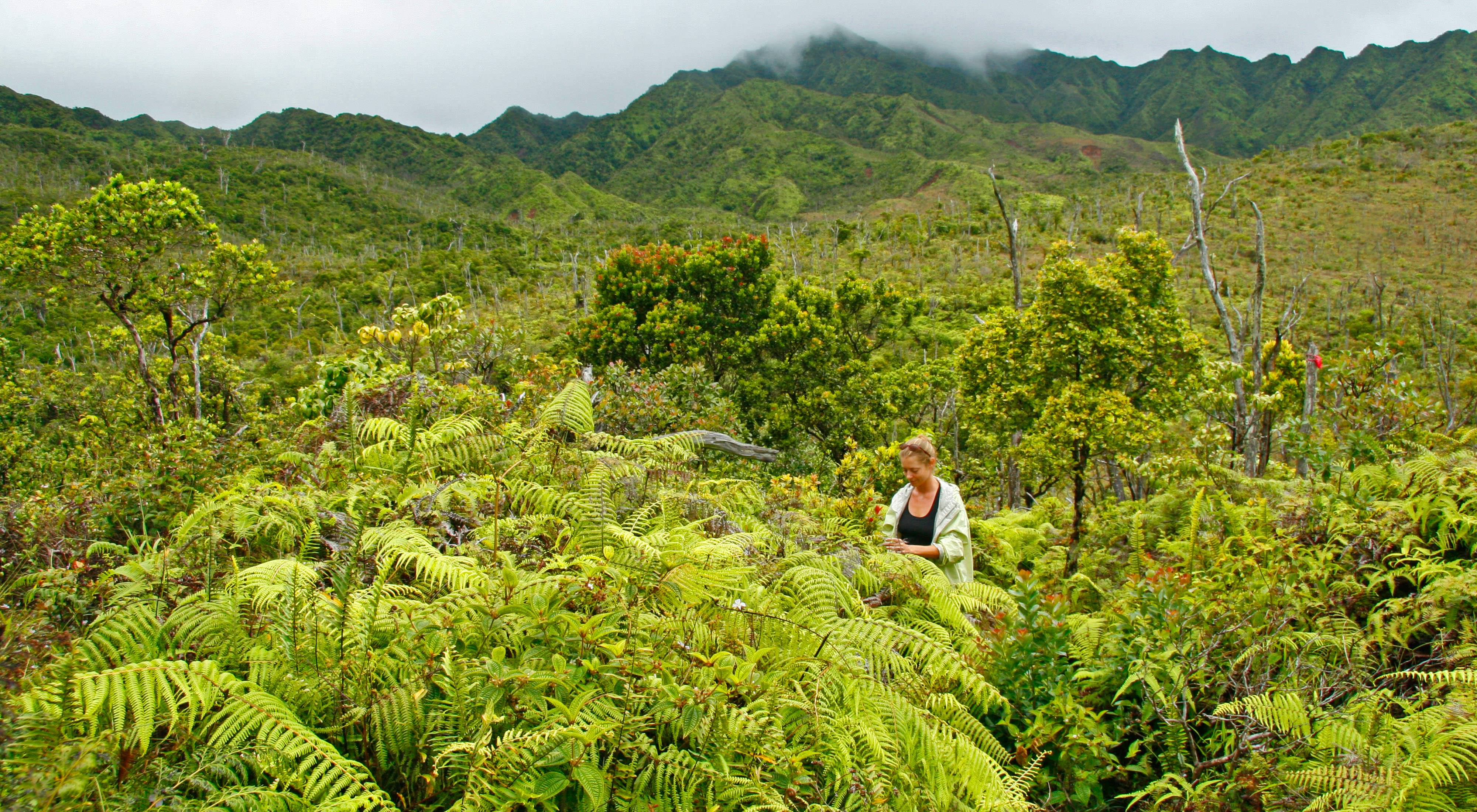
A woman stands in a lush jungle with a forest in the background.
Kanaele Bog Kanaele Bog, Kaua`i © Grady Timmons/TNC

Protecting ʻŌhia From a Deadly Threat

Across Hawaiʻi, the fungal disease Rapid ʻŌhia Death (ROD), is killing native ʻōhia trees. It was first detected on Kauaʻi in 2018 and at Kanaele Bog in 2020. In some areas, the infected trees are removed to prevent further spread. Today, our teams and partners systematically monitor the area for new ROD infections and work to prevent its spread. The bog also serves as a site for research on treatment methods for ROD.

Kanaele Bog is one of those rare places that changes you when you visit. It looks quiet from a distance, but this bog is constantly working for all of us, collecting water, sheltering rare species and preserving Hawaiʻi's natural heritage. 

Mele Khalsa, Kauaʻi Terrestrial Director

Partnerships

In some parts of Hawaiʻi, TNC owns and manages forest preserves. In other areas, TNC manages lands while the landowner retains ownership. On Kauaʻi, TNC manages Kanaele Bog through a management agreement with the landowner. We also coordinate conservation efforts across the island through the Kauaʻi Watershed Alliance, a group of private and public landowners united to protect the island’s upper watershed areas for the benefit of future generations.

These watershed partnerships and alliances protect freshwater and biodiversity; natural systems flow across property lines and span vast stretches of both private and public lands. More than 2 million acres in Hawaiʻi are now overseen through similar watershed partnerships, enabling collective management of native forests and lands for culture, biodiversity and freshwater recharge. These cooperative partnerships represent our best hopes for the future.

“Kanaele Bog is one of those rare places that changes you when you visit,” said Mele Khalsa, Kauaʻi Terrestrial Director.  “It looks quiet from a distance, but this bog is constantly working for all of us, collecting water, sheltering rare species and preserving Hawaiʻi's natural heritage. Its protection depends on strong partnerships that bring landowners together to care for the forests and wetlands that sustain our freshwater resources. Every invasive plant removed, every native seed planted and every relationship strengthened is an act of hope for the future and a commitment to the generations who will depend on these forests long after we are gone.”