


Description
Cross Ranch Preserve lies along the Missouri River about 30 miles north of Mandan, next to Cross Ranch State Park. Located on the river’s west bank and extending into the surrounding hills, the preserve protects a diverse landscape of floodplain forest and mixed-grass prairie.
Along the Missouri River, you’ll find some of North Dakota’s most extensive remaining floodplain forests. Beyond the floodplain, the landscape rises into mixed-grass prairie, a remnant of the vast grasslands that once stretched across millions of acres before widespread agricultural development.
Although the Missouri River’s natural flow has been significantly altered by the human-made Lake Sakakawea, Cross Ranch lies along one of the last free-flowing, undeveloped sections of the river. At the preserve, the river and its banks provide important habitat for wildlife. Least terns and piping plovers use the river’s sandbars, as do migrating whooping cranes in the fall. Pallid sturgeon inhabit its channels, while bald eagles can be seen fishing its waters.
The 5,593-acre preserve is divided into three main areas. The 1,840-acre north unit follows the Missouri River and borders Cross Ranch State Park. The 2,300-acre central unit lies in the Missouri River hills above the floodplain, while the 1,440-acre south unit is located about three miles farther south in the river hills.
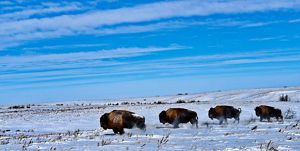
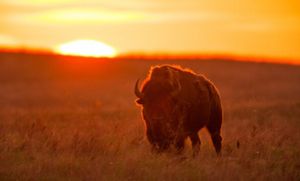
The Nature Conservancy maintains two bison herds on Cross Ranch Preserve. Bison play a vital role in maintaining healthy grassland ecosystems. Their selective grazing helps native grasses and wildflowers thrive, while their hooves create just enough soil disturbance to make space for new growth. Their droppings return nutrients to the soil, and seeds carried in their fur are dispersed across the prairie.
Bison are wild animals and should never be approached. Visitors can safely watch them from a distance or from across fence lines.