

It’s mid-summer in California’s Sierra Nevada mountains, and the heat feels oppressive even beneath the shade of the trees. Temperatures hover above 95 degrees and the brush crackles under Kristen Wilson’s boots as she walks. Every gust of wind feels like a warning.
As The Nature Conservancy’s lead forest scientist in California, Wilson has spent years studying dry forests—ponderosa pine and mixed conifer-laden ecosystems found throughout the West that are known for long, dry seasons. But lately the work feels different. “I’m thinking about fire danger and how I would get out of the field quickly,” she says. “That is something I wasn’t thinking about a decade ago as much.”

This Is Not Your Grandparents’ Dry Spell
For generations, “drought” has been understood as a temporary condition—a dry year here and there, easily forgotten during the next good rainy season. But what is happening now across the Western United States goes beyond a lack of rain. Rising temperatures are sucking moisture out of trees and soils directly into the atmosphere, intensifying evaporation and causing a net loss of water to the ecosystem. Snowpack is melting earlier and faster, making wildfire seasons longer and more severe.
The impacts of this “hot drought” on western dry forests are pervasive. Scientists use the term “aridification” to describe this shift toward a hotter, drier baseline. The concept is simple: across much of the West drought is no longer just a weather pattern. A permanently thirstier climate is reshaping how water moves through landscapes, how forests burn and whether some ecosystems will survive in their current form at all.
This new reality demands a different way of thinking about dry forests, water and the connections between them. TNC is taking action to study, restore and protect western dry forests and watersheds, so that we can adapt to this drier future.

Crowded Forests Die Faster
Dry forests are naturally adapted to dry conditions. However, across much of the West, dry forests have grown increasingly dense due to a century of land management policies and practices that have, among many things, removed low-intensity beneficial fire and overharvested large trees, resulting in forests overgrown with small, young trees. In California, mixed conifer forests have 2 to 6 times more trees per acre than historically.
Too many trees competing for too little water amplifies stress, making forests more vulnerable to insects and disease. These compounding effects have led to extensive tree die-offs. For example, aerial surveys have shown that more Douglas-fir trees died in southwest Oregon from 2015 to 2019 than in the previous 40 years.
Dead and dying trees accumulate as fuel, making the landscape more flammable.

For Wilson the concern is not only that fires are becoming larger, but that they are burning in ways many western forests are not adapted to survive. “The size of those fires and then the amount of high-severity fire is really the concern,” Wilson says, “particularly the big patches of contiguous high-severity where you’re losing all your trees.”
Wilson and her collaborators are studying how forests can better adapt to a hotter, drier future by combining lessons from the past with climate projections for the future. Her work has helped land managers rethink restoration strategies in forests where wildfire is inevitable, but catastrophic fire does not have to be.

“The past is helpful to refer to, because we can think about the role that cultural burning played, as well as lightning fires burning the forests,” Wilson says. Historically, low-intensity fire set by Indigenous people and lightning maintained dry forests—clearing fuels, recycling nutrients and maintaining a more open, resilient forest structure. Today, Wilson says, restoration must not only reduce overcrowding through thinning, but also restore beneficial fire to the landscape.
One of Wilson’s major contributions was co-developing a climate-informed forest resilience framework for California’s Tahoe-Central Sierra region, a 2.4 million-acre landscape. The framework combines historical fire patterns, current forest conditions and future climate projections to help managers decide where forests can realistically persist and where restoration efforts are most likely to succeed.
But Wilson also emphasizes: “We can’t do it with thinning alone, we also have to use beneficial fire.” Across her work, she has increasingly focused on helping communities and land managers learn to live with beneficial fire, which can include controlled burns, cultural burning or managed wildfire, as an essential part of adapting forests to drought.
Beneficial fire is a necessary ingredient for us to live with drought and stressed, dense forests.
Working with Nature in the Colorado River Basin
The Colorado River Basin has been experiencing drought for more than two decades. With more than 40 million people across the American West and Mexico depending on the river for drinking water, electricity and irrigation, the system has been pushed toward “water bankruptcy.”
Much of the basin’s water begins as snow and rainfall in forested headwaters, including some dry forests that are facing intensifying wildfire risk and insect outbreaks.
“We've got an immediate crisis brought on by the drought and the fact that we had the worst snowpack in recorded history this past winter,” says Nancy Smith, Colorado River Program Director at TNC.

Given the urgency of the water crisis in the basin, forest and watershed restoration has become increasingly critical. TNC is focusing on approaches that look forward—toward a permanently hotter, drier future—and that work with nature rather than against it.
“We are using nature-based solutions to help our landscapes continue to function in the face of these really challenging and unpredictable conditions,” says Smith. “We use restoration approaches that help restore natural function and build resilience to hotter, drier conditions across entire watersheds.”
That work ranges from thinning and controlled fire to methods that use natural materials to reshape the flow of rivers and streams. One example of this are beaver dam analogs—simple, cost-effective structures that mimic the natural water-slowing functions of beaver dams. The goal is to work with natural processes to reconnect streams with floodplains, hold water longer in wet meadows and reduce stress on ecosystems and communities alike. Because these approaches are relatively inexpensive, Smith says they can be implemented “at a scale that matters.”
Equally important, the work is rooted in local collaboration. “We find collaborative science-based solutions that work with the people and places on the ground,” says Smith. She emphasized that restoration is not only about healthier forests and watersheds, but also about building the on-the-ground expertise, workforce, and local capacity needed to carry out that work over the long term. By investing in restoration crews, controlled burning capacity and community partnerships, TNC hopes to create lasting economic benefits in rural communities while helping both people and ecosystems thrive together.
Hot Winters and Low Streamflows
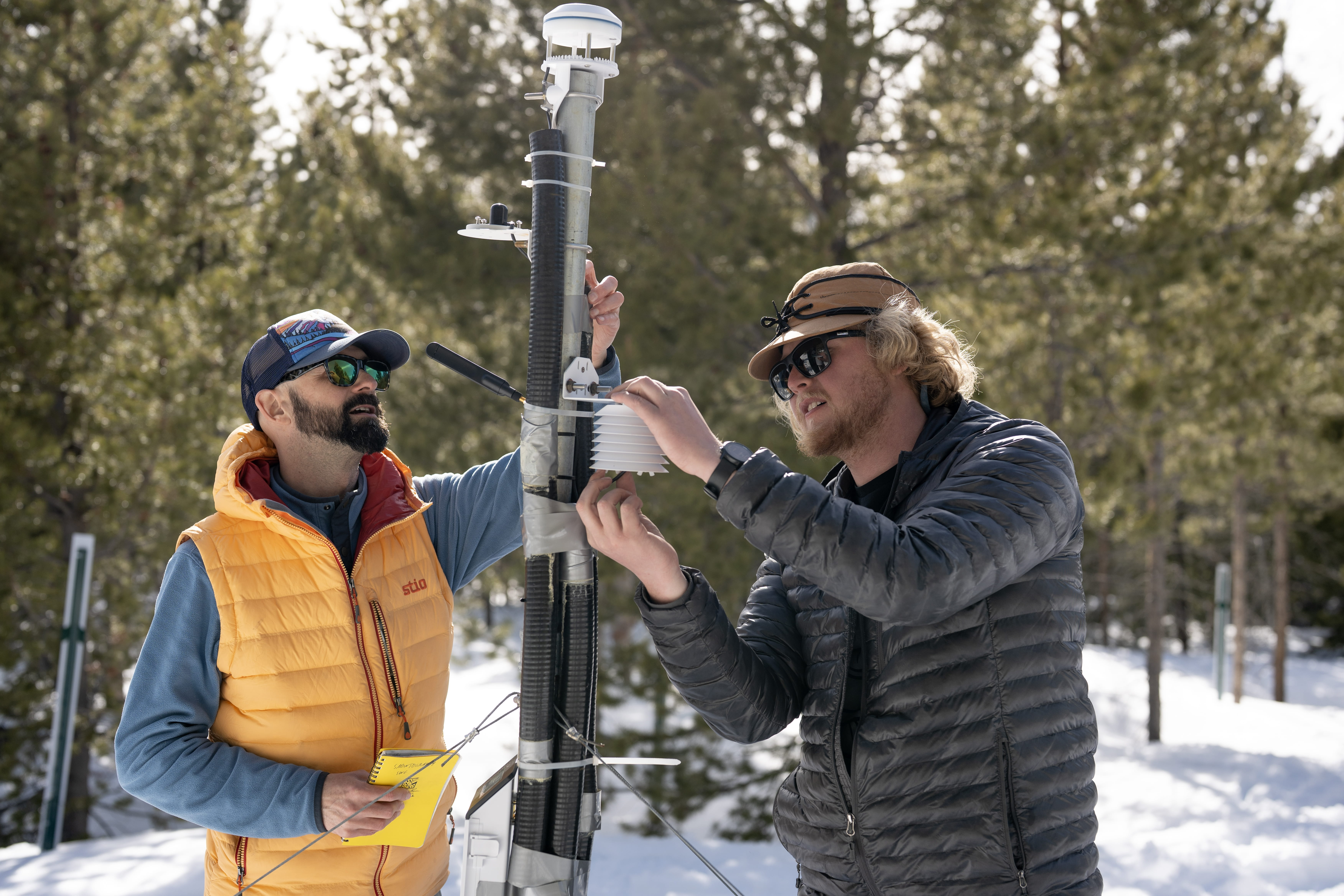
Researchers are using “snowtography”—networks of cameras and sensors that track snow levels in forests—to better understand how forest conditions influence snowpack, and ultimately water supply. Early findings suggest forest restoration can make a meaningful difference. Thinning and controlled burning open up overcrowded forests, leaving clearings. When snow falls in treated areas, less of it gets caught high up in tree canopies where it is more likely to melt, evaporate or sublimate (turn directly into vapor), and some of it is shaded by remaining trees. This helps snow accumulate on the ground, where it can persist longer into spring.
The benefits are measurable: treated forests have shown improved soil moisture and healthier tree growth. At TNC’s Cle Elum Ridge forest restoration project at the headwaters of the Yakima River, snowtography has revealed a promising glimpse: on the north side of the ridge, measurements have shown treated forests with canopy gaps can hold snowpack that is 2.9 times deeper and lasts 12-30 days longer than in forested plots.
Drought Flows Downstream
On April 8, the Washington Department of Ecology declared a statewide drought emergency, despite receiving 104 percent of normal winter precipitation. The previous winter was warm, and too much precipitation came as rain, leaving snowpack at near-record lows.
“We are entering the fourth consecutive year of drought in Washington,” says Darcy Batura, TNC’s director of forest partnerships in Washington. “It’s not just episodes anymore, this is a full shift.”
Washington’s summer water supply is stored as mountain snowpack, so this year’s low snow levels are likely to mean widespread water shortages over the coming summer. Painful tradeoffs between some of Washington’s most cherished goals—such as its vital, high-value agriculture economy, and its commitment to salmon recovery—will be inevitable.

Snowpack from dry forests is a critical water source for farmers and communities, which rely on waterways, like the Yakima River.
What ties these challenges together is the condition of forests at the headwaters of rivers and streams. Forests act as a sponge, holding water as snowpack and releasing it over time.
Batura serves on the Watershed Lands Subcommittee for an innovative public-private partnership called the Yakima Basin Integrated Plan. It represents a longstanding effort to improve drought resilience by combining water conservation, habitat restoration and water storage projects to balance the needs of farms, communities and forests in the Yakima River Basin.
Forest restoration is an important component of the plan. In fact, one of its proudest accomplishments was the acquisition of the 50,241-acre Teanaway Community Forest at the headwaters of the Yakima River, which has become a centerpiece of restoration, collaboration and recreation.
“We have a plan that is a model that’s addressing water scarcity, and there’s strong support from diverse partners,” says Batura. “And that support has helped us protect a lot of the land that we’ve been working to conserve.”
Balancing Urgency with Agency
Drought is no longer a passing challenge, and this awareness is growing. The headlines are often dominated by catastrophic wildfire, shrinking snowpack and forests under stress. But researchers and land managers say that is not the whole story.
Studies have documented ways in which restoration actions are helping: impacts include reductions in wildfire severity and tree mortality, along with healthier tree growth, improved soil moisture and in some places increases in snow retention and headwater streamflow. Restoration also helps forests recover more quickly after a fire.
Hot drought might be reshaping western dry forests, but the expanding efforts to restore forests through thinning, controlled and cultural burning, and cross-boundary collaboration offer a reminder that we still have agency in determining what kind of future comes next.
Continue learning
Our Work in Dry Forests
TNC’s Western Dry Forests Program leads and convenes efforts to restore forest resilience and reduce the severity of wildfires across the West. Learn more about how we’re partnering with state programs and other partners to restore dry forest ecosystems.

Local Stories

What Colorado Trailblazers Teach Us About Wildfire Recovery
Meet our two Phil James Conservation Award winners and discover how they’re restoring Colorado’s ponderosa pine forests.

Planting Trees Can Help Forests After a Fire
It takes many people to plant a forest: people who collect seeds, grow seedlings in nurseries and, after our worst wildfires, plant them wherever nature needs a helping hand.

Measures of Snow
The Nature Conservancy explores how forest thinning and prescribed burning affects western snowpack, water supply and forest resilience.