
Tennessee’s Top Conservation Wins
We keep expanding our restoration projects, protecting lands and reconnecting rivers

2025 By the Numbers
-

11,933
acres protected by TNC and partners.
-

9,419
acres burned with partners.
-

1,170
miles of streams reconnected.
-

145+
bats tagged by TNC and assisting partners for research.
Get the Full Scoop
Download our 2025 Impact Report
LAND
Landmark win for the wild Hatchie
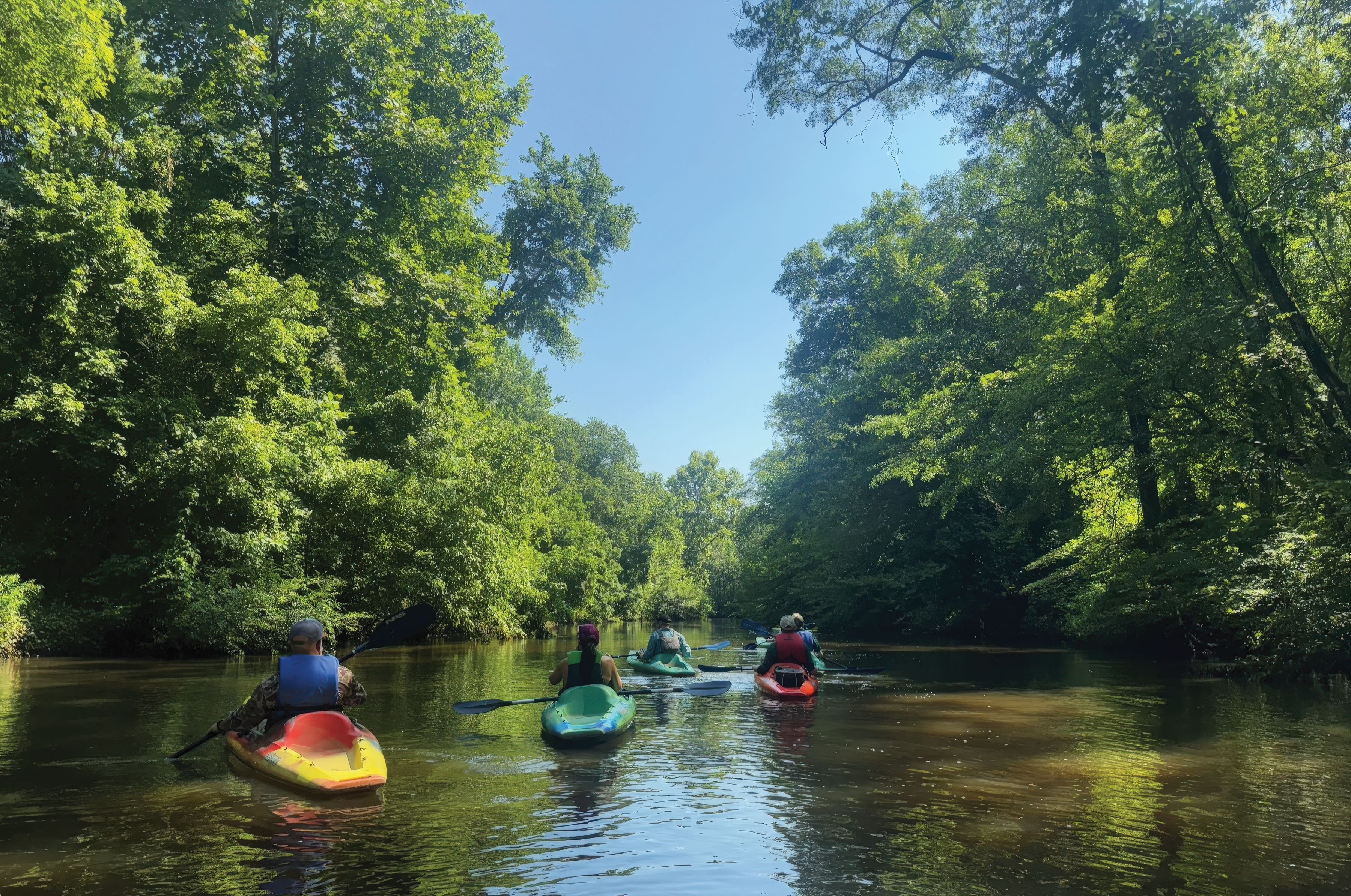
A 7,418-acre expanse of old-growth bottomland hardwood forest along the Hatchie River has been permanently protected through a partnership with The Conservation Fund and the Tennessee Wildlife Resources Agency (TWRA). This marks the largest land acquisition The Nature Conservancy in Tennessee has undertaken in West Tennessee over the past 25 years. The protected area spans Haywood, Madison and Hardeman counties.
The Hatchie River—the last free-flowing river in the Mississippi River Basin—plays a vital role in restoring floodplain function, filtering water and providing habitat for migratory birds and native wildlife. This landscape is a biological treasure, supporting more than 100 fish species, 11 types of catfish, 35 mussel species and more than 250 bird species, including Swainson’s and cerulean warblers.
WATER
Two barrier removals in one year
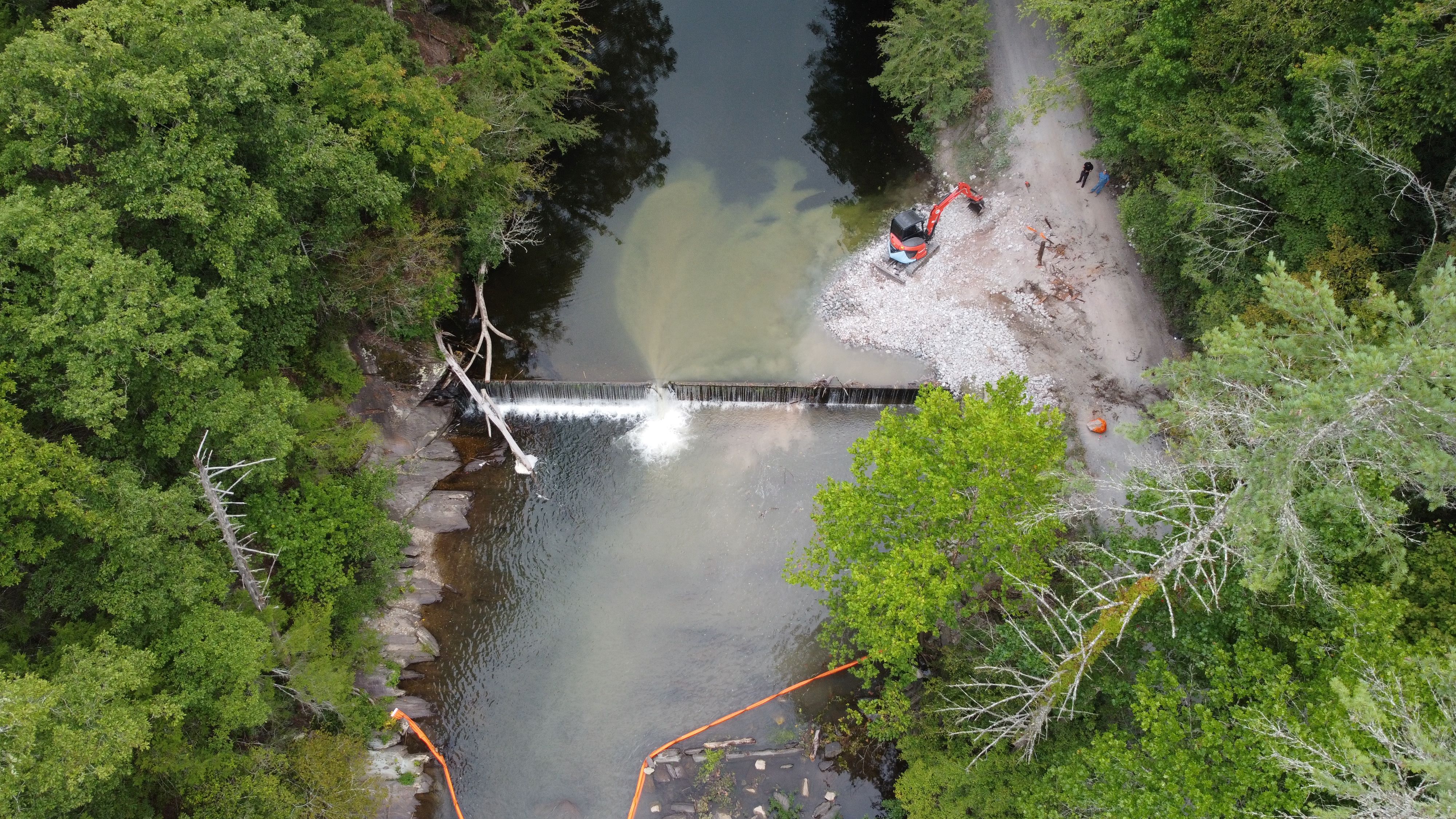
Harms Mill Dam on the Elk River and the Lower Citico Creek Dam in the Cherokee National Forest have been removed. These high-priority projects are reconnecting aquatic habitats, improving public safety and restoring the natural flow of water across some of Tennessee’s most ecologically significant rivers.
The removal of Harms Mill Dam reconnected more than 1,100 stream miles, opening habitat for 46 species of greatest conservation need, including the endangered boulder darter. The removal of the Citico Creek Dam reconnected more than 38 miles of stream, restoring habitat for 67 fish and mussel species, including the federally endangered smoky madtom, Citico darter and yellowfin madtom.
2025 was a remarkable year for conservation in Tennessee. I’m deeply grateful for the dedication of our staff, trustees, partners and supporters who helped accelerate our work across land, water and climate to advance TNC’s 2030 goals.
CLIMATE
Policy progress in a changing landscape
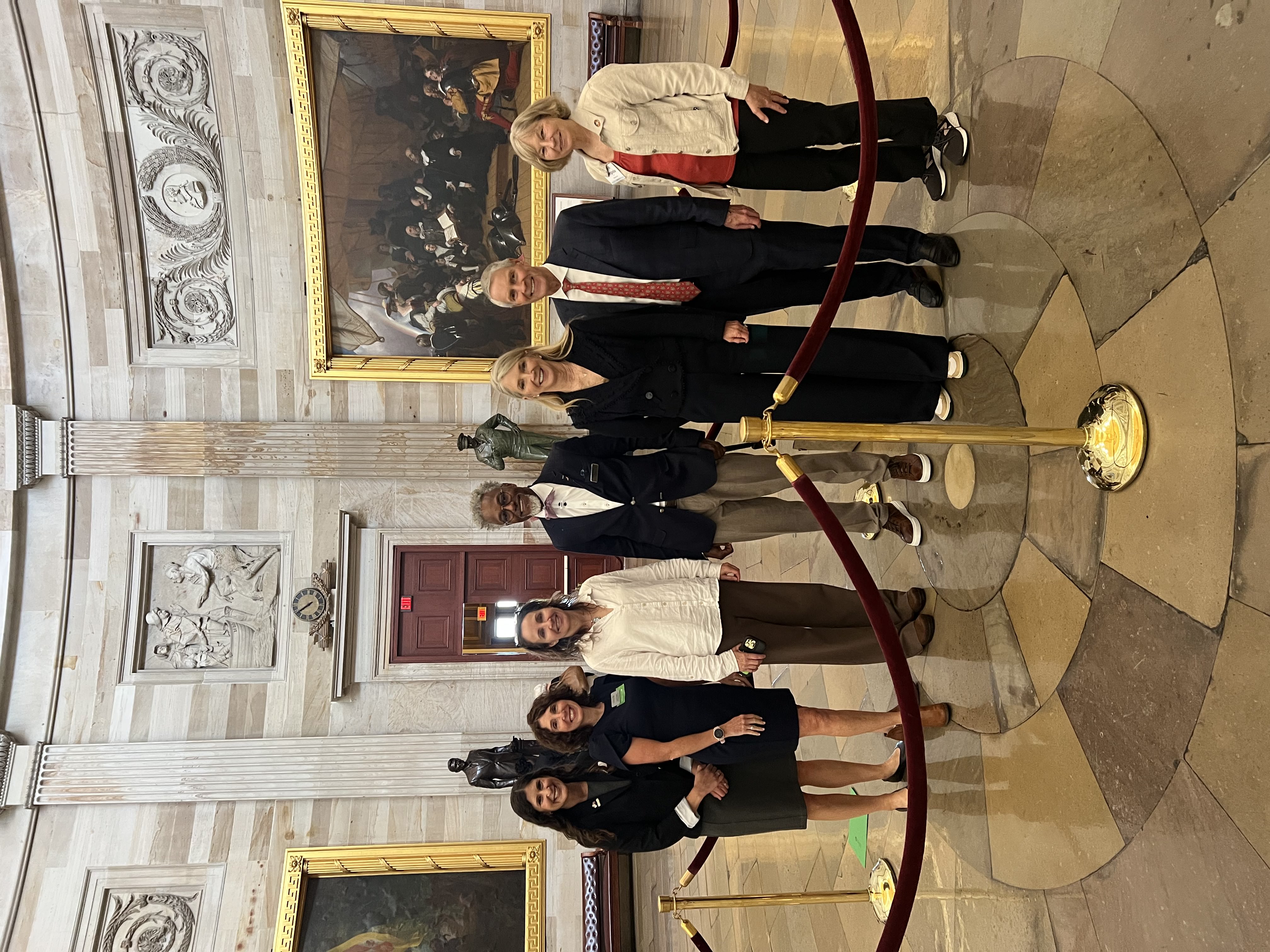
In 2025, The Nature Conservancy faced major policy challenges as federal and state programs critical to conservation came under threat. Rising to meet these challenges, TNC coordinated a nationwide campaign to defend public lands, mobilizing members to send 100,000 letters to Congress and successfully blocking proposals to sell public resources. These efforts underscored the power of policy as a tool for conservation, driving strong investments in forests, wildlife, water and climate.
Key wins included safeguarding wetlands and advancing water security through the Duck River Watershed Planning Partnership. Working with lawmakers and partners, TNC helped retain protections for high-quality wetlands, preserving thousands of acres of vital habitat. Meanwhile, recommendations for the Duck River plan—backed by nearly $90 million in state funding—set a model for watershed management across Tennessee. Together, these achievements highlight how collaboration and persistence can protect nature and people while building momentum for the future.
BIODIVERSITY
Conserving Tennessee’s hidden worlds
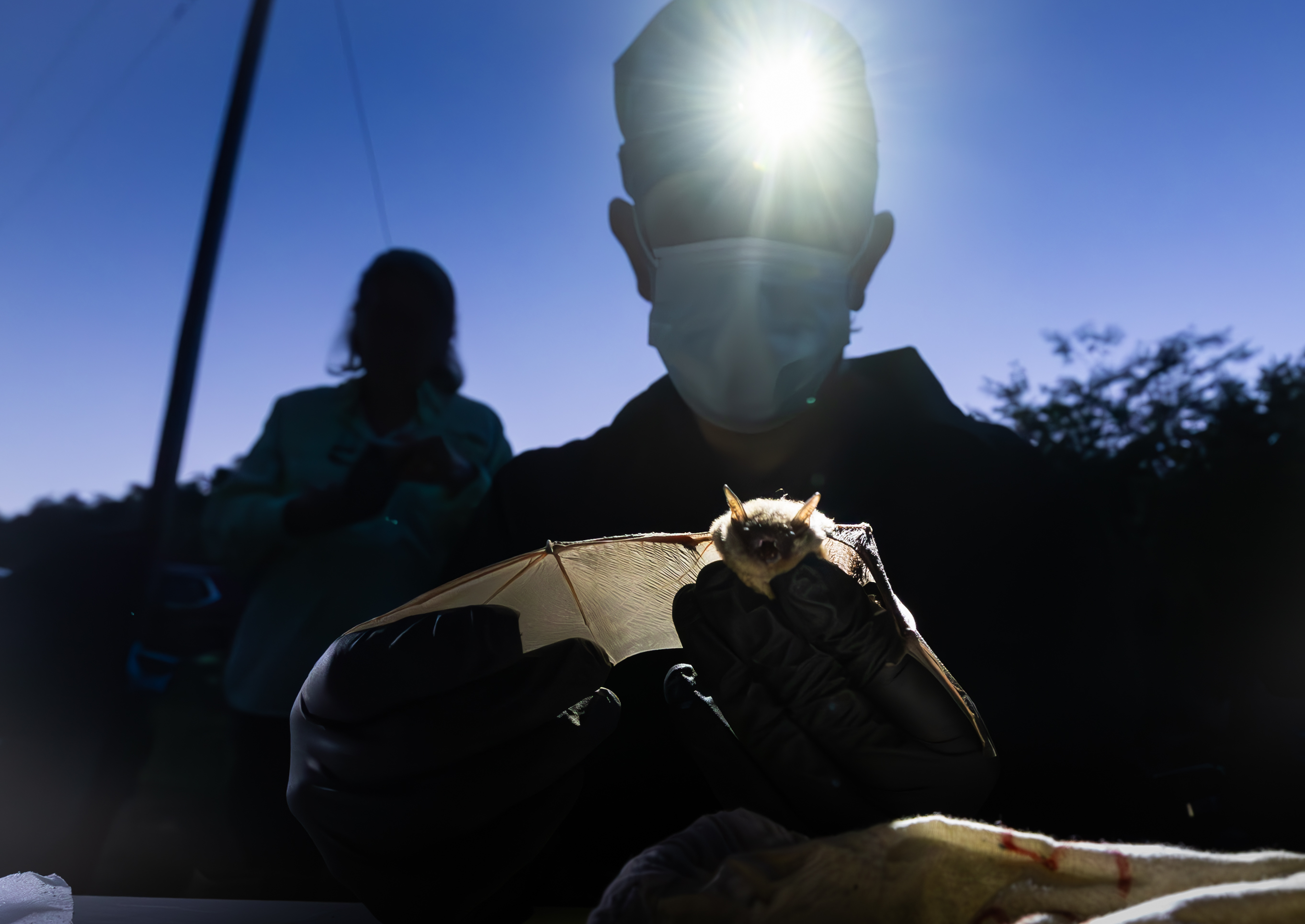
Tennessee’s underground ecosystems are among the most biologically and culturally rich in the country. The Nature Conservancy’s Cave and Karst Program works to protect these fragile environments and the bat species that depend on them. In 2025, our team visited 47 caves during winter bat surveys, documenting a 38% increase in tri-colored bat counts across 26 sites—an encouraging sign for a species previously down by over 90%. We also identified new Indiana bat roosts, expanding known habitat for this endangered species.
Our research uses the MOTUS Wildlife Tracking System and Bluetooth transmitters to study bat migration and landscape use. In September, we set a record by tagging 120 bats in two nights with partners the Tennessee Wildlife Resources Agency (TWRA) and the Tennessee Valley Authority (TVA). One tagged gray bat traveled more than 165 miles, offering new insights into movement patterns and conservation needs.
Conservation Wins Since 1978
1978-1980
The Nature Conservancy opened an office in Tennessee.


TNC transferred 4,138 acres at Savage Gulf State Natural Area to the state and Taylor Hollow Preserve in Middle Tennessee to the Tennessee Wildlife Resources Agency, adding it to the Cherokee Wildlife Management Area.

TNC protected Tennessee’s only native cranberry bog, donated it for research, and expanded Radnor Lake State Park by adding 413 acres, growing the preserve to 1,300 acres.
1981-1990
The Nature Conservancy employed cutting-edge science to pursue projects that would advance efforts to protect cave habitats and other natural areas.

Purchased Powell River Preserve (now a state natural area) to protect endangered plant species, and purchased the 40-acre Barnett's Woods where Price's potato bean was rediscovered after presumed to be eradicated in TN.

Purchased Hubbard’s Cave and the first 72 acres acres of what is today Colditz Cove State Natural Area, which features the spectacular 60-foot Northrup Falls. Also purchased 2,600-acre White Oak Swamp in Hardin County, a habitat for river otter and numerous waterfowl. It's now a state wildlife management area.

Installed a massive steel gate at Hubbard’s Cave to protect bat habitat. Received 1,100 acres for the protection of the Tennessee River Gorge from Bowater, Inc. Purchased the first 90 acres of the Vesta Cedar Glade in Wilson County for the protection of the endangered Tennessee coneflower. Acquired 12,262 acres for Chickasaw National Wildlife Refuge in West Tennessee.

Purchased Mount View Cedar Glade in Middle Tennessee to protect the endangered Tennessee coneflower’s site of discovery.
1991-2000
From large acquisitions to pioneering the use of conservation easements, The Nature Conservancy asserts its leadership by developing new ways to protect important lands.

Purchased 3,100 acres from a Sunnybell Cedar Glade in Middle Tennessee and subsequently convinced Tennessee Department of Transportation to re-route a section of State Route 840 to avoid destroying the glade. Today it is a State Natural Area managed by the state of Tennessee.

Acquired the first 43 acres of Couchville Cedar Glade with financial support from American Airlines, Cracker Barrel and BellSouth. Today this cedar glade is a 122-acre State Natural Area that is contiguous with Long Hunter State Park near Hermitage, Tennessee.

Established the William B. Clark Conservation Area on the Wolf River near Memphis with a land donation from Buck Clark and his family foundation.

Began purchasing land at Flat Rock Cedar Glades in Murfreesboro; at 846 acres, it’s now the largest protected cedar glade in the Southeast. Today it is a State Natural Area and is open to the public. Also purchased Orchard Bog in Shady Valley in East Tennessee and soon launched mountain bog restoration efforts to benefit migratory birds, cranberries, and the endangered bog turtle.

Marie Dickey Kalman donated the 452-acre John R. Dickey Birch Branch Preserve in Shady Valley. Marked the protection of 57,000 total acres in Tennessee.

Opened a community-based conservation office in Shady Valley for East Tennessee. Employed two Shady Valley residents to run the office and manage the Shady Valley preserve system.

Acquired Schoolyard Springs Preserve in Shady Valley to protect unusual artesian springs and several rare plant species, including Gray’s lily. Purchased the 65-acre Quarry Bog Preserve in Shady Valley to begin the second wetland restoration project to benefit bog turtles.

Opened community-based conservation offices on the Duck River in Columbia and on the Hatchie River in Brownsville. Burton Tally donated the 1,100-acre Tally Wilderness Preserve in Pickett County, adjacent to Pickett State Forest. William & Lee Russell donated 78 acres along Clifty Creek on the Roane/Morgan County line to form the Clifty Creek Preserve.
2001-2010
Growing in size and scope and driven by science, The Nature Conservancy expands its reach throughout Tennessee.
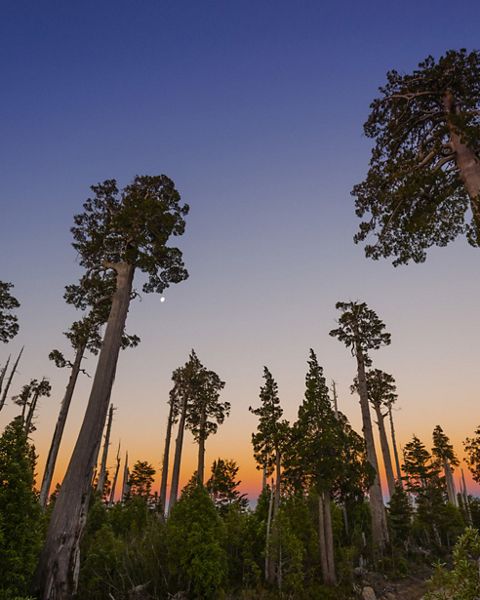

Opened an award-winning boardwalk at the William B. Clark Conservation Area. Purchased the 1,571-acre Jim Creek tract to become part of Pickett State Forest. Acquired 5,200-acre Carter Lands to constitute a portion of the Bear Hollow Mountain Wildlife Management Area. Purchased 1,063 acres and 161 acres on Millstone Mountain, both on the Hatchie River, to protect a unique geologic formation and associated rare plant communities.

Marked the protection of 200,000 total acres in Tennessee, including 11,800 acres purchased from the Anderson-Tully Corporation to create the John Tully Wildlife Management Area. The U.S. Geological Survey identified the Duck River as one of the most biologically rich rivers in the Southeast. Helped acquire 75,000 acres on the Cumberland Plateau to create the Sundquist Wildlife Management Area. Opened an office in Knoxville.

Worked with TNC in Alabama to protect the 21,000 Walls of Jericho. Protected 10,000 key acres connecting Great Smoky Mountains National Park and the Cherokee National Forest in a historic agreement with Alcoa Power Generating, Inc. and others. Secured $750,000 from Congress to purchase tracts along the Obed Wild & Scenic River and $1.8 million to purchase tracts in the Lower Hatchie National Wildlife Refuge.

Purchased 3,000+ acres in Pogue Creek Canyon,, adjacent to Pickett State Forest. Philanthropist M.C. Davis donated Alexander Cave. Partnered with Tennessee Wildlife Resources Agency to create a State Wildlife Action Plan to pinpoint and tailor habitat protection for wildlife species. Secured $6.1 million in federal funds to construct the Duck Riverwalk. Purchased 200 acres in the Yanahli Wildlife Management Area on the Duck River in Maury County.
Marked the protection of 220,000 acres in Tennessee. Used funds donated by M.C. Davis to acquire Bellamy Cave for TNC and the State of Tennessee. Installed a bat-friendly gate at Hubbard’s Cave. Purchased 2,569-acre Dry Branch Creek from International Paper to protect an endangered Tennessee yellow-eyed grass population and 4,208-acres on Skinner Mountain. Doubled the size of Orchard Bog Preserve in Shady Valley.

Reached a $14 million goal for TNC's first capital campaign in Tennessee. Teamed up with the State of Tennessee and two timber companies to complete the largest conservation transaction in the state since the creation of the Great Smoky Mountains National Park. "Connecting the Cumberlands" protected 127,854 acres, links to 66,000 acres of public lands and expanded Frozen Head State Park & Natural Area.

Purchased two key forest properties near the Walls of Jericho: the Thompson property (874 acres) and Pumplog Hollow (1,012 acres).
_Ryan_Kennedy_4000x2200.jpg?crop=533%2C0%2C2933%2C2200&wid=800&hei=600&scl=3.6666666666666665)
Protected five and half miles along one of the richest mussel shoals on the Duck River in a conservation easement with Allen Dairy in Marshall County. Collaborated with The Hermitage, President Andrew Jackson's historic home, to clean up a massive sinkhole filled with decades of trash. Removed more than 60 tons of garbage and restored and replanted the area.

Helen and Fred Stone donated 66 scenic acres along the Obed Wild and Scenic River to create the Stone Preserve. Also expanded the Clifty Creek preserve to more than 80 acres with a donation from Doris and Albert Clark. Expanded the Shady Valley preserve's bog habitat by 26 acres, bringing the total of restored wetlands in Shady Valley to more than 140 acres.
2011-present
Over 40 years, The Nature Conservancy has cultivated skills that make it possible to pursue larger scale and more complex projects than ever before.
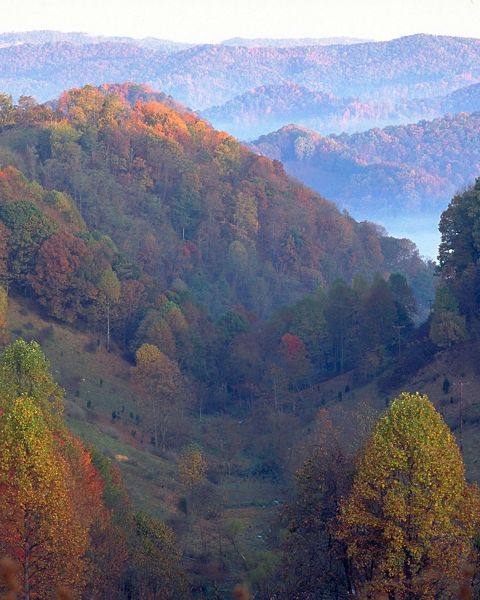

The U.S. Fish and Wildlife Service announced that the Tennessee coneflower would be removed from the Endangered Species List. Concluded two successful, multi-year programs with farmers and other landowners to improve habitat around streams that feed into the Duck River., bringing more than $2 million to improve water quality for people and nature.

Worked with the State of Tennessee worked together to purchase Doe Mountain, an 8,600-acre, richly forested tract in Johnson County, to be public park land. Built the world's first artificial cave for hibernating bats as a way to combat white-nose syndrome, an epidemic that has killed millions of bats across the U.S. and Canada. The cave is an experimental prototype. If successful, it can be replicated nationwide.

Acquired 4,000 acres of mountain forest along the Little Tennessee River from Brookfield Renewable Energy Group. These lands connect the Great Smoky Mountains National Park with the Cherokee National Forest. We call this historic project "Bridging the Smokies."

Purchased 63 acres of cliff-top property along the Obed Wild & Scenic River, the protected corridor of lands and waters managed by the National Park Service. The acquisition preserves the broad bluff that can be seen directly across from the National Park Service's popular Lilly Bluff Overlook platform.

Working with Bat Conservation International, co-funded breakthrough research on treatments for White Nose Syndrome in bats. Initial trials led to 75 bats healed and released to the wild. Purchased 16.7-acre property adjacent to Big South Fork. The Gil & Summerfield Johnston Preserve contains a rare double arch of sandstone and other scenic features.
.jpg?crop=170%2C0%2C2666%2C2000&wid=800&hei=600&scl=3.3333333333333335)
Enrolled our first Tennessee property in TNC's Working Woodlands program, which helps preserve private landowners' forests while allowing the owners to generate income through Forest Stewardship Council® (FSC) C008922 (FSC) certified timber management and the carbon sequestration market.
.jpg?crop=226%2C0%2C3546%2C2660&wid=800&hei=600&scl=4.433333333333334)
The largest dam in Tennessee ever removed for river restoration purposes--the Roaring River Dam in Jackson County--was removed by TNC and partners including the Tennessee Wildlife Resources Agency, the Army Corps of Engineers, the Southeast Aquatic Resources Partnership, the U.S. Fish and Wildlife Service, and the Tennessee Department of Environment and Conservation.

Accepted TNC's largest land donation in Tennessee when the Bridgestone Americas tire company donated its 5,800-acre Chestnut Mountain property. Now known as the Bridgestone Nature Reserve at Chestnut Mountain, this new preserve will open to the public once a public access plan and new trails are complete.
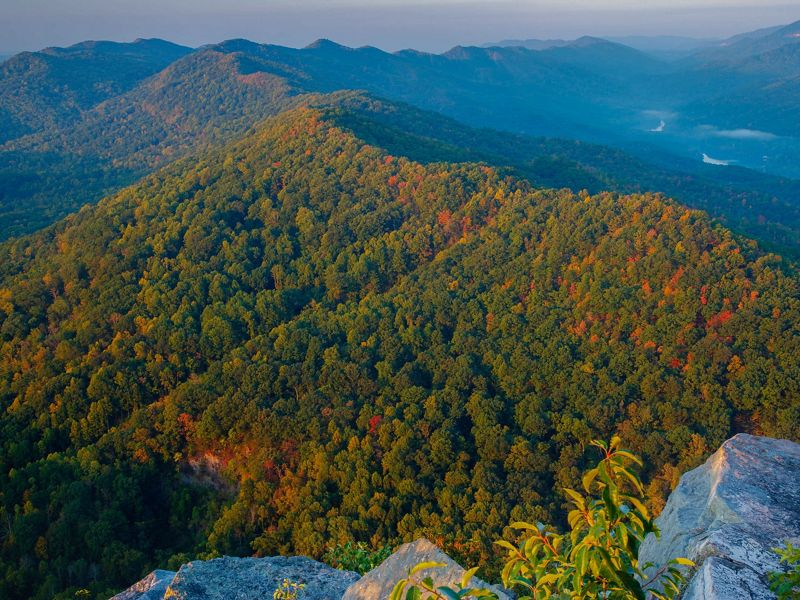
Organized the acquisition of 100,000 acres of forestland along the Tennessee-Kentucky border, part of a larger 253,000-acre acquisition in the heart of the Central Appalachians, a globally significant hotspot for biodiversity, a major North American migratory corridor and source of important watersheds.

The Nature Conservancy marked the permanent protection of more than 400,000 acres since opening its doors in Tennessee with the purchase of 640 acres, together with The Conservation Fund, near Newport. The acquisition permanently protects 1.5 miles of French Broad River frontage from development and provides critical habitat for endangered bats and black bears.

TNC’s Cumberland Forest Project sold a 43,000-acre conservation and public recreation easement to the State of Tennessee. This landmark conservation win marks the largest, State-owned, conservation easement in Tennessee.
Help The Nature Conservancy protect and manage critical lands and waters around Tennessee.
Related Stories

Rethinking Tennessee Dams
Many of Tennessee's dams don't fulfill their original purpose, and even cause harm. Find out what we're doing about it.

Tennessee Policy
Explore our legislative priorities aimed at conserving Tennessee's natural resources and strengthening the connection between nature and people.

Tennessee Lands
TNC is working to transform how we manage natural and working lands, inspire better land-use practices, protect habitats for imperiled species and conserve climate-resilient landscapes.