


A Confluence of Ideas
Water fund staff cross borders to exchange information and inspire each other
At first glance, it might seem like a robust coastal city in South Africa, high desert towns in New Mexico and a lake deep in the forests of southern Maine wouldn’t have a lot in common. Yet each is concerned about the future of its water supply, and each has worked with The Nature Conservancy to form a water fund to secure their water sources for future generations.
What are Water Funds?
Water funds are public-private partnerships in which downstream users, such as businesses, utilities and local governments, invest in upstream conservation initiatives aimed at improving and protecting water quality and quantity for the region.


In 2025, TNC staff from New Mexico working on the Rio Grande Water Fund (RGWF) traveled to South Africa and Maine to meet with fellow water fund staff and compare notes on what each has learned. Both of these funds consulted early with RGWF when establishing their own funds, and the reunion was an opportunity to exchange information and cheer each other on. The most common word used to describe the meetings was “inspired.”
“It’s really insightful when you visit another place,” says Kirsten Watson, TNC’s manager of the Greater Cape Town Water Fund. “You end up with a different lens and become more inspired on how to deal with your own water fund.” She adds that face-to-face meetings are much more productive and make it easier to take a deeper dive into the subject.
Water Crisis Spurs Collaboration
Keep in Touch!
Sign up to receive monthly conservation news and updates from New Mexico.
In early 2018, Cape Town was in crisis; drought drew the city dangerously close to “Day Zero”—the day when the citizens’ taps would run dry.
Thanks to strict restrictions on water use and much needed rain, that day didn’t come. But it served as a wake-up call. The city needed to come up with a long-term solution. A crucial element of that solution is the Greater Cape Town Water Fund (GCTWF).

Like the water funds in Maine and New Mexico, the big focus was on protecting and, where needed, restoring the lands where the water supply originates—the watershed. In the case of Cape Town, that watershed had been invaded by non-native pine, acacia and eucalyptus trees that were guzzling greater volumes of water than the native plants. In addition to physically cutting down the invasive trees, they are employing controlled burns to assist in their removal.
In that sense, the GCTWF work is similar to that of the RGWF in New Mexico where unnaturally dense forests have created conditions for the kind of severe fires that put both water quality and quantity at risk. There, the focus is on thinning forests and using controlled burns to prevent catastrophic fire and enable natural fire cycles to resume. The Cape Town fund was modeled after the Rio Grande fund, and AJ Jones, forest and watershed health manager for TNC in New Mexico, was glad to see how far they’ve come.
“I’m impressed with how articulate and specific their business case is and how multiple stakeholders meet regularly to align community and business goals.” Jones is also “amazed at their implementation system doing complete removal in really steep areas where they have to rappel down. Their specialized crews reminded me of being on a Hotshot crew in my early 20s.”
Jones says the exchange helped them see how they could improve their communications and community engagement efforts, especially after seeing the marketing materials and level of outreach of the other water funds.

Protecting Clean Water for the Future
Unlike Cape Town and New Mexico, Maine’s water fund, Sebago Clean Waters (SCW), isn’t facing looming shortages. Sebago Lake is huge, supplying water to one in six Mainers—including the city of Portland. Right now, there is more than enough water to meet that demand. The lake’s water is so pure, it requires no filtration, thanks to the forests that carpet 84% of the watershed. But only 17% of the watershed is protected (90% is privately owned) and the U.S. Forest Service considers it the most vulnerable in the Northeast. Second-home development and other uses of the forest could spell trouble down the road.
SCW’s community program director Tamara Lee also finds that many of the things they learn in these exchanges are transferable among the programs. She is especially impressed with the work RGWF is doing with Indigenous Pueblos, something they could model in their outreach to Tribal Nations in Maine and reflect in the implementation of the fund’s newly focused strategic plan.
Portland, Maine
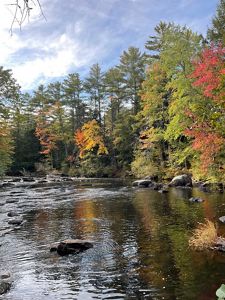
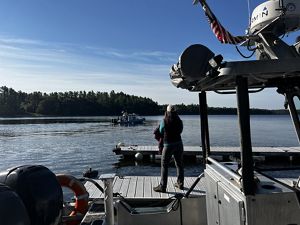
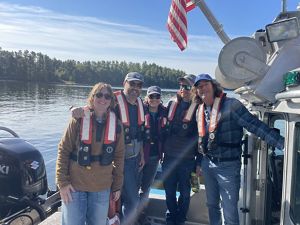
Photos captured during the Sebago Clean Waters Learning Exchange
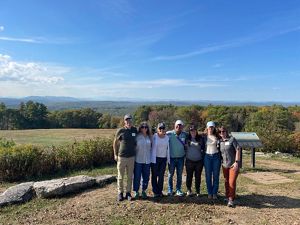
Hacker’s Hill Preserve: of Loon Echo Land Trust (a SCW Member Organization) © Jason Scullion
Crooked River: largest tributary of Sebago Lake © Jason Scullion
Sebago Lake boat tour: with Portland Water District © AJ Jones
Sebago Lake: © Erica Anderson
“SCW’s new strategic direction intentionally centers community in our work. Some examples of how that is already showing up include a community wood bank established by SCW partner Loon Echo Land Trust to provide firewood for heating the homes of those in need; building and deepening relationships with Abenaki and Wabanaki Tribal Nations toward greater land access; and exploration around creative ways to support affordable housing,” offers Karen Young, director of SCW.
A Global Tool for Water Protection
TNC has helped develop more than 50 water funds around the world. Watershed investment programs like these are putting nature-based solutions (NbS) into the global toolbox that communities need to adapt to changing snow and rainfall patterns. With nearly two-thirds of the world facing some degree of water scarcity, and a changing climate poised to make that worse, our goal is to mainstream these watershed investment programs as government, industry and funders seek solutions to this global crisis. And we’re already seeing results. A study by TNC and Forest Trends found that global investments in NbS for water security doubled between 2013 and 2023 to $49 billion.
As the partners in Cape Town, New Mexico and Maine can attest, collaboration and partnership are a winning formula that can pay off in big ways within the local community and far beyond.
Make a Difference in New Mexico
For more than 40 years, people like you have helped The Nature Conservancy protect more than 1.5 million acres of New Mexico’s forests, rivers and grasslands. We’re building on a conservation legacy to help solve today’s biggest conservation challenges from climate change and habitat loss to protecting clean water. Together we’re stronger!
More Stories

New Mexico: Rio Grande Water Fund
An innovative water fund on the Rio Grande is protecting forests, boosting local economies and securing the water supply for 1 million people.

Spotted: Wildlife Caught on Camera on TNC Preserves
Check out these trail camera photos from TNC preserves across New Mexico!

Videos from New Mexico
From rivers to forests to grasslands, check out a video to learn more about our conservation work throughout The Land of Enchantment.