

Trees have the extraordinary ability to improve our lives. They conserve energy, absorb storm water, and provide cooling shade for people and habitat for wildlife. In Louisiana, they also help our cities become more resilient in the face of extreme weather.
But urban trees and the communities they protect face many challenges, including destruction from hurricanes, droughts, floods and pests. So, The Nature Conservancy has stepped up, launching Louisiana Treesilience, an urban forestry initiative that helps communities build and maintain a sustainable tree canopy.
Louisiana Treesilience is a collaborative program that meets communities’ greatest forestry needs, which can include tree plantings, canopy assessments, urban forestry planning, hazardous tree removal, tree maintenance and canopy restoration.


Program Overview
Louisiana Treesilience is administered by TNC with generous support from public and private donors. It launched in 2024, thanks to a three-year grant from the USDA Forest Service and support from the Louisiana Department of Agriculture and Forestry. The initial focus was to provide relief to the 22 parishes most affected by the 2020 and 2021 hurricane seasons. The program will expand across the state as funding allows.
Louisiana Treesilience works with local governments, nonprofit organizations and communities of all sizes. The program collaborates with communities to ensure their needs are met and the projects have the maximum conservation impact. Louisiana Treesilience funds each project and oversees all contracting to ensure its success.

Impacts of Change
The 2020 and 2021 hurricane season featured a succession of devastating storms that caused destruction across a wide swath of South Louisiana. Hurricanes Ida and Laura, both Category 4 storms, made landfall in Louisiana with record-breaking 150 mph winds.
Communities suffered billions of dollars in damage. Some of that damage included massive loss of forest canopy, a front-line defense for urban areas in the face of severe weather.
Science tells us that hurricane intensity will only increase over the next 50 years with stronger winds and storms that move further inland and linger longer over our communities. Louisiana Treesilience is a movement to help buffer cities from these impacts while empowering communities to manage their urban forests.
When communities replace lost trees and save existing mature trees, they create a strong, adaptive urban forest that not only protects neighborhoods from storms but also reduces temperatures and flooding in our cities and improves air and water quality. In short, healthy trees make cities more livable and improve our quality of life.
Project Focus
The Louisiana Treesilience Program focuses on restoring and maintaining public trees—in parks, along roadsides and on properties owned by schools, cities, parishes, neighborhood associations and churches. The program works closely with public entities and organizations to ensure it meets their highest needs and results in the most resilient tree canopy possible.

(Click each box to learn more about TNC's Louisiana Treesilience Initiatives.)

Trees Are Key
In addition to beautifying the landscape, healthy urban tree canopies buffer neighborhoods from severe weather, reduce air temperature, store carbon and support diverse wildlife. Emerging science indicates that adding more nature to urban environments alleviates anxiety and depression, improves air quality to benefit heart and lung health, and invites an active lifestyle that can prevent other chronic diseases.

Amplify Existing Efforts
Louisiana Treesilience builds on existing partnerships to expand the impact of community efforts. In its first year, Louisiana Treesilience partnered with Louisiana State Parks to increase longleaf pine habitat and shade canopy in two popular state parks. The program has the flexibility to meet partners wherever they are in their urban forest management efforts and provide support for their priorities.

Make It Easy
Louisiana Treesilience’s unique format ensures that each project is a success as TNC administers the funding and is proud to shoulder a majority of the work. Working collaboratively with community members, TNC contracts and oversees the project to completion.
Bring Treesilience to Your Community
Since 2024, Louisiana Treesilience partnered with nine public entities in seven parishes. Currently the program is not accepting any additional applications but will be reevaluating and potentially reopening applications in January 2027. If you have questions about the program, please reach out to lafo@tnc.org for additional information.
Building Resilience One Tree at a Time
Although Louisiana Treesilience is a newer program, we hit the ground running. In its first year, it has made large strides towards improving urban forest resilience in south Louisiana. Get real time project information about Louisiana Treesilience projects around the state and read the linked stories below to see projects completed to date and for ideas on how the program can benefit your community.

July 2026
A mid-year review confirms that Louisiana Treesilience is growing a greener future around the state.
TNC’s Louisiana Treesilience Program has been hard at work across Louisiana, growing a cooler, greener future one tree at a time. To date, the program has planted more than 7,400 trees to help restore the urban tree canopy in communities that were hit hard by hurricanes in 2020 and 2021.
So far in 2026, Louisiana Treesilience has planted 185 native trees ranging in size from 30 gallons to 200 gallons in five communities across the state. That’s a total investment of nearly $150,000 in natural resilience that will assist with buffering storms, retaining water and reducing heat near urban areas.
In addition to tree planting, so far in 2026, Louisiana Treesilience also invested about $130,000 in urban tree planning and maintenance efforts in local communities. In St. Bernard Parish, for example, the program planted 56 native trees, including bald cypresses, sweetbay magnolias, nuttall oaks and savannah hollies in the Violet community and in Francis Park. The St. Bernard project, a $100,000 investment in the parish, also included planting designs by a licensed landscape architect and creation of a planting guide that the parish can use for future tree projects.
In New Orleans, Louisiana Treesilience worked in neighborhoods across the city, including Lakeview, the 7th Ward and on the campus of LSU New Orleans (formerly the University of New Orleans). In the 7th Ward, TNC worked with the City of New Orleans and Louisiana Department of Transportation to plant 41 trees along sidewalks and within the neighborhood under and adjacent to the Interstate 10 overpass. This project includes continual maintenance of the trees through their first growing season. Additionally, at LSU New Orleans, more than $50,000 was invested to help maintain and repair the campus tree canopy, which included the removal of 13 hazardous trees near roads, sidewalks and student common areas along with pruning existing trees to prepare for future storms. Twenty-six native trees were planted to replace the 13 trees that were removed.
In Terrebonne Parish, the program conducted an urban tree canopy assessment which was used to update the parish’s urban forest management plan and determine where trees were needed most. To jump start the process of rebuilding lost canopy, Louisiana Treesilience planted 63 native species trees in four park locations for a $95,000 investment in the community.
In addition to this year’s plantings, Louisiana Treesilience has been monitoring the growth of 396 containerized trees planted in 2024 and 2025 across the state. Over all of these trees are thriving, growing and already serving their communities with shade and natural beauty. For example, all 25 mature oaks and cypress trees that were transplanted in DeRidder’s West Park have grown taller and thicker since their installation in early 2025, completely transforming the park. In Alexandria, 129 installed trees are helping to make cooler while enhancing the appearance of roadways around the city in three locations where they were planted.
In Slidell, local residents are enjoying the 72 trees planted in parks around the city in 2025, providing needed shade near walking paths, playgrounds and sports fields. Additionally, Slidell benefited from the removal of 34 dying and hazardous trees, which improved safety and saved the city money.
These communities have invested in their future, and in a short time, these are already reaping the benefits as even young, growing trees intercept rainwater, provide shade and cooling benefits, absorb groundwater, prevent erosion and transform the views of a neighborhood, park or pathway.
TNC's Louisiana Treesilience Program has been funded by a grant from the USDA Forest Service to replace thousands of trees in a 22-parish region that took the biggest brunt of hurricanes in 2020 and 2021. Now the program is working to expand statewide.
January 2026
Louisiana Treesilience plants 111 trees in Fairview Riverside State Park.
Perched on the Tchefuncte River in Madisonville, Fairview Riverside State Park is a popular spot for RV and tent camping, boating on the river and enjoying a landscape that looks plucked right out of a scenic postcard of Louisiana.
But over the years, that landscape has taken a beating. In Hurricane Ida, the state park lost more than 200 mature trees. The entrance to the RV campground is now awash in sunlight with the remaining pines unable to provide much shade during Louisiana’s hot summers. Pine beetles and drought conditions also have taken a toll on the park’s tree canopy.
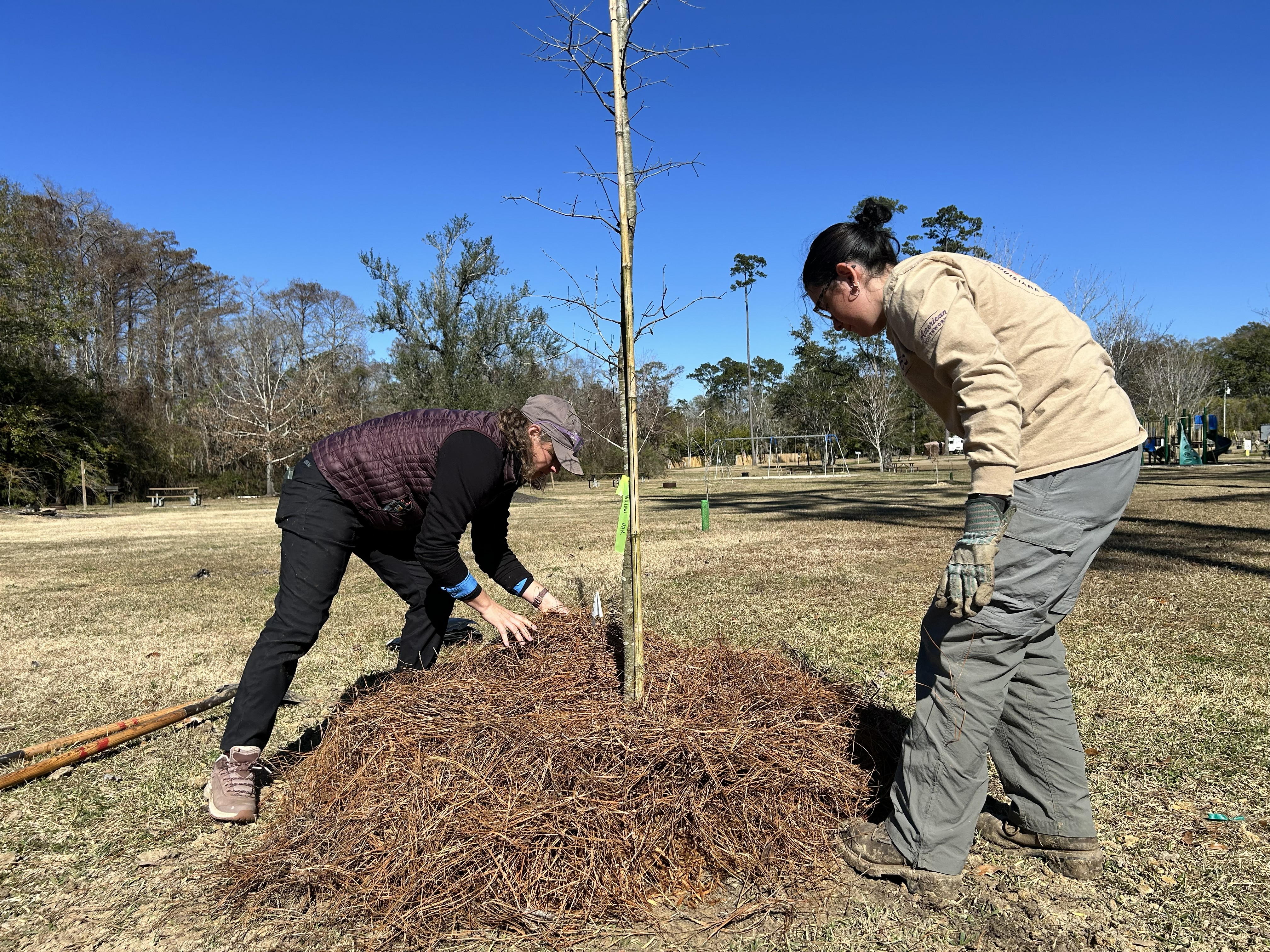
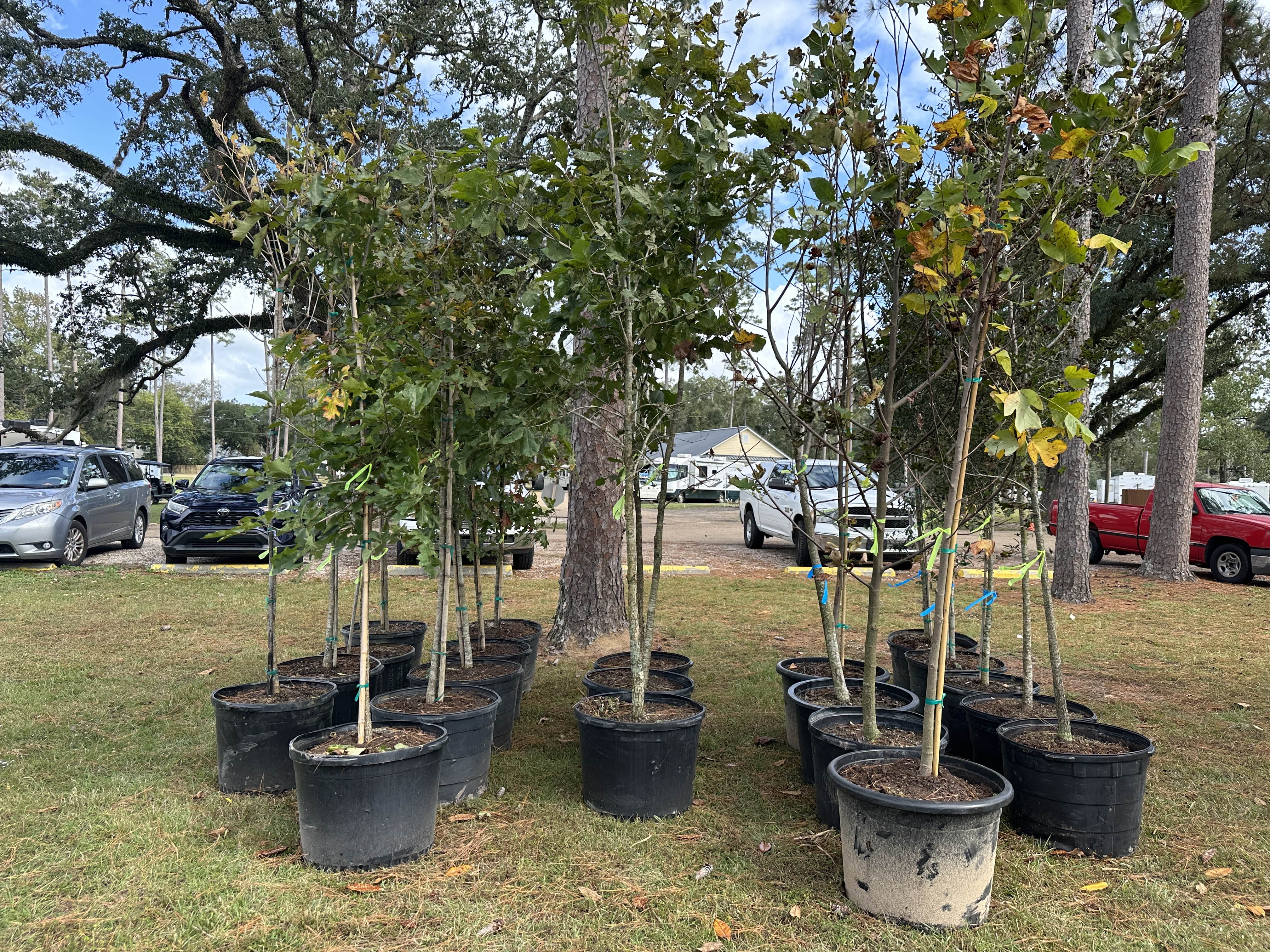
The Nature Conservancy’s Louisiana Treesilience Program is now working to bring back some of that shade. Over the past two years, Louisiana Treesilience has planted 111 native trees in Fairview Riverside, with the last two dozen live oaks, American elms, Willow oaks, Tulip poplars, Florida maples and Sweetbay magnolias going in the ground this week. A $17,000 investment in the park’s tree canopy, the project is part of Louisiana Treesilience’s three-year effort to help restore public lands that lost thousands of trees in the hurricanes of 2020 and 2021.
Funded by a grant from the USDA Forest Service, Louisiana Treesilience has planted more than 7,400 trees in communities across the state, from DeRidder, Lake Charles and Alexandria, to Slidell, Madisonville and New Orleans.
On a chilly but sunny day in late January, Amanda Takacs, TNC’s Louisiana community forest conservation coordinator, was supervising the tree planting project at Fairview Riverside as a four-person team from the Louisiana Conservation Corps (LaCC) were digging the holes, applying cypress and pine needle mulch and watering in the new trees. The LaCC is part of TNC’s GulfCorps program.
Fairview Riverside Park Manager Morgan Wood said TNC’s work is providing a needed boost to the park’s efforts to reforest areas and add more public amenities at the park.
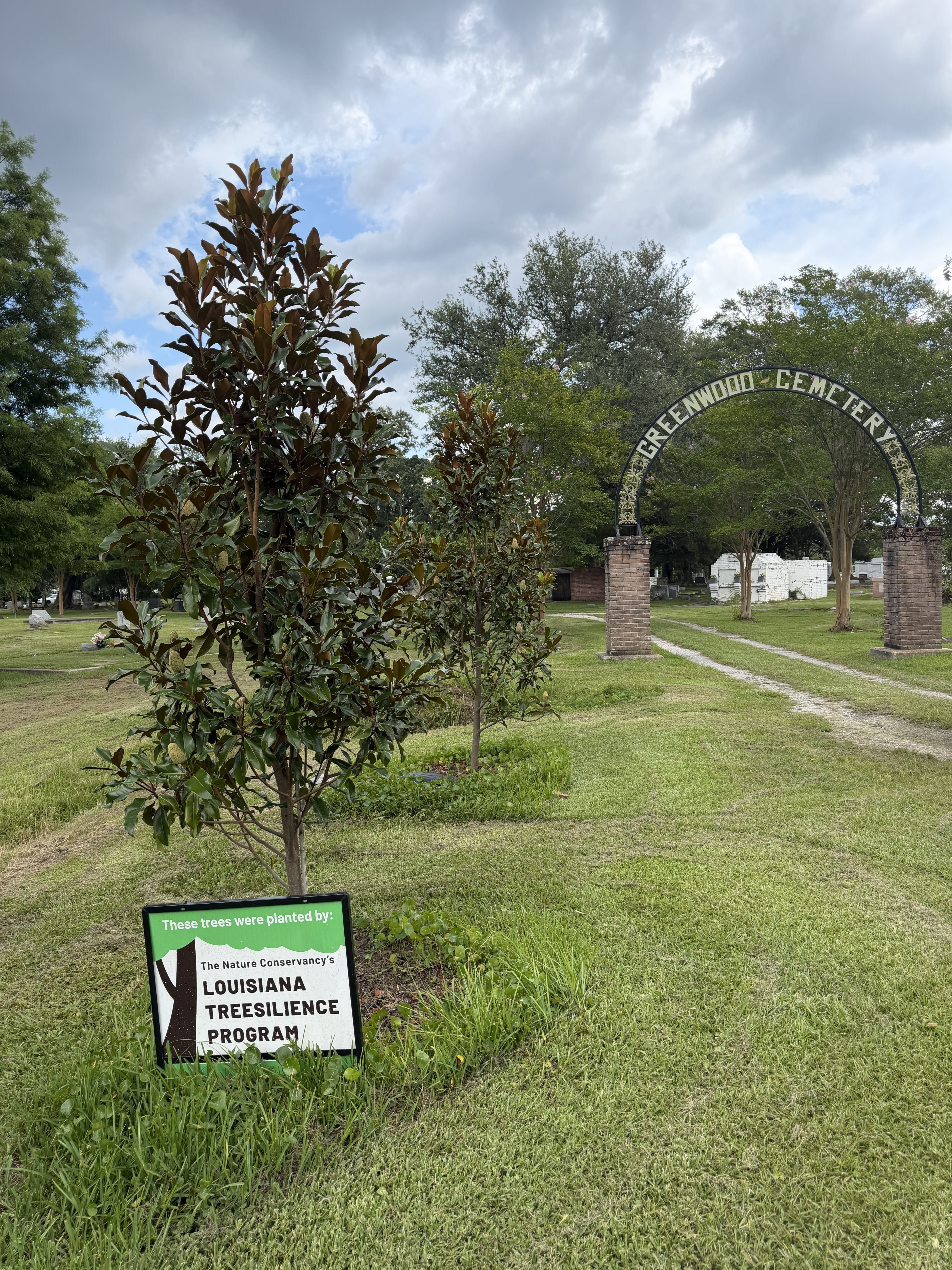
This is Louisiana Treesilience’s second project in St. Tammany Parish. Last year, the program invested $93,000 in hazardous tree removal and native tree planting in the City of Slidell, helping add needed shade to its municipal parks and a historic cemetery.
September 2025
Louisiana Treesilience makes tree canopies more storm ready in a New Orleans neighborhood.
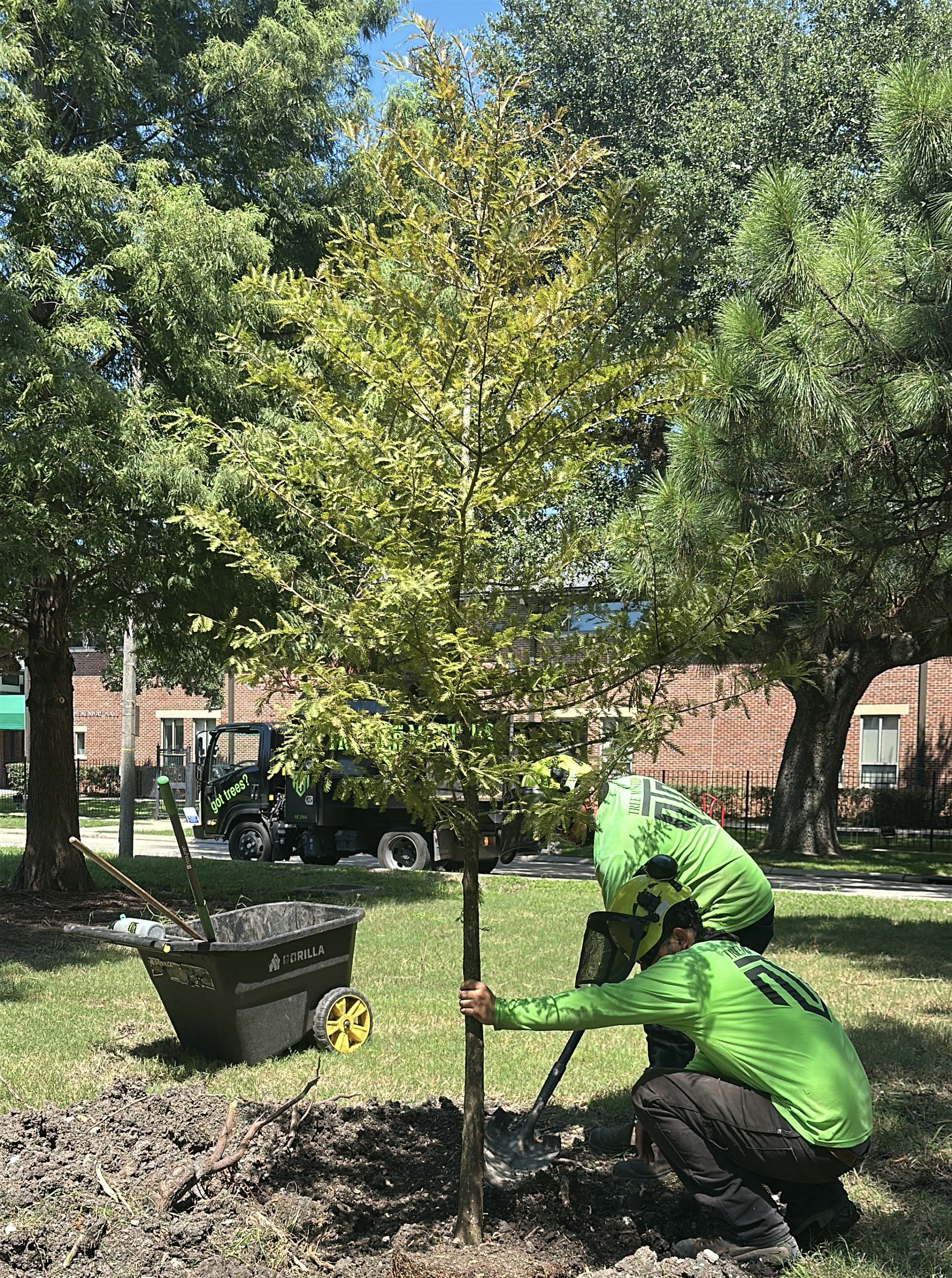
As we hit the peak of hurricane season, The Nature Conservancy’s Louisiana Treesilience program has been busy working to make urban tree canopies healthier and more storm resilient. In New Orleans’ Lakeview neighborhood, Louisiana Treesilience, working in partnership with the non-profit Friends of Lakeview, recently removed 11 dead or hazardous trees and conducted maintenance on mature trees along over a mile of Canal Boulevard. TNC then planted 22 live oaks and bald cypress trees and purchased 25 additional bald cypress and live oaks, which will be planted by Friends of Lakeview along Milne Boulevard.
During the last year, Louisiana Treesilience has planted more than 7,000 trees on public property and removed 53 dead or hazardous trees in six communities across south Louisiana.
Does your community need help restoring, maintaining or adding to its urban tree canopy? There is still time to submit an application for this round of Louisiana Treesilience funding. The program is a great way to bring trees to your community or create healthier urban canopy for storm season.
Find more information and the application at nature.org/louisianatreesilience. To discuss project options, reach out to TNC's Louisiana Treesilience Program Coordinator Amanda Takacs at Amanda.takacs@tnc.org or 330-421-0013.
May 2025
Louisiana Treesilience celebrates one year of building storm-ready communities.
This summer, new oak trees provide shade and improve air quality for residents using the walking trails and picnic areas in a popular DeRidder park. On a busy street in Alexandria, new magnolia trees brighten the landscape while reducing air temperatures in the city’s downtown. Thanks to The Nature Conservancy’s Louisiana Treesilience program, these trees and many others will help communities be more storm-ready at the beginning of hurricane season.
Over the past 12 months, Louisiana Treesilience completed four major projects, with five other active tree plantings in progress, in communities devastated by storms in 2020 and 2021. Funded by a three-year grant from the USDA Forest Service, the program has planted nearly 600 large trees and removed 19 dead or dying trees that were potentially hazardous.
These projects, which serve more than 60,000 Louisiana residents, mitigate the effects of recent hurricanes by both removing hazardous trees and strategically planting native species to Louisiana Treesilience Celebrating one year of building storm-ready communities, one tree at a time reduce urban temperatures. “The trees also provide a buffer from storms, manage flooding and improve quality of life,” says Amanda Takacs, TNC’s Louisiana community forest conservation coordinator.
“Treesilience allows us to employ conservation practices where people live, work and recreate,” says Seth Blitch, TNC’s Louisiana director of conservation. “Also, not everyone has the opportunity to spend the day in nature, so bringing it to municipal areas can strengthen a community’s bond with the natural world.”
In DeRidder, the city already is seeing the benefits. “The park is full of people every morning, with the walking trail and the pickleball court,” says Tommy Landry, DeRidder’s director of public works. “To bring children out to play, if there are no shade trees, they won’t stay long.”

January 2025
TNC Louisiana Treesilience plants 25 trees in DeRidder’s West Park.
When Hurricane Laura roared ashore in 2020, the City of DeRidder found itself in the storm’s crosshairs. The Category 4 hurricane pummeled DeRidder with more than 100-mile-per-hour winds, dramatically altering the look and feel of the small city, home to nearly 10,000 people.
West Park, DeRidder’s largest community park, lost 300 trees. But that was just the start.
“We lost hundreds of trees in Laura, but then as time went along, we lost at least 200 more that were dying from damage caused by the hurricane,” said Tommy Landry, DeRidder’s Director of Public Works. “And they’re still dying today.”
Replacing that many trees is a tall order for a city of DeRidder’s size, but letting the urban canopy remain bare wasn’t an option, Landry said.
“I had been trying for about a couple of years to find grants and programs that could help us put trees back in,” he said. “It seemed like everywhere I went was a dead end except for one small grant we got from Keep Louisiana Beautiful.”
Then Landry, through the Louisiana Main Street Program, learned about The Nature Conservancy’s Louisiana Treesilience Program. Funded by a three-year grant from the USDA Forest Service, LA Treesilience is working to replace hundreds of damaged and lost trees in areas that were devastated by hurricanes in 2020 and 2021, and to create a front-line defense for urban areas in the face of severe weather. Treesilience works with local governments, non-profits and communities of all sizes.
The program meets directly with community members to learn about their specific needs and desires to restore their urban tree canopy. Then, LA Treesilience not only funds the project, but also oversees all contracting and work to ensure its success. This approach means that the local community does not need to spend crucial staffing and resources to manage the grant.
In DeRidder’s West Park, LA Treesilience, managed by Amanda Takacs, community forest conservation coordinator for TNC Louisiana, made a $64,000 investment, planting 25 large cypress, willow oaks and live oak trees, all of which were 8 to 12 years old. It also removed 10 large dead or damaged trees, which could have been hazardous in the popular park, home to walking trails, a pickleball court, a swimming pool, ball fields and picnic areas, Landry said.
Of that $64,000 investment, DeRidder didn’t have to pay a dime.
Grown and transplanted by Wilkinson Tree Farm in Iowa, La., the new trees were planted with a high-tech spade truck, which looks like a giant claw machine from an arcade. Large enough to be an instant addition to the park’s tree canopy, the trees have impressed city residents, Landry said. “It’s awesome. I can’t tell you how many people have complimented the new trees,” he said. “Treesilience is a true blessing.”
Even before TNC started working with DeRidder, the city was putting its own funding toward restoring the hurricane-damaged municipal tree canopy. “We started budgeting to put in 25 trees a year, which is a hefty cost for our taxpayers, but we know what that investment will mean for the city,” he said. “We spent $50,000 for 25 trees; the trees were $2,000 each, each with a six-inch diameter base. We did not want to waste time with little bitty trees. We needed to get our shade canopy back in the park.”
Combined with LA Treesilience’s plantings, the city has added a total of 80 new trees in West Park in two years, including five provided by the Keep Louisiana Beautiful grant.
“The park is full of people every morning, with the walking trail and the pickleball court,” Landry said. “To bring children out to play, if there are no shade trees, they won’t stay long.
Takacs has worked closely with Landry through every step of the process. “She has been great to work with,” he said. “She lets you choose everything and then she makes it happen. It’s a big burden off of any city.”
Landry sees this work as a long-term investment in his community. “I am about to have my first grandchild,” he said, “and when she gets old enough to go to the park, I want her to know that her grandfather worked to plant these trees.”
Support This Work
TNC hopes to expand Louisiana Treesilience’s reach beyond hurricane affected areas to benefit local communities around the state. This can only happen if we secure a more permanent funding stream. Contact us at 225-338-1040 or lafo@tnc.org to join our efforts to rebuild public tree canopies across the Pelican State.
Educational Resources
In 2024, Louisiana Treesilience hosted an Urban Forest Climate Resilience Workshop to help communities better understand and prepare their urban canopy. Experts in the field of urban trees and storm resilience shared information about the newest technology to help participants understand our community tree priorities.
View the video links below to learn more about how to make your urban forest more climate resilient.
Session 1
What to Expect: Future Climate Impacts on Our Urban Trees (Amanda Takacs)
Session 2
Factors that Contribute to Tree Failure in Tropical Storms (Andrew Koeser, Ph.D.)
Session 3
BREC’s Connected Environments: Imagine Your Parks 3 (Reed Richard)
Session 4
Smart Solutions for Resilient Urban Forests: Leveraging Technology for a Sustainable Urban Forest (Joshua Behounek)
Session 5
Readiness, Response and Recovery: Manging Trees With Storms in Mind (Darren Green)
Session 6
Rebuilding After the Storm - Restoration Pruning for Storm-Damaged Trees (Andrew Koeser, Ph.D.)
Let's Build Something Big
Help us expand Louisiana Treesilience’s reach beyond hurricane affected areas to benefit local communities around the state.

Recent Stories

Louisiana's Iconic Trees
Many tree species are deeply connected to Louisiana’s history, culture and identity.

6 Ways Trees Benefit All of Us
No matter where you live, forests and trees use their many powers to support our lives—and all life on Earth. Their health is our health.

Funding Trees for Health
An analysis by The Nature Conservancy on finance and policy actions to enable tree planting for public health.