

Protecting the Okefenokee Swamp
TNC and partners challenge the threats surrounding the newly designated UNESCO World Heritage Site.
The Nature Conservancy in Georgia is thrilled that UNESCO has officially recognized Georgia's Okefenokee National Wildlife Refuge as one of the most incredible natural places anywhere in the world.
As a World Heritage Site, now one of just 27 in the United States, the Okefenokee Swamp joins other iconic natural places like the Galapagos Islands, Great Barrier Reef, and Yellowstone National Park as a landscape worth protecting and sharing with the rest of the world.
Now, it falls to us in Georgia to ensure the Okefenokee is protected for the benefit of the people who enjoy it and the hundreds of species that call it home. Ever since The Nature Conservancy helped conserve 15,000 acres of the swamp in 1978, we have worked to preserve this pristine ecosystem for people and nature alike.
This designation confirms what all of us in Georgia have always known—there is no other place on the planet quite like the Okefenokee Swamp.
What is a UNESCO World Heritage Site?
A UNESCO World Heritage Site is a treasured place designated as an outstanding value to humanity. Sites include historic cities, castles, cathedrals, mountains, rainforests and ocean areas. UNESCO stands for The United Nations Educational, Scientific and Cultural Organization, which seeks to encourage the identification, protection and preservation of cultural and natural heritage around the world.
What makes the concept of World Heritage exceptional is its universal application. World Heritage sites belong to all the peoples of the world, irrespective of the territory on which they are located.
Historic land deal protects 8,000 acres near Okefenokee Swamp
America’s Okefenokee Swamp is a world-renowned treasure and now, thanks to the efforts of The Conservation Fund, conservation partners and supporters like you, it will stay that way.
In June 2025, The Conservation Fund finalized a deal to purchase approximately 8,000 acres near the southeastern boundary of the Okefenokee National Wildlife Refuge. This land includes the Trail Ridge property owned by Twin Pines LLC, the company that proposed dragline mining for titanium dioxide just a couple of miles outside the boundaries of the refuge. There was wide agreement among experts that mining in that location posed significant risks, threatening the water levels of the swamp and the two rivers it feeds, and increasing the potential for wildfires, harm to fish and wildlife and the release of toxic contaminants.
“The Okefenokee Swamp is one of Georgia’s most iconic natural resources,” said Monica Thornton, Executive Director of The Nature Conservancy in Georgia. “The Nature Conservancy has proudly supported the Okefenokee since the 1970s, when we facilitated adding nearly 15,000 acres to the wildlife refuge. The Okefenokee belongs to all of us, and I am grateful to not just The Conservation Fund for protecting it, but also the hundreds of thousands of people who raised their voices in support of the Okefenokee and helped make this outcome possible.”
The Okefenokee belongs to all of us, and I am grateful to not just The Conservation Fund for protecting it, but also the hundreds of thousands of people who raised their voices in support of the Okefenokee and helped make this outcome possible.
Protecting water and wildlife
The waters of the Okefenokee Swamp flow into two rivers, supporting an abundance of fish, amphibians, reptiles, birds and insects.
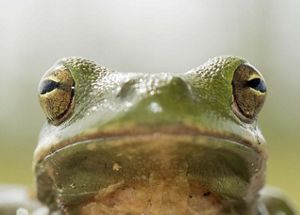

Green Treefrog: Green tree frog at Okefenokee Swamp Park © Annie Esbenshade/TNC Photo Contest 2019
Great egret: The Okefenokee National Wildlife Refuge provides valuable habitat for a variety of wildlife species. © David Wilson/Creative Commons
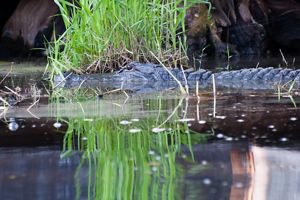
American alligator: An alligator rests within a swamp at Okefenokee National Wildlife Refuge. © Tim Parkinson/Creative Commons
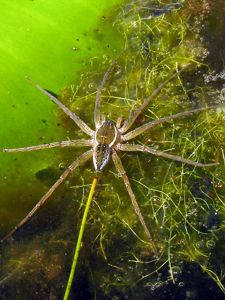
Six-Spotted Fishing Spider: Six-Spotted Fishing Spider © Alan Cressler
What's next for the Okefenokee Swamp?
While the Twin Pines property is now safely in the hands of conservationists and will likely be added to the refuge, the swamp remains vulnerable to inappropriate development around its borders. As we celebrate this conservation victory and the UNESCO World Heritage Site designation, we will continue to be vigilant for any other threats that could permanently damage the swamp and put at risk the wildlife and people that rely upon it.
Now, it falls to us in Georgia to ensure the Okefenokee is protected for the benefit of the people who enjoy it and the hundreds of species that call it home.
We Can’t Save Nature Without You
Sign up to receive monthly conservation news and updates from Georgia. Get a preview of Georgia’s Nature News email.

Further Reading

Clean Energy for People and Wildlife
The Nature Conservancy is working across the country to help private and public partners deliver clean, wildlife-friendly renewable power to customers faster and cheaper.

Siting Wind Right for Wildlife
How can we balance renewable energy development with the need to safeguard wildlife and their habitats? Site Renewables Right, a new analysis by The Nature Conservancy has some answers.

Supporting Georgia’s Clean Energy Future
Reducing the carbon dioxide and other greenhouse gas emissions that drive climate change is the key to protecting the lands and lives we cherish.