

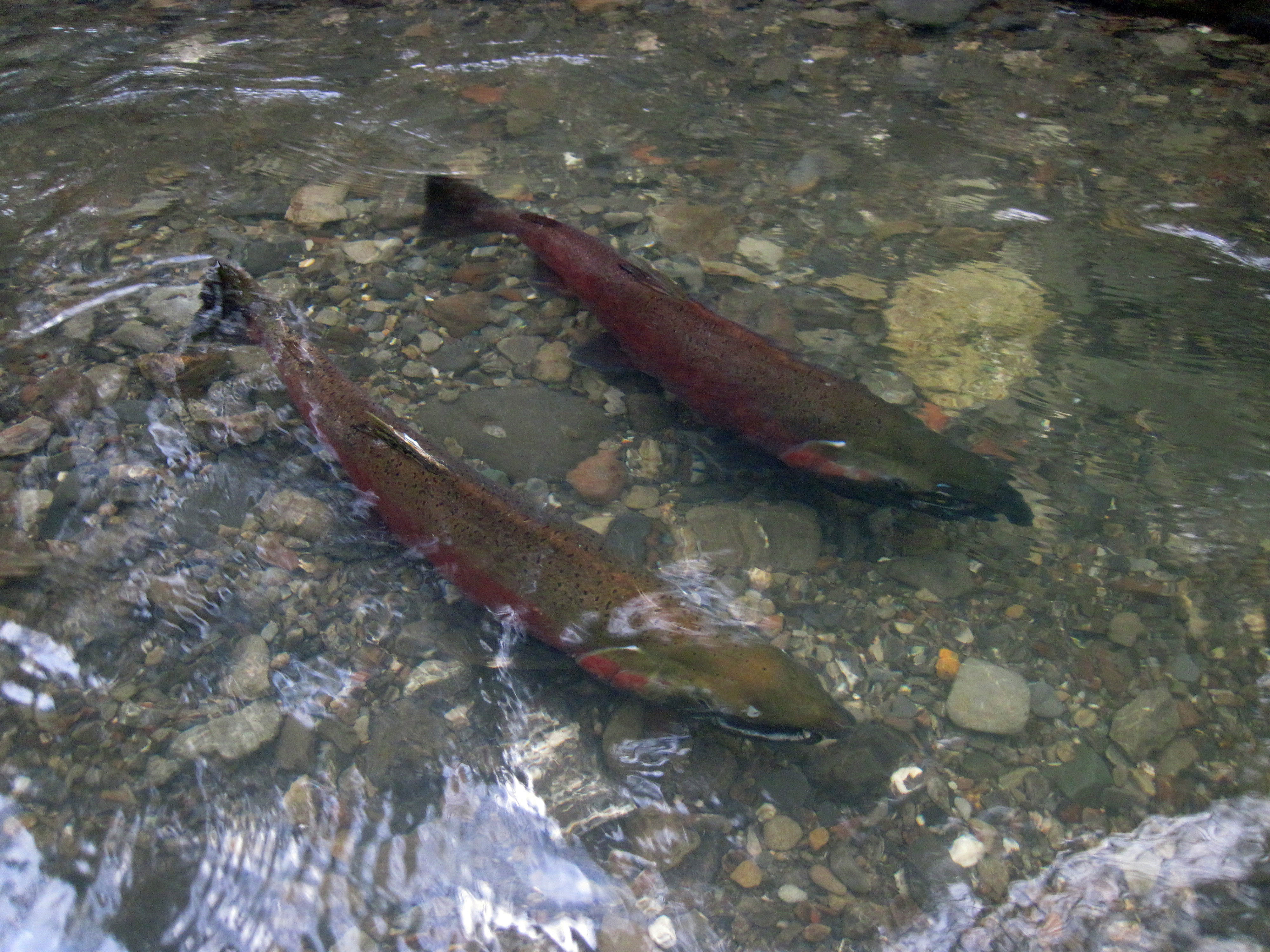
Salmon and steelhead are fundamental to the health of the Navarro River watershed, but decades of low population numbers tell a troubling story. Historically, tens of thousands of salmon and steelhead would return from the ocean each year and fight their way back upstream to the Navarro headwaters to spawn. A century of water diversions, extensive logging and overfishing have caused salmon populations to decline.
We have reasons for hope: in winter 2024-2025, we saw an exciting increase in salmon returns. But there are even more reasons for action: in all other years since monitoring began in 2008, only hundreds of coho returned.
TNC is working to ensure more water in streams when salmon need it, for a future with more salmon. We’re partnering with water users in the Navarro River watershed to develop solutions for nature and people.


A Boost for Salmon and Steelhead
TNC and partners are working in watersheds of California’s North Coast that we believe can be salmon strongholds, making major investments in habitat restoration and flow enhancement. Salmon and steelhead recovery efforts in Mendocino County are seeing encouraging results, with salmon returns at Ten Mile River and Noyo River exceeding recovery targets in the winters of 2023-2024 and 2024-2025 following more than two decades of substantial investment in restoration.
In the Navarro, funding from the California Wildlife Conservation Board (WCB) and Department of Fish and Wildlife (CDFW) is supporting projects to restore streamflow and enhance habitat for endangered coho salmon and steelhead. At the same time, these efforts increase water security for farms and local landowners and conserve water through innovative water storage and groundwater infiltration projects.
The work is managed by the Navarro River Flow Enhancement Partnership, a collaboration between the Mendocino County Resource Conservation District, Trout Unlimited and The Nature Conservancy. For over ten years, the Partnership has leveraged public and private funding to make local communities more resilient to the impacts of drought and expand restoration efforts in the Navarro while sharing lessons learned and successful approaches to benefit similar efforts elsewhere in the region.
Projects like these reflect TNC’s strategic approach to conservation. We use science to identify priority places to work where our efforts will have the biggest returns, and we build partnerships to develop and implement this innovative conservation work. Thanks to these partnerships, public funding, and private funding from TNC supporters, we’re able to scale up our efforts—and our impact.
The Power of Partnerships
To make sure there’s enough water in the Navarro River and its connected streams to support salmon and steelhead, TNC and partners are working with many different types of water users—from residential landowners to vineyards—to better manage water diversion in the watershed. Vineyards have been critical partners because of their central place in the local economy and the importance of careful water management in making world renowned wines.
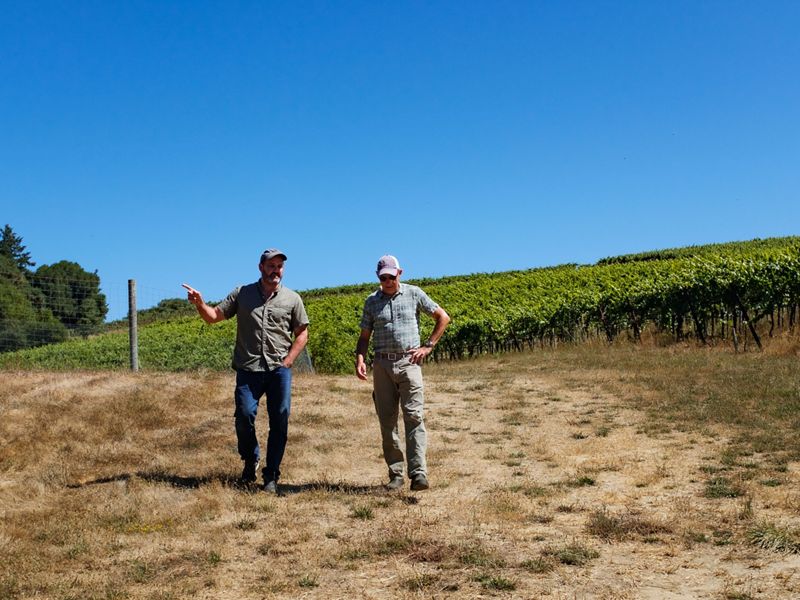
We’re working with Anderson Valley winemakers like Roederer Estate Vineyards and Husch Vineyards to create win-win water-use strategies that don’t leave salmon and steelhead behind.
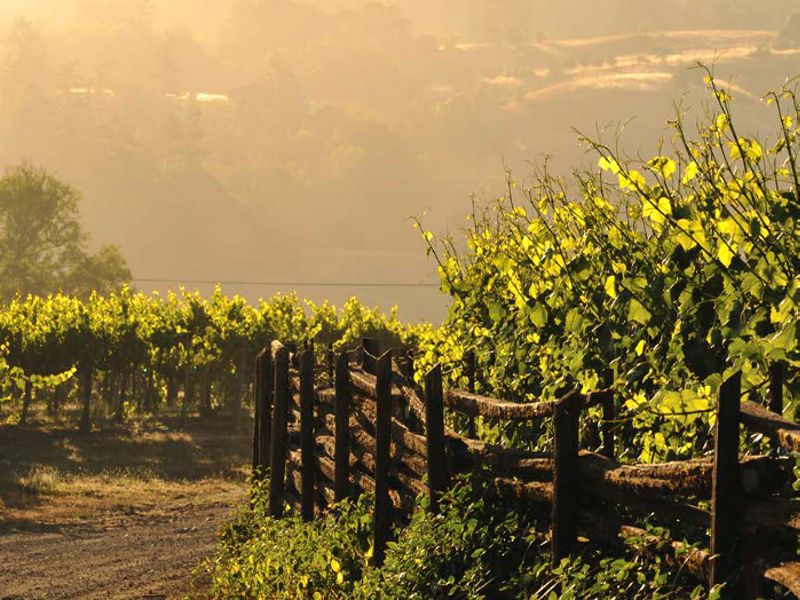
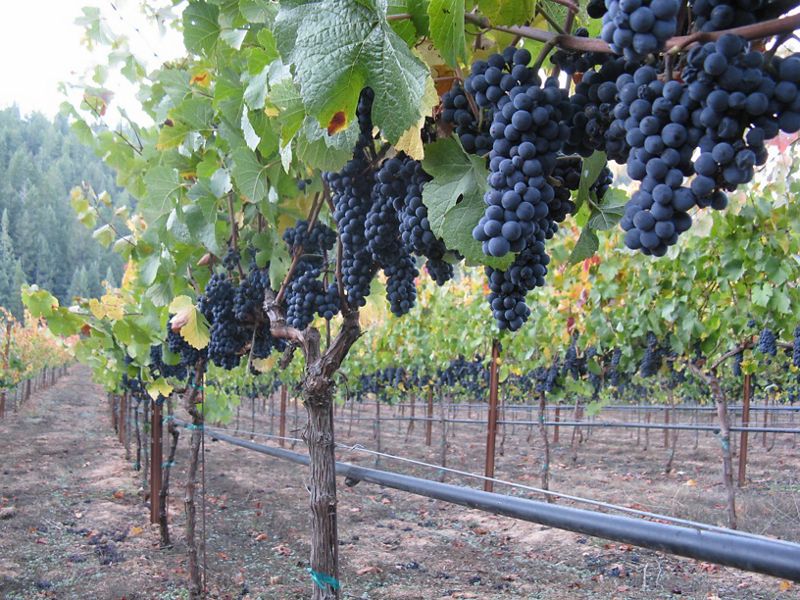
Collaborating with Husch Vineyards
Husch is the oldest vineyard in the Anderson Valley. The 23-acre family-owned operation has been open since the 1970s, and vineyard owner Zac Robinson has been minding the vines since he was a boy. He has also been minding the Navarro River, which runs through the property, by epoxying pennies to rocks along the river to track water level changes over the years. When TNC asked Husch if we could put a stream gage on his property to measure flows there, Zac was thrilled to offer his support.
“We have the same philosophy,” Zac explained. “When [TNC] showed up, they told us two things that piqued our interest: they were driven by science, and collecting these data could help our growing practices as much as it would help nature.”
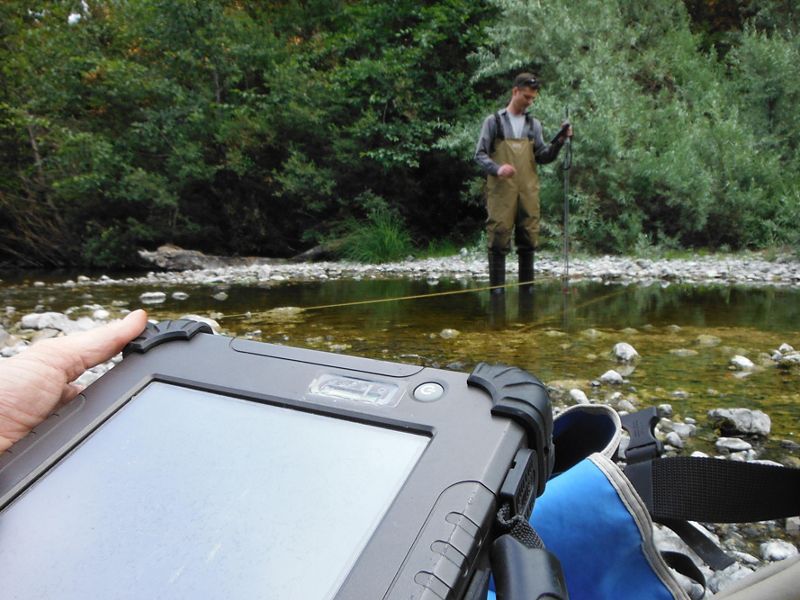
The gage TNC installed on Zac’s property was one of 16 placed throughout the Navarro River watershed to measure how water diversions were causing summer streamflow levels to dip, a danger for young salmon and steelhead. Guided by this data and to reduce their impacts to the river, Husch installed a new water pump that enabled them to lower their diversion rates from 500 to just 115 gallons per minute, an amount that helps keep the river flowing for fish without sacrificing wine-grape production.
Preparing for Summer Water Needs… and Climate Change
Reducing irrigation diversion rates is helpful, but it’s only part of the solution. It would be better for vintners like Zac—and fish—if vineyards could avoid taking water from the Navarro in the summer, when water levels are naturally lowest.
The health of grape vines and the salmon runs of the Navarro River share a common problem: getting the water they need when they need it. Water availability in California is naturally variable, and farms, communities and fish often need water most in the summer when it is least abundant. This challenge is only becoming worse with climate change, as droughts last longer and become more frequent.
To help solve this problem, we’re working with partners to store water when it’s abundant, for use when it’s scarce.
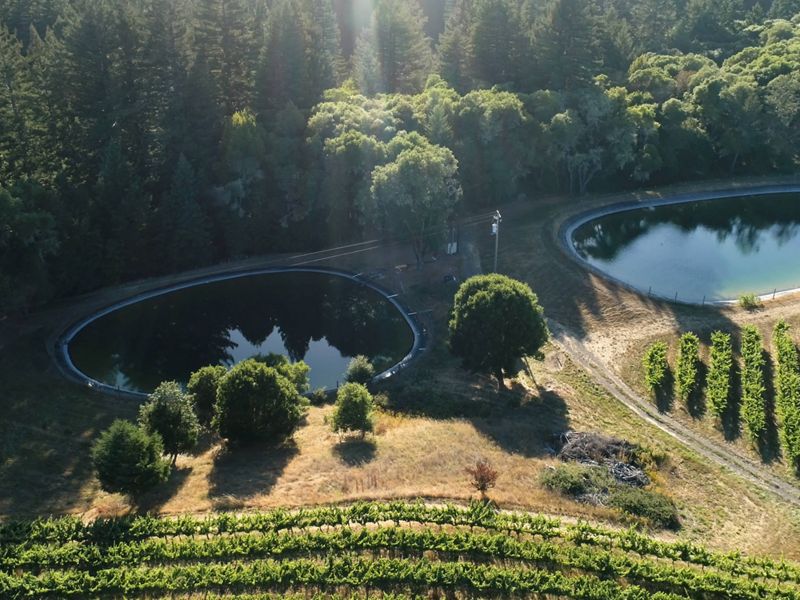
Fortunately, the North Coast has a relative abundance of water in the winter and spring. So, TNC is helping wine growers like Husch and Roederer as well as other landowners divert and store water in the rainy season that can then be used during the summer, when river levels are at their lowest and fish desperately need water. As a first step, we helped Zac make improvements to a leaky pond that now efficiently stores water for use later in the year. We then helped Husch navigate the complex system of water rights in California to allow him to divert water when its plentiful and leave it in stream in the summer.
Getting Water Rights Right
California has a notoriously complex system of water rights and policies, many of which were created long ago and don't adequately account for the current needs and stressors on water in our state. For example, Husch’s old water right only allowed them to pump and store water during the spring and summer. So TNC developed water rights analyses and paperwork needed to acquire a new winter water right and to protect Husch’s existing summer water right instream for fish and wildlife. Essentially, Husch is donating a summer water right to the environment.
The State Water Board approved the permits in December 2025, allowing Husch to begin winter water diversion and storage, and to avoid summer water diversion moving forward. This project is great for fish, but is also good for Husch, improving their water security and reliability and making the vineyard more resilient to the next drought.
Scaling-Up to Meet a Growing Challenge
Salmon and steelhead aren’t just struggling in the Navarro. Their numbers are dwindling all over our state—and so is our water supply. That’s why TNC’s California Water Program is focused on increasing the pace and scale of our work to restore water flows for nature. Our partnership with Husch vineyards is a powerful demonstration of a concept that can apply to any summer water user across California’s coastal watersheds.
Taking lessons learned from this project, TNC and our partners in the California Salmon and Steelhead Coalition are working to streamline the lengthy process for developing and permitting similar flow enhancement projects. At the state capital, we are working with agencies and legislators to update water policies and laws to enable and encourage smarter water management.
We also developed a new water-analysis webtool to help other landowners explore environmentally beneficial water-management and streamline development of such projects. These efforts will make Husch-type conservation projects simpler and faster to permit across coastal California.
Then, we are bringing community-based water management—like we’ve used in the Navarro—to key watersheds for salmon recovery via the Environmental Water Network, which provides technical support and incentivizes new partnerships to proliferate these common-sense water solutions across California.
Working together, we can restore the health of freshwater systems that salmon and other wildlife rely on, while also improving water supply reliability for people.
This body of work is supported and jointly carried out in collaboration with the Mendocino County Resource Conservation District (mcrcd.org), as well as with the California Salmon & Steelhead Coalition, a strategic partnership of The Nature Conservancy, Trout Unlimited and California Trout to increase streamflow in California’s North and Central Coast watersheds, with the goal of restoring and protecting wild salmon and steelhead and creating water reliability for people. To learn more, visit: www.casalmonandsteelhead.org.
To learn more about salmon in California, visit the Conservancy’s State of Salmon in California website: www.casalmon.org. This website is the most comprehensive repository of salmon information in California, presenting the current status and historical trends of salmon and steelhead populations and the work of the salmon restoration community.
You may also like

Water Markets
Like a stock market…but for water. In times of water scarcity, water markets bring financial stability, flexibility and sustainability to agriculture and nature alike.

BirdReturns: A Habitat Timeshare for Migratory Birds
When it comes to habitat, why buy when you can rent?

TNC California: 2026 Legislative Priorities
California voters are invested in building a safer, more climate-resilient future for our state. TNC has the scientific expertise and policy strategy to help achieve that vision.
Make a Difference in California
Together, we can achieve transformative change on a scale that’s attainable—for salmon, for California, and for the world.