


Bluffton Preserve A perfect vantage point at Bluffton Preserve. © Raven Lawson / TNC Arkansas
Thank you for your dedication to The Nature Conservancy’s mission in Arkansas. Your continued support fuels our conservation efforts and makes the successes in this report possible. As we embrace the spring season, we celebrate the impact of your generosity—conserving and restoring landscapes, protecting critical water resources and ensuring a thriving natural future for generations to come. We hope you take pride in these achievements, knowing that your commitment is driving lasting change across Arkansas.

Land Protection That Flows Downstream
Steep forested bluffs over clear water define the Archey Fork of the Upper Little Red River, which winds through TNC’s Bluffton Preserve, shaping both the land and the life that depends on it.
Thanks to you, TNC and partners have conserved another 2,000 acres along the Archey Fork, more than doubling the size of Bluffton Preserve and stitching together a landscape that can now function as it was meant to—connected, resilient and wild. These forests and streams work together, filtering water, sheltering wildlife and buffering one of Arkansas’s most important Ozark rivers.
This protection also matters downstream. Water flowing through Bluffton Preserve eventually reaches Greers Ferry Lake, a drinking water source for more than 30,000 Arkansans. It matters beneath the surface, where rare freshwater mussels filter the river and where fish like the yellowcheek darter, found nowhere else on Earth, still persist.
Photos of Bluffton Preserve
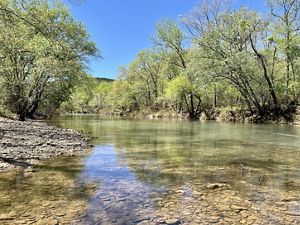
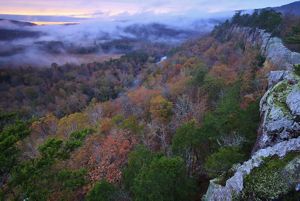
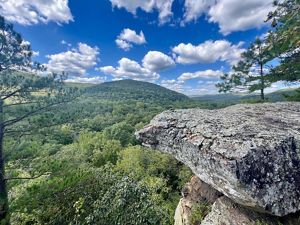
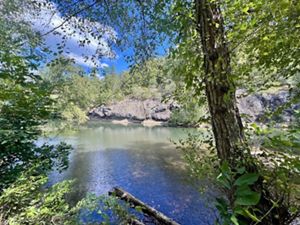
Bluffton Preserve is also a place for people. Trails follow ridgelines, campsites sit beneath big trees, and the river invites exploration by paddling, fishing or swimming. It’s a place where conservation is something you can walk through and experience firsthand.
Land protection on this scale doesn’t happen all at once. It’s the result of steady commitment, long-standing partnerships and a shared knowledge that some places are worth keeping whole. TNC has set an ambitious goal to lead and work alongside partners to protect an additional 30,000 acres of priority lands like this by 2030, places that are vital for both people and nature. Your support helps ensure connected landscapes continue to sustain clean water, wildlife and outdoor connections for generations.

Hidden Places, Meaningful Protection
Important conservation work is underway in places slowly shaped by water and time. Cave and karst landscapes are part of what makes Arkansas special, often hidden from view, yet rich with rare species and full of success stories.
TNC is continuing long-term monitoring of cave species alongside agency biologists and local experts. These surveys require tight squeezes, careful observation and offer essential insight. Species like bats, cavefish and cave crayfish depend on quiet, undisturbed caves. TNC’s Ozark Karst Program Manager, Michael Slay, recently reported that an endangered bat population rebounded from just six individuals to more than 300 after a bat-friendly cave gate was installed, a powerful reminder of what thoughtful protection can achieve.


Exploration has also brought discovery. Michael and fellow cave scientists have found yet another previously unknown population of rare cave crayfish and gathered evidence of a cavefish that may be new to the state, highlighting just how much life remains unseen beneath the surface.
Caves are connected, and what happens on the surface flows underground. TNC expanded partnerships with the Beaver Watershed Alliance and the Illinois River Watershed Partnership to work with NW Arkansas landowners on improving water quality through floodplain restoration, streambank stabilization and groundwater protection. This work is collaborative, often unseen and making a measurable difference underground.
A Shared Effort for Shared Groundwater
With a $500,000 investment from Mississippi State, TNC is expanding a practical agricultural effort to a pressing groundwater challenge in the Mississippi Delta. The investment builds on a well timer pilot program launched in Arkansas, where results showed that farmers reduced irrigation water use by about 20 percent simply by tracking how long their wells ran.

More than 60,000 acres in Arkansas now use well timers. That success and the knowledge gained is now extending into Mississippi, with plans to install at least 250 timers on roughly 25,000 acres at no cost to farmers, focusing on areas where groundwater is under the greatest strain.
The approach is simple and effective. By providing better information and working with farmers voluntarily, well timers help make smart, efficient water decisions that benefit both working lands and long-term water resources.
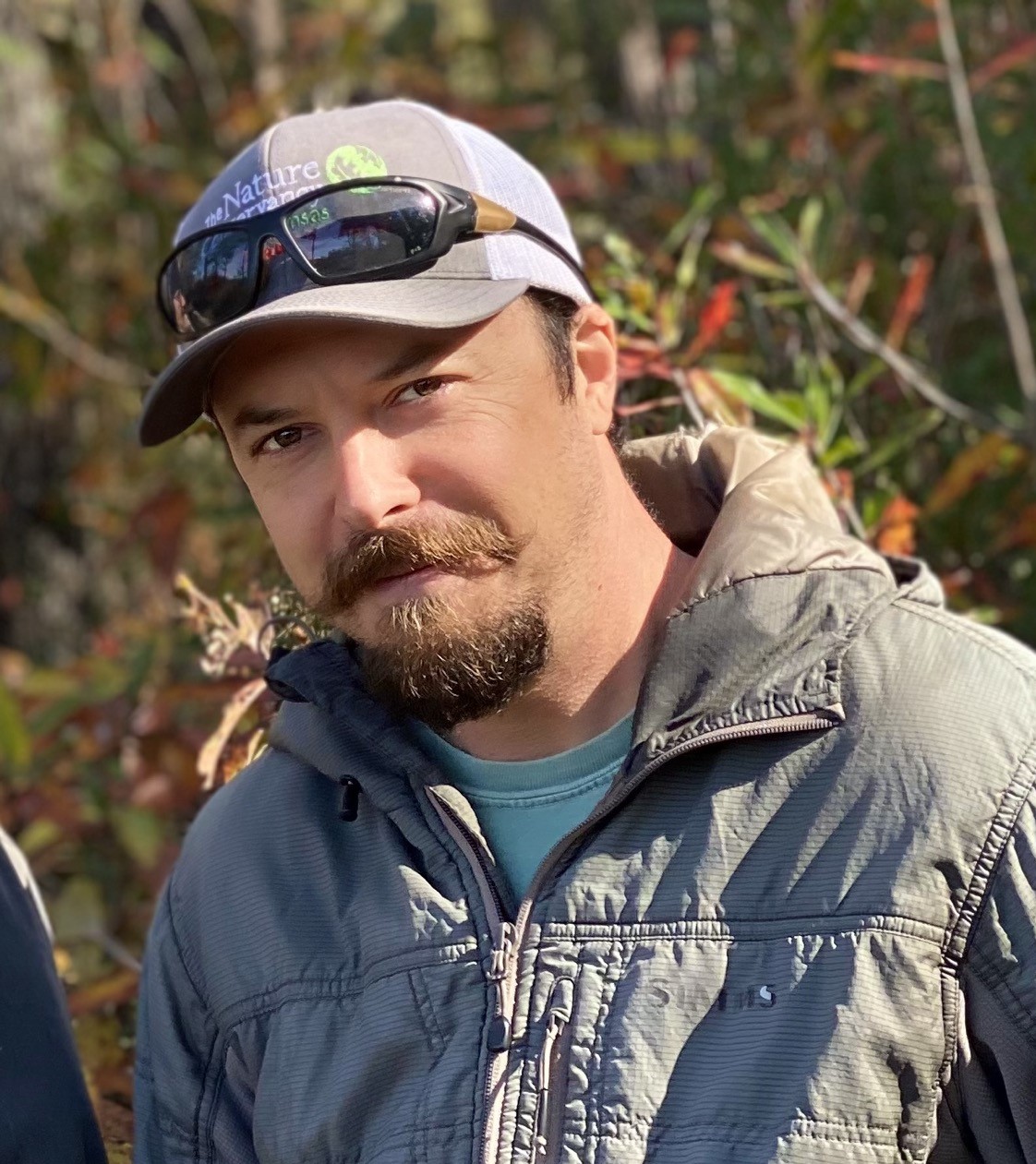
Story by Gabe Levin
Prescribed Fire in Action
Working on lands that thrive with fire captured my heart early in my career. If you’ve ever stood in an Arkansas prairie or open woodland in summer, you know why. The air hums with insects, grasses ripple with movement, and flashes of color appear everywhere you look. This kind of abundance doesn’t happen by accident, it depends on fire. Knowing that creates a sense of responsibility that carries me through the dusty, sweaty, smoke-filled days it takes to care for these places.
Now in my fourth year with TNC Arkansas’ prescribed fire program, my role has grown. I still light fires and walk long blackened lines, but I also teach others how to do this work well and safely. Passing on that knowledge is how we ensure these landscapes endure.
In March, our team hosted fire ecology students from the University of Idaho, giving them a full taste of life on a burn crew. They joined us for long road days, shifting weather forecasts and total immersion in fire, from planning and ignition to holding the firebreak line and evaluating results. It’s demanding work. Yet day after day, their enthusiasm only grew. By the end of the week, when offered a break, they asked for more fire.
We call it the “fire bug”—a deep affection for land that makes fatigue feel secondary to purpose. Sharing that love is as important as teaching technique. In return, we’re granted a rare view: the land renewed by fire, alive with possibility and moving closer to its full potential.
—Gabriel Levin, Burn Crew Manager
Learning on the Land: Turning Science into Action
TNC preserves serve as living classrooms, places where scientists can test ideas, learn what works and share lessons that strengthen conservation across the state.
Research activity on Arkansas’ preserves has grown, with six new projects launched by partner universities and independent researchers, with several more continuing. These efforts aren’t just academic. They are designed to answer practical questions that landowners, agencies and partners are grappling with every day.
One of these projects is at Smith Creek Preserve, where researchers from Arkansas Tech University are studying cerulean warblers, a striking blue songbird whose numbers have steadily declined. The site offers a rare opportunity to better understand habitat needs and forest management choices that can make a difference for vulnerable birds.


Another research project is underway at Ranch North Woods Preserve. Researchers are exploring how native plants and mosquito management influence bird health. This work sits at the intersection of wildlife and human well-being and could help shape future approaches far beyond the preserve boundaries.
TNC is also leading research on how fire is used to restore forests across the state. By studying how different seasons of prescribed burning affect plant communities, insights can be applied by conservation groups, agencies and private landowners alike. By leveraging our lands, TNC is helping ensure that conservation in Arkansas is guided by science, shared widely and built to last.

Shortleaf Pine Video: Returning the Right Tree to the Right Place
Shortleaf pine forests once covered much of Arkansas. Today, TNC’s Manager of Resilient Forests, Clint Harris and partners are helping those woodlands make a comeback, and a new video captures how that restoration is happening on the ground.
Created in partnership with the Arbor Day Foundation, the video follows the work behind shortleaf pine recovery: prescribed fire returning to the landscape, young pines taking root and forests actively managed for resilience against wildfire and extreme weather.
The film offers an honest look at restoration as a long-term commitment rather than a single action. It’s a reminder that restoring forests is as much about patience and partnership as it is about planting trees.
Learn how Clint is restoring shortleaf pine on his own multigenerational family’s land and how our work is inspiring others.
You Make the Difference for People and Nature in Arkansas
Every day we work with individuals and businesses, private landowners and public agencies, and others focused on conserving and restoring the lands and waters of the Natural State.
Arkansas Stories

Drones Take Flight for Conservation in Arkansas
See how drones are emerging as a valuable tool in modern conservation efforts.

Restoring Stream Connectivity in Arkansas
TNC Arkansas and partners are restoring stream connectivity in the Ozarks by removing barriers like low-water crossings to protect biodiversity and reconnect rivers.

Scenic Stays Near Arkansas Nature Preserves
Book a stay close to Arkansas’s most scenic preserves.