


Protecting a Delicate Flower with Flames
Beneficial burn clears dead grass and thickets to protect a rare desert wetland.
Keep in Touch!
Sign up to receive monthly updates from Arizona and beyond.
Flames stretching three to 30 feet rose above The Nature Conservancy’s (TNC) Canelo Hills Cienega Preserve during a carefully planned prescribed fire—an operation carried out to safeguard one of the rarest plants in the world: the Canelo Hills ladies’-tresses orchid (Spiranthes delitescens). The endangered flower grows only in cienegas, the spring-fed wetlands tucked into an otherwise arid landscape. Slender and unassuming at first glance, the orchid reaches about a foot and a half tall with its tiny white flowers spiraling delicately along its stem.
The orchid can be hard to find, often concealed in dense grasses until conditions are just right for it to bloom. Years without natural disturbances like fire and flooding may be suppressing its visibility or presence.

Orchid Science
Longtime science partner Andrew Salywon, PhD, Herbarium Curator and Research Botanist for the Desert Botanical Garden (DBG), has spent more than a decade working alongside TNC to better understand these orchids and the fragile cienega systems they depend on. Though orchids have not been seen at this site in several years, new soil research collected by Salywon and colleagues found evidence of a crucial mycorrhizal fungus on the preserve.
“Studies show a tight interaction between the soil fungus and the orchid, which has specialized structures and roots that help the orchid exchange nutrients with the fungus,” Salywon explained. “The presence of this fungus means orchids could be hiding under the soil. It’s also an encouraging sign for future recovery efforts, since transplanted orchids would find their fungal partner waiting for them.”
To that end, DBG and TNC established an experimental plot on the preserve where open space, moisture and the right fungal communities converge. In August 2025, the team transplanted 20 lab-grown orchids to this site as an early test of what long-term restoration might make possible.
“Our science gives us reason to be hopeful that we can increase the population. The prescribed fire will only strengthen our chances because these delicate flowers need space and less competition,” added Salywon.
A Prescribed Fire Five Years in the Making
The morning of the 328-acre burn—on one of only five places this orchid has ever lived—began like all prescribed fires do: with a detailed briefing. Just after dawn, the Coronado National Forest station parking lot filled with people, engines, trucks and water tenders.
By 7:30 am, all eyes were on the burn boss, who ended the briefing with the words everyone was waiting for: “This is the right fire at the right time, for the right reasons.” The energy in the air was unmistakable as crew members prepared for ignition.
This beneficial burn was designed to clear years of dead grass, thin thirsty juniper trees and remove thickets of willows—opening space, circulating nutrients and protecting scarce wetland water.


TNC’s Daniel Simpson, Ramsey Canyon Preserve manager, has been at the heart of this work. After years of planning delays, weather constraints and ecological considerations—including ensuring the burn happens when overnight temperatures stay below 40 degrees to protect other important species—the green light finally came.
“Historically, this habitat burned about every five to 10 years, but it’s been 20 years since any natural disturbance. These fuel levels are unhealthy,” Simpson said. “With the right kind and right amount of disturbance, ecosystems stay resilient, diverse and dynamic—and that’s what we’re hoping for today.”
When asked whether the vegetation could have been removed manually, he noted that fire can do in hours what would take people years.
Preventing the Next Big Disaster
While protecting the orchid was an important driver, the prescribed fire also reduces wildfire risk, improves habitat around O’Donnell Creek and protects regional water resources.
“We’ve witnessed devastating wildfires across the Western U.S.,” said Forest Service Public Information Officer Michelle Perez. “We want to prepare our lands for a wildfire before one forces people from their homes. When done within a prescription, fire can heal the land.”

Collaboration Is Key
Initiated by the U.S. Fish and Wildlife Service, led by the U.S. Forest Service and supported by the Bureau of Land Management, National Park Service, TNC Arizona and private landowners, the burn was the result of five years of planning, shared expertise and trust. More partners meant more boots on the ground, greater safety and shared resources.
With a portion of his land in the burn footprint, private landowner Steve Smith—upstream neighbor to TNC and DBG—engaged in the planning process.
Curt Bernal and Elise Clicquennoi moved to the Z Triangle, adjacent to the preserve, in 2022. They’ve since built a strong relationship with TNC and DBG. During the burn, they hosted about 20 people to watch the fire move across the land, capturing everyone’s attention.
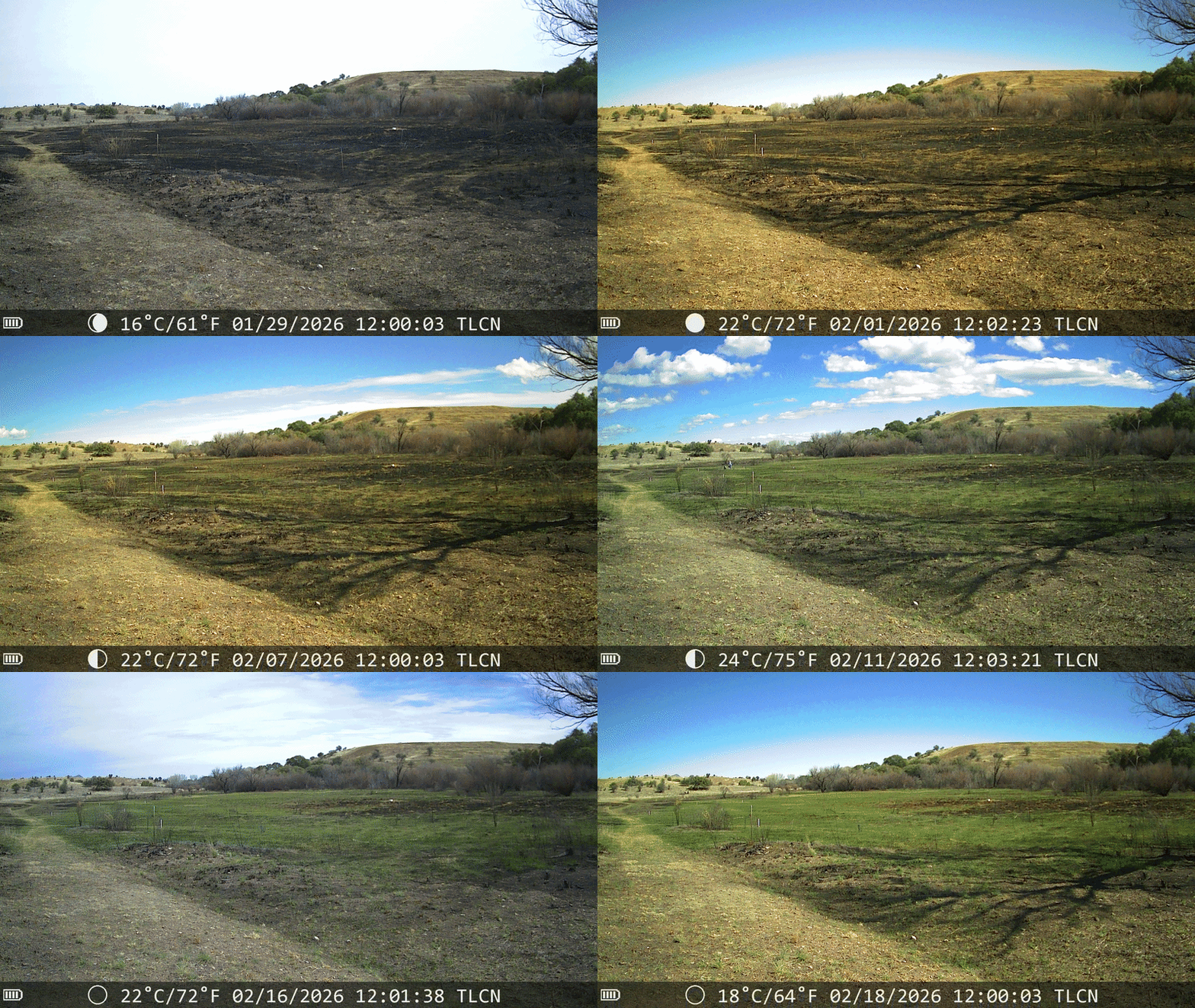
Three weeks later, the change is unmistakable. “The area is much more open now,” they shared. “We’re seeing new green growth, exploring areas that were previously inaccessible and even noticing the water rising.”
Post-Burn Progress
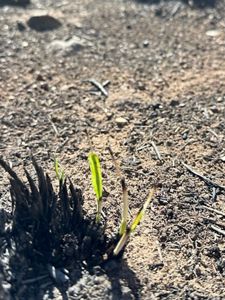
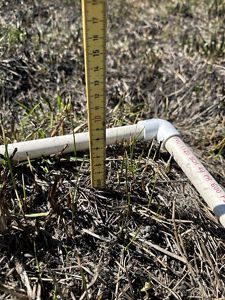
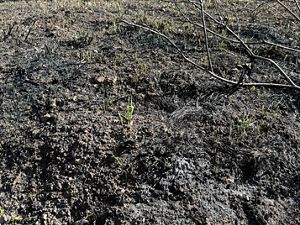
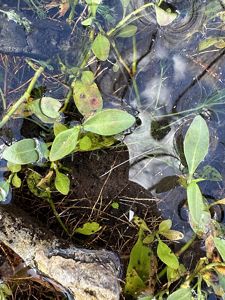
Mosaic: Green sprouts and burned vegetation three weeks after prescribed fire © Gita Bodner
New grasses have sprouted: three weeks after the prescribed fire © Gita Bodner
Canelo Hills orchid plot: Sedge regrowth © Andrew Salywon
Water rising: new sprouts post fire © Gia Bodner
What’s Next
Over the next few years, TNC and DBG will monitor how the fire affects the land, water and orchids—research that will guide future restoration and, hopefully, support the long-term survival of the Canelo Hills ladies’-tresses. Opportunities for expanded plantings, improved hydrology and continued collaboration may grow from the data gathered.
This burn marks a turning point—one rooted in science, partnership and deep care for a biodiversity hotspot. Now, the land begins its next chapter.
Make a Difference in Arizona
More Arizona Stories

Wired for the Wild: Technology Is Powering Conservation
Across Arizona and far beyond—a quiet revolution is taking place. Birds, bats and other wildlife are unknowingly helping us unlock the secrets of their migrations, behaviors and habitats.

Protecting and Stewarding Arizona’s Lands
One of the most diverse states, Arizona boasts lands from deserts to grasslands to forests. Since 1996, TNC has ensured these landscapes remain for future generations.

Safeguarding Freshwater Ecosystems Across Arizona
Freshwater resources in Arizona serve as a critical water supply for the people of Arizona and surrounding areas. Discover how we are addressing water security for people from all communities.