


Thanks for visiting our conservation newsroom. We hope you'll visit often to stay informed about conservation projects and big wins that we are reporting on from around Alabama.
Check out our most recent accomplishments from the Yellowhammer State.
January 28, 2026
Scientists conduct tree ring research at Flagg Mountain.
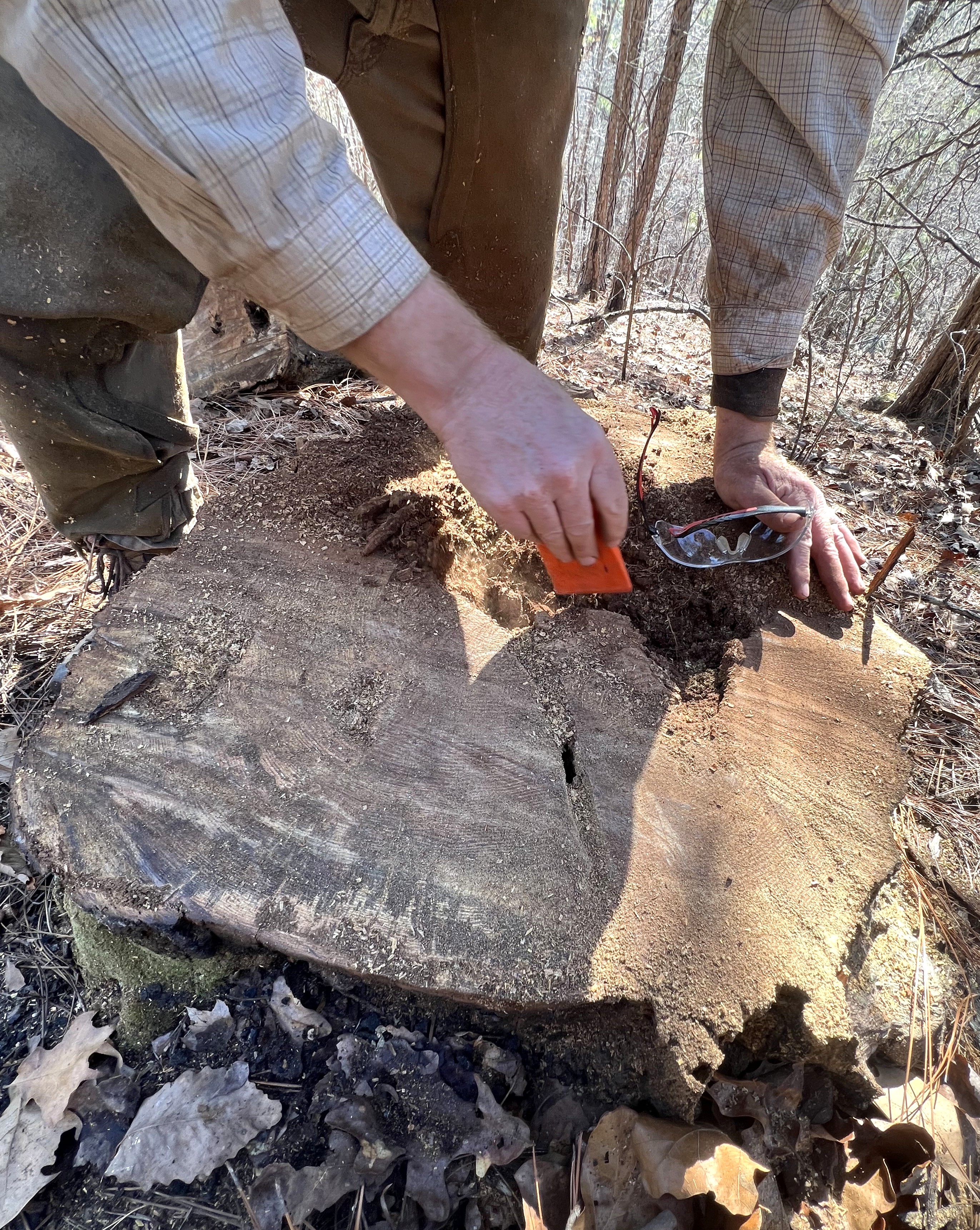
The Nature Conservancy and our next-door neighbors at Flagg Mountain – the Alabama Forestry Commission – welcomed dendrochronologists from the University of Missouri's Center for Tree Ring Science seeking to collect samples of montane longleaf pine (Pinus palustris) stumps and snags. This was a return visit for the researchers, who initially scouted the area in February 2025 to determine whether there would be enough material for a study focused on the history of past fire disturbances taking place in this landscape.
Finding plenty of remnant wood warranted this return visit that included cutting cross-sections from about 30 stumps and snags over a three-day period. Once back in the lab, the scientists will sand down the samples to measure and study tree rings, including scars left by fire. Ultimately, over a period of 1-2 years, the researchers will create a chronology that indicates the frequency of fire during each tree’s lifetime down to specific years and even seasons.
While this type of research is somewhat common and has been done in shortleaf pine, red pine and other species, very little has been conducted in montane longleaf pine.
“We have some good examples of mature longleaf pine stands that represent ‘desired future conditions,’” says Davis Goode, TNC’s director of forest programs in Alabama. “This type of retroactive study sheds light on the frequency and seasonality of historical fire that influenced these conditions.”
The montane longleaf pine ecosystem, restricted to parts of Alabama and Georgia, is a rare subset of the 90-million-acre longleaf forest that once covered a significant portion of the southeastern United States. Today, these forests have severely declined as a result of timbering operations that removed fire from the ecosystem for almost a century.
“Reconstructing the forest’s fire history in mature stands at Flagg Mountain provides a blueprint for fire teams working to restore this forest and younger forests in the surrounding landscape,” adds Goode. “If we burn based on historical patterns of frequency and seasonality, in 80-100 years young stands would develop into a desirable structure and composition.”
Eventually and depending on funding, the scientists and conservation partners hope to pursue a landscape scale study that would paint a broader picture of the area’s fire history. In the meantime, fire teams comprised of staff from TNC and partners organizations are preparing for the spring prescribed burning season. While the tree ring study will not be completed, the teams proceed confidently in knowing that they are bringing back historic fire patterns that have all but disappeared over the last 100 years as traditional Indigenous settlements were replaced by agriculture that arrived with European expansion. With perseverance and patience, replicating this historic disturbance, over time, will result in welcoming back the beauty and benefits of a new native forest.
November 15, 2025
We're welcoming birds to Walker Island West.
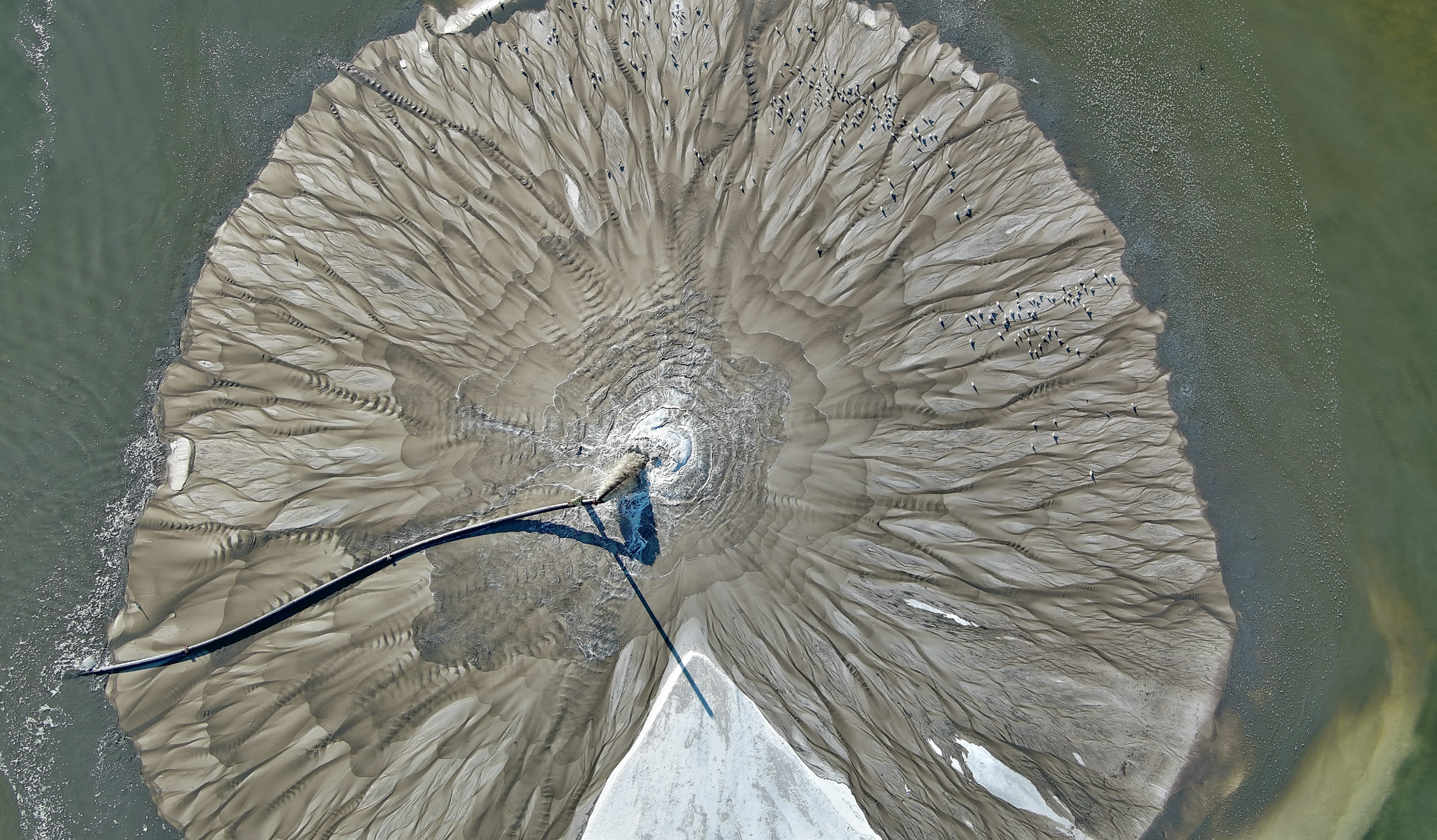
What in the world is this picture? It is the creation of an entirely new island, called Walker West. This new island will play an important role in protecting expanding seagrass beds and provide additional bird habitat for the migratory, wading and shore birds that frequent the Perdido Islands.
In September, The Nature Conservancy and our partners officially cut the ribbon on Walker West and the entire Perdido Islands project, which restored 26 acres of barrier island habitat using approximately 216,000 cubic yards of sand. Birds love these islands, too. On one night of September 2024, more than 10 million birds flew through Baldwin County skies during the fall migration. On a single night, that number might be as high as 30 million birds. In this picture, you can see the gulls and terns looking for meals on the brand-new shoreline.
Read more about this story and other recent conservation wins in the Winter 2025 issue of Alabama Nature.
September 19, 2025
GulfCorps orientation kicks off a year of conservation work.
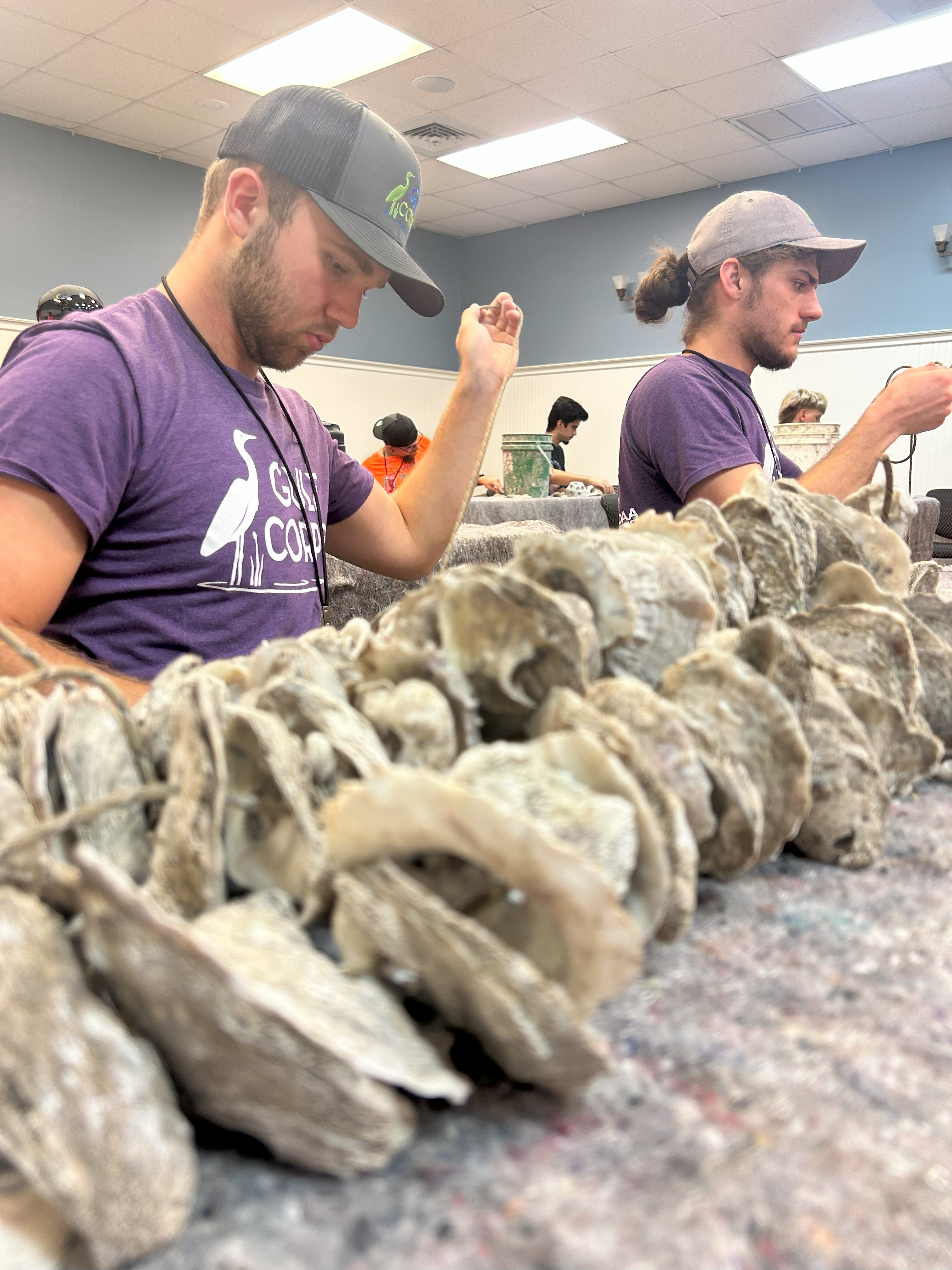
The Nature Conservancy’s GulfCorps program recently gathered nearly 100 conservation crew members and leaders to learn how they will help restore the natural features and habitats on critical conservation lands across the Gulf Coast, including in Alabama. The Student Conservation Association-Alabama members were among those who participated in the GulfCorps orientation week, held in Fairhope, Ala.
Funded by a grant from the National Oceanic and Atmospheric Administration (NOAA), GulfCorps creates hundreds of conservation jobs for young adults in all five Gulf states — Alabama, Mississippi, Louisiana, Florida and Texas. The program provides experience, hands-on training and professional workforce development opportunities. Conservation corps crews work on a range of projects on local, parish, state and federal lands and waters.
During the orientation week, the crews were trained to identify invasive species, learned about efforts to protect sea turtles and marine mammals, and helped build vertical oyster gardens, or VOGS, to help restore oyster habitat. During their training sessions, the crews built 82 VOGS that will be deployed to create oyster habitat. After a year in the water, each VOG could host about 170 oysters, and each adult oyster can filter between 13 and 50 gallons of water daily.
GulfCorps, which launched in 2017 under the leadership of TNC, NOAA, the Student Conservation Association and The Corps Network, focuses on projects that restore habitats damaged by the 2010 Deepwater Horizon oil spill while also restoring the economy of the Gulf states.
August 26, 2025
TNC prepares a warm welcome for a new creep of gopher tortoises at the Splinter Hill Bog Preserve.
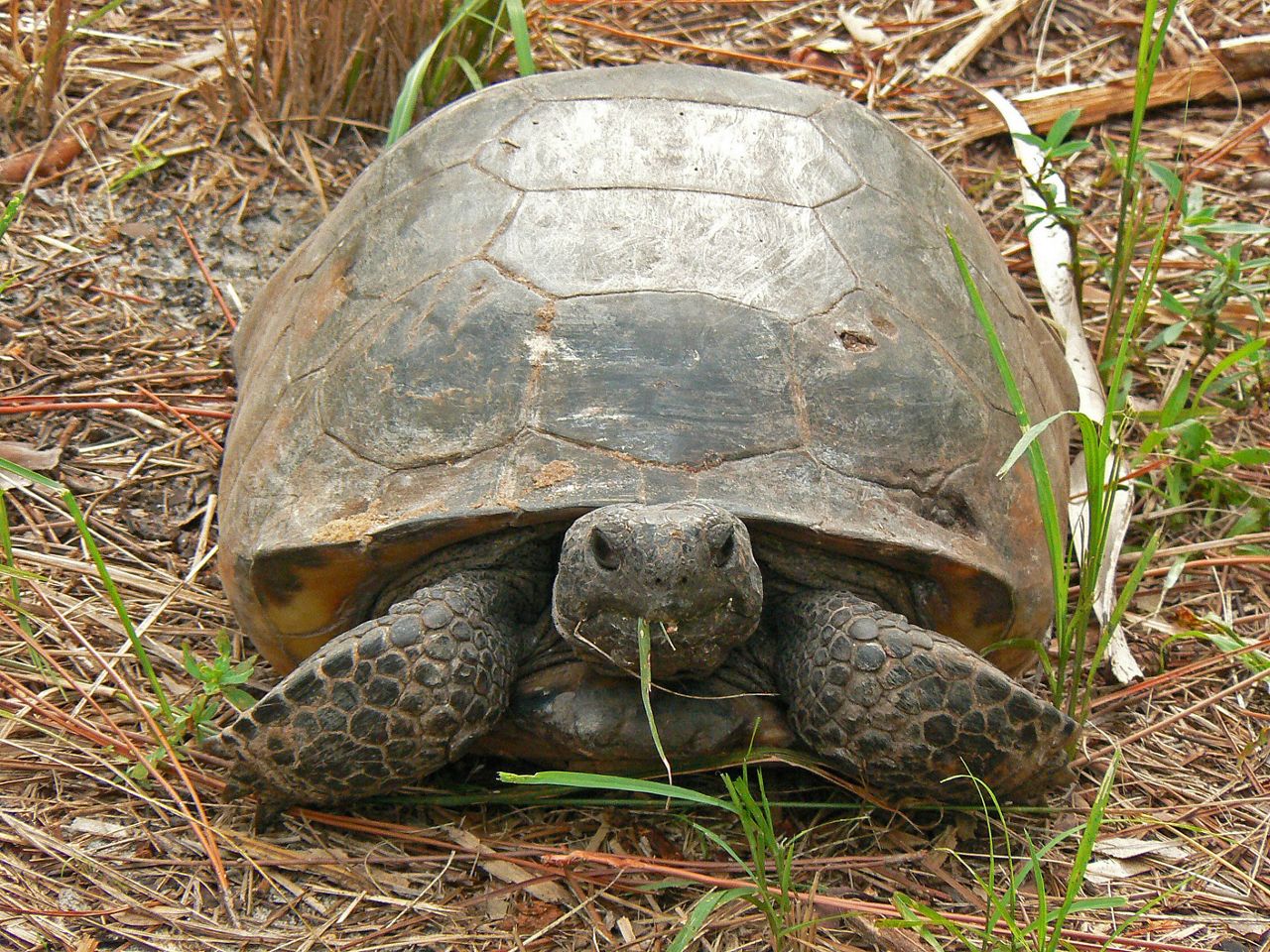
With approximately 1,900 acres, The Nature Conservancy’s Splinter Hill Bog Preserve provides a place where animals and plants can safely spread out and, hopefully, thrive. This amenity came in handy over the summer when a building contractor from another part of the state, and familiar with TNC's work, inquired about relocating five gopher tortoises living at a project site.
“Since gopher tortoises are a state-threatened species here, and federally threatened in two Alabama counties, you can’t build if they are found on a property,” says Rob Wood, TNC’s coastal fire program coordinator in Alabama. “Luckily we have everything they need here at the preserve.”
In fact, gopher tortoises already inhabit a portion of the north end of the preserve. This is a population that has a long history of living in the area’s ideal combination of an open, grassy landscape interspersed with longleaf pines growing in sandy soils favored by the tortoises for extensive burrows where they spend most of their time.
“All of the right elements are here at Splinter Hill,” adds Wood. “We just keep an eye on things and maintain the habitat with periodic fire that mimics what once naturally occurred across the landscape.”
Now, in the south side of the property, the contractor is building a five-acre enclosure and a starter burrow with help from TNC and oversight by a state wildlife biologist to ensure the preserve’s new residents get off to a strong start. TNC will maintain the area for two years while the tortoises settle in.
“Gopher tortoises are an important keystone species, with deep burrows that support hundreds of species in addition to themselves,” says Wood. “We are proud to be stewards of a place where they can exist as they are meant to, and away from where urban sprawl was pushing farther and farther into their world.”
May 18, 2025
TNC's Alabama Freshwater Team embarks on an Alaskan adventure.
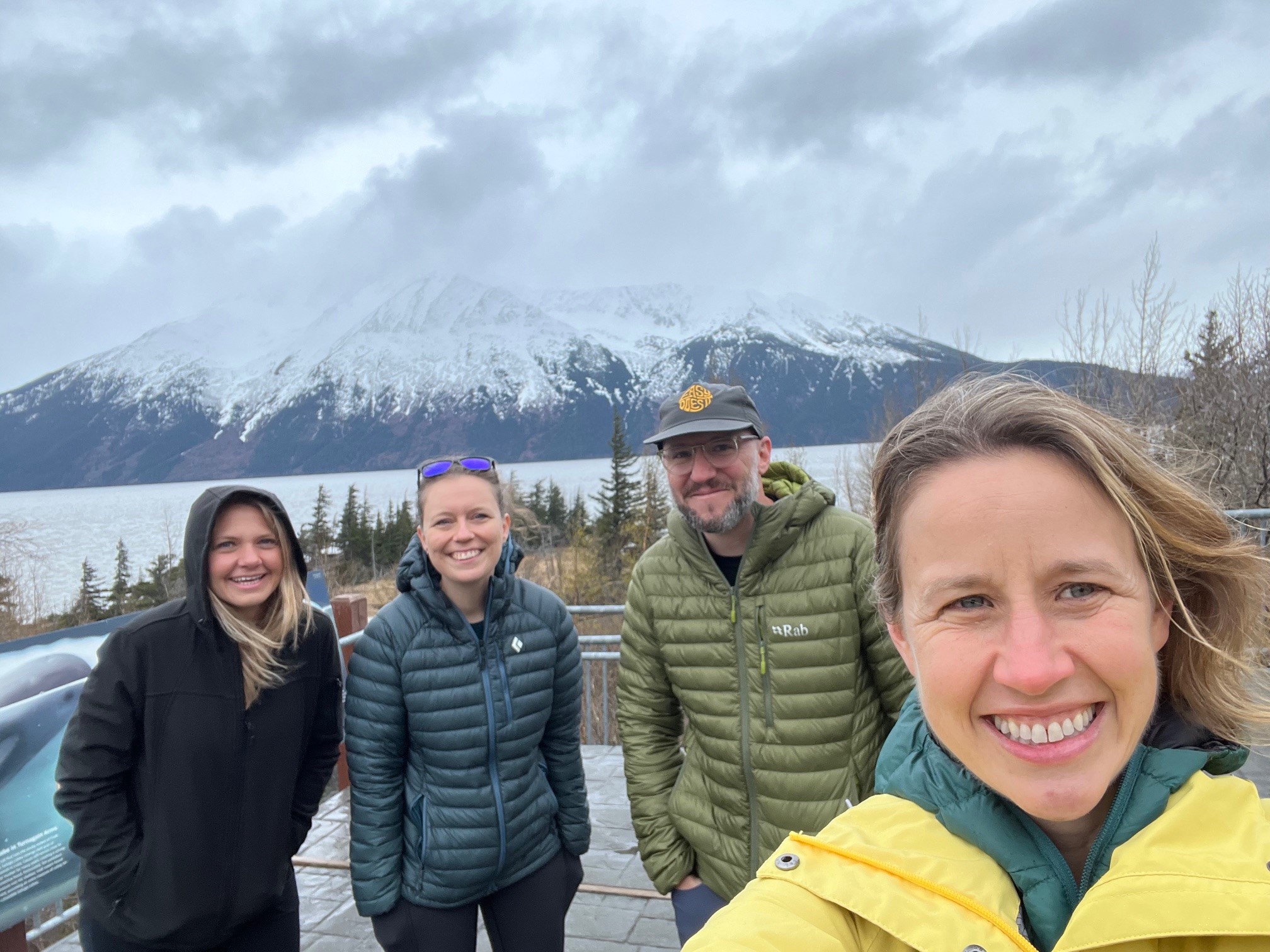
No, that’s not a picture of the north Alabama mountains. Earlier in May, The Nature Conesrvancy's Alabama freshwater team had the honor of attending and presenting at the American Water Resource Association (AWRA) conference in Anchorage, Alaska. Each member of the team gave separate presentations on different facets of the TNC's Freshwater Program in Alabama.
The conference theme was "Development Risks and Challenges in Changing Climate Conditions." All of the TNC team’s presentations tied in to climate resilience.
"Like Alabama, Alaska is a state rich in water – it just comes in different forms," says Alana Reynolds, TNC's freshwater program watershed coordinator in Alabama. "I’m in awe of the indigenous communities who are resilient enough to live in this landscape. But Alaska, much like the rest of the world, is definitely experiencing the impacts of climate change as glaciers melt, sea ice thins and temperatures warm."
The week was a tremendous opportunity to demonstrate TNC's whole-system approach to conserving freshwater in Alabama, and to learn from practitioners across the country who are all facing similar challenges in unique ways.
Reynolds adds, "Alaska was incredibly beautiful. The landscape is wild, rugged and unforgiving. It has kept its status as the last frontier and is largely undeveloped because of the harsh climate, land protection efforts and much of it is inaccessible most of the year. There are many vast wetland systems that were formed by glaciers and they constantly change from freeze and thaw cycles."
April 13, 2025
Collaboration is key to protecting Alabama’s aquatic diversity.
The Nature Conservancy’s three-person Freshwater Team arrives to work each day focused on finding ways to protect and restore our state’s unique aquatic species and habitats. Director of Freshwater Programs Jason Throneberry, Urban Watershed Specialist Ben Wegleitner and Freshwater Program Watershed Coordinator Alana Reynolds bring a wealth of experience and knowledge to the work, and depend heavily on collaboration and partnerships, both formal and informal.
When it comes to freshwater conservation, one of our most important partnership is with the Alabama Rivers and Streams Network (ARSN). In 2006, ARSN formed as a way of mobilizing nonprofits, private companies, government agencies and concerned citizens around identifying the highest quality and most biodiverse watersheds that exist in Alabama. With Alabama leading the nation in freshwater diversity, this is a tall order.
To date, the Network has identified 46 watersheds and 14 river and streams where focusing management, restoration, and recovery efforts would have the greatest impact on the state’s impressive, but vulnerable, populations of rare fishes, mussels, snails and crayfishes.
“These Strategic Habitat Units (SHUs) and Strategic River Reach Units (SRRUs) were selected based upon presence of federally listed and state imperiled species, and the habitats required by these species to survive,” says Alana Reynolds, TNC’s watershed coordinator in Alabama.
TNC has adopted a small subset of the SHUs on which to focus our restoration efforts, including the Paint Rock River, Locust Fork of the Black Warrior River, Big Canoe Creek, Terrapin Creek and the Cahaba River watersheds. The Alabama River is also a SRRU that is a priority to TNC.
Since 2016, ARSN members have continued to gather to investigate water quality, habitat conditions and species health at individual SHU’s and SRRUs around the state. TNC’s Freshwater Team participates in these gatherings at places where the ARSN priorities and TNC’s work intersect. Then, once a year, ARSN brings everyone together to share progress, report on potential threats and discuss opportunities in priority watersheds.
The ARSN meetings are important to TNC because ARSN helps guide TNC’s work in Alabama based on focal species presence, opportunity for restoration, partner momentum and leveraging available resources.
Reynolds adds, “This annual meeting, and the smaller gatherings throughout the year, are a great opportunity to connect in person about the work, and if needed, course correct so that Alabama can maintain it’s standing as the state with the highest aquatic biodiversity in the nation.”
We can't conserve Alabama nature without you!
Your support makes it possible to tackle projects that will ensure future generations can rely on Alabama's productive and resilient lands, healthy and abundant waters, and a beautiful and thriving coast.
More Louisiana Stories

Healthy Alabama Waters
Secure clean water for our rivers, lakes and streams so that Alabamians can safely eat native fish and seafood, enjoy swimming and boating and trust the water we drink.

Alabama Places We Protect
Learn about the places The Nature Conservancy protects in Alabama.

Restoring Alabama Rivers
Alabama fish haven't migrated upriver on their own for generations. Jason Throneberry, a TNC freshwater program director, talks fish cannons, endangered Alabama sturgeon and getting fish past dams.