


In Milwaukee, more than 120 trustees and staff celebrated The Nature Conservancy's 75th anniversary, wrestled with big questions together and looked ahead to what this moment asks of each of us. Whether or not you were in the room, this recap is for you.
Each section below includes photos, a short synthesis, where to find materials and actions you can take.

Day 1: The Place Before Us and the Legacy We Inherited
The Summit was organized around one question, posed by Michael Reuter at the opening: what pivotal moment are we living in now, and what responsibility does it place before us? Day 1 answered by looking back, at the places, people and decisions that built 75 years of conservation in the Midwest.
Day 1
Opening on the Water
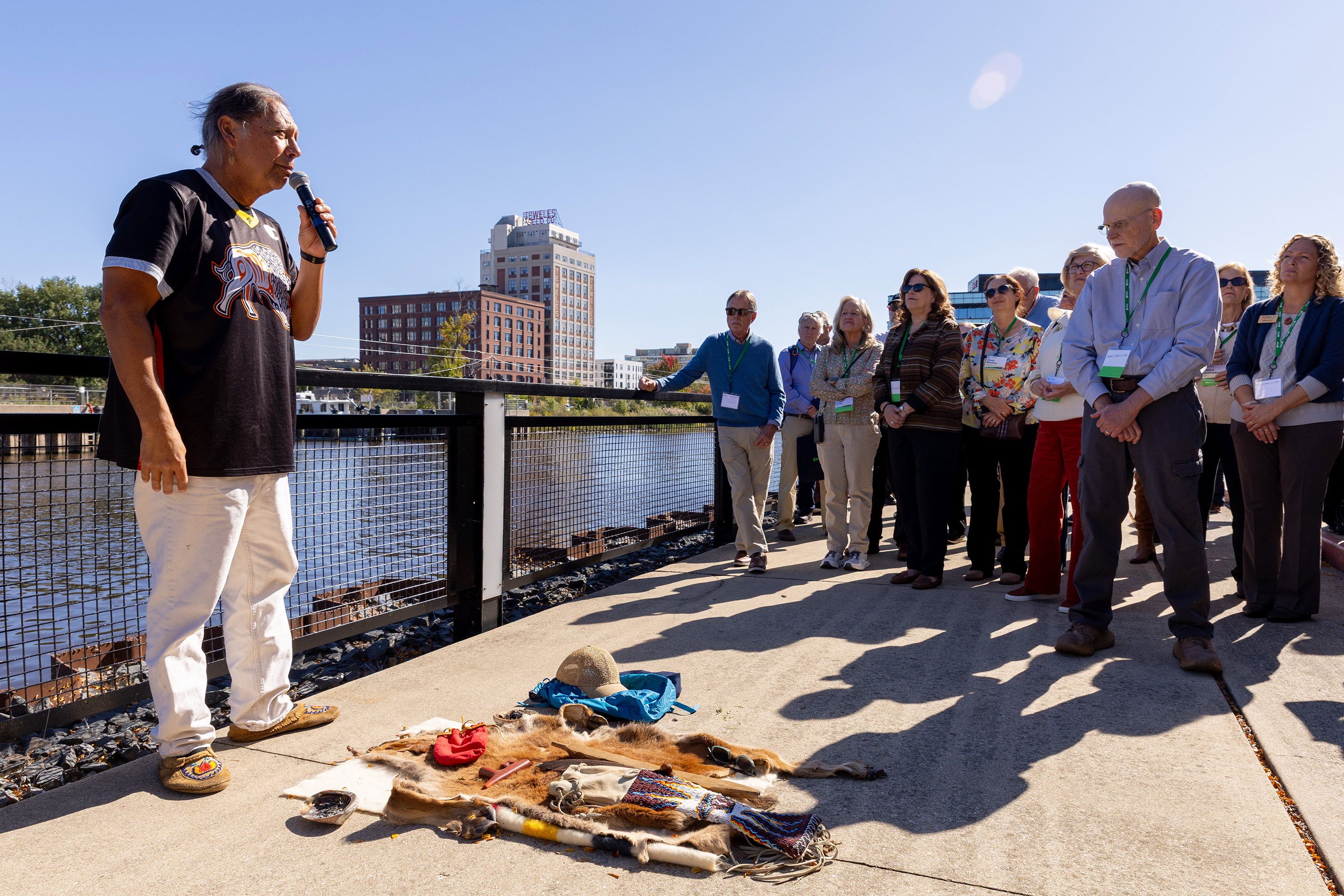
Overview & Synthesis: We began with place, not strategy. On the riverbank at the Harley-Davidson Museum, Bryant Waupoose, Executive Director of Medicine Fish, introduced Mark Denning, who grounded us in the Indigenous history of this place and the intergenerational responsibility it carries.
We then took to Milwaukee's waterways as a living classroom. Elizabeth Koehler, Matt Dallman and Wisconsin trustee Kevin Shafer connected what we saw from the water to one Midwest freshwater story, asking three questions along the way: What happened here? Why did it matter? What became possible because people chose to act?
Day 1
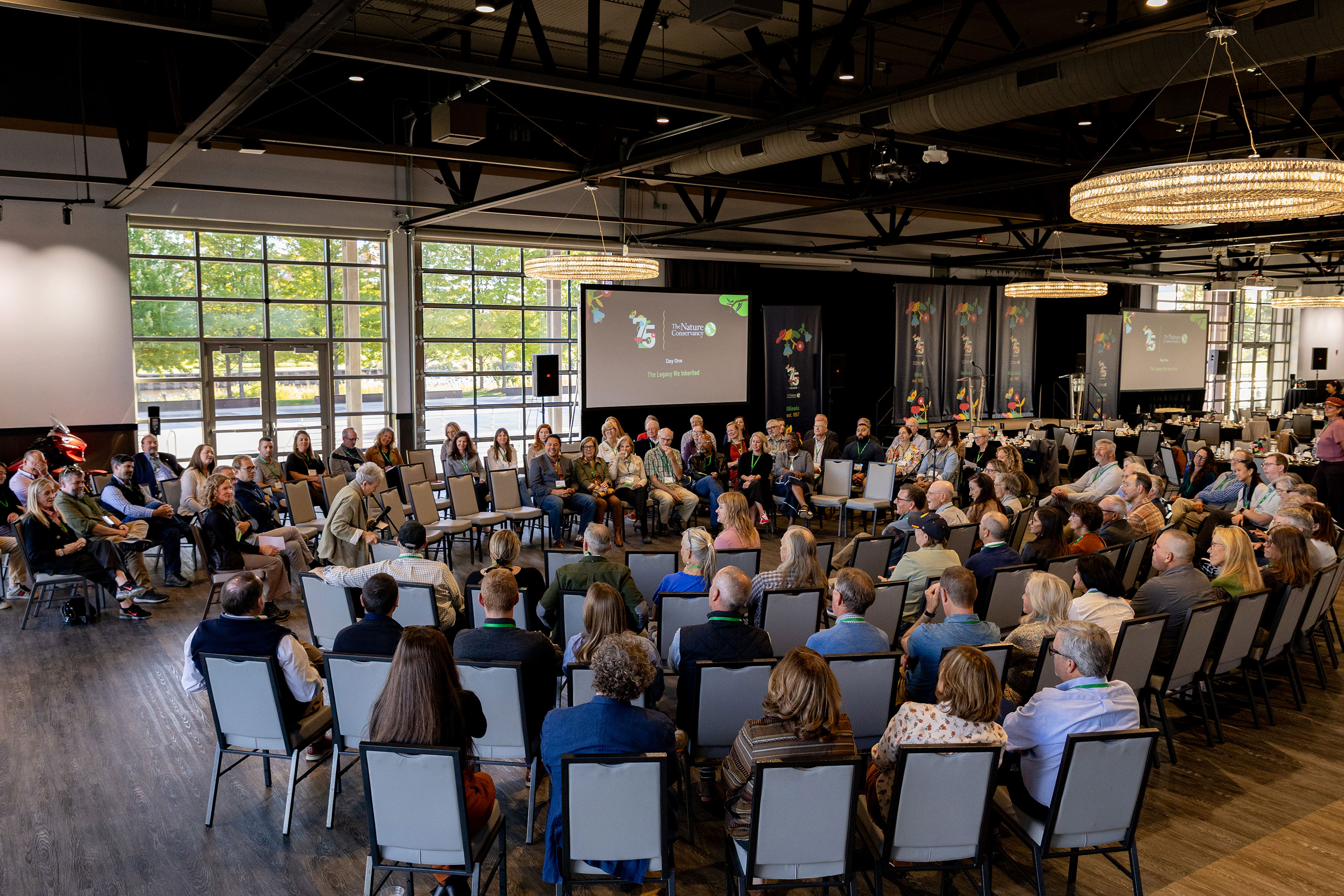
Storytelling Circle: Pivotal Moments
Overview & Synthesis: Back on land, trustees from across the division told stories of pivotal moments in conservation leadership. Brenda Shapiro (Illinois) spoke to the relationships, decisions and persistence that changed what became possible, with Emiquon as the example. Ken Inskeep (Indiana) described the long-term leadership behind landscape-scale restoration we saw in Kankakee Sands. Terry Barclay (Michigan) shared the legacy of protecting the Upper Peninsula. John O'Meara (Ohio) traced Ohio's place in TNC's origin story. Matt Dallman spoke on behalf of Debbie Cervenka and drew on two decades of relationships with Tribal partners and Indigenous leaders, and Harry Drucker offered a trustee's view of shared learning across the Midwest and Latin America.
Together, they showed a legacy built by people who saw possibility, took risks and stayed with the work long enough to change the future.
Day 1
Honoring Helen
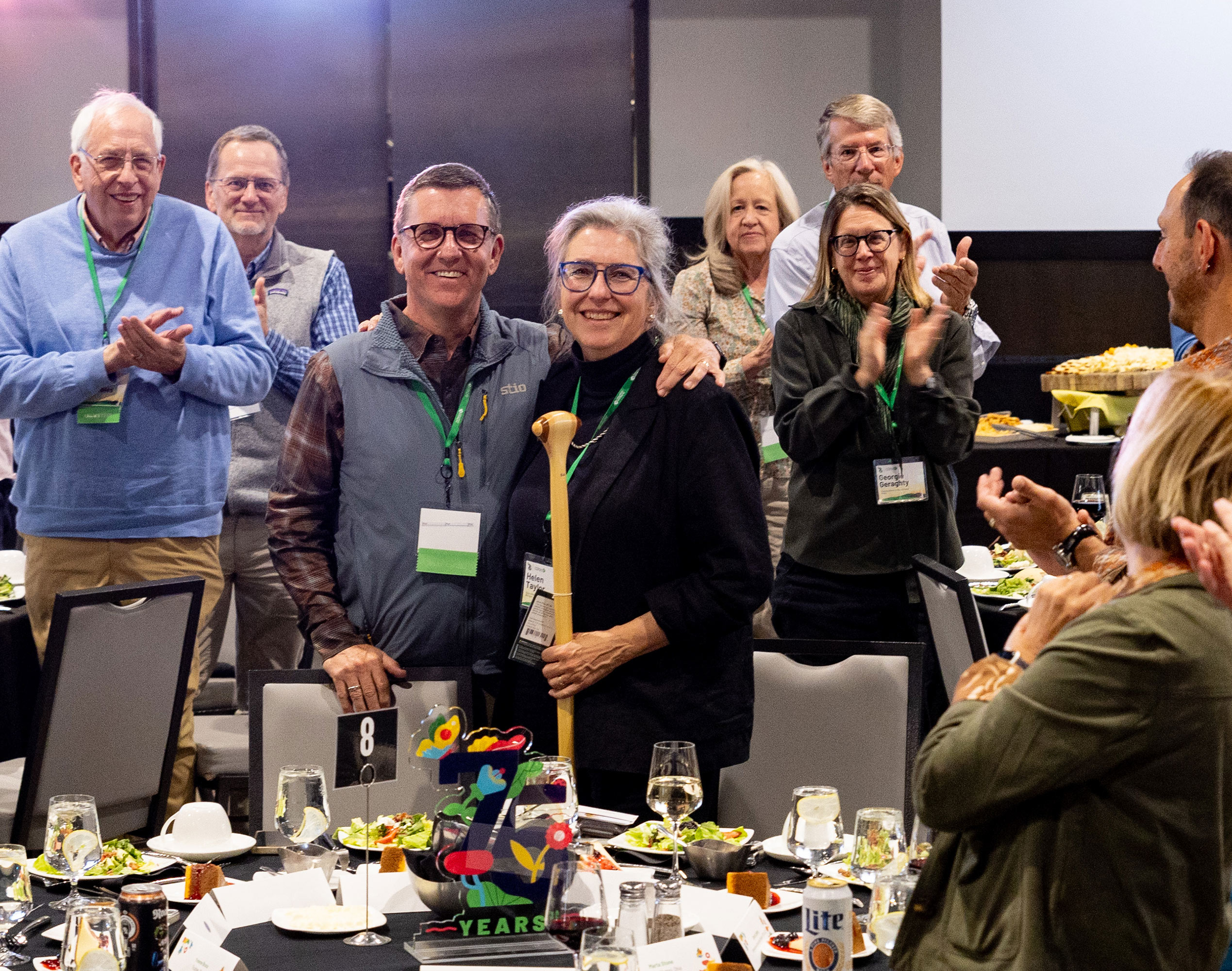
Overview & Synthesis: The circle closed with one more story: Helen Taylor, TNC's Michigan State Director, retires in December after more than three decades with TNC. Helen helped Michigan think bigger about what conservation can accomplish. Across Michigan, TNC has helped protect more than 443,000 acres in Michigan, including nearly 97,000 acres of wetlands, 558 miles of rivers and streams, 120 miles of Great Lakes shoreline and 18 Great Lakes islands. Her team stewards 36 preserves and forest reserves spanning more than 103,000 acres.
David Barfield honored her for the trust behind those numbers, built over decades of working with communities, Tribal Nations, agencies, donors and partners, and Michael Reuter presented her with the customary canoe paddle.
Day 1
75 Years, Cake and a Big Gift
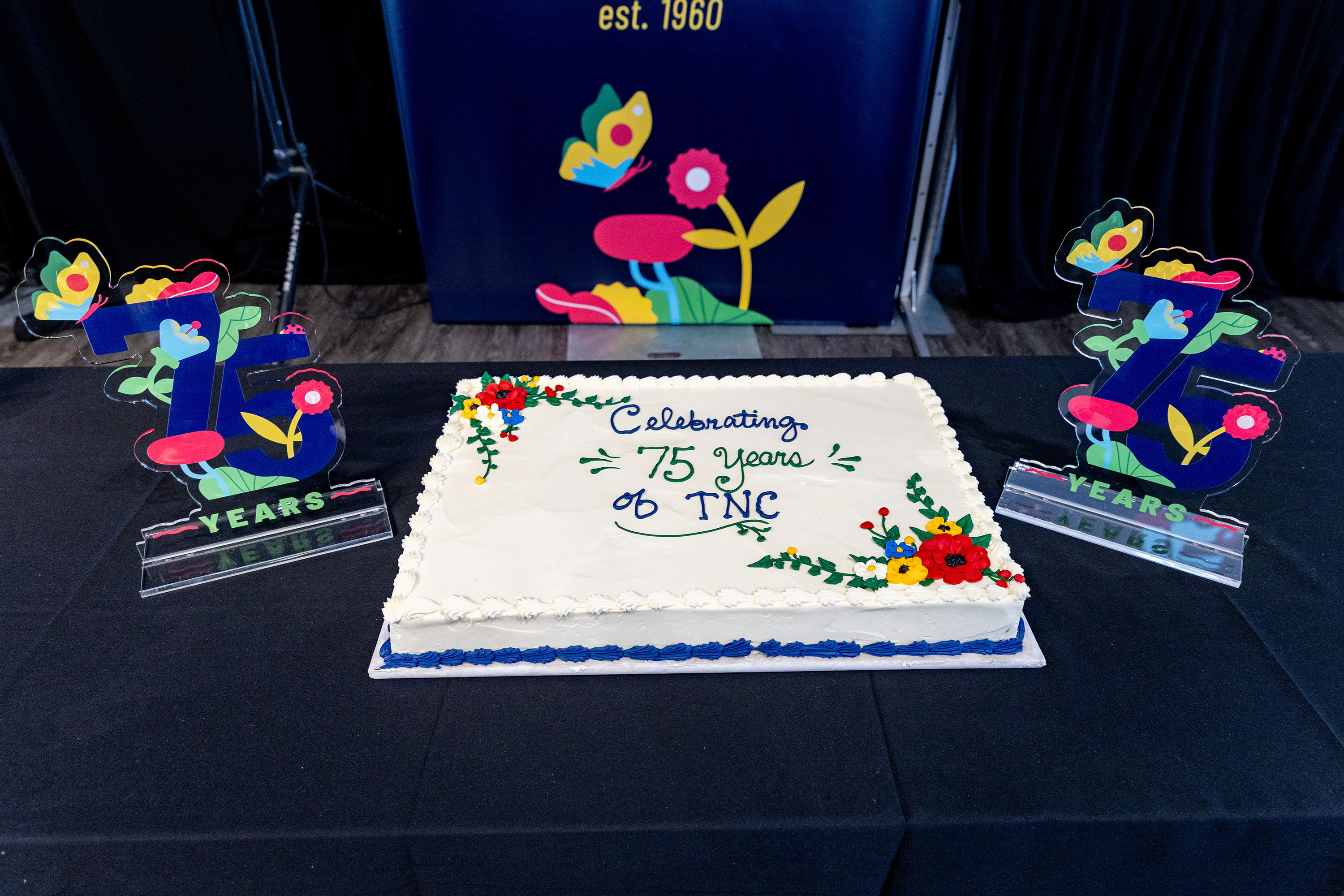
Overview & Synthesis: At dinner, we marked 75 years of The Nature Conservancy with cake and a toast to the thousands of people whose choices built this legacy. Jan Glendening, executive vice president for North America, the Caribbean and Micronesia, reflected on 75 years and shared news of a BIG gift, with more details to come soon.
Cassie Hauswald closed the evening with an image that stayed with the room: conservation is a relay race. None of us starts at the beginning of the story, and none of us will finish it.
Day 2: The Moment We Are In
Day 2 asked a harder question: what kind of organization must The Nature Conservancy become if we are serious about influencing systems change at the scale required by 2030 and beyond?
Bill Stanley framed the day around the connections among water, climate, food, energy, policy, markets, infrastructure, philanthropy, and public trust. Nichole Barger, TNC's Executive Vice President for Science, opened with the scientific and societal forces reshaping conservation, and the reasons there is still a real opportunity to change the trajectory.
Day 2
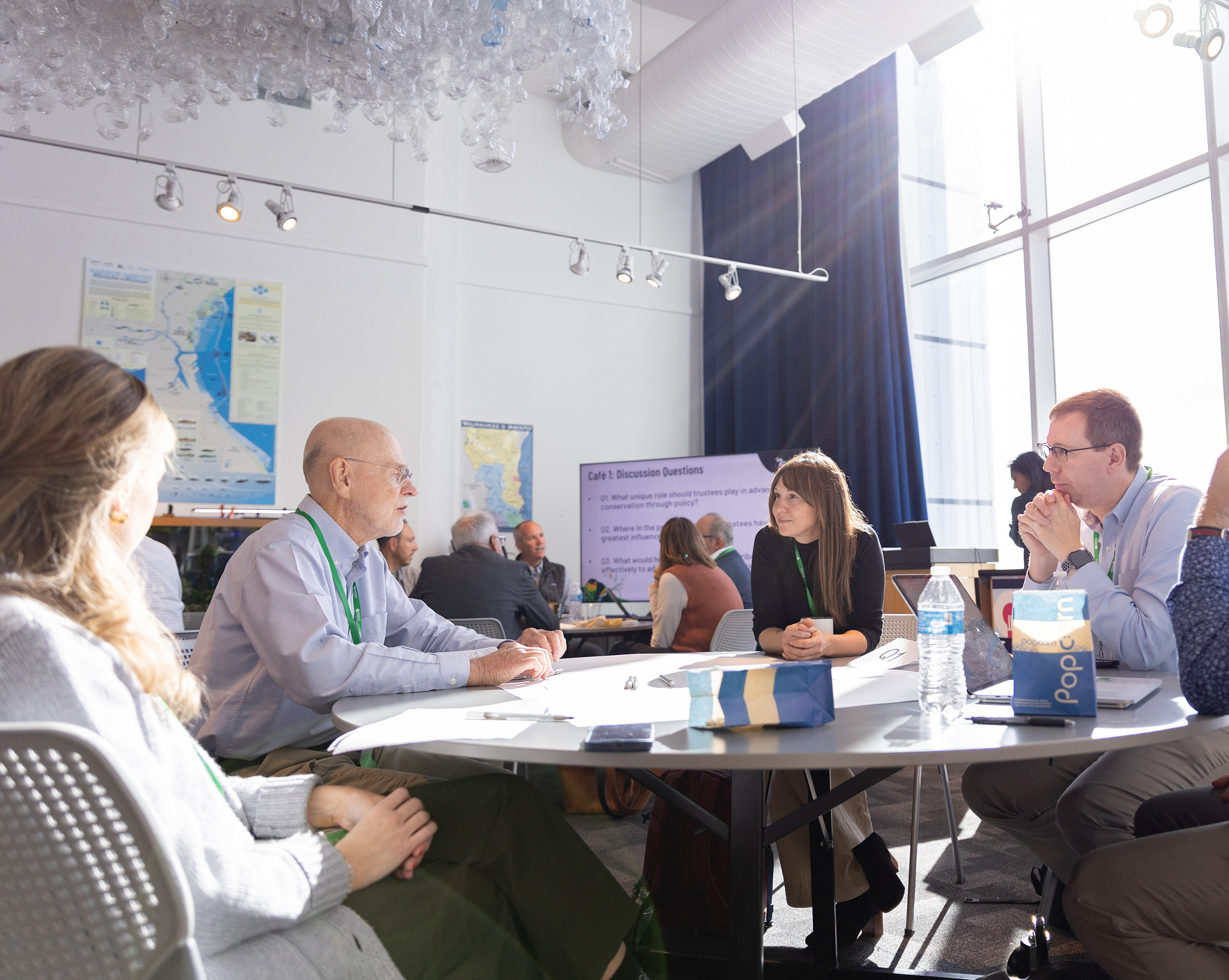
World Cafés
Three World Cafés followed, about 45 tables and two and a half hours of conversation in all:
- Café 1: Changing What Is Politically Possible, led by Ashley Maybanks, on trustee roles in policy and public funding. Ashley's presentation
- Café 2: Designing the Midwest Water, Climate and Food Future, led by Scott Sowa, on the integrated Midwest conservation portfolio. Scott's presentation
- Café 3: Midwest and Latin America Partnership, led by Patrick Doran and Fernando Leyva, after Paula Caballero, TNC's regional managing director for Latin America, presented One Conservancy Across the Americas. Paula leads more than 400 staff across nine countries and helped originate the concept that became the UN Sustainable Development Goals. Patrick and Fernando's presentation
Before the synthesis, Tonyisha Harris previewed In My Backyard, her docuseries on frontline communities leading climate solutions, bringing the day's systems back to human scale.
Matt Jackson then synthesized notes from every table in three parts: opportunities to seize or scale, obstacles to solve together and insights that surfaced in nearly every room. As Matt put it, this was TNC at its best: staff putting big ideas forward and trustees pressure-testing them.
Day 2
Trustees as Partners in the Work
Overview & Synthesis: Tables made a pointed case. Trustees can reach decision-makers, community leaders and peers who are often more receptive to a trustee than to TNC staff. With staff stretched across ambitious 2030 Goals, trustees asked to be engaged as genuine partners, bringing professional expertise and relationships where TNC lacks capacity in-house. Tables also proposed a Midwest-wide inventory of trustee relationships, so TNC can see who is connected to whom across five states and the broader organization.
Day 2
Policy Moves Through Relationships
Overview & Synthesis: This came up at nearly every table, in every room. Policy is shaped well beyond the statehouse: by local officials, agricultural and business leaders, and neighbors, and trustees already hold many of those relationships. Yet trustees were candid that policy work feels intimidating. They asked for three things: advocacy training, clarity on TNC's policy goals and desired outcomes in each state, and a clear picture of which relationships would move them. Given that direction, trustees said they can often find the path themselves.
Day 2
Telling TNC's Story With Urgency
Overview & Synthesis: Trustees challenged TNC to lead with the people and communities our work affects, not the data behind it, and to sound less polished and technical. One telling example: searches for "Great Lakes" or "Great Lakes advocacy" don't reliably surface TNC, even though the Great Lakes hold roughly 20% of the world's surface fresh water and are central to our work. Tables also argued that TNC has not shown the cost of inaction. Nichole Barger's observation that a disappearing plant may be a cure we never discover reframed conservation as a question of what humanity stands to lose.
Day 2
Agriculture, Latin America and Learning Both Ways
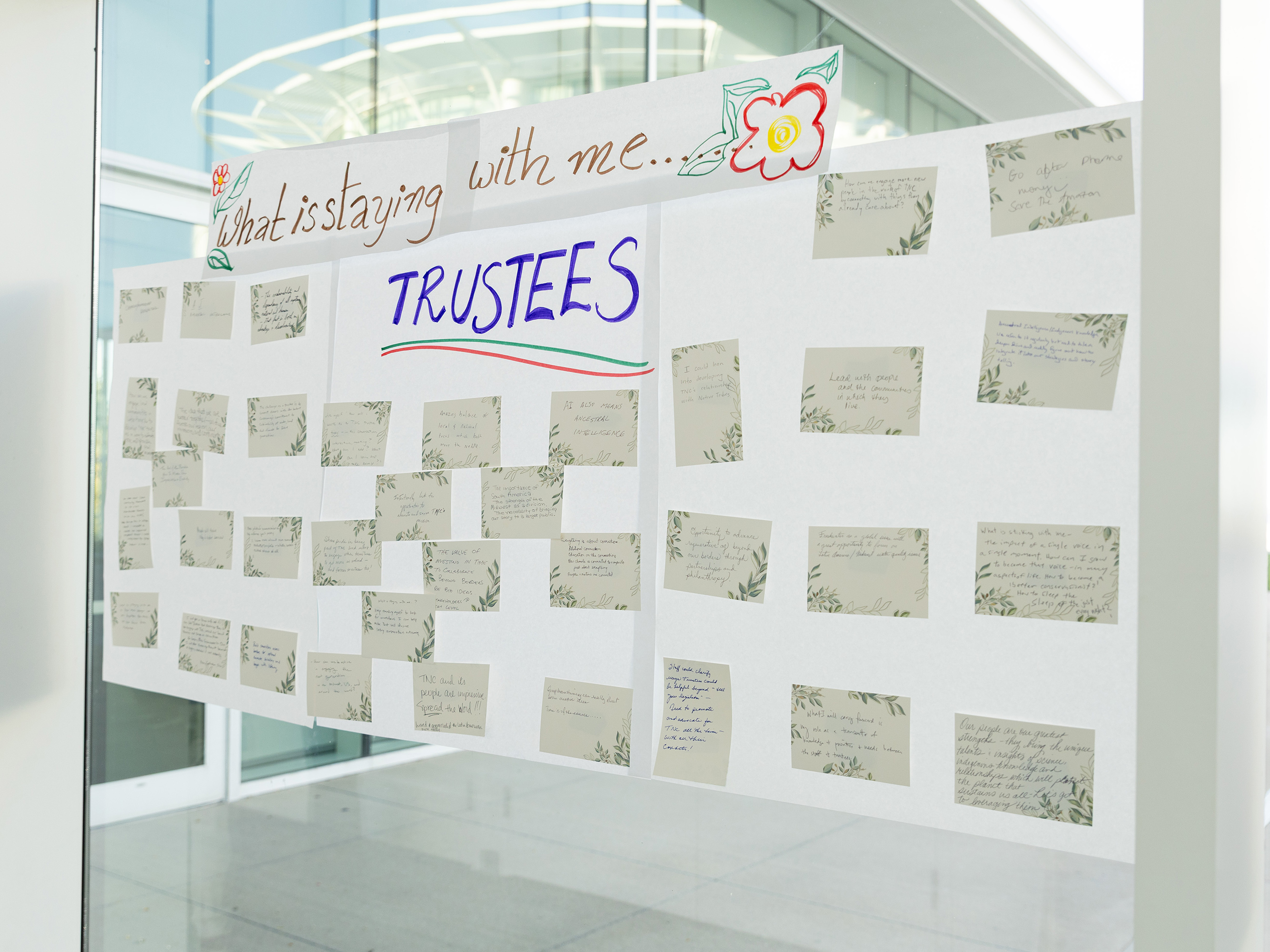
Overview & Synthesis: Agriculture emerged as perhaps the Midwest's biggest lever. All five of our states are major agricultural states, and farming shapes water quality, habitat, and our ties to Latin America. Trustees called for exchanges, not one-way trips: regular cross-state convenings, shared staff and expertise, and Midwest trustees serving on Latin American boards and vice versa. The learning runs both ways. The Latin America program's work on agriculture, water and forests offers proven approaches the Midwest can adopt without reinventing the wheel, which is the promise of One Conservancy. A phrase heard in every room, ancestral intelligence, pointed to Indigenous and community knowledge as a source of insight TNC should seek out through genuine partnership.
Day 2
The Forces Shaping What Come Next
Overview & Synthesis: Three forces surfaced again and again. Data centers were on everyone's mind. Some are being built now, with major demands on land, water and energy, and trustees asked for a unified organizational response while decisions are still being made in our communities. The next generation came up at almost every table; young people often move ahead of their parents on the issues that matter and can be powerful catalysts for change. And four to five years into One Midwest, trustees strongly endorsed working as one division and urged TNC to go further.
Next step: Bring one of these forces to your next board meeting as a discussion question. For example: what should TNC's response to data centers be in our state?
Day 2
Connecting Local Passion to Global Impact
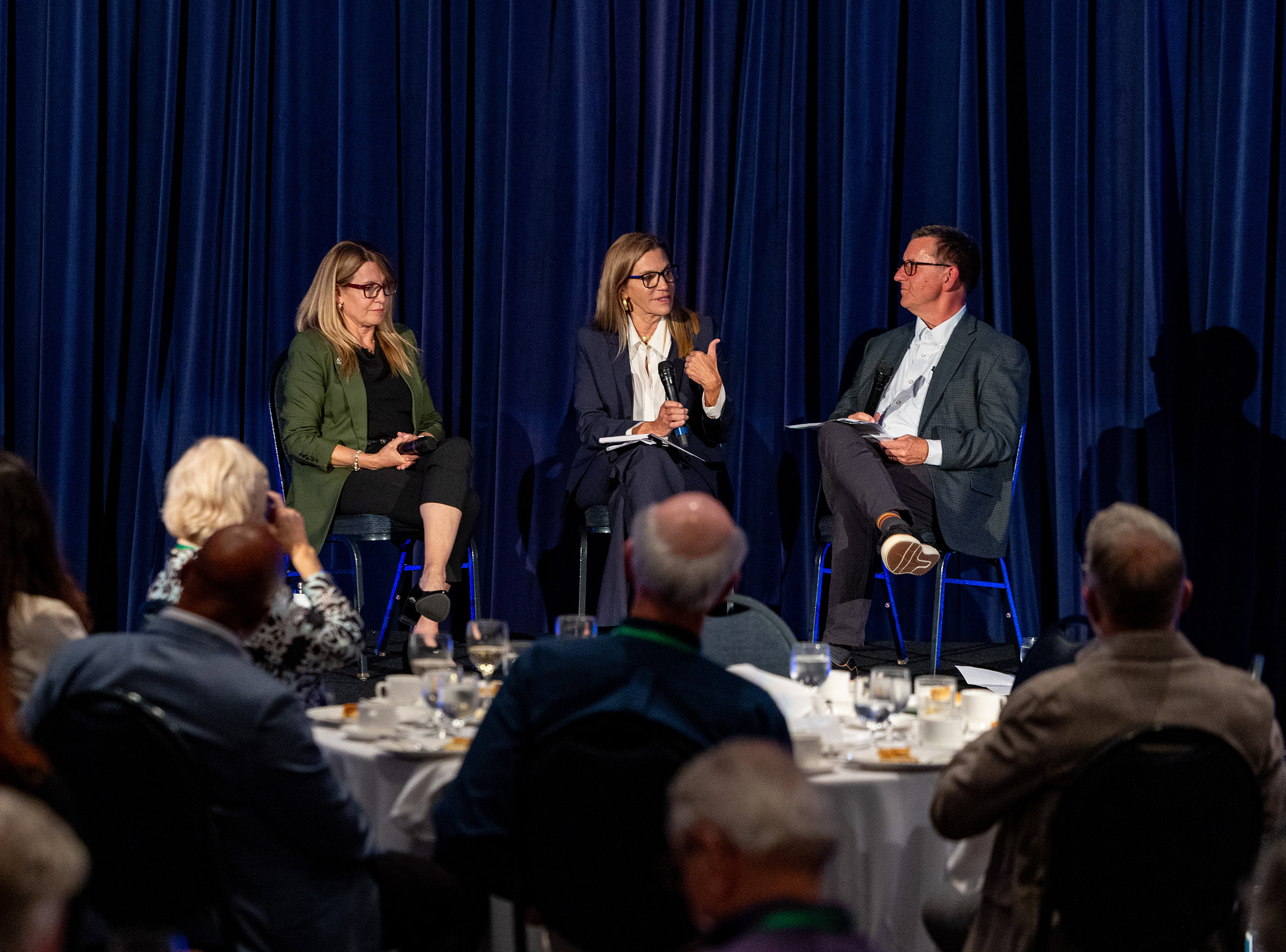
Moderated by Michael Reuter, the Summit fireside chat brought together Laura Kohler, Global Business Ambassador of Kohler Company and chair of Kohler's three philanthropic trusts, and TNC's President and CEO Jen Morris for a thoughtful conversation on conservation leadership, philanthropy and the role trustees play in advancing TNC's mission. Through questions that connected local action with global impact, the discussion explored the urgency of today's conservation challenges and the opportunities trustees have to help accelerate meaningful change.
Drawing on her family's long legacy of community service and philanthropy, Laura Kohler reflected on the responsibility of leadership and the power of personal advocacy. She encouraged trustees to use their voices, relationships and influence to help others understand both the urgency and opportunity of conservation. Laura underscored that clean water is a fundamental right and that achieving lasting progress requires broad partnership. While TNC contributes science, global expertise and on-the-ground experience, meaningful change depends on the collective efforts of trustees, donors, businesses, communities and conservation practitioners working together.
Jen Morris reinforced the idea that conservation is not a choice between local and global priorities. She highlighted the Midwest's globally significant freshwater resources, agricultural lands and biodiversity while demonstrating how these landscapes are intrinsically connected to places such as the Amazon and Orinoquía. Jen encouraged trustees to begin with the places they care about most and then follow those connections, recognizing that investments across geographies can strengthen one another through a One Conservancy approach.
The conversation also addressed the urgency of today's conservation challenges. From biodiversity loss and climate change to freshwater security and emerging pressures such as data center development, Jen emphasized the need for TNC to be both bold and disciplined. She noted that the organization's strength lies in combining scientific rigor, trusted local relationships, effective partnerships and measurable outcomes to create lasting impact while responsibly managing risk.
Throughout the conversation, both leaders emphasized that trustees are uniquely positioned to advance conservation as advisors, ambassadors, conveners and advocates. Laura and Jen encouraged trustees to leverage their networks, leadership and influence to connect people, ideas and opportunities that can accelerate progress. The discussion closed with a challenge to carry forward a sense of shared ownership for TNC's future, helping bridge the organization's deep local roots with its global reach to achieve conservation impact at the scale this moment requires.
Day 3: Carrying the Story Forward
If Day 1 looked back and Day 2 named the moment, Day 3 turned to action: the philanthropy, leadership and long-term stewardship this moment requires of trustees.
Day 3
Opening Remarks
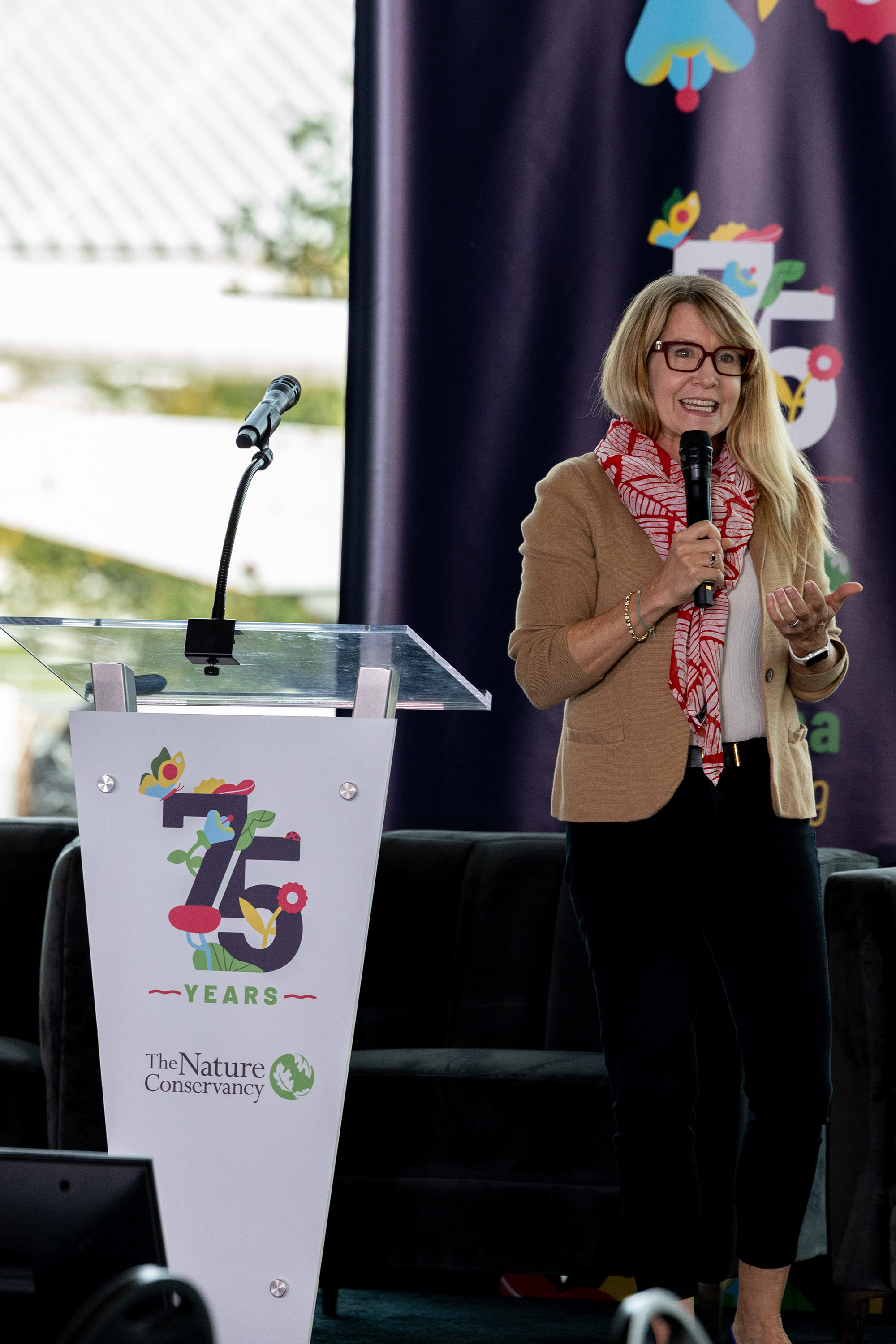
Overview & Synthesis: TNC President and CEO Jennifer Morris connected two days of content to the campaign. Her message: We are all in this together. One Future is one campaign for all of TNC, and everything rolls up to our 2030 Goals. The Midwest has a rare opportunity as five states choose to pursue one shared goal rather than five separate ones. Jen pointed to our Latin America partnership and to trustees whose thinking now reaches beyond their own state, like Wisconsin's connection to Colombia through the same birds that visit our backyards. Her charge: to succeed, we must tell this story differently, and to people who have not yet heard it.
Explore the National Nature's Dividends Report.
Day 3
The One Future Campaign: How Will You Tell Your TNC Story?
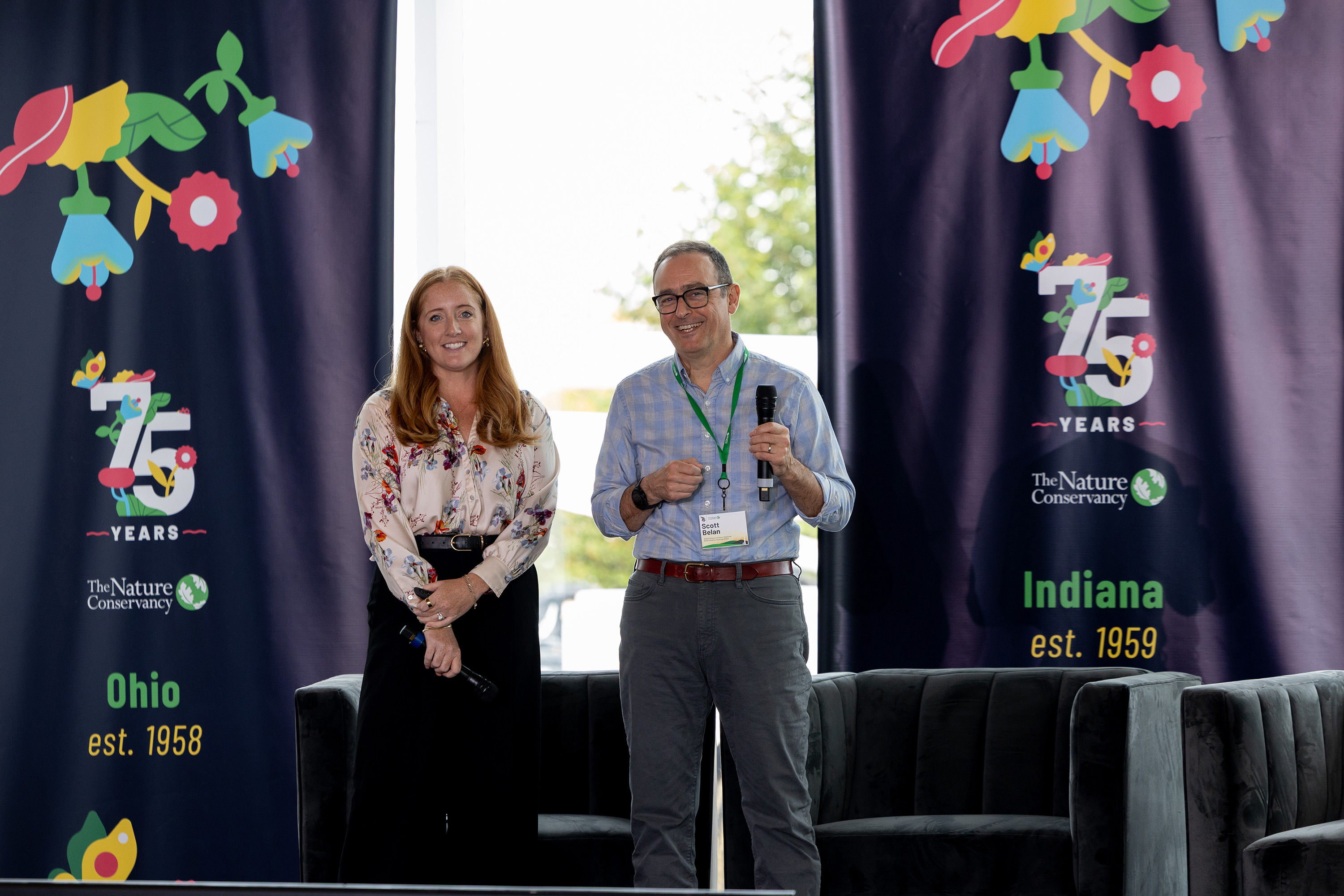
Overview & synthesis: Global Director of Donor Relations Scott Belan placed One Future in historical context. TNC's campaign goals have grown from $1 billion to $7 billion to $12 billion, made possible by a decision in 2000 to build relationship-driven, major-gift fundraising. During the Our World campaign, annual giving doubled from $400 million to $800 million a year. One Future is the most aligned and ambitious campaign in TNC's 75-year history, one campaign with one case, and it aims to grow private revenue by 50%, from about $675 million to $1 billion a year; last year TNC raised nearly $1.3 billion. Its framework is the 1-2-3: one vision, two crises, three priorities.
Bench Consultant Renee Davis brought it back home. The Midwest has raised $422 million of its $750 million goal, 56% of the way there, with much of the campaign still ahead. In more than 80% of donor interviews, people name TNC's collaborative nature as one of its greatest strengths, and the Midwest now works that way across five states. Beyond their own giving, the campaign asks every trustee to tell their TNC story, expand our audience, and invite new people in, because the people introduced to TNC this year could make transformational gifts before 2030. Trustees then practiced a 90-second story built on Why Me, Why TNC, Why Now, and Why You, and mapped the donors, connectors, and influencers in their networks.
Next step: Keep building your TNC story, choose three to five people to introduce to TNC, and schedule a one-to-one with your development partner or campaign co-chair.
Day 3
Closing: Seven Generations from Now
Overview & Synthesis: The Summit ended where it began, with responsibility across generations. In a closing circle, Michael Reuter asked a question that reaches past any campaign: what responsibilities do we carry to people seven generations from now? Trustees imagined future TNC leaders asking how we responded in this moment, and considered how today's choices will be judged by people we will never meet. Each participant then filled out a commitment card naming one commitment to carry back to their state, chapter, board or team.
Day 3
Your Next Step
The Summit asked three things of every trustee: tell your TNC story, expand our audience, and invite and engage new people. Your BU team is ready to help.
Seven generations from now, someone will ask what you did in this moment. How will you answer?
In Memory of John Taylor
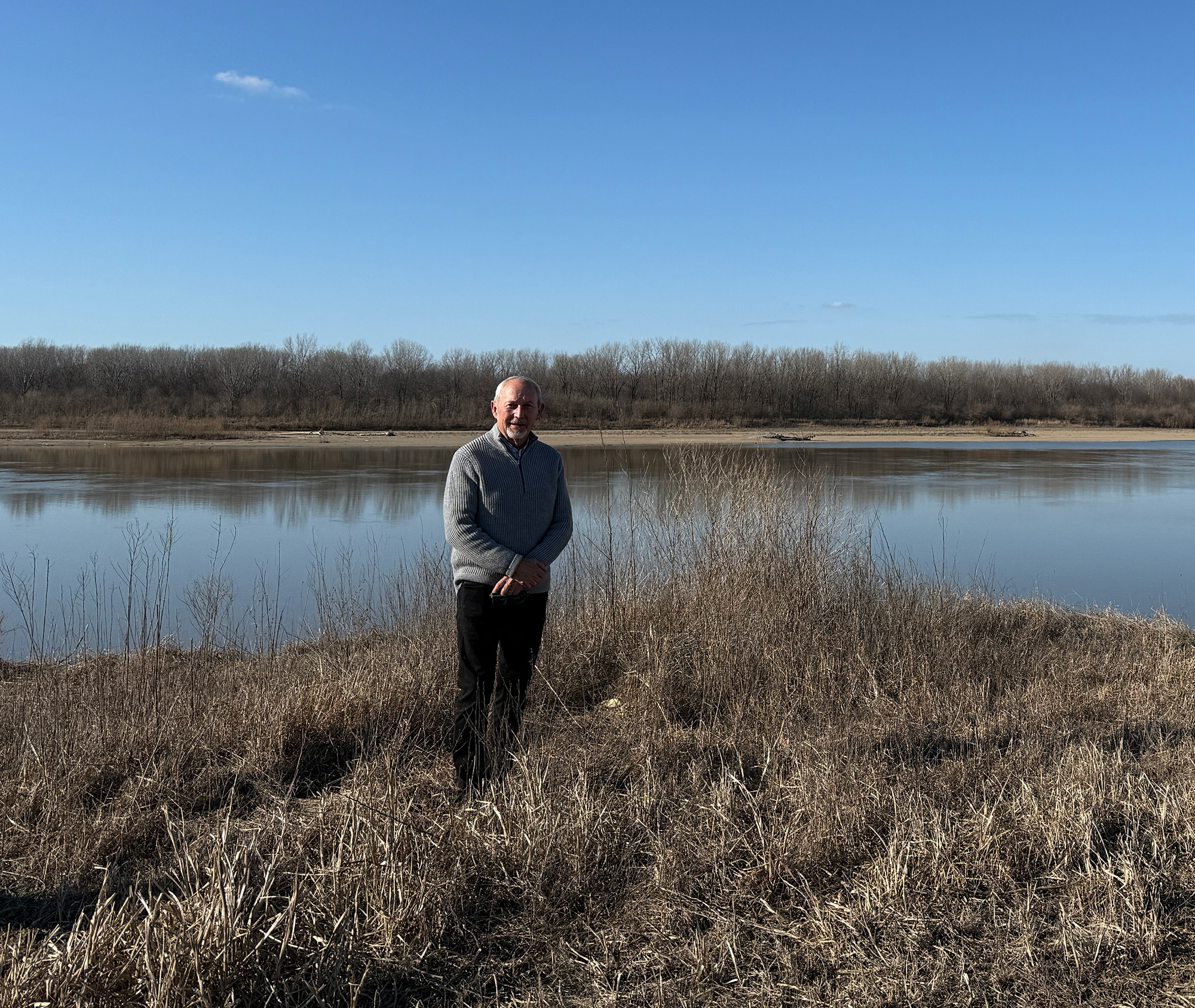
We dedicate this Summit to Indiana Trustee John Taylor, who believed in the power of learning, especially when it came to TNC. There is nothing he loved more than mentoring others and sharing his own knowledge and joy. John engaged in learning about everything—from conservation to philanthropy to inspiring others to believe in the power of nature.
We hold his family in our hearts and will carry his example forward in the stories we tell and the people we invite in.
With gratitude,
Midwest Board of Partners
More Midwest Stories

Seed to Scale in the Midwest
Small, place-based efforts through land protection, partnerships, or innovation grow over time into solutions that shape entire systems and influence work far beyond the Midwest.

The Top 10 Spookiest Species in the Midwest
Discover 10 of the spookiest species haunting the Midwest—from creepy creatures to freaky fungi—and learn how they keep Midwest habitats healthy.

Reconnecting the Wild Midwest: Wildlife Corridors in Action
Let the Midwest roam again. See how TNC reconnects forests, prairies, rivers and more, so wildlife from bobcats to butterflies can move and thrive in a changing climate.