
 Invasive Basics
 Meet a Few Species
 Preventing Invasives
 Managing Invasives
 Looking Forward
 How You Can Help


Great Lakes Fisheries
In the Great Lakes, native fisheries are the foundation of a $7 billion commercial and recreational fishing industry, as well as a living indication of the health of the entire freshwater system.

Invasive Rusty Crayfish TNC Michigan fisheries team working with members of the DNR to monitor rusty crayfish, an aquatic invasive species in the Great Lakes that eat native fish eggs. © Jason Whalen/Fauna Creative
The Great Lakes are one of the most important freshwater systems on Earth—supporting wildlife, drinking water, recreation and billions of dollars in economic activity. But they are also the world's most heavily invaded freshwater ecosystem, making prevention and early action critical to protecting these waters.
The good news: science‑based solutions, such as strong prevention policies, early detection tools, and long-term management, are working. Scroll on to discover how invasive species spread, what’s being done to stop them—and how you can help.

Before we take a deeper dive into invasive aquatic species in the Great Lakes, let's run through what, exactly, an invasive species is and how many there are within the region.
A non-native species is a plant or animal that's found outside of its natural range. Most non-native species do not cause many problems (if any) in the new ecosystem.
An example of a non-native species in the Midwest is the common dandelion (Taraxacum officinale). Native to Europe, the common dandelion was introduced to North America and is not a significant threat to native ecosystems in most regions. In fact, in the Midwest, dandelions are an important food source for native bees and other insects.
An invasive species is a non-native plant, animal or other organism that disrupts an ecosystem, causing harm to the environment, the economy, and/or the health of people or animals.
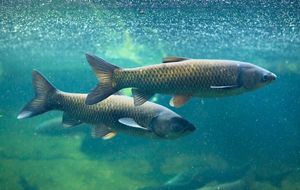
Native to Asia, grass carp (Ctenopharyngodon idella) is an invasive species in the Great Lakes region. This species was imported to North America to control vegetation in aquaculture, but escaped into native waters. Once in rivers and lakes, grass carp eat most (if not all) the aquatic plants, reducing food sources and shelter for native species.
There are around 180 non-native species established in the Great Lakes. About 34% of these (~64) are considered invasive and harmful to ecosystems in and around the lakes.

 Return
Most invasive species arrive through human activities, such as shipping, canals, accidental or intentional releases or recreational activities. Click each photo below for an example of how this happens!
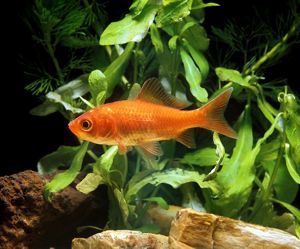
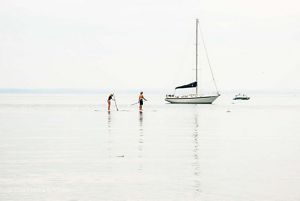
Using Canals & Locks: Some invasive species reach the Great Lakes by simply swimming through open shipping passages built between the Atlantic Ocean and the Great Lakes. © T. Lawrence, Great Lakes Fishery Commission
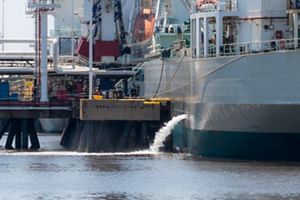
Ballast Water: Many invasive species hitch a ride in ships when they fill their ballast tanks with ocean water., which then gets emptied into the Great Lakes when the ships arrive. © Doug McLean/Shutterstock
Escapees: Purchased for fishing bait, aquariums, water gardens or other ponds, some invasive species escape or are released into the Great Lakes and their surrounding waters. © slowmotiongli/Shutterstock.
Unwanted Guests: Invasive species can also enter the Great Lakes through recreational activities, hitching a ride from one body of water to another on boats, kayaks, waders, jet skis and more. © Lisa Erickson/TNC Photo Contest 2022
Dive into local and global monthly stories on nature and conservation wins. Stay in the Loop

Biodiversity is the web of life that keeps ecosystems healthy—from fish and birds to plants and microorganisms. In the Great Lakes, invasive species weaken that web by crowding out native species that have evolved to work together over thousands of years. When those connections break, entire ecosystems become less resilient, affecting fisheries, wildlife and people alike.
Invasive species tend to be aggressive, reproduce quickly and have few, if any, natural predators. As a result, they can rapidly outcompete native fish, plants and wildlife for food and habitat.

For instance, the spread of invasive fish contributed to the decline of lake whitefish, lake trout and other fish populations important to both recreational and commercial fishing.
Shorelines aren't spared from the impact of invasive species, either. Along the lakes' shores and waterways, invasive plants, such as Eurasian watermilfoil, block panoramic lake views, crowd out native plants that birds and other wildlife depend upon and get entwined in boat motors.
Click each species to flip the photo and learn how these invaders spread, why they’re harmful and what’s being done to manage them.

Typically three to six inches in length, round gobies are small fish—but they are aggressive and prolific breeders.
Where are they from? The round goby is native to Eurasia, specifically the Black and Caspian Seas. They were first spotted in the Great Lakes in the early 1990s and are believed to have gotten here by riding in the ballast waters of ocean ships.
Ecological and economic impact: Round gobies have caused declines in native fish populations and negatively impacted the fishing industry. They aggressively compete with native fish for food, and they also eat the eggs and fry of native fish and many of the bugs and critters that native fish rely on for food. In addition, anglers complain that gobies steal bait off their lines.
As with many invasive species, the impact of round gobies is not always clear cut. On the positive side, round gobies eat invasive zebra and quagga mussels and are now an important food source for some Great Lakes fishes, native water snakes and water birds. However, round goby can pick up botulism from the mussels, passing this disease to birds and causing mass mortality events.
Outlook: Efforts are now focused on limiting further spread of round gobies into the inland rivers and streams in the Great Lakes basin. Scientists are also trying to identify how and whether to suppress round goby numbers on some critical habitats, such as native fish spawning reefs.

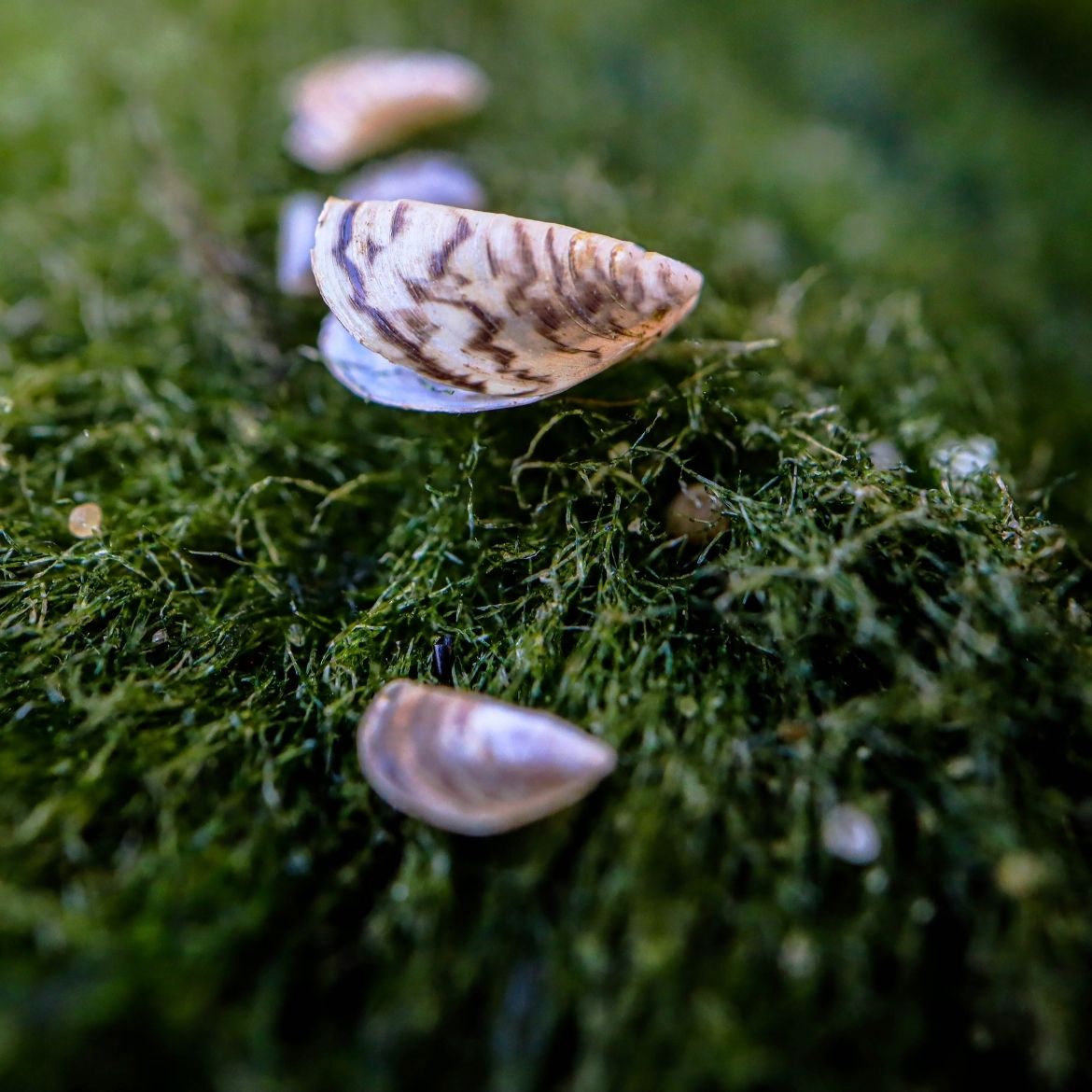
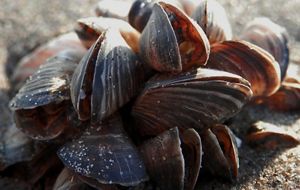
Where are they from? Native to Eastern Europe, zebra and quagga mussels got into the Great Lakes via ocean ships. These fingernail-sized creatures likely rode in the ballast waters of ocean ships and were then released into the lakes.
Ecological and economic impact: Quagga and zebra mussels consume massive amounts of phytoplankton and zooplankton, which are tiny plants and animals that many fish and larger zooplankton rely on for food. The mussels have dramatically disrupted the entire food web in the Great Lakes basin, reducing the movement of nutrients into offshore open waters. The mussels have also altered native habitats, smothering the habitats in clumps of live mussels or dead shells.
Importantly, by outcompeting larval fish for an increasingly limited zooplankton resource, the mussels have contributed to declines in some of the region’s important fisheries. They have also contributed to the loss of many species of native pearl mussels, which were an important part of the basin’s native communities but are now only a distant memory for older generations.
On the positive side, the mussels have been credited with cleaning up the waters of some Great Lakes. However, invasive mussels also contribute to toxic, foul-smelling, blue-green algae blooms in Lake Erie. The invasive mussels preferentially filter out the healthy algae in water and leave behind the harmful blue-green algae. In addition, the mussels’ excrement (pseudo-feces) can provide a flush of nutrients that can promote blooms.
The mussels also wreak havoc on industrial and city water (municipal) users by attaching themselves to the insides of pipes and water collection structures, resulting in expensive cleanup operations.
Outlook: Quagga and zebra mussels are widespread across the Great Lakes basin and the United States. Nationally, prevention efforts are trying to keep the mussels out of the few uninvaded major river systems, especially in the western United States. Scientists are trying to identify how to best suppress invasive mussels in the Great Lakes and elsewhere. Visit the Invasive Mussel Collaborative for more information.

Where is it from? Invasive common reed is from Europe and was likely introduced in the eastern United States via ballast waters on ocean ships in the 1800s. The nonnative plant spread into the Great Lakes basin and across most of the country.
Ecological and economic impact: There is both a native and an invasive common reed. The two plants look alike, but the invasive species is darker in color and grows in denser stands than the native species, and today is far more common. Because of its jam-packed growing patterns, invasive common reed tends to crowd out other plants. The reed also has deep roots and releases a chemical into the soil, which further prevents other plants from growing. Phragmites have taken over shorelines and nearby wetlands, decreasing wildlife diversity and reducing recreational opportunities for birders and anglers.
Outlook: There are a number of control methods that can be used to suppress invasive common reed, including prescribed fire and herbicides and some promising new tools in development that offer more selective and effective management. Visit the Great Lakes Phragmites Collaborative for more information.

Where are they from? Native to the Ohio River Basin, rusty crayfish were likely transported to the Great Lakes by fishers who use this animal as bait.
Ecological and economic impact: Rusty crayfish tend to outcompete native crayfish for habitat and food. They are omnivores and eat a lot of invertebrates, fish eggs and aquatic plants, even to the extent that submerged plant habitats or algal forests are lost.
Outlook: Scientists are evaluating various control methods, including trapping rusty crayfish, to see if short-term suppression can benefit native fish spawning. New methods are being tested to respond to the recent spread of another crayfish species (red swamp crayfish), which might have potential in the management of rusty crayfish.
The U.S. Fish and Wildlife Service and state and provincial resource management agencies encourage anglers to dispose of unwanted bait in the trash and not release them into lakes and other waterways.
The Great Lakes are the most heavily invaded freshwater system in the world—but there is hope thanks to collaboration and science-forward work.

nonnative species are established in the Great Lakes.

species are considered invasive due to harm to ecosystems, economies or human health.

reduction in the introduction rate of new invasive species since 2006, thanks to region-wide collaborations.
Addressing invasive species requires acting at every stage—before they arrive, as soon as they appear and where they’re already established. Scroll on to find out how these challenges are being met in the Great Lakes.

Decades of collaboration are paying off in the Great Lakes. Federal, state, provincial and Tribal agencies—working alongside nonprofits like The Nature Conservancy—are using science-based solutions to stop new invasive species and reduce the impacts of those already here.
As a result, the number of new invasive species entering the Great Lakes has dropped dramatically. Today’s efforts focus on three critical actions:


Preventing invasive species from entering the Great Lakes is the most effective—and cost-efficient—line of defense. Evidence shows it’s working: the discovery rate of newly established nonnative species declined by 85% between 2006 and 2026.
One of the biggest successes has been ballast water regulation. Ships take on ballast water for stability, but that water can carry invasive organisms across oceans. In the mid‑2000s, Canada and the United States adopted new regulations requiring ships entering the Great Lakes to flush ballast tanks with saltwater and use treatment systems that kill freshwater species before discharge.
The Nature Conservancy helped support the passage and defense of these regulations, which are now enforced through comprehensive inspections. Today, 100% of incoming ships are subject to saline testing, dramatically reducing this major pathway for the introduction of aquatic invasive species.
There are lots of ways invasive species can enter the Great Lakes. TNC and its partners are working to identify where prevention efforts can have the greatest impact and to close the gaps that invasive species use to gain entry. Click each photo to learn more!

Non-native fish, animals and plants that are sold in pet stores, aquariums and bait shops have the potential to become invasive species if accidentally or deliberately released into the Great Lakes.
For example, a pet store may sell a non-native plant that looks beautiful in a home aquarium. But when water from that home aquarium is emptied into a local river or stream, it carries the plant along, increasing the risk that this species could take root and become invasive in the Great Lakes.
To prevent scenarios like this, TNC and partners have developed science-based risk assessment tools to identify nonnative organisms that are likely to become invasive if released. The tools are intended to help state, provincial and federal lawmakers determine when it is appropriate to prohibit the sale of a particular organism because it would likely harm native ecosystems.
Historically, there has been significant variation in the species each state or province prohibits for sale. Without rules to prevent interstate transport and sale, the regulations of individual jurisdictions were only as strong as their weakest neighbors. TNC and partners are working with the Great Lakes Aquatic Nuisance Species Panel to develop lists of invasive species that have the greatest potential to arrive, spread and cause harm in the Great Lakes.
As a result of these efforts, the National Oceanic and Atmospheric Administration (NOAA) Great Lakes Environmental Research Laboratory has developed a risk-assessment clearinghouse to make this data available. Armed with this science-backed information, management agencies and legislators are working together to consistently manage the trade of these organisms across shared waters.
As a result, the number of species regulated by at least half of the Great Lakes states and provinces increased from 10 to 44 between 2008 and 2020. (Blue Accounting provides more information on this work.)

Recreational boating is an important part of life on the Great Lakes. Unfortunately, invasive species can spread through our region by hitchhiking on boats and other recreational watercraft, as well as on equipment such as fishing gear or waders.
As boaters travel and move their vehicles between different bodies of water, invasive mussels, plants and other organisms can cling to the craft’s hull, anchor, motor props, bilge and even the trailer itself.
Large boats aren’t the only vehicles of transportation. Invasive species can also be introduced into new habitats on jet skis, wave runners and non-motorized crafts such as canoes and kayaks.
While some invasive species may be large enough to see and remove by hand, other invasive microorganisms that travel on watercraft may be invisible to the naked eye or hide in places that can only be observed by deliberate inspection.
This is why TNC actively promotes the Stop Aquatic Hitchhikers campaign, which encourages people to follow a three-step process before moving boats and other watercraft from the water: Clean, Drain, and Dry.
In addition, Natural Resource Management Agencies across the basin encourage anglers to dispose of unwanted bait, worms and fish parts in the trash. When keeping live bait, drain the bait container and replace it with spring or dechlorinated tap water. Never dump live fish or other organisms from one water body into another.
Some agencies have also adopted regulatory-based inspection and decontamination policies for recreational watercraft, and all have ongoing outreach and education programs, as described by Blue Accounting.
Across the basin, regulatory programs vary in the specific activities they regulate (e.g., possession and transport of plants and animals, draining bilge and livewell water) as well as the agency authorities (e.g., mandatory inspection) and associated penalties.

To aid travel and commerce, people built locks and canals to connect the Great Lakes with other river basins, such as the Mississippi, Ohio and Hudson/Mohawk rivers or to allow ships to bypass natural barriers like the Niagara Falls.
Historically, these natural barriers prevented the movement of species between these waterways. Unfortunately, while they facilitate the transport of goods and recreational vessels, these canals provide artificial connections that have enabled the movement of many aquatic invasive species into and out of the Great Lakes. In fact. They're one of the reasons why the Great Lakes basin has been referred to as a beachhead for the invasion of North America.
The Great Lakes region has a long history of using barriers to help manage invasive species. For example, dams are a cornerstone of the sea lamprey control program, and a set of electric barriers are maintained in the Chicago Area Waterway System to prevent invasive carp from entering the Great Lakes.
There is renewed interest in developing smarter barrier methods that can prevent the movement of aquatic invasive species through canal systems or waterways while still allowing for commerce and the movement of native species. For instance, the U.S. Army Corps of Engineers is fortifying the Brandon Lock and Dam on the Des Plaines River, south of the electrical barriers in Chicago, to block invasive carp from getting into Lake Michigan.
A new locking mechanism is being added that will create a strong current to flush any fish downstream before a boat can enter the canal. Research is also underway to test a variety of other deterrents, including sound waves, electricity and bubbles. The goal is to stop invasive carp without harming the migration of important native fishes.
TNC has been working to raise awareness of the need for additional solutions to curb the spread of invasive species in canals. For example, we have historically worked with our partners and federal and state agencies to track the spread of invasive carp through the Chicago Area Waterway System.
In addition, TNC participated in a New York State task force that recommended barriers as the most effective way to address the longstanding problem of invasive species movement in the Erie Canal, which has often been referred to as a “superhighway” for invasive species.
More recently, we have been conducting research at our preserves on new methods that could eventually be used on the Great Lakes. For instance, at Emiquon Preserve in Illinois, TNC installed a state-of-the-art water-control device that allows conservation staff to manage the flow of water into and out of the preserve.
Scientists have used the structure to test various methods for deterring invasive carp. Currently, a project is evaluating a fish identification and sorting apparatus driven by artificial intelligence that could eventually be used to recognize any invasive carp trying to get into the preserve via the waterway and automatically route those carp into a storage container while allowing passage of native fish species.
While a lot of progress has been made in preventing invasive species from entering the Great Lakes, some species will inevitably slip through safeguards. Finding these species quickly, while populations are still small and localized, gives managers the best chance to eliminate or contain them before they spread.
Across the Great Lakes region, the U.S. Fish and Wildlife Service and its state partners are leading early detection efforts through a world-leading, regional surveillance program that involves rigorous annual monitoring of multiple high-risk sites across the basin. TNC assists with this effort by developing regional planning tools and innovative detection methods, and by co-facilitating an annual interagency regional planning meeting.


Spanning more than 295,000 square miles, the Great Lakes basin is big, and it's just not possible to monitor every shoreline and tributary for invasive species. Instead, early detection efforts focus on where invasive species are most likely to arrive.
Working with federal and state agencies and other nonprofit partners, TNC is helping to identify high-risk locations by mapping major invasive pathways (such as shipping routes, canals and recreational boating) and then layering those risks across the basin.
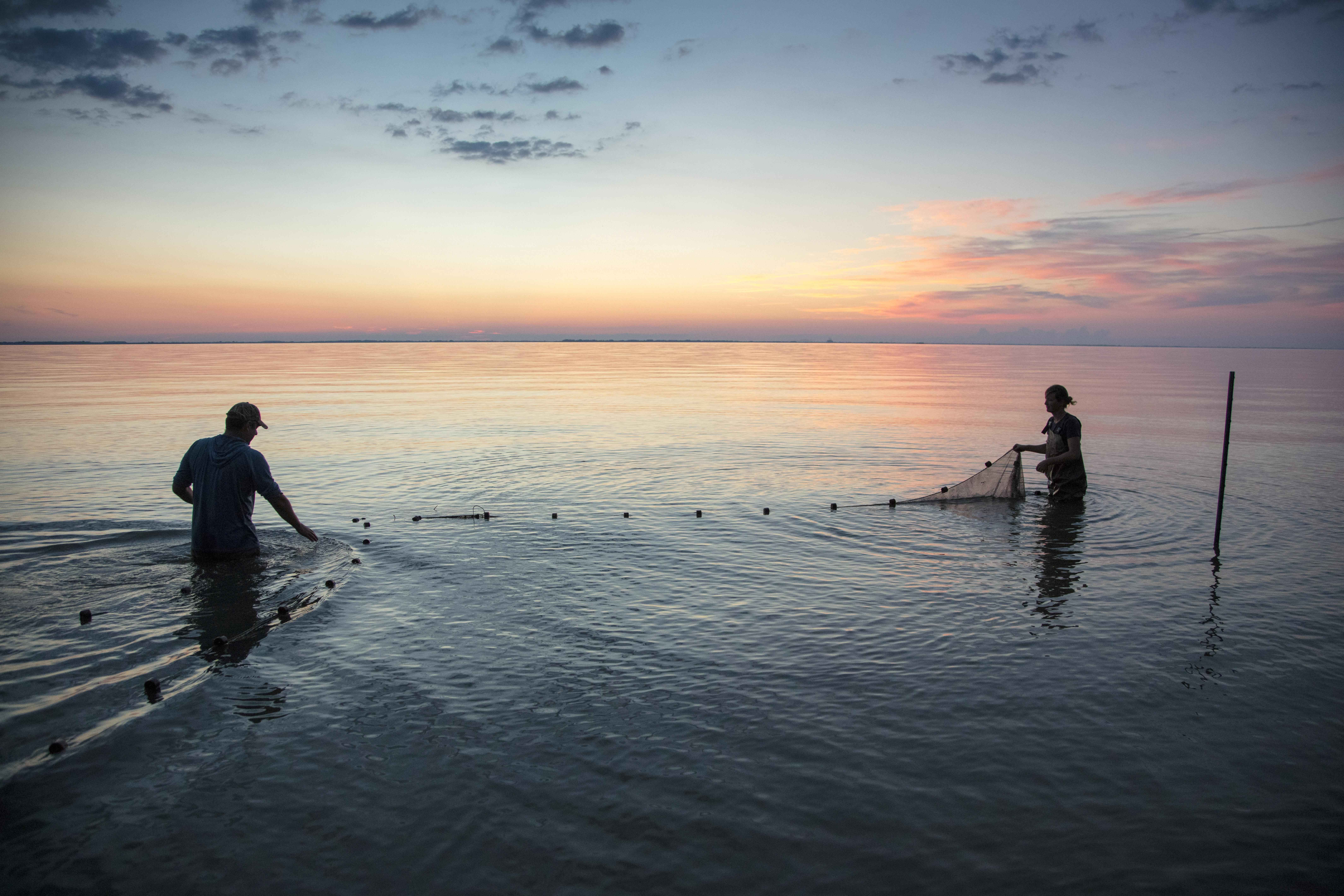
Many of the highest-risk sites are concentrated in western Lake Erie, southern Lake Michigan and the St. Clair-Detroit River System. By concentrating monitoring efforts in these areas, agencies can detect potential new invasive species more quickly and cost-effectively.
TNC and partners continue refining these tools, expanding them to inland waters and the Canadian side of the Great Lakes. The result is smarter monitoring that focuses effort where it can have the biggest impact.
Detecting the Invisible
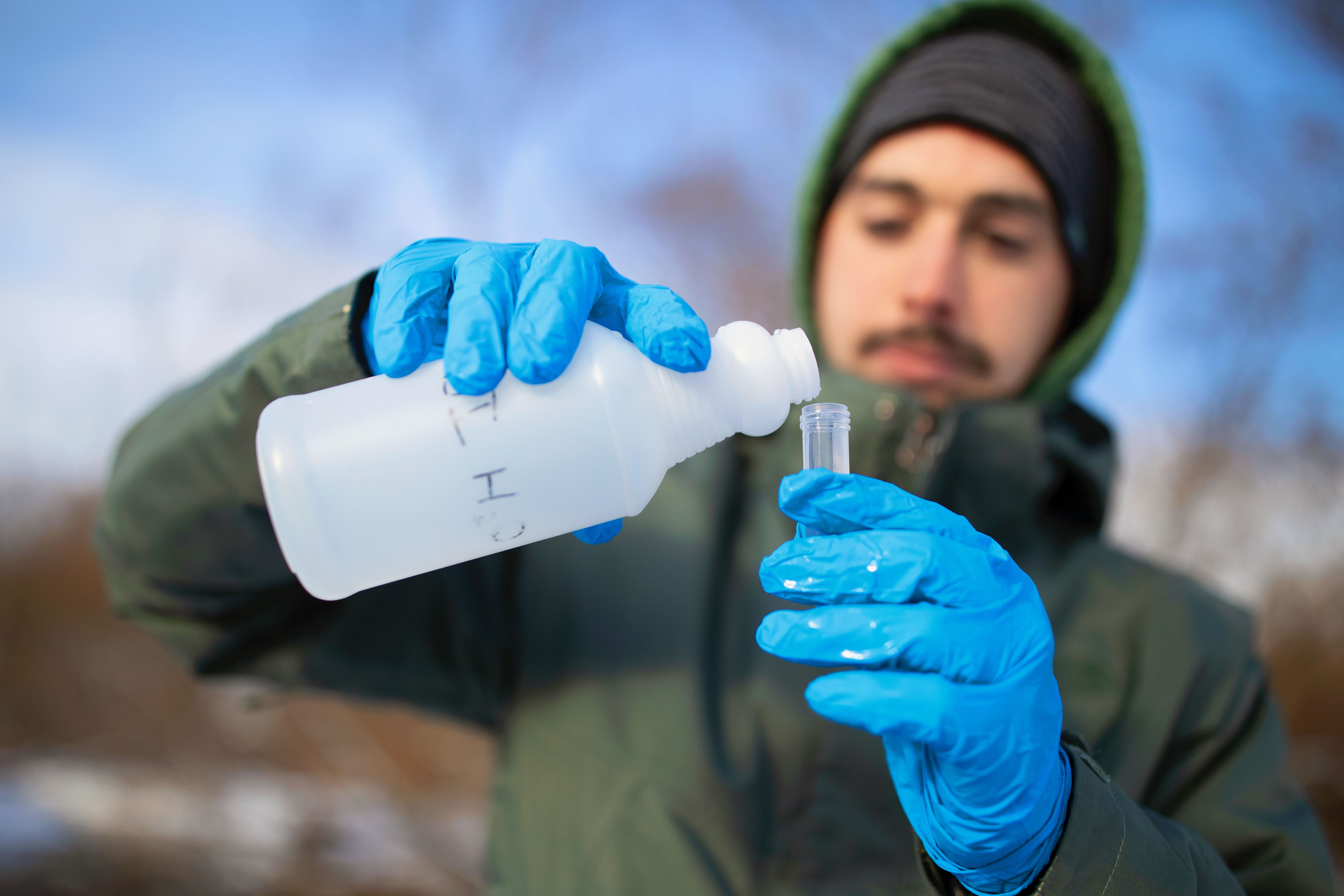
Sometimes the earliest signs of an invasion are invisible. Environmental DNA (eDNA) enables scientists to detect invasive species by collecting tiny traces of genetic material left behind by plants and animals in water.
Acting like an early‑warning system, eDNA can help managers identify invasive species long before they're spotted or captured, when their populations are still small and easier to manage. eDNA can also reveal an entire aquatic community from a single water sample, making it a powerful and cost‑effective surveillance tool.
TNC played a key role in testing and advancing eDNA in the Great Lakes. Between 2009 and 2010, in partnership with the University of Notre Dame, TNC scientists analyzed more than 1,000 water samples from Chicago-area waterways for traces of invasive silver and bighead carp. This research showed that these two carp species were approaching Lake Michigan, prompting stronger barrier protections in nearby canals from federal and state agencies.
Today, eDNA is widely used across the region as part of coordinated invasive species monitoring programs, helping agencies respond faster and with greater precision.


When invasive species become established in the Great Lakes, prevention is no longer enough. The next critical strategy is control—reducing populations, limiting damage and, in possible, eliminating species from specific locations.
Managing established invasive species is complex, long‑term work. But past success shows it can deliver lasting ecological and economic benefits.
Proven Success
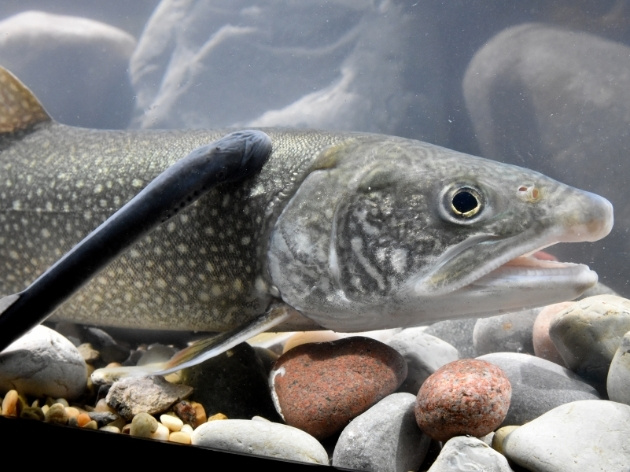
The long‑term suppression of sea lampreys (Petromyzon marinus) is one of the most successful invasive species management efforts in the world—and a powerful model for what’s possible in the Great Lakes.
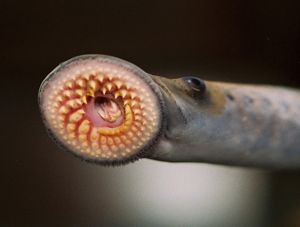
Native to the Atlantic Ocean, sea lampreys are eel‑shaped parasites that attach to and then feed on large fish such as lake trout. Their introduction and rapid spread across the Great Lakes devastated native species, contributing directly to the collapse of regional fisheries in the mid‑20th century.
Today, sea lamprey populations in the Great Lakes have been reduced by about 90%, thanks to a coordinated U.S.-Canadian program overseen by the Great Lakes Fishery Commission.
The integrated management program uses four suppression methods that were tested and proven to work in controlling sea lamprey:
Lampricides, which are pesticides that kill sea lamprey larvae but do not harm most other organisms when deployed appropriately
Traps to catch sea lampreys as they migrate to and from the streams where they spawn
Barriers to block sea lamprey migration to spawning areas and prevent adult lamprey from accessing spawning habitats
Pheromones and alarm cues, which take advantage of the natural odors that sea lampreys produce to lure migrating adults into traps or repel them from spawning habitats
Building on the success of the science‑based sea lamprey program and the Great Lakes Phragmites Collaborative, TNC and its partners are expanding efforts to address other long‑established invasive species across the Great Lakes.
A critical first step is deciding which species to tackle first. Working with the Great Lakes Panel on Aquatic Nuisance Species, TNC and regional partners are developing an objective, science‑driven process to identify the most high‑impact invasive species to prioritize for control, research and funding.
Finding new tools and methods to control each invasive species effectively—without unintentionally harming native species—is crucial. Many existing tools are not species‑specific, which limits their use to small or highly controlled sites. In contrast, successful control programs, like sea lamprey management, target species-specific weaknesses rooted in biology or behavior.
Lessons Learned
Every species, whether native or invasive, has its own biology and behavior. Understanding how a species feeds, reproduces, or moves allows managers to design targeted control methods that avoid or reduce harm to native plants and animals and are more effective over the long term.
For example, TNC is a member of the Invasive Mussel Collaborative, which is advancing research on control options for quagga and zebra mussels. These efforts build on early trials of a species‑selective mussel toxin from a naturally occurring soil bacteria. Research like this offers exciting potential pathways to suppress invasive mussels while minimizing impacts on native species.
For instance, to prevent invasive grass carp from entering Lake Erie, the Ohio Department of Natural Resources is targeting them during their spawning events, which appear to depend on a few large rivers and summer flood events. By focusing control efforts during these migrations, the ODNR can more effectively find and target grass carp while minimizing effects on native species.
To support strategic efforts like these, TNC is working with research and management partners to develop potential suppression tools for high‑priority invasive species. Bringing together scientists and invasive species managers to evaluate species biology, available techniques and emerging innovations will help pinpoint the most promising solutions for each species for the Great Lakes and beyond.
There are several invasive species considered highly harmful—or potentially harmful—within the Great Lakes ecosystem. Click each photo for a closer look at few examples.
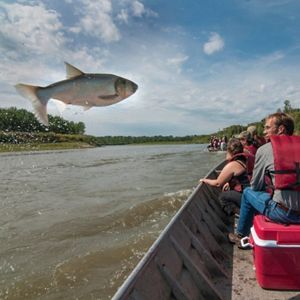
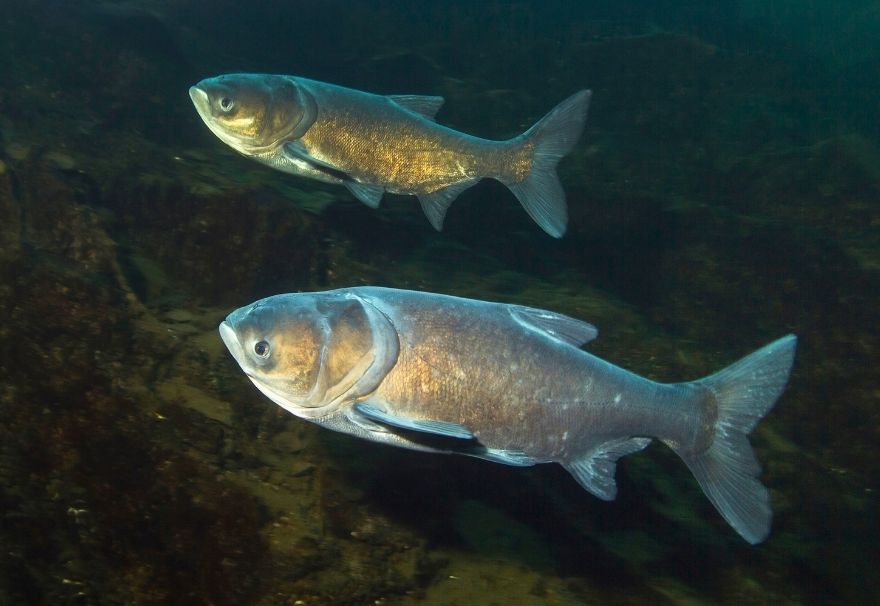
Silver Carp: In addition to outcompeting native species for food, silver carp are large fish and known to jump high out of the water if startled, endangering people on watercraft. © Chris Helzer
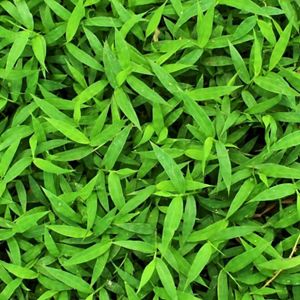
Japanese Stiltgrass: Growing rapidly in dense mats, Japanese stiltgrass overtakes native plants, reducing food and habitat for native insects, birds and other wildlife in the Great Lakes. © Hendri/Adobe Stock
Quagga Mussels: These small but mighty mollusks consume food resources needed by native mussels while forming dense colonies that attach to rocks, water systems, docks, boats and more. © Ryan Hodnett/CC BY-SA 4.0/Wikimedia Commons
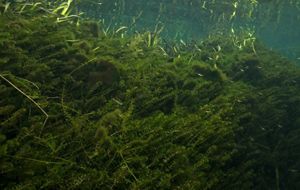
Hydrilla: Originally brought to the U.S. from Asia for aquariums, hydrilla escaped into waterways and now forms thick, tangled mats that block sun, deplete oxygen and clog waterways. © Ryan Hagerty/USFWS
Grass Carp: Voracious eaters, grass carp devastate native aquatic ecosystems by eating large amounts of native plants, reducing food and shelter for native species. © wrangel/Getty Images
While the work ahead is long and challenging, it's also a reason for hope and optimism. Working together, across agencies, organizations, states and boundaries, we've already shown we can make a difference.

The future of the Great Lakes may be challenging, but it's building on a foundation of progress, partnership and possibility.
Over the past two decades, collaboration across federal, state, provincial and Tribal agencies—alongside organizations such as The Nature Conservancy—has transformed how the region responds to aquatic invasive species. Together, these partnerships have delivered real results:
These successes show what’s possible when people, science and policy come together. But the work is far from over.
With continued investment, innovation and collaboration, we can build on this momentum—protecting native wildlife, supporting fisheries and recreation, and ensuring the Great Lakes remain a vital resource for generations to come.
You can help stop invasive species and help protect the Great Lakes today. Click below for quick ways to get involved wherever you are.
Explore simple, practical steps you can take right now in your yard or neighborhood.
Get monthly stories on conservation, nature and more right in your inbox.
Get involved with TNC projects in your area to make a hands-on impact on nature.
Join us to protect native species and restore vital habitats in your community, the Midwest and around the world.
From wildlife corridors to weird wetland wildlife, there is a lot to discover in the Great Lakes and the Midwest.


