

Partnering with Indigenous Peoples and Local Communities
American Buffalo Return Home to Tribal Lands
Restoration is about more than land.
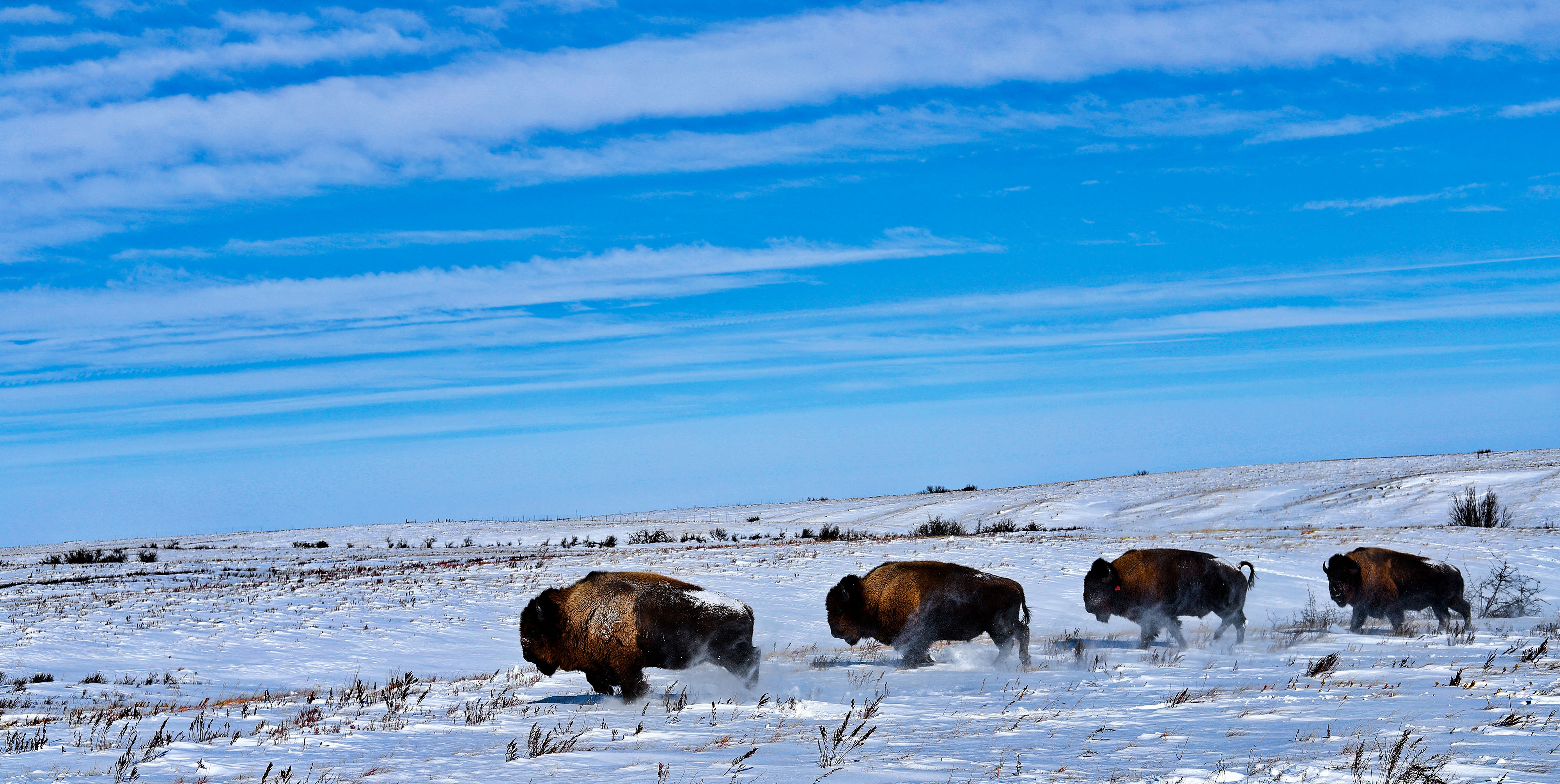
In 2020, The Nature Conservancy began work with the InterTribal Buffalo Council (ITBC), the non-profit Tanka Fund and other Indigenous partners to transfer bison (also known as American buffalo) from TNC herds to Native Nations and communities. To date, nearly 3,000 buffalo from 11 herds at TNC preserves have made the long journey—over time and distance—back to their ancestral grazing lands.
Transferring buffalo at this scale supported a quadrupling of the number of animals made available through ITBC's Surplus Buffalo Program in 2022, marking the largest restoration of buffalo to Native Nations in history. Almost 600 buffalo were transferred in 2025, sent home to other ancestral grazing lands.
Bison Homecoming


Bison Home-Sending Becomes Buffalo Homecoming
TNC currently owns and manages approximately 6,600 bison on 11 preserves in the United States, including the Tallgrass National Prairie Preserve, cooperatively managed by TNC and the National Park Service.
Did You Know?
The Nature Conservancy is the second largest private owner of buffalo in the United States, after Ted Turner.
Recognizing that most North American grasslands evolved under the influence of climate, fire and grazing, TNC first reintroduced bison to our preserves in 1978 and continues to support buffalo to ensure those lands remain diverse and resilient.
Buffalo are a keystone species for grasslands, and their presence is integral to thousands of natural relationships. Their grazing behavior naturally promotes biodiversity and helps a wide range of wildflowers, plants, insects and amphibians flourish.
On TNC preserves, a buffalo’s primary job, so to speak, is to help maintain the health of grasslands.
For the Indigenous Peoples TNC partners with, bison are much more. We send them to Tribal Nations as bison, and they are welcomed home as buffalo—a cultural keystone as much as an ecological one, and core to Tribal identity.
The restoration of buffalo back to our communities opens a new chapter for cultural revitalization and ecological restoration.
Rematriating Buffalo
Rematriation—the Indigenous concept of restoring balance to the world—best captures the benefits of returning buffalo to their original lands.
“The restoration of buffalo back to our communities opens a new chapter for cultural revitalization and ecological restoration. Collaboration in Tribal buffalo restoration means we can work together for the betterment of buffalo and our Tribal homelands,” says Jason Baldes, Tribal buffalo program manager for the National Wildlife Federation.
Today, the lands of Indigenous Peoples across the U.S. and Canada contain more intact ecosystems than all national parks and nature preserves combined. Indigenous Peoples within the United States manage approximately 20,000 buffalo on more than 1 million acres (many, but not all, of these animals began life on TNC preserves).
Returning buffalo to Tribal lands is not new. ITBC has been working with Tribes for more than 30 years to restore buffalo to Tribal lands to preserve their historical, cultural, traditional and spiritual relationship for future generations. Currently ITBC consists of more than 80 Tribal Nations and continues to add new Tribal Nations in support of this effort.
Reconnecting Long-Severed Ties
Since time out of living memory, buffalo and Indigenous Peoples have had a critical relationship across North America as stewards of the lands and waters on which a diversity of life depends. By the late 1800s, this relationship was severely disrupted: buffalo were slaughtered to near extinction, and Indigenous Peoples had been largely forced into life on reservations, separated from the once great herds that were hunted to the thinnest edge of survival.
The people suffered from the separation, as did the lands and waters. The restoration of American buffalo to their traditional grazing lands under the auspices of their traditional stewards is part of knitting up long-severed connections—environmental, cultural and economic.
The Far-Reaching Benefits of Returning Buffalo to Tribal Lands
TNC’s partnerships with ITBC and other partners help relieve grazing pressure on public and private lands while benefitting Native communities, families and Tribes who want to start new herds or grow and supplement existing herds.
Tribal Nations and Native communities create the infrastructure needed to restore buffalo geographically across the country, preserving unique genetics and thousands of years of knowledge about maintaining the relationship between buffalo and their Native relatives.

Stay in the Loop
Sign up for updates about TNC's conservation work around the world
More Buffalo Stories

Coming Home
Lucille Contreras set out to reconnect her Lipan Apache community with its heritage. In the process, she brought buffalo back to Texas Native American land for the first time in a century.

Bison Round Up At Tallgrass Prairie Preserve
Tallgrass Prairie bison are rounded up each fall for their annual checkup.

Buffalo Homecoming
Supporting Indigenous Stewardship of the Land

American Bison
Learn how The Nature Conservancy is protecting the once nearly extinct American bison across 12 preserves in the central United States.