
100,000 Native Trees Planted in the Gran Chaco to Restore Ecosystems and Strengthen the Resilience of Productive Landscapes
TNC Argentina, in partnership with John Deere, has planted more than 100,000 trees as part of a restoration project in Argentina's Gran Chaco Region.

Across Argentina’s Gran Chaco, native forests coexist with agricultural and livestock production systems that sustain local livelihoods and economies. In areas where land-use change has fragmented native forests, restoration offers an opportunity to reconnect ecosystems and strengthen critical ecological functions, including biodiversity conservation, water regulation and climate resilience.
With this goal in mind, The Nature Conservancy (TNC) Argentina, with philanthropic support from John Deere and in collaboration with producers, academic institutions and other key stakeholders, implemented a restoration project that planted 100,000 native trees across 367 hectares. The milestone represents a significant contribution to ecosystem restoration and conservation efforts throughout the region, seeking to rebuild connections between isolated native forest remanents within productive landscapes.

"Agroforestry corridors are based on the understanding that production and conservation can advance together," said Elisa Carrión Narváez, Forests, Carbon and Climate Change Lead at TNC Argentina. "We aim to identify areas where restoration can improve ecosystem connectivity while also creating value for productive activities,” she added.
Restoration activities were carried out in six settlements of Santa Fe, Santiago del Estero and Chaco Provinces.
Forest restoration helps recover degraded lands and restore essential ecosystem functions. Through active restoration efforts, native tree species were planted in strategically selected locations. These activities were complemented by aerial seeding, using drones in partnership with the startup Reforest Latam, incorporating innovative technologies to expand the reach and efficiency of the project.

White carob tree (Neltuma alba) accounted for nearly 80% of all trees planted. Well adapted to the conditions of the Dry Chaco and highly drought resistant, the species plays a critical role in restoring Chaco forests. In addition to helping reconnect fragmented habitats, white carob contributes to soil regeneration, improves water infiltration and retention, and provides food and shelter and pathways for numerous wildlife species.
"We approached this sustainability initiative as an opportunity to create a restoration framework that delivers positive impacts for local communities while helping ensure that future generations can continue to thrive in these landscapes," said Rodrigo Weisburd, Corporate Affairs Manager at John Deere Argentina.

Partners in Restoring the Landscape
Implementing a project at this scale required collaboration among a diverse network of organizations and local stakeholders. An important role in the early stages was played by Nativas, a company focused on advancing regenerative approaches and restoring the value of natural infrastructure within productive ecosystems. Nativas worked closely with local producers and helped build the partnerships needed to carry out restoration activities.
To participate in the project, farmers were required to meet a series of environmental and long-term commitment criteria. These included refraining from clearing high conservation value forests, carrying out restoration activities on degraded agricultural lands, and committing to protect and maintain the planted trees as they grow.
The profiles of farms were evaluated through field visits and satellite imagery analysis. The project team also conducted interviews with prospective farmers to better understand their interest in restoration and the characteristics of their production systems. Restoration plans were tailored to each site, integrating both ecological and productive considerations.

Optimizar Forestal played a key role by supplying 80,000 of the trees planted in Bandera and Tostado. Working alongside farmers, the company contributed to the design and implementation of the restoration plans, helping align production goals with the project's ecological objectives.
Before planting could begin, the project team coordinated site preparation activities and waited for adequate soil moisture conditions. To improve seedling survival, planting was scheduled following rainfall events of approximately 60 millimeters, ensuring sufficient water availability in the soil.
Planting activities took place during the spring seasons of 2024 and 2025. Optimizar Forestal coordinated field operations through specialized crews capable of planting up to 2,500 trees per day.
"Being part of a project like this was incredibly rewarding," said Luis Arguello Pitt, co-founder of Optimizar Forestal. "We worked extensively with farmers on restoration design and planting plans. We met with each of them multiple times to ensure the work could be carried out successfully."

Active restoration requires investment, planning and long-term monitoring. After each planting season, tree survival was assessed and unsuccessful seedlings were replaced to help ensure the long-term persistence of vegetation cover and the environmental and productive benefits associated with it.
Monitoring conducted by Nativas recorded a survival rate of nearly 90%, supported in part by favorable rainfall conditions across the Chaco region.
"Projects of this scale are not common," said Antonella Fernández, Nature Design Lead at Nativas."But the impact goes far beyond the number of trees planted. It is also reflected in the inspiration it provides to neighboring farmers and the awareness it generates throughout the region."

Trees and Nature Transform Productive Lands
At Don Nicanor Ranch in Santa Fe Province, veterinarian and rancher Mario Oertlinger chose to dedicate part of his farm to forest restoration.
"One of the main benefits is providing shade throughout the property so animals can remain comfortable wherever they are grazing," Oertlinger explained. "That can increase weight gain, improve reproductive performance and reduce heat-related pregnancy loss associated with high temperatures."
A long-term vision also drives Mariano Fiori, a regenerative cattle farmer from Santa Fe. "I imagine this farm years from now with fully restored and healthy soils, abundant vegetation cover, thriving biodiversity and greater capacity to withstand extreme weather events," Fiori said. "I envision a landscape that is more resilient to droughts and floods."
For Oertlinger, however, restoration creates value that extends beyond agricultural performance.
"On a personal level, it is moving to see two-year-old trees already serving as nesting sites for birds" he said, and he added: "That is incredibly meaningful to me and has nothing to do with economics."


The Social Impact of Restoration
The impact of the project began long before trees were planted. The School of Forest Sciences (FCF, for its acronym in Spanish) at the National University of Santiago del Estero (UNSE, for its acronym in Spanish) actively participated in producing native tree species and supporting restoration-related activities.
The university nursery produced 20,000 native seedlings suitable for planting, contributing directly to the recovery of the Chaco forest ecosystem.
For Sandra Bravo, Associate Professor of General Botany at FCF - UNSE and leader of this component of the project, restoration means working closely with communities to identify native species that can generate environmental, social and economic value within each territory.
Restoration and Awareness Raising
The UNSE team played a key role in promoting awareness of native forest restoration among local communities.
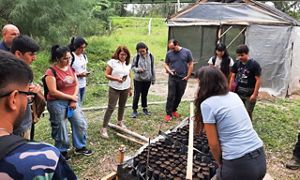
Training Local Communities: Sandra Bravo, an FCF-UNSE researcher, leading a restoration training workshop in the Gran Chaco. © UNSE
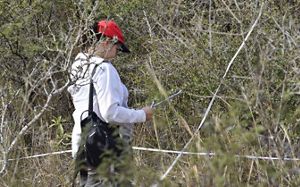
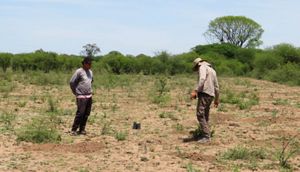
Planning for Restoration: The FCF-UNSE team conducting field assessments in a forest plot selected for restoration. © Juan Pablo Martínez
Understanding the Forest: Before restoration begins, the UNSE team assesses and inventories the forest area targeted for restoration. © Juan Pablo Martínez
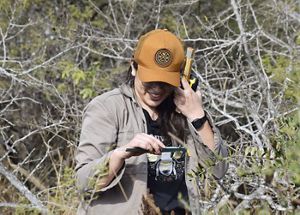
From Planning to Planting: After completing training and forest inventories, local communities design and carry out restoration planting activities. © UNSE
Throughout implementation, the project team found that many local communities were unfamiliar with native tree production techniques and with the benefits associated with forest restoration.
As a result, project activities included training workshops in rural schools and farming communities, creating spaces for learning about the importance of restoring and conserving forests.
Many families in the Chaco region rely on forest products for their livelihoods. In that context, Bravo explained:
"This led us to rethink some of the species we initially planned to promote and consider alternatives that could also generate income through products such as flour, honey, natural dyes and medicinal plants."
"This is the kind of impact we hope for," Bravo added. "We are improving quality of life for people in our region while helping communities prepare for a climate change scenario."
Beyond 100,000 Trees: Looking Ahead
The milestone of planting 100,000 trees represents both a tangible achievement and a starting point for expanding restoration models that can be replicated across the vast Gran Chaco landscape.
"This is a long-term vision," said Rodrigo Weisburd of John Deere Argentina. "We thought about the potential Argentina has and how we can leverage its climate and land resources. By restoring these landscapes, we can unlock value for the country, for producers and for society as a whole."
For Elisa Carrión Narváez of TNC Argentina, one of the most important outcomes of the project was the collective learning generated among partners and stakeholders.
"This experience helped us better understand how restoration networks function, identify key actors across the landscape and recognize which organizations can become strategic partners," she said. "Those lessons create new opportunities to bring this knowledge to other regions and expand the impact of future restoration initiatives."
RELATED ARTICLES

With technical support from The Nature Conservancy, Sumatoria launches a credit line to promote regenerative cattle ranching in the Gran Chaco.
Sumatoria and The Nature Conservancy co-designed evaluation tools and sustainability criteria so that livestock producers can access improved credit conditions.

Reforestation and regenerative agriculture in action in the Gran Chaco
In this forest, the second largest in South America after the Amazon, corn and soy growers and livestock farmers learned to improve their production without deforesting.

Fortin Chacabuco: How sustainable grazing can save Patagonia's natural landscapes
Fortin Chacabuco is Argentina's first sustainable grasslands demonstration ranch. The working ranch protects Patagonian landscapes and spreads conservation to all of Argentina.