

Have Renewable Energy Acceleration Areas (RAAs) Gained Momentum in Europe?
A moment to reflect on Europe's renewable energy acceleration journey so far and chart the way forward

For anyone involved in renewable energy planning at the EU or national level, 21 February 2026 marks an important milestone: it is the deadline set by the Renewable Energy Directive (RED III) for EU Member States to designate Renewables Acceleration Areas (RAAs), a cornerstone of Europe’s effort to speed up renewable deployment.
More than two years after the entry into force of RED III, as we reach this important deadline, what conclusions can we already draw on what this measure has advanced?
It is important to acknowledge that proposing spatial planning and designating zones for faster renewables deployment is a novel approach by the EU. If done right, with a science-driven approach and systemic stakeholder engagement, the upfront designation of areas most suitable for renewables can help significantly accelerate permitting processes without needing to water down environmental regulation.
The first stage of this exercise has proven complex. Bottlenecks affecting implementation include limited staffing, gaps in data and coordination challenges across agencies. A large number of Member States are not expected to meet the deadline.
A detailed stock take of where things stand, developed jointly by The Nature Conservancy, BirdLife Europe, CAN Europe, the European Environmental Bureau and WWF European Policy Office, sheds light on these hurdles, highlights the progress made so far and sets out key policy recommendations.
In light of the above, the 21 February deadline should be seen not as a conclusion, but rather as an important milestone in the EU’s spatial planning journey. It offers a moment to assess progress and identify the way forward. RAAs, the first‑of‑its‑kind exercise in strategic, regionally coordinated, upfront spatial planning for renewables, like any planning effort, require time, dedicated capacity, budget, coordination and learning by doing. The two‑year timeframe set by RED III was ambitious, yes, and it was also necessary to catalyse action and ensure Member States began laying the foundations for long‑term, nature and people-friendly renewable energy deployment.
At TNC, we have been fortunate enough to follow the process closely in some Member States. What we have learnt so far is that leadership and ownership is emerging in Member States and that smart spatial planning is an effective way to accelerate renewable deployment while minimising impacts on nature and people. This approach is more effective than deregulation or revising legislation.


Deregulation won’t achieve progress, but upfront spatial planning will
Upfront spatial planning has a clear purpose: to help governments, developers and communities identify areas where renewable energy can be deployed rapidly, predictably, inclusively and with lower risk to people and nature. By mapping where projects can be built with the least conflict and the greatest benefit, science-driven and participatory spatial planning can:
- Speed up permitting by reducing uncertainty and concentrating efforts where impacts are lowest.
- Strengthen nature protection by steering development away from sensitive habitats, and aim for making net biodiversity benefits.
- Increase investor confidence through clarity and predictability.
- Support communities by integrating local priorities early in the process.
- Increase social license of renewable energy sources by targeting areas that are in low conflict with nature and community values.
This is the essence of a nature- and people-positive renewable energy transition: not choosing between people, climate and biodiversity, and designing systems that advance all, as one cannot thrive without the other.


Important progress has been made across Member States, and that shouldn’t be overlooked
Even though many Member States are still in the early stages, several countries have already demonstrated what effective RAA‑aligned planning can look like:
- Czechia's Ministerstvo Životního Prostředí (Ministry of Environment) and Asociace pro Mezinárodní Otázky Klima (Association of International Affairs, Climate Team) launched an online map portal to support informed debate and decision-making on the suitability of areas for RAA designation.
- Croatia's Ministarstvo Zaštite Okoliša i Zelene Tranzicije (Ministry of Environmental Protection and Green Transition) and Državni Zavod za Zaštitu Prirode (State Institute for Nature Protection) developed detailed biodiversity value mapping on their Bioportal platform, as a precursor to RAA planning.
- Portugal's government initiated a Strategic Environmental Assessment process including potential RAA site mapping, with complementary studies and a Smart Siting Guide published by TNC to support their work.
- Estonia's Maa-ja Ruumiamet (Land and Spatial Development Board) launched a renewable energy portal publicly to help guide large-scale wind auctions.
- France's Institut National de l'information Géographique et Forestière (National Institute for Geographic and Forest Information) published an in-depth mapping portal to inform the designation process in municipalities.
Besides the EU Member States, neighboring EU accession countries in the Balkans also started to take the process seriously as Contracting Parties of the Energy Community.
For example, the Montenegro Energy Growth and Acceleration (MEGA) study highlighted the importance of active participation by decision‑makers in spatial planning processes from the outset. The study drew on expert panels, public participation workshops and close collaboration with key national and regional institutions, including the Ministry of Energy and Mining in Montenegro and the Energy Community Secretariat, leading to the publication of TNC's Smart Siting Guide: Montenegro.
These examples demonstrate that upfront renewable energy spatial planning is not only feasible, it is already happening. The challenge now is to scale these approaches across the EU and do it in a holistic manner with efforts to identify grid dedicated areas.
To achieve this, policymakers should focus on:
- Maintaining momentum and committing fully to RED III implementation
- Increasing data availability, accessibility and quality
- Strengthen administrative capacities
- Breaking silos between cross-sectorial spatial planning needs
- Deepening dialogue between relevant stakeholders
- Boosting cross-sector collaboration
Designating RAAs is a complex, multidisciplinary task. It requires planners; ecologists; grid operators; local, regional, national policymakers; and local authorities to work together in new ways.
21 February 2026 is a moment to pause and reflect on what has worked and where more dedicated effort, collaboration and capacity is needed. This milestone is a signal that Europe is entering a new phase of its energy transition, one grounded in planning and long‑term thinking.
With continued commitment, shared learning and strong leadership, RAAs can become a cornerstone of a future where climate action, nature protection and thriving communities walk hand in hand.
Community of Practice
Renewable Energy Siting Technicians
TNC is convening a Renewable Energy Siting Community of Practice in Europe, targeting national and regional siting technicians responsible for spatial planning of renewable energy. It offers a technical, collaborative and non‑political space to learn about best practices, scientific advances, enabling conditions and practical challenges.

Related Reading
-
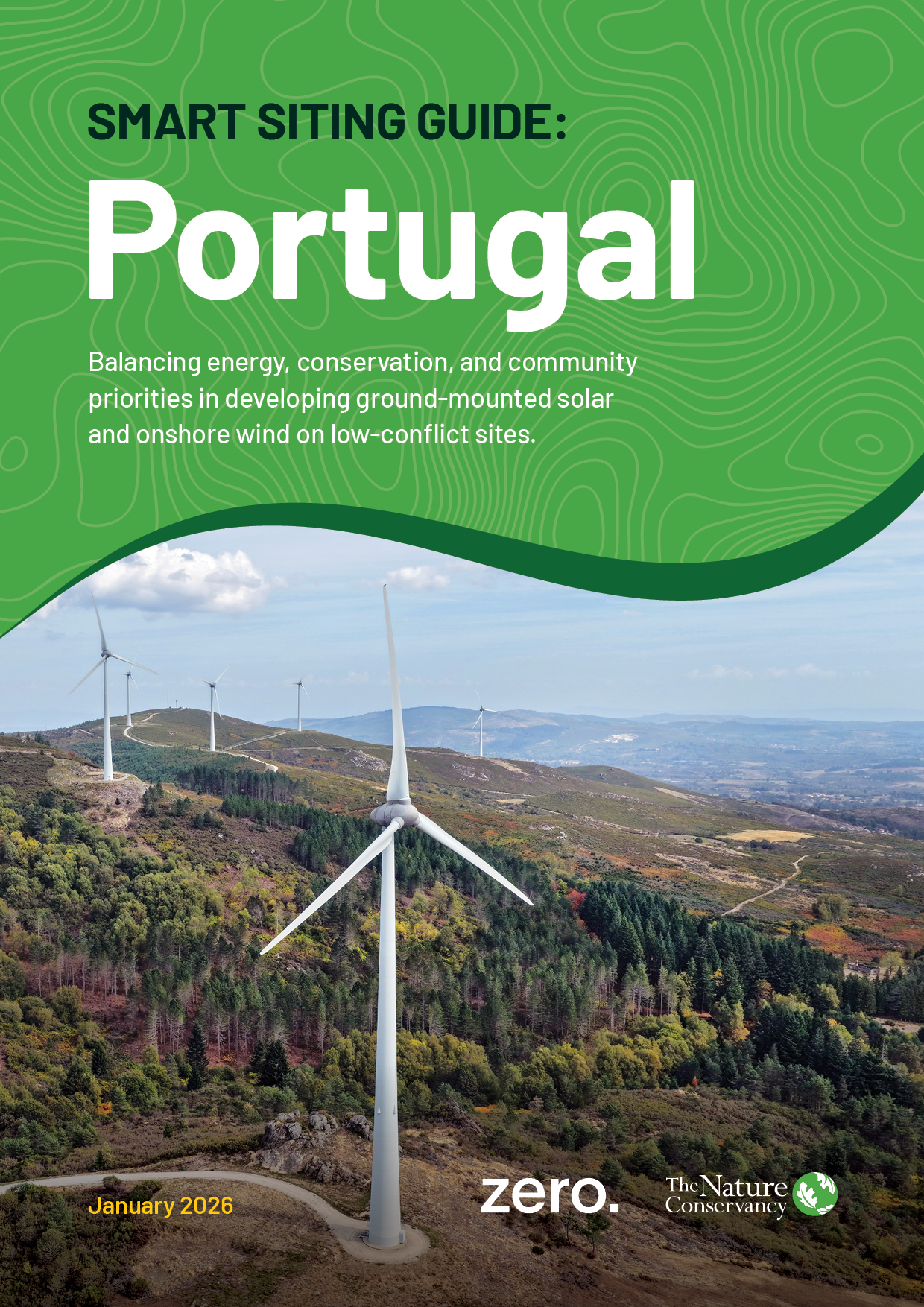
Smart Siting Guide: Portugal
This guide serves as a practical roadmap for decision-makers, renewable energy actors and civil society for spatial considerations of a renewable energy future. LEARN MORE
-
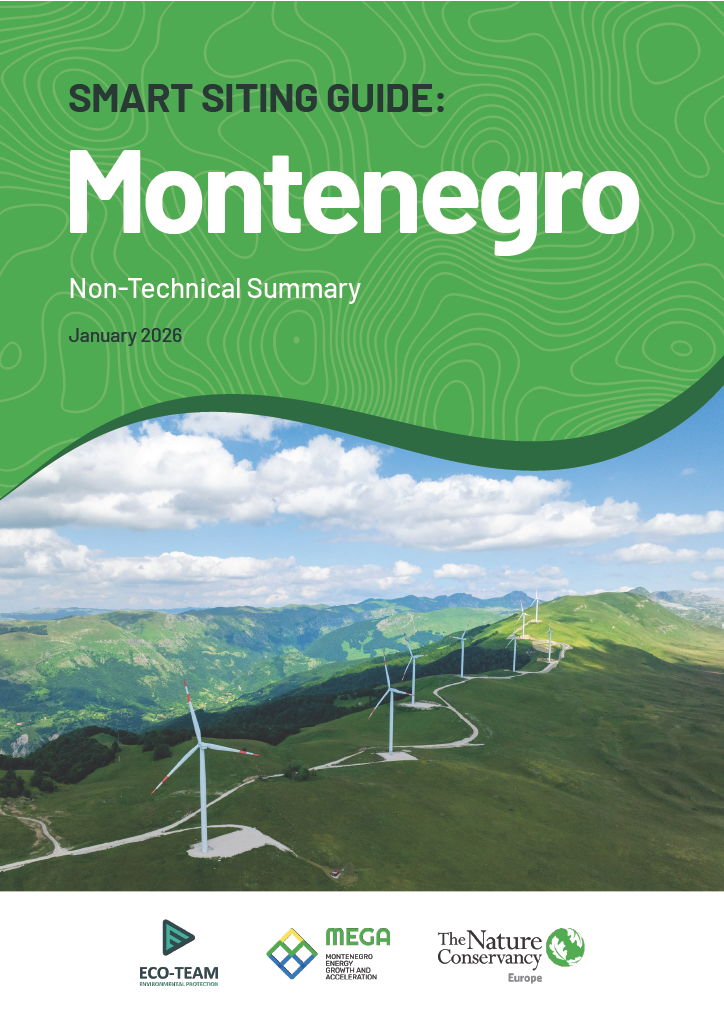
Smart Siting Guide: Montenegro
Built upon the Montenegro Energy Growth and Acceleration (MEGA) study, this guide details how the country can balance development, conservation and community priorities to achieve its renewable energy goals. LEARN MORE
-
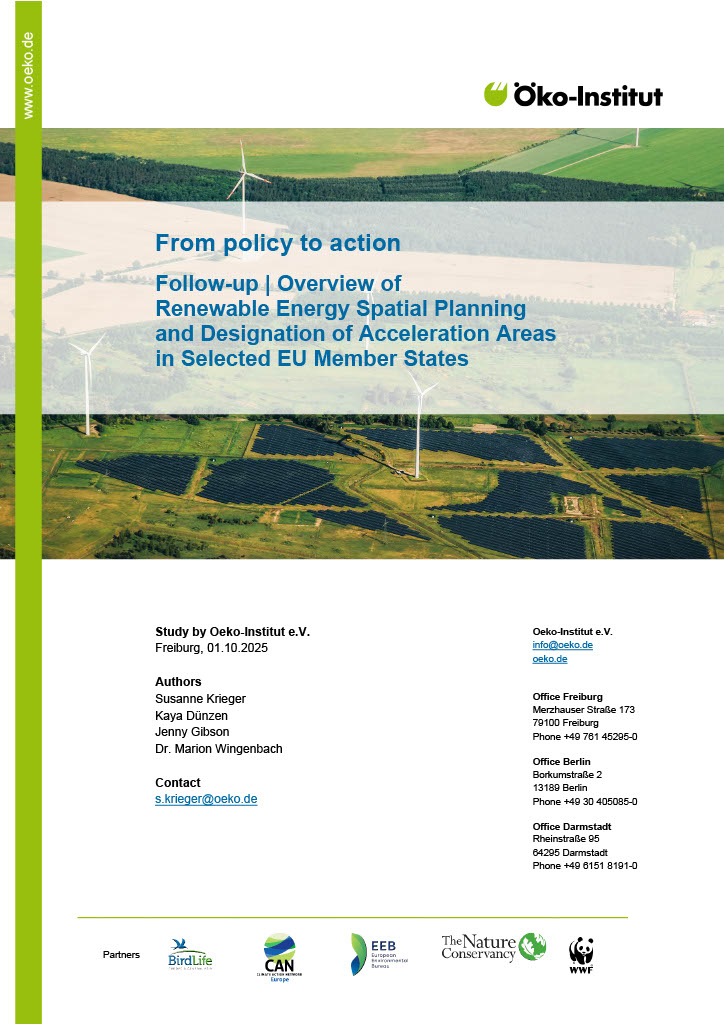
From Policy to Action: Follow-up Report
This report provides an overview of Renewable Energy Spatial Planning and Designation of Acceleration Areas in Selected EU Member States. LEARN MORE
-
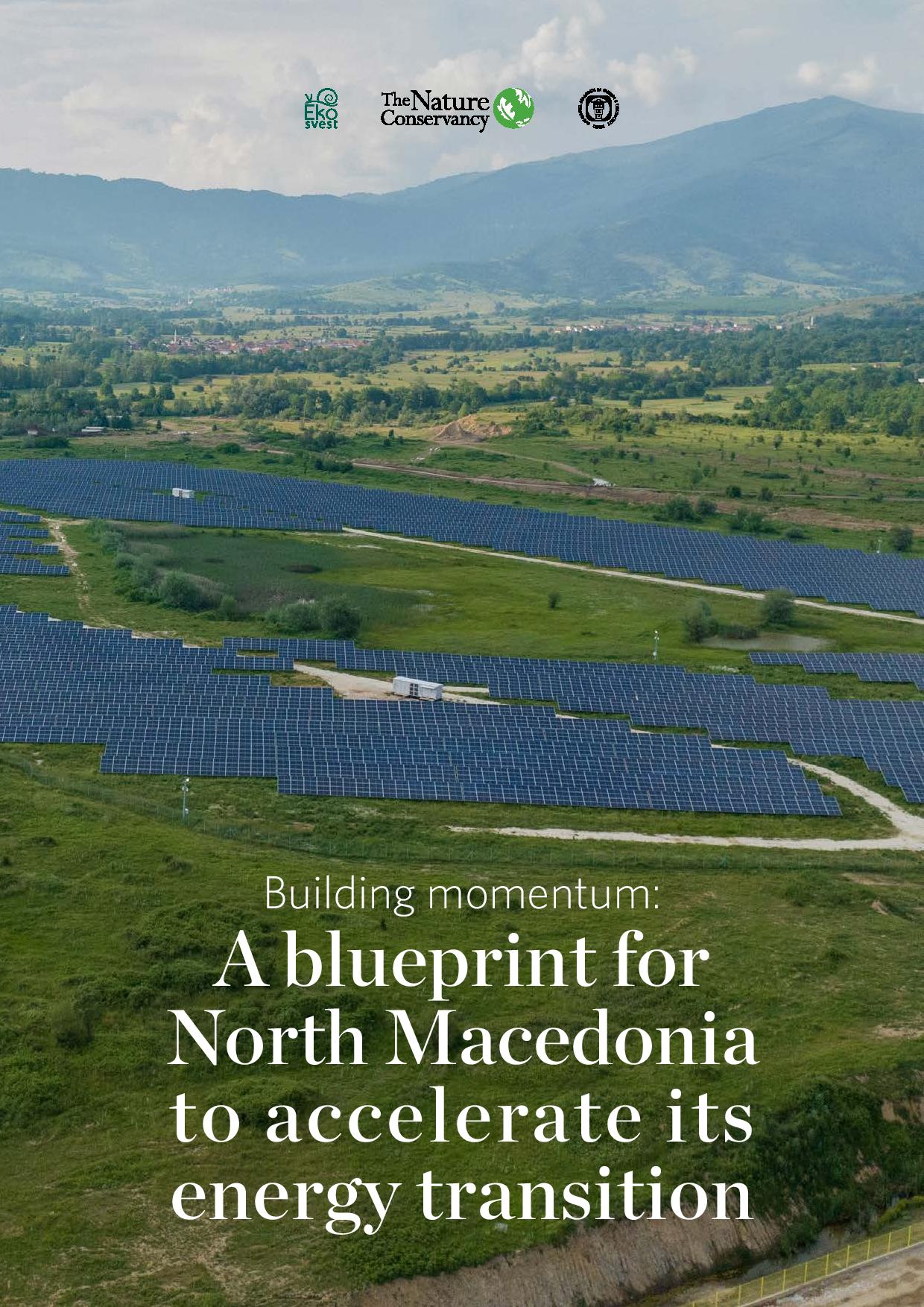
Smart Siting Guide: North Macedonia
This guide provides a blueprint for North Macedonia to accelerate its renewable energy transition, featuring findings, methodology and recommended next steps for decision-makers. LEARN MORE
-
Smart Siting Guide: Serbia
This guide includes a map of 100 priority locations for solar energy in Serbia, featuring findings, methodology and recommended next steps for decision-makers. LEARN MORE