


Maps are a starting point for responsible clean energy development
Relationship-driven planning—not data-driven siting—will be the key to accelerating the clean energy transition.
Navigating climate, conservation and community considerations for clean energy planning.

The Clean Energy Compass is The Nature Conservancy’s first-stop tool for clean energy planning. This interactive map helps decision-makers identify potential conservation and community considerations early in the clean energy planning process. Used alongside the Compass Resource Hub on this page, the Clean Energy Compass can help guide clean energy planning toward outcomes that maximize benefits to climate, conservation and communities—the 3Cs.
For the first time in decades, energy demand is increasing in the United States. Large-scale clean energy projects—such as wind and solar power—are critical to affordably meeting growing energy demand, maintaining grid reliability and tackling climate change. Expanding clean energy can also create jobs, support homegrown energy production and keep the air we breathe and the water we drink clean. There is no question—the U.S. needs more clean energy.
But clean energy projects often face delays and cancellations due to environmental or community-related tradeoffs. This is especially true when tradeoffs emerge late in the planning process.
The earlier potential tradeoffs are identified, the more flexibility decision-makers have to adjust project plans, engage stakeholders and address concerns. Early planning can help reduce conflict, avoid costly delays and get projects online faster.
That is why The Nature Conservancy developed the Clean Energy Compass—to help accelerate a clean energy transition by improving outcomes for nature and people.
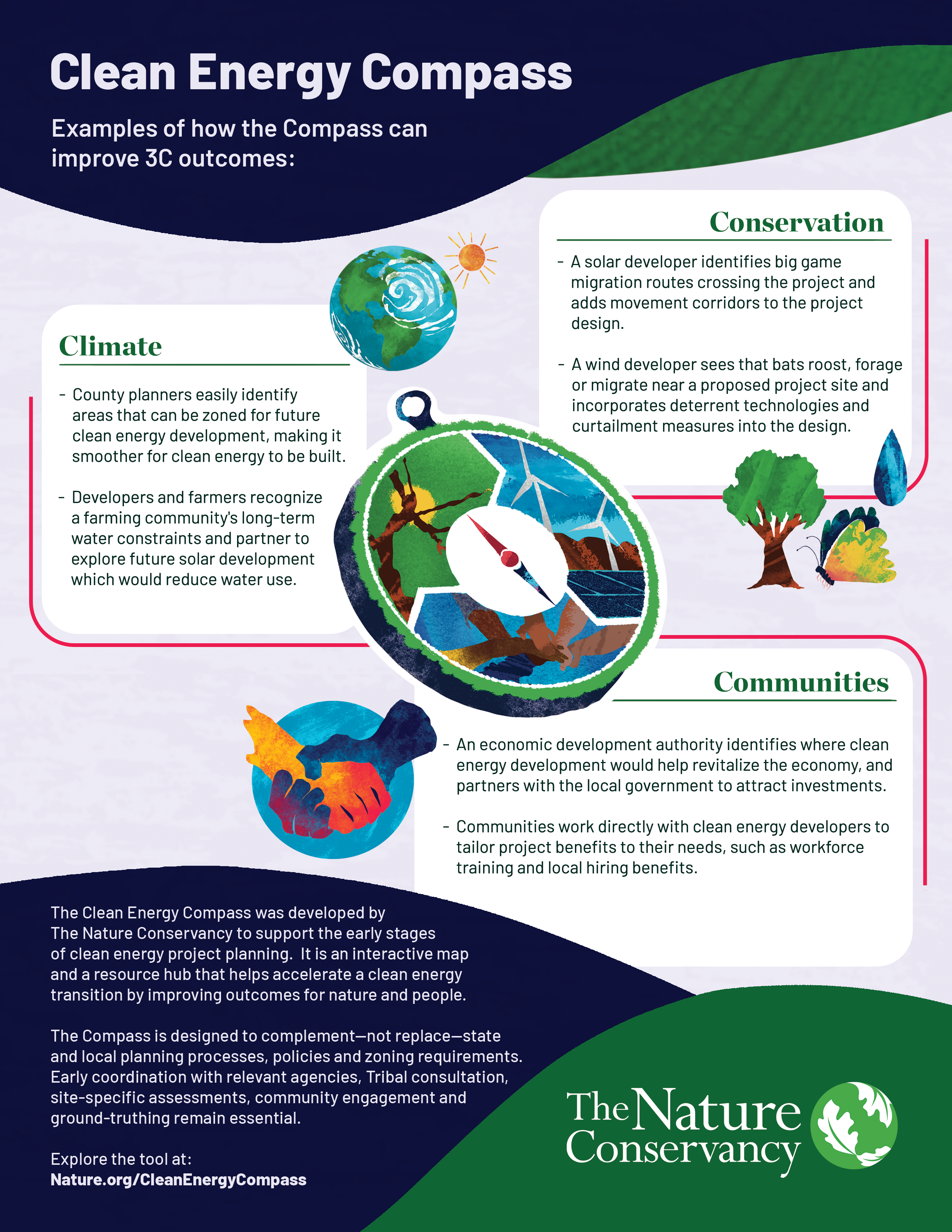
Click here to download the Clean Energy Compass infographic.
The Clean Energy Compass is The Nature Conservancy’s first-stop tool for clean energy planning. It combines an interactive national-scale map with the Compass Resource Hub to help identify conservation and community considerations early in the planning process.
The map includes more than 100 high-quality, national-scale datasets related to climate, conservation and communities—the 3Cs. The data flag where wildlife, habitat and community factors may warrant additional consideration.
The Compass Resource Hub—which you can find on this page—offers vetted information and practical guidance for considering nature, communities and Tribes throughout clean energy planning.
The Clean Energy Compass is intended to support early-stage information gathering and should not be used as a standalone siting or decision-making tool. It does not assess the technical feasibility of clean energy projects, nor should it be used on its own to rank or score locations. Early coordination with relevant agencies, Tribal consultation, site-specific assessments, community engagement and ground-truthing remain essential.
The Compass is designed to complement—not replace—state and local planning processes, policies and zoning requirements. Because it relies on national-scale datasets, it may identify conservation or community considerations in areas already designated for clean energy development. Conversely, state, Tribal and local plans or policies may account for priorities and values that are not reflected in the Compass.
It is important to note that the presence of wildlife and habitat resources or community considerations do not necessarily preclude clean energy development, as many impacts can be avoided, minimized or addressed through thoughtful project design, operations and mitigation measures. The Compass Resource Hub helps the user navigate these considerations.
By providing a consistent national baseline of conservation and community information, the Clean Energy Compass helps inform more thoughtful clean energy planning from the outset.
The Clean Energy Compass is designed for anyone involved in clean energy planning, development, permitting or decision-making. It helps users identify potential conservation and community considerations early, enabling more informed decisions, better project design and more effective stakeholder engagement. Below are examples of how different users may find value in the Compass.

Incorporate data from the Compass into desktop screening tools to identify potential wildlife, habitat and community considerations early in the planning process.
Example: A developer evaluating a potential solar site could use the Compass to identify nearby habitat considerations and adjust fencing layouts before finalizing a site plan.

Use the conservation and community information in the Compass to proactively plan for renewable energy, reduce conflicts, minimize risk and create better outcomes for nature and people.
Example: A county planner could use the conservation and community information in the Compass to proactively designate or zone for future solar development.

Use the Compass to quickly identify potential risks early and the appropriate questions to resolve, thereby avoiding late delays and speeding up project review.
Example: A state permitting agency could use the Compass to identify potential wildlife or habitat considerations at the beginning of project review and work with developers and other resource agencies to resolve issues early.

Use the Compass to better understand environmental and community considerations that may influence project timelines, risk and outcomes.
Example: A corporation interested in procuring a clean energy project with 3C attributes could use the Compass to identify potential environmental or community sensitivities and ask developers informed questions about community engagement strategies and environmental mitigation efforts before selecting a proposal.

Use the Compass alongside other datasets and planning tools to help identify conservation and community considerations early in the project review and coordination processes.
Example: A state agency conducting an environmental review could use the Compass during project scoping to identify issues that can be resolved early.

Use the Compass to understand how clean energy development may align with local priorities, economic opportunities and community needs.
Example: A regional development organization could use the Compass to inform conversations with communities about how and where to steer potential clean energy investments.
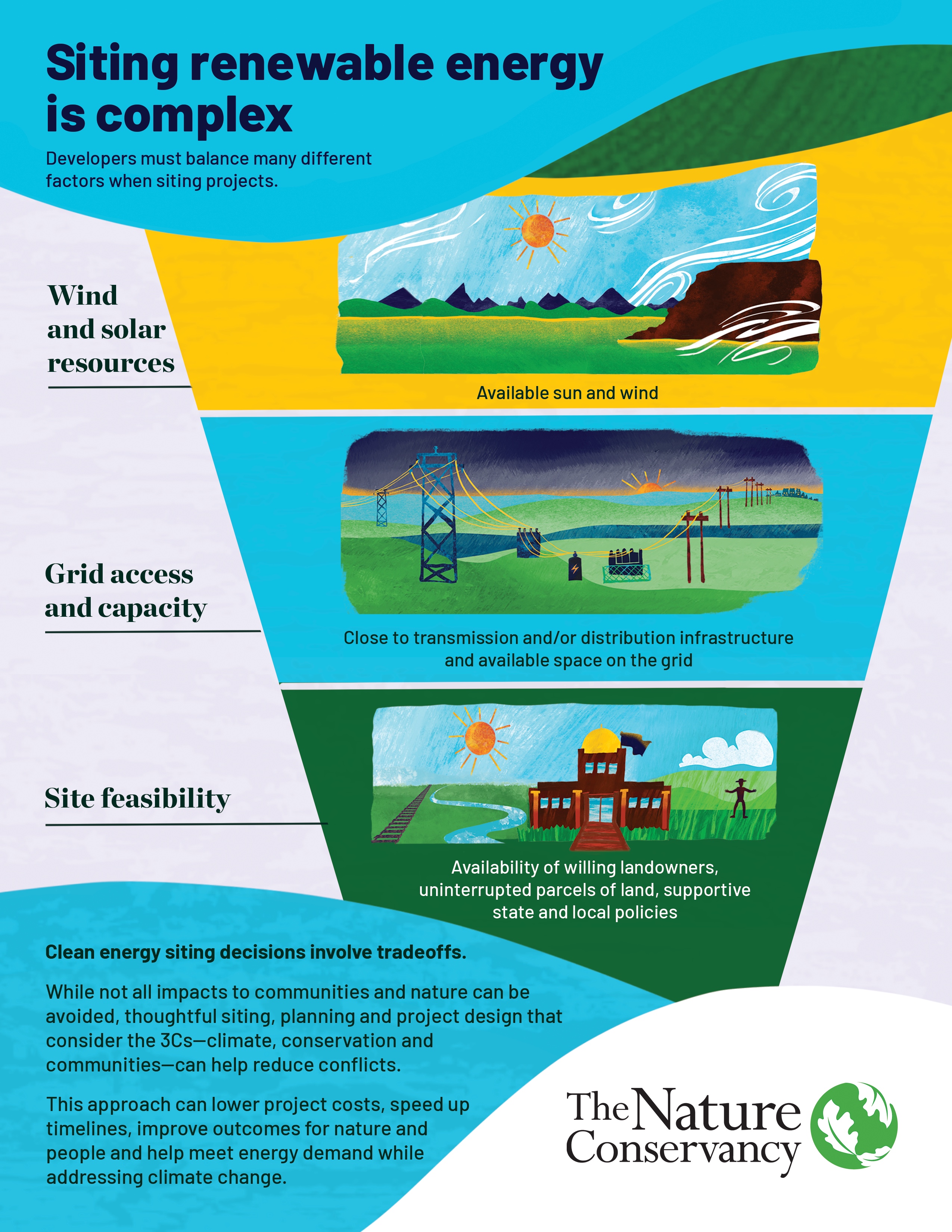
The Nature Conservancy is committed to accelerating a clean energy transition while improving outcomes for nature and people. Renewable energy development on rooftops, parking lots, brownfields and former mines plays an important role, but these sites alone cannot meet growing energy demand and tackle climate change. Under any energy buildout scenario, utility-scale wind and solar projects are essential to meeting climate goals affordably and reliably.
Identifying suitable locations for these projects is becoming increasingly complex. Many sites with strong renewable energy resources, transmission access and relatively few environmental or community constraints have already been developed. Today, clean energy planning requires balancing technical feasibility and cost with conservation priorities, community interests and local land-use considerations.
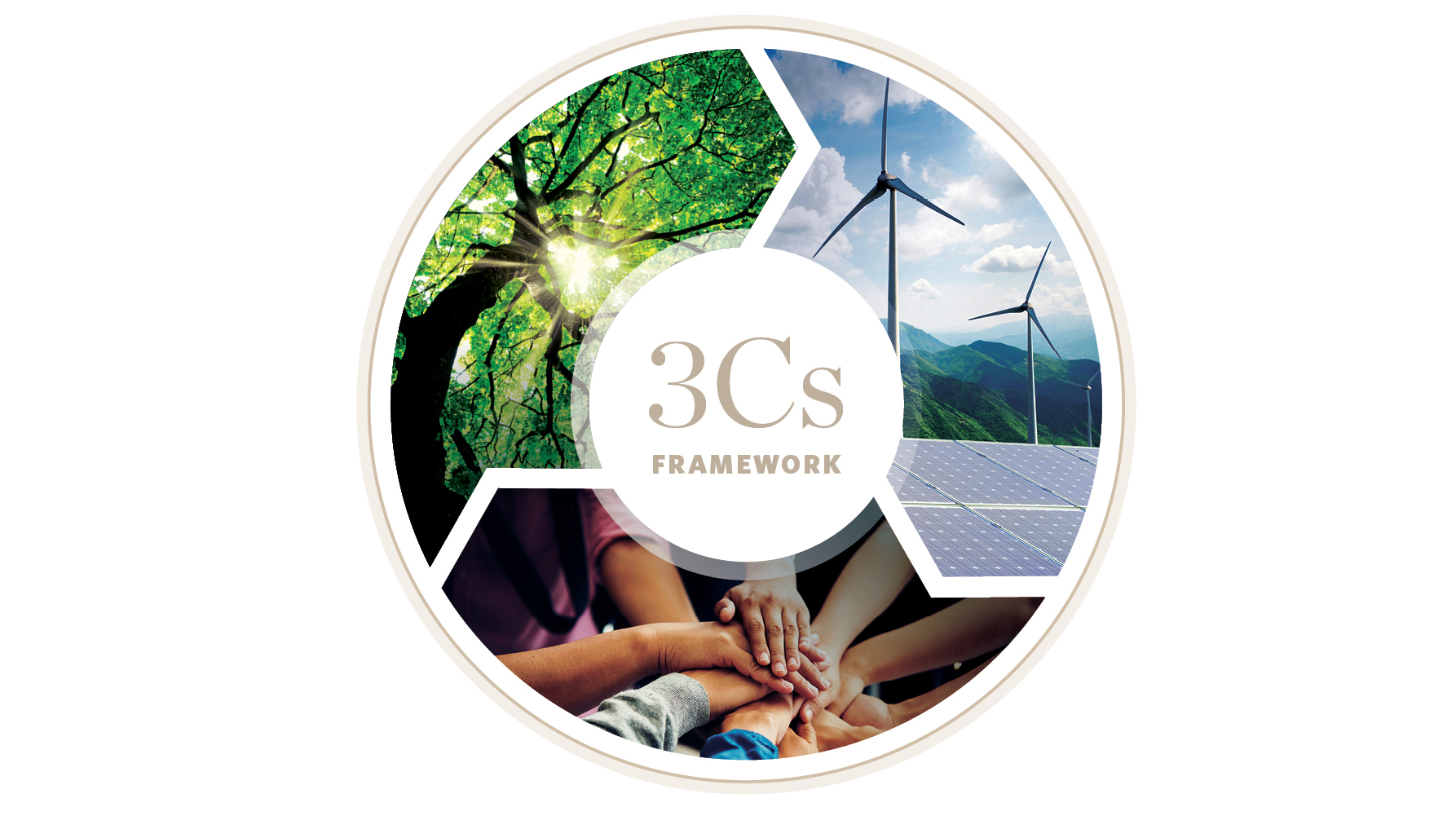
Building clean energy inevitably involves tradeoffs. While not all impacts can be avoided, thoughtful planning and project design can help reduce conflicts, minimize risk and create better outcomes for nature and people. The Nature Conservancy believes that accelerating clean energy deployment requires considering climate, conservation and communities—the 3Cs—from the outset.
Maximize reductions in greenhouse gas emissions.
Avoid impacts to wildlife and habitat and restore and enhance nature's values.
Center communities and Indigenous Peoples, working in collaboration to support shared benefits and an equitable transition.

 Return
Integrating the 3Cs early in the planning process can help clean energy projects move forward with greater certainty, reduced conflict, avoided costly delays and lowered project risk. The Clean Energy Compass was created to help put the 3Cs into practice. By bringing together resources related to the 3Cs, the Compass helps users identify potential considerations early—when there is still time to inform decisions, explore options and improve project outcomes.
The Compass Resource Hub complements the Compass map by providing curated resources that are primarily organized around the 3Cs—climate, conservation and communities—to support more informed clean energy planning. These resources help users connect to information that can support informed 3C clean energy planning. We recognize there are many additional resources available to support engagement on the 3Cs.
Use these resources to center and collaborate with communities.
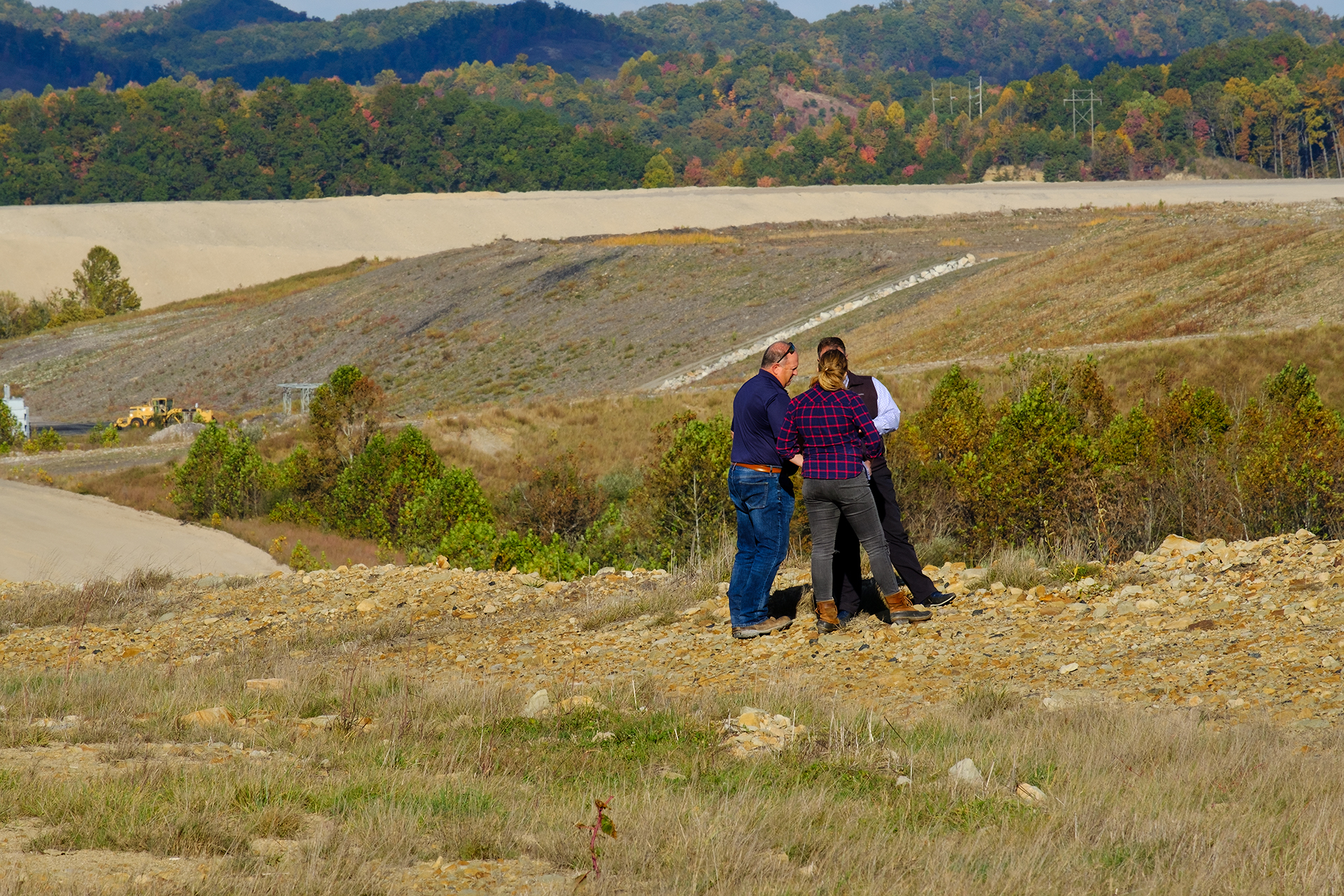
The Compass incorporates socioeconomic and environmental vulnerability indicators including income, race and ethnicity, pollution exposure, health burdens and energy affordability to highlight where communities may face cumulative impacts. Read about the role of spatial data in understanding community characteristics.
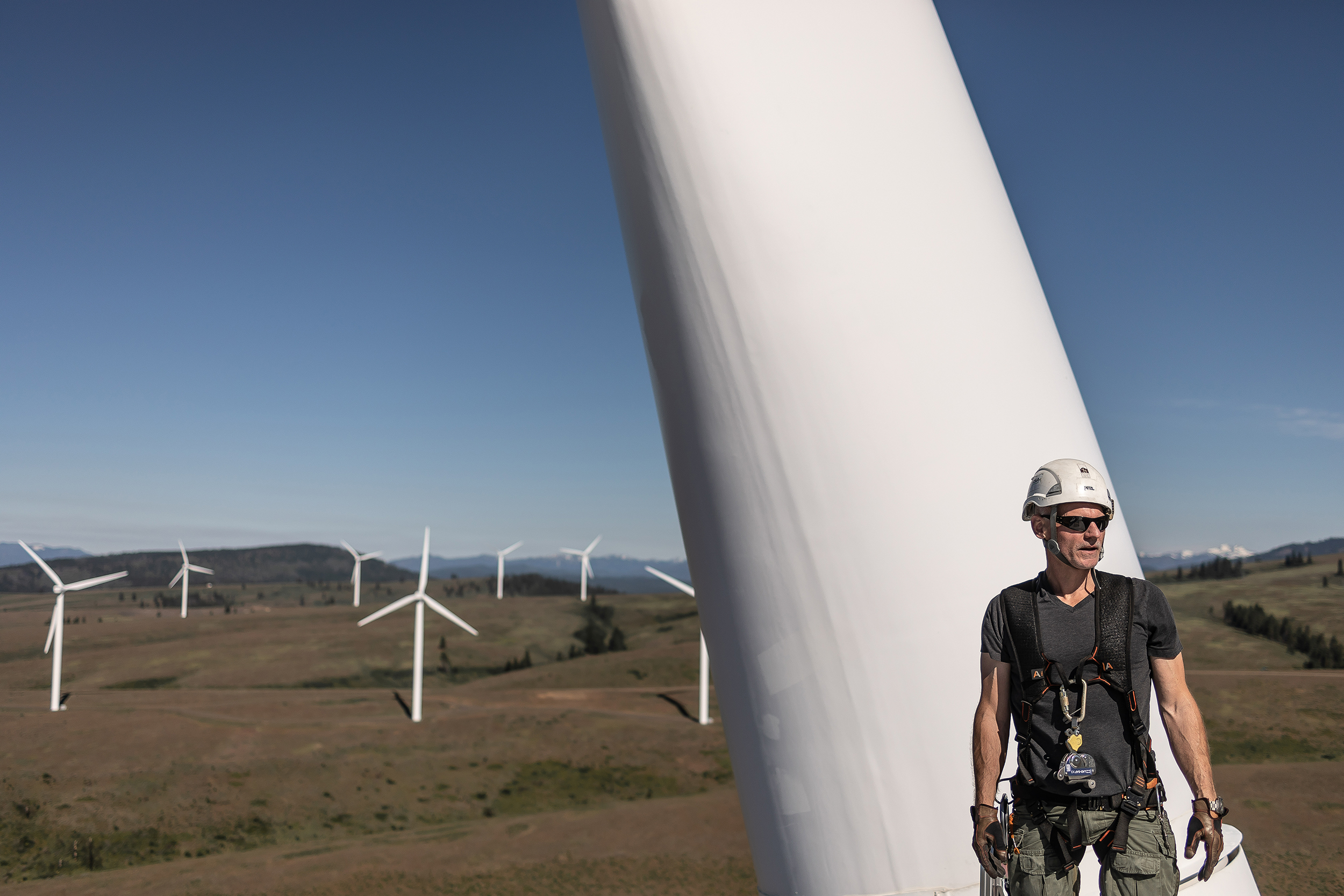
While maps can help orient users to community characteristics, they are not enough. Planning for responsible clean energy development must be relationship-driven and community-centered. Read about resources to help center communities and share benefits equitably.
Use these resources to center and collaborate with Tribal and Indigenous People.
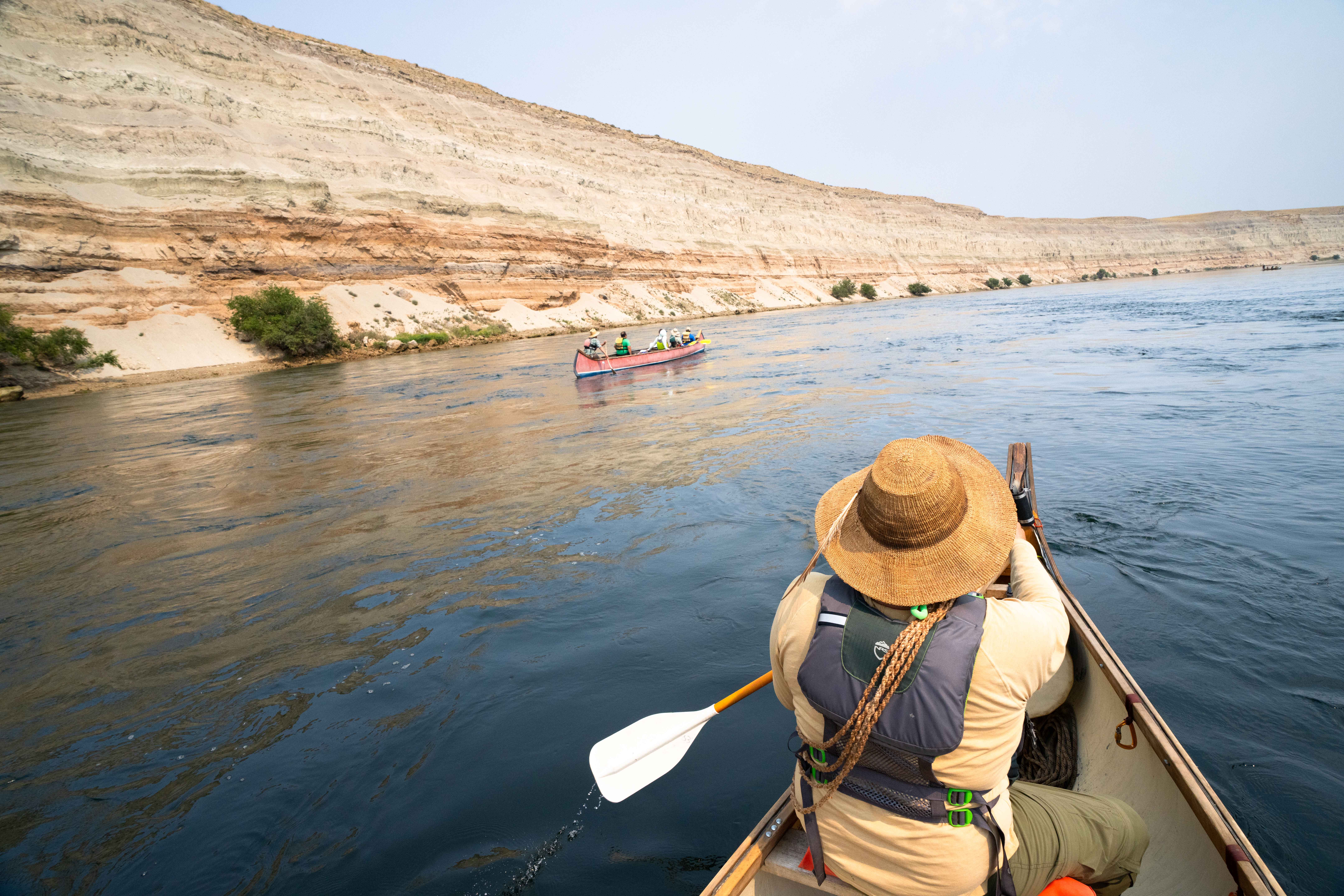
Before any engagement with Tribes or Indigenous Peoples, TNC recommends growing competency and capacity on Tribal-related topics. TNC’s Indian Country 101 training is a foundational course that was designed with Indigenous partners. Take TNC's Indian Country 101 training.
Indigenous data sovereignty is the right of Indigenous Peoples to govern, protect and decide how their data is collected, used and shared, ensuring information about their lands and communities supports self-determination. Read the Indigenous Data and Energy Sovereignty Resource Guide.
The Indigenous Lands layer in the Clean Energy Compass is updated regularly based on real-time feedback. TNC welcomes input about how this layer is represented—especially where Tribes wish to adjust, refine or remove reflected data. TNC can provide trainings on the use of the Compass to Indigenous energy experts and planners. Inquiries and feedback about this part of the tool should be directed to maya.batres@tnc.org.
Take these steps and use the following resources to consider nature when planning, siting or procuring renewable energy. These steps are inspired by the U.S. Fish & Wildlife Service’s voluntary Land-Based Wind Energy Guidelines.
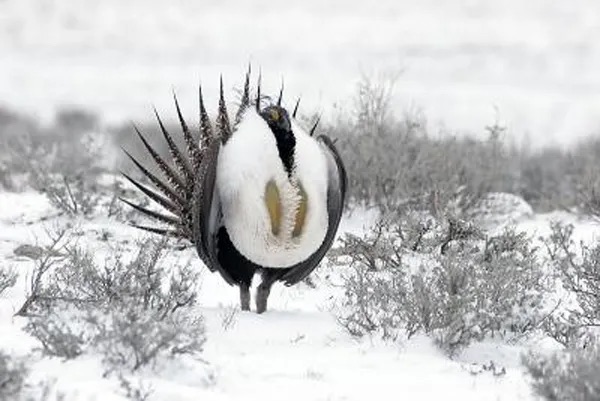
Use the Clean Energy Compass mapping tool and other relevant conservation data, such as data made available by state fish and wildlife agencies, to identify potential conflicts with highly and moderately sensitive habitats, species and natural areas.
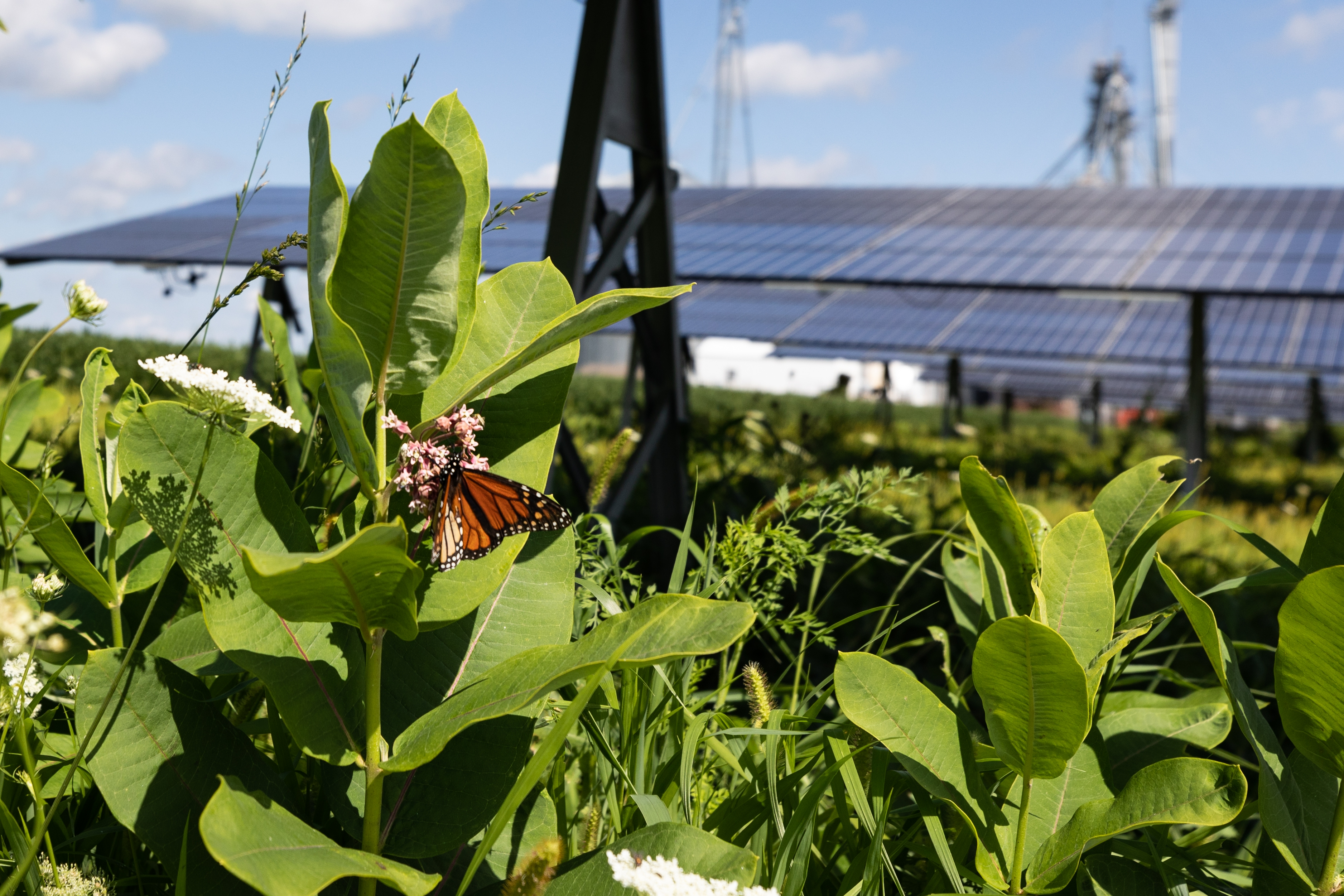
Pair desktop screening with site-specific assessments and input from fish and wildlife agencies, Tribes and local experts to better understand conservation impacts. Find your state fish and wildlife agency.
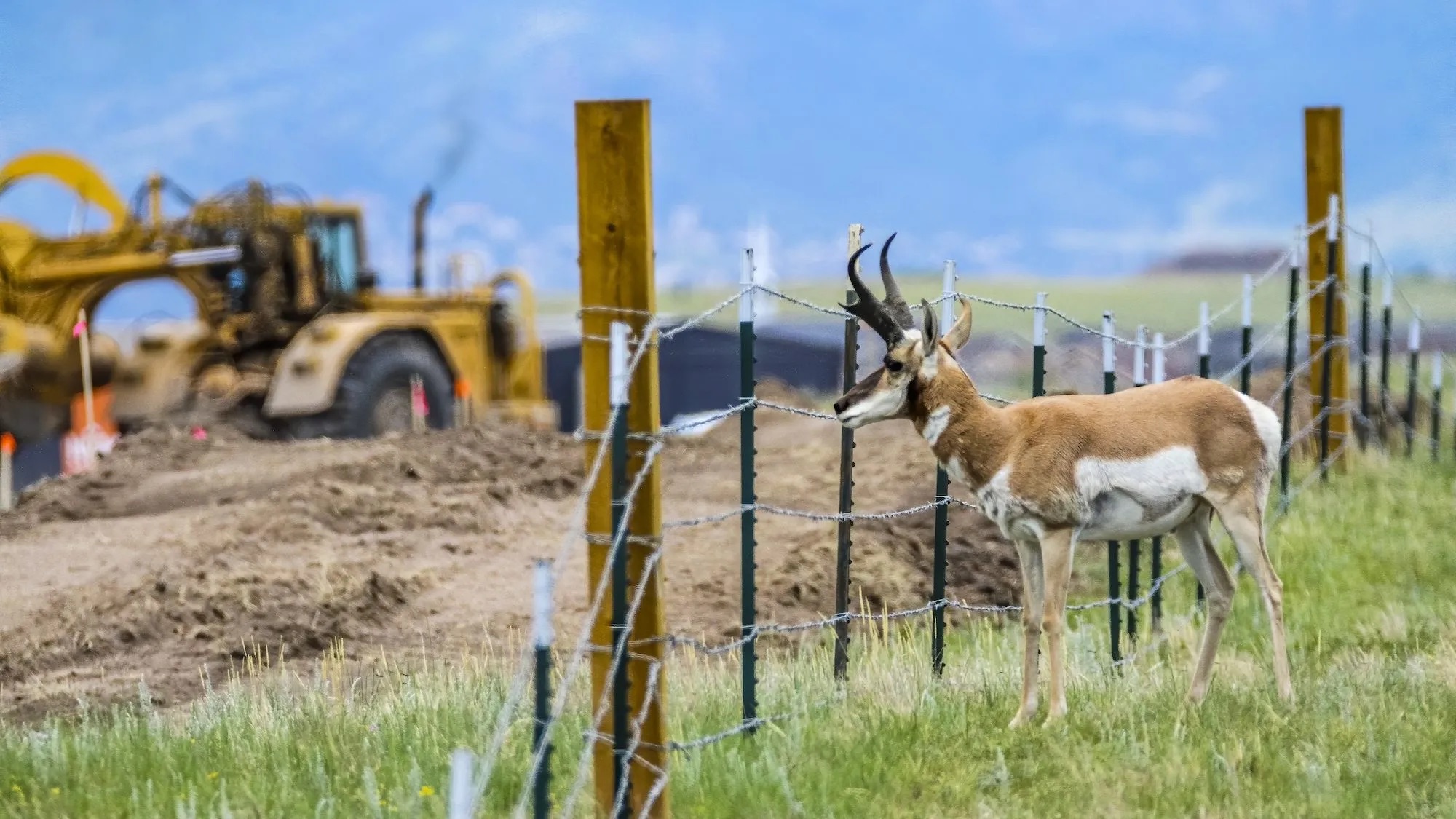
Many impacts to nature can be avoided, minimized or addressed through thoughtful project design, operations and mitigation measures. Consider a multitude of options, including micro-siting, wildlife-friendly fencing, migration corridors and more. Learn about the mitigation hierarchy.
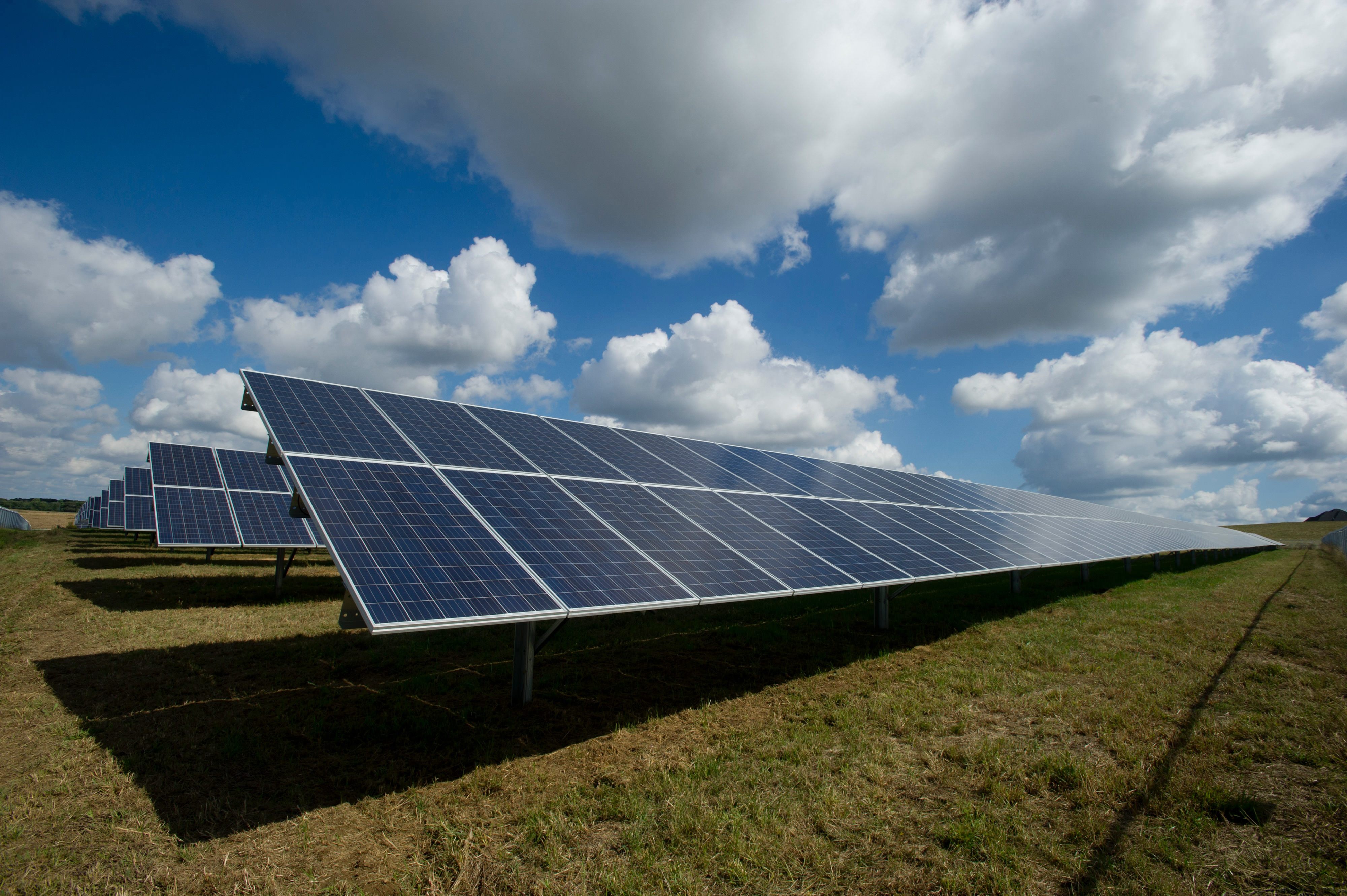
If significant impacts remain after applying the mitigation hierarchy, evaluate alternative locations with lower conservation risk.
Renewable energy development on rooftops, parking lots, brownfields and former mines plays an important role in meeting net-zero decarbonization goals, but these sites cannot do it alone. Under any scenario, utility-scale wind and solar projects are essential to meeting climate goals affordably and reliably. Use these resources to maximize emissions reductions.
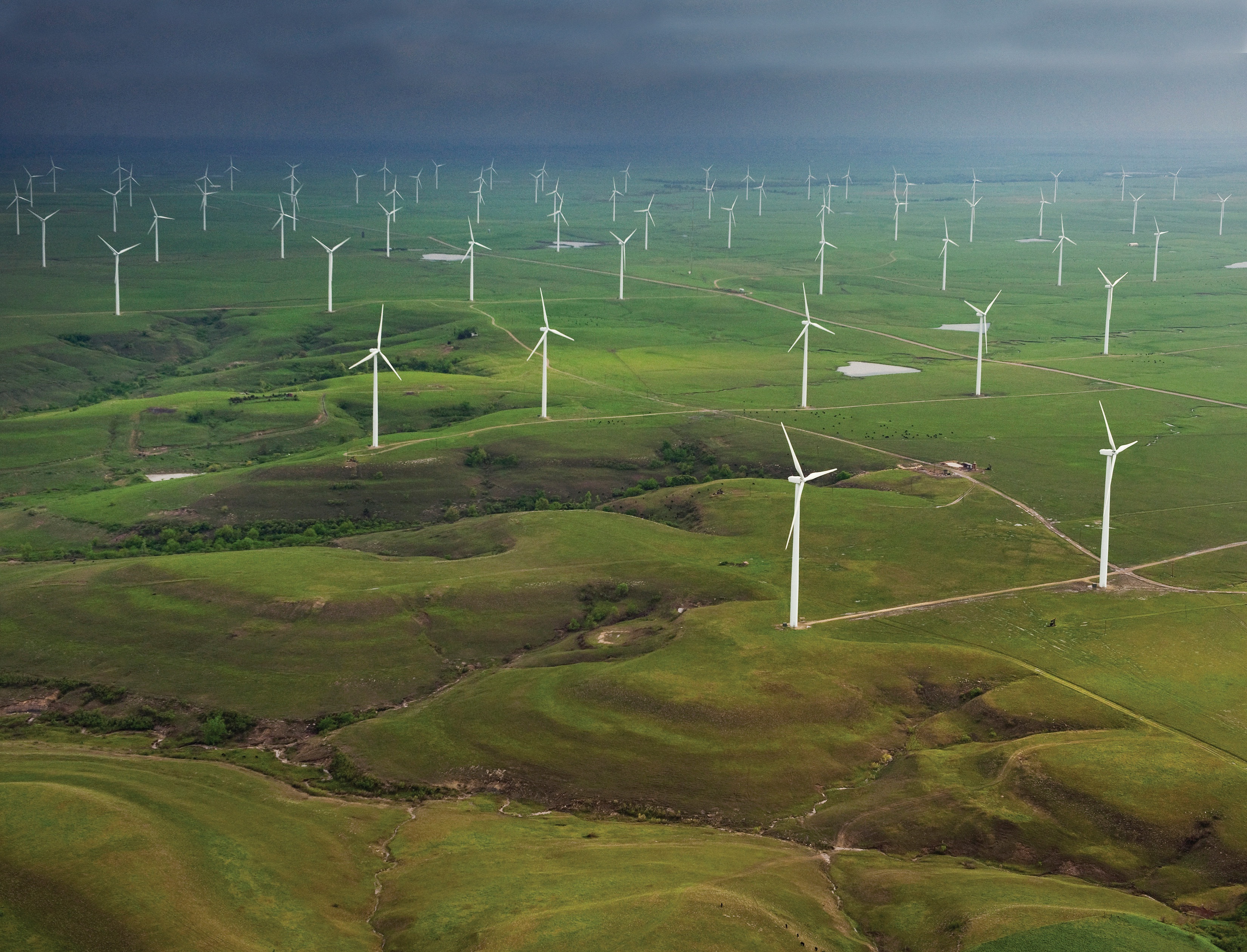
The faster we reduce greenhouse gas emissions, the more we can limit the impacts of climate change. The Clean Energy Compass was designed to help accelerate a clean energy transition by improving outcomes for nature and people.
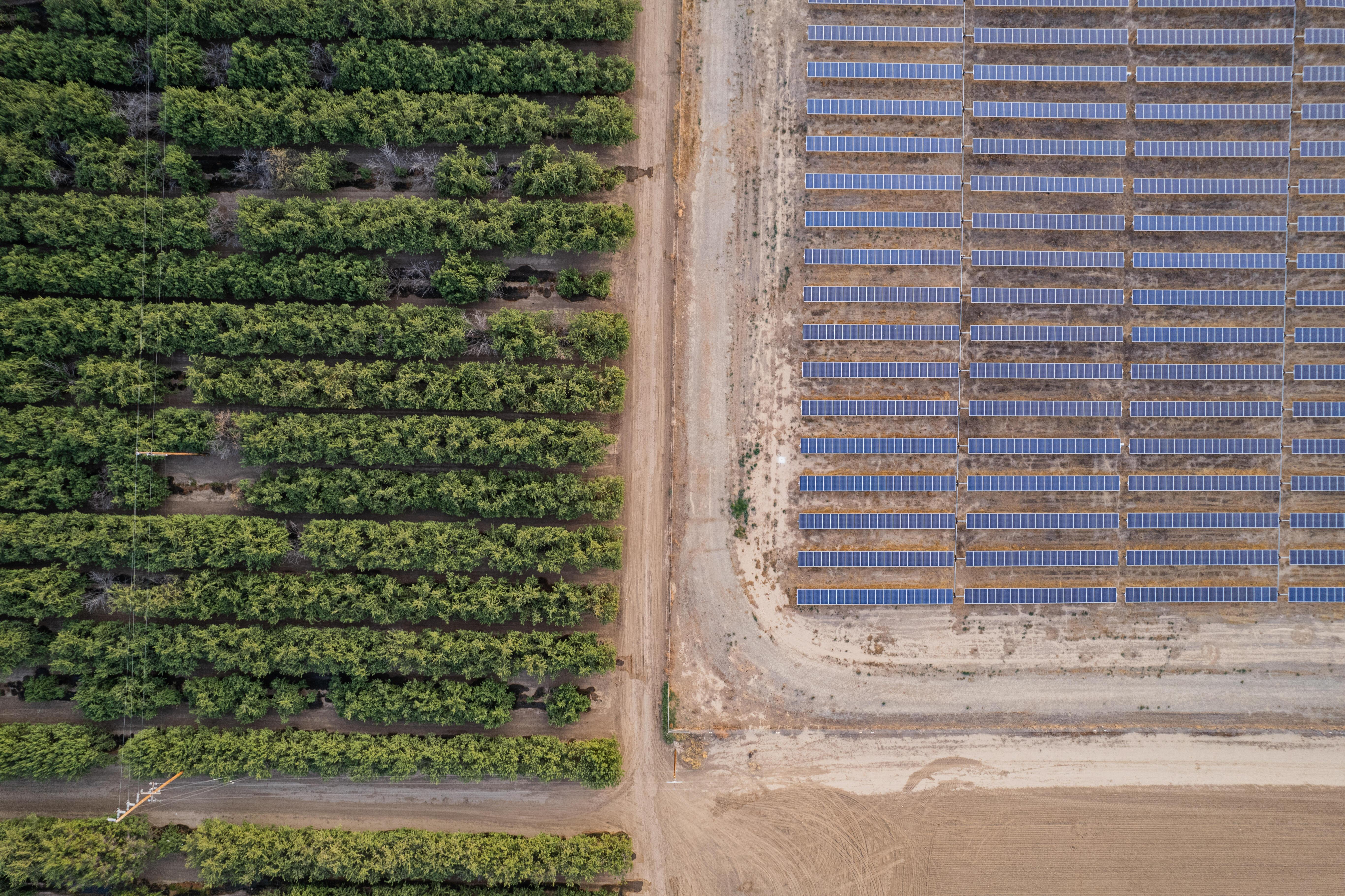
Consider “emissionality”—a measure of how much a clean energy project can reduce emissions by replacing carbon-emitting generation on the grid. Emissionality can be included as one decision criterion in project siting. Learn more about emissionality in TNC’s Purpose-Driven Toolkit.
Before using the Clean Energy Compass map, it is important to understand what the tool is—and what it is not. The Compass provides national-scale data and is intended to be a starting point—not a final word—for clean energy planning. It is not a standalone siting tool and should not be used on its own to determine where clean energy projects should or should not be built.
The Compass helps identify potential conservation and community considerations that may warrant further evaluation. Information highlighted in the map should be verified through site-specific assessments, robust community engagement, Tribal consultation and other appropriate analyses.
It is important to note that the presence of wildlife, habitat or community considerations resources does not necessarily preclude clean energy development, as many impacts can be avoided, minimized or addressed through thoughtful project design, operations and mitigation measures. Visit the Compass Resources Hub for more information.

“As the world’s largest clean energy marketplace, we know firsthand that securing permits for renewable energy projects is more difficult today than ever. TNC’s Compass offers a practical way to evaluate those risks early on by providing much-needed visibility into potential environmental impacts and potential permitting challenges from day one of site selection.”
“My team and I are encouraged by TNC’s focus on helping developers better understand environmental considerations early in the siting process. Tools like the Clean Energy Compass can complement existing site-screening efforts by identifying potential environmental considerations, informing project design decisions and supporting meaningful engagement with local stakeholders. Access to credible, science-based information helps us proactively consider conservation objectives, protect natural resources and make more informed decisions as we responsibly develop and operate the energy infrastructure that communities need.”
TNC is working on the energy transition in two ways: advancing climate action policies and accelerating the renewable energy buildout in the United States.


