

The Power of Peatlands for People and Nature
Protecting and rewetting peatlands are powerful actions in the fight against climate change, helping to slow its progression while also shielding communities from its worst impacts.

In the Patagonia region, many local people make a living by harvesting sphagnum moss and selling it for use in horticulture. But extracting too much of this topmost mossy layer disturbs carbon-rich peatlands and interferes with their ability to store water and harbor biodiversity.
To help communities maintain their ways of life while also protecting this valuable ecosystem, TNC is working with Indigenous Peoples, local communities and women’s groups to create and test practical, community-led ways to harvest sphagnum moss sustainably—and explore other income options that support people and the environment.

Actions to protect, better manage and restore nature can reduce greenhouse gas emissions and store carbon. Combined with cutting fossil fuels and accelerating renewable energy, natural climate solutions offer immediate and cost-effective ways to tackle the climate crisis. Learn more.
Peatlands are a type of wetland made up of layers of partially decomposed plant material, or peat, that has accumulated over hundreds to thousands of years. Although they cover only 3% of the Earth’s surface, they store one-third of soil carbon and provide 10% of the world’s fresh water, acting like a natural sponge that stabilizes flows and prevents flooding.
Peatlands are an important natural climate solution. Protecting and rewetting these critical ecosystems are powerful actions in the fight against climate change, helping to slow its progression while also shielding communities from its worst impacts by reducing the risks of floods, droughts and fires.


Sphagnum moss is widely used as a growing substrate for vegetables and flowers and is Chile's main exported Non-Timber Forest Product. With more than 2.8 million hectares of peatlands, Chile’s sphagnum moss generates important income for rural communities in the south.
However, about 23% of this ecosystem is not officially protected. Unsustainable extraction and drainage for grazing, plantations or construction threaten the integrity of Chile’s peatlands and pose a risk to the economy. By helping establish regenerative management models, TNC is also working to secure the livelihoods of those who depend on this resource.
We are working with communities in Llanquihue, Chiloé and Última Esperanza—areas where harvesting sphagnum moss is an important economic activity. We host workshops and field activities for harvesters, dryers, exporting companies, trade associations and public services strengthening collaboration across the value chain.
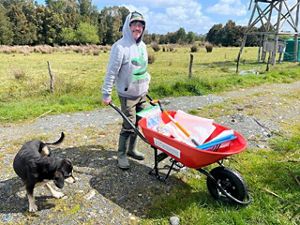
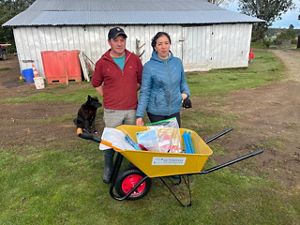
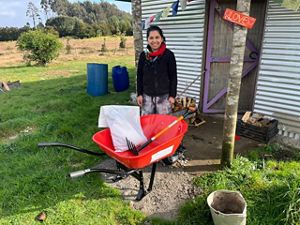
Supplies: Kit distribution for the sustainable harvesting of sphagnum moss to participants in the sustainable harvesting pilot projects. © Camilo Navarro
Best Practices: The kit contains a best practices manual and various tools to help implement it. © Camilo Navarro/TNC
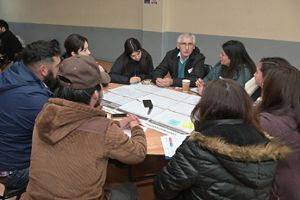
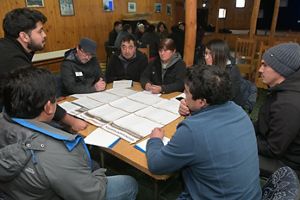
Workshop: By engaging community members in a series of workshops, we are ensuring we hear diverse voices. © Alfonso Benítez/UBO
Harvesting Tools: The goal is to promote the adoption of good harvesting practices. © Camilo Navarro
Diverse Participation : Participants included moss harvesters and dryers, exporting companies, trade associations from the moss extraction sector and public agencies. © Alfonso Benítez/UBO
As part of a global effort to protect peatlands, and in partnership with Universidad Bernardo O’Higgins, TNC is generating applicable knowledge to improve harvesting and conservation practices for Patagonia peatlands. Our goal is to maintain balance between productive activity and protection of these ecosystems.
We are working toward a regenerative management model that restores ecosystem functions, ensures moss regeneration and strengthens the sustainability of local economies that depend on this resource. We are also working to identify financial mechanisms that facilitate adoption of good practices throughout the value chain.
Global Insights Newsletter
Access the latest reports, tools and in-depth thinking on climate solutions.
Peatlands can be found in 180 countries, and protecting and restoring them is critical for slowing the impacts of climate change. Unless we act now, peatlands will shift from a net carbon sink to a net carbon source this century.
Over the last few years, more science has been done to show the extent of existing peatlands and where protecting and restoring them would be most impactful. Thanks to this growing body of knowledge, there is more momentum than ever for governments and communities to protect and restore these critical ecosystems.
Science shows that—combined with cutting fossil-fuel use and accelerating renewable energy—natural climate solutions can help us avoid the worst impacts of climate change.


