
interstitialRedirectModalTitle

interstitialRedirectModalMessage

Places We Protect

Francine Cohn Preserve

Texas

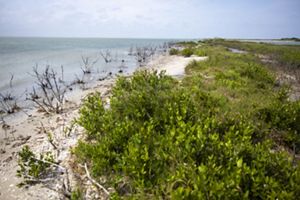
Blue ocean waters lap at a sandy white beach surrounded by green plants and grasses.
Gulf Refuge The Francine Cohn Preserve sits on Corpus Christi Bay. © Annie Mulligan

Francine Cohn Preserve is one of the most important colonial waterbird nesting islands.

Overview

Description

Sitting just off the Texas coast in the Gulf are a string of barrier island refuges for wildlife. One of the “pearls” in this string is the Francine Cohn Preserve, just south of Port Aransas on the bay side of Mustang Island’s western shoreline. This 410-acre preserve is about a mile from The Nature Conservancy (TNC)'s Shamrock Island Preserve, one of the most important nesting sites for colonial waterbirds. As a result, Francine Cohn’s saltwater lagoons serve as a foraging site for rare and other waterbird species at this island rookery. Migrating and resident songbirds, shorebirds, waterfowl, raptors and wading birds also use the area for feeding, resting and roosting.

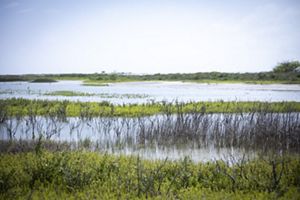
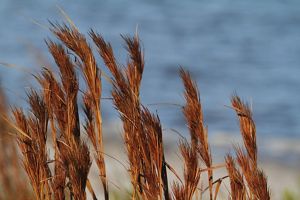
The preserve’s saltwater lagoons are full of expansive seagrass beds fringed with smooth cordgrass and black mangroves as well as glassworts on saltflats. Upland coastal grasslands of the preserve showcase gulf cordgrass and seacoast bluestem.
Access

CLOSED TO THE PUBLIC

Size

637.8 acres

Explore our work in Texas

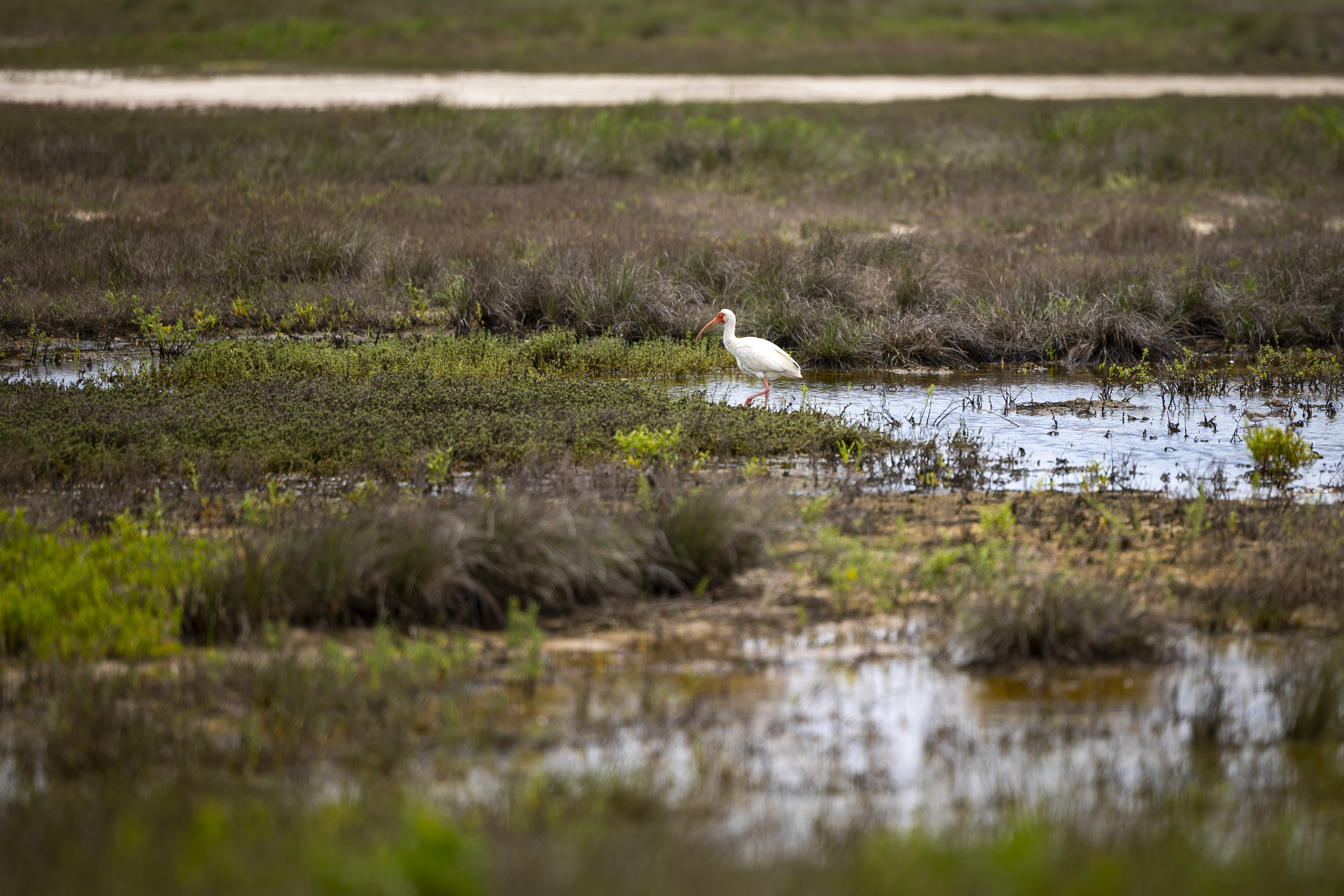
A white bird sits in brown marsh grass just off shore.
Bounty of Biodiversity The 480-acre Francine Cohn Preserve provides essential habitat for many of the bird and marine species of the Gulf. © Annie Mulligan

Why This Place Matters

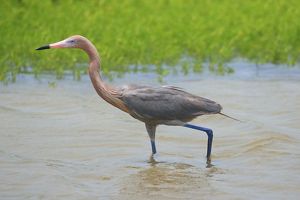
Among the rare species recorded at the Francine Cohn Preserve are the piping plover and reddish egret, both of which are listed as threatened, and the peregrine falcon, which is endangered in Texas. A few of the many other bird species using the preserve are great blue herons, ibises, roseate spoonbills and tricolored herons. The preserve provides a sanctuary for area resident and migrating birds and wildlife, on an island threatened with large-scale development.

This site is also a critical marine conservation area, providing essential habitat for numerous fish and other species that are commercially and recreationally important. These include red drum, southern flounder and speckled trout, plus blue crabs and brown shrimp. Although all of these are common in preserve waters, populations of the blue crab, for instance, have been in decline in the Gulf in recent years, with reduced freshwater sources and habitat loss among the likely culprits.

Photos from Francine Cohn Preserve

Discover the diverse plant life and wildlife at this coastal marshland preserve.

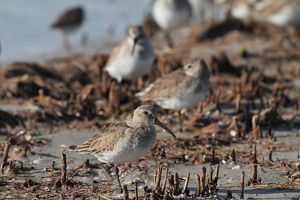
At least four birds with brown and white feathers and long thin beaks stand in the sand along the beach.
A mosaic of blue saltwater lagoon water and dense green mangrove plants.
Blue ocean waves meet a white sand beach filled with short green plants.
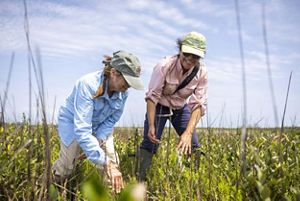
Two women stand in a field of tall green grass, identifying plants.
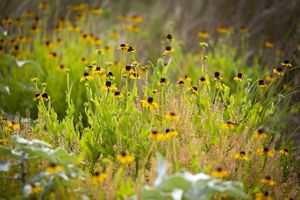
A field of small yellow flowers with black centers and green stems.
A closeup of brown and orange prairie-grass with feather-like tips and long stems.
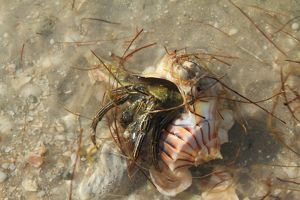
A hermit crab hangs out of a striped pink shell lying in the sand.
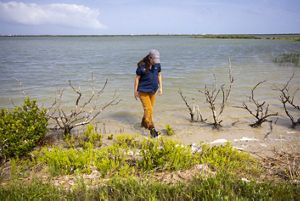
A woman walks along a sandy beach lined with green plants.
A bird with pink and grey feathers walks through green marsh.
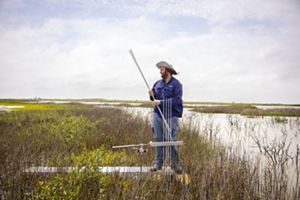
A man holding a metal bar stands in the middle of marsh habitat.
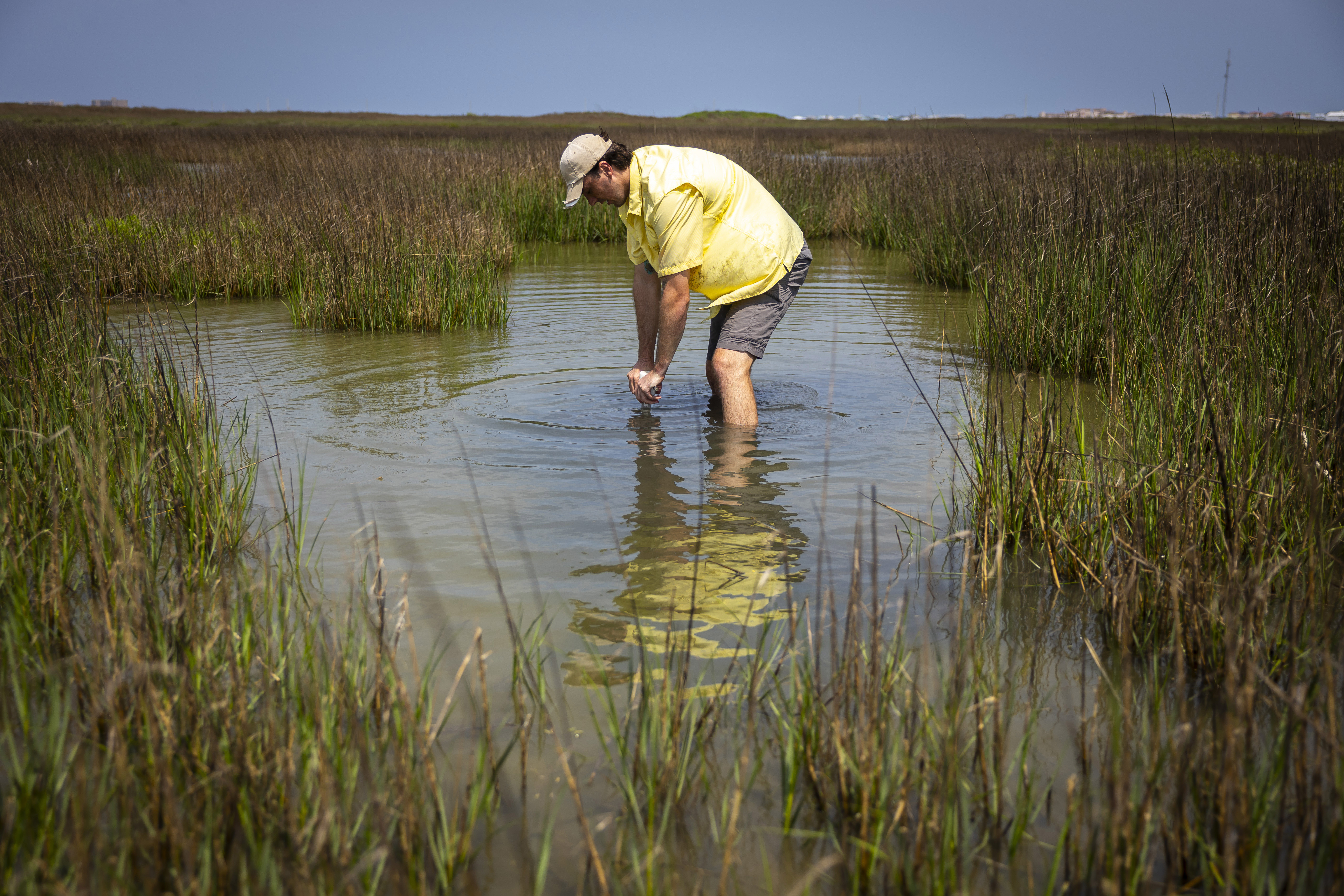
A man stands in marsh water, submerging a tool into its depths.
Studying coastal habitat Max Portmann, a graduate student at Texas A&M University-Corpus Christi, takes a soil core sample at the Francine Cohn Preserve. © Annie Mulligan

What TNC Is Doing

The Francine Cohn Preserve was established by TNC through a donation by Marcus Cohn of 22 acres in 1999, which has grown through the years.  The preserve now abuts more than 47,000 acres of state park, thanks to the Texas Parks and Wildlife Department’s (TPWD) expansion of Mustang Island State Park in 2015. Recent hurricanes and relative sea-level rise are threatening the backside wetlands of Mustang Island, including the Francine Cohn Preserve. In partnership with TPWD, Coastal Bend Bays and Estuaries Program and others, TNC is focusing on coastal restoration, incorporating nature-based solutions to maintain the ecological health and persistence of its various marsh systems and tallgrass coastal prairie.

This work is an important part of TNC’s efforts to adapt Texas's barrier island systems from threats like climate change, coastal development and habitat fragmentation. 

Learn More

The Francine Cohn Preserve is closed to the public. For more information, contact Director of Landscape Initiatives Sonia Nájera (snajera@TNC.ORG).