interstitialRedirectModalTitle

interstitialRedirectModalMessage

Places We Protect

Big Walnut

Indiana

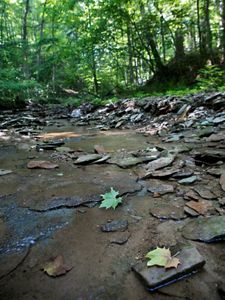
A wide, low stream with exposed rocks is flanked by dense forests at Big Walnut Preserve.
Big Walnut Creek Big Walnut Creek runs through Big Walnut Nature Preserve in Putnam County, Indiana. © Timothy Metz

Big Walnut Nature Preserve provides extensive habitat for diverse plant life and great trails.

Overview

Description

Big Walnut Preserve in Putnam County is a dazzling scenic area situated among the rolling hills and steep ravines of Big Walnut Creek Valley.

Since being dedicated as a National Natural Landmark in 1968, the preserve has been co-managed by TNC and the Indiana Department of Natural Resources Division of Nature Preserves (DNP). This successful partnership has protected more than 2,400 acres and has ensured the long-term viability of this biologically important natural area.

Access

OPEN TO THE PUBLIC

Hours

Sunrise to sunset

Highlights

Rolling hills, steep ravines and the Tall Timbers Trail

Size

2,458 acres

Explore our work in Indiana

Photos from Big Walnut

Just an hour west of Indianapolis, Big Walnut Nature Preserve provides extensive habitat for diverse plant life and great trails.

Shallow creek runs through Big Walnut nature preserve.
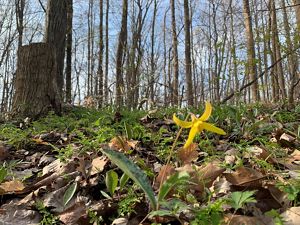
Single yellow trout lily blooms on forest floor.
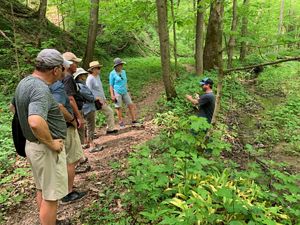
Hike leader speaks to small group of hikers on the trail at Big Walnut nature preserve.
Group of volunteers stands on either side of Big Walnut preserve sign.
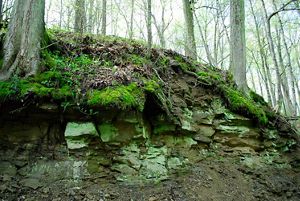
Moss-covered stone outcropping at Big Walnut nature preserve.
Small group of hikers walk the Tall Timbers Trail at Big Walnut.
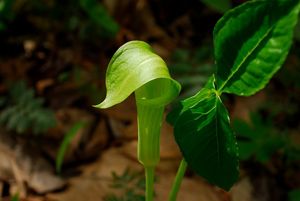
Close-up of a bright green jack-in-the-pulpit.
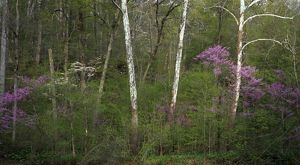
Forest with redbuds in bloom.
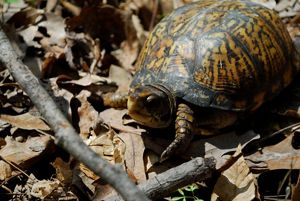
A box turtle on forest floor.
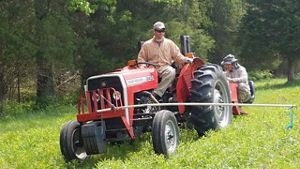
Two men on a tractor plant tree seedlings.

Visit

  • With beautiful, glacial-relic stands of eastern hemlock and Canada yew flourishing on cool, north-facing slopes, it’s no surprise that Big Walnut was dedicated as a state nature preserve in 1985. Exceptionally large trees, including the largest known hemlock trees in Indiana, are scattered across the preserve along with one of the few remaining stands of a beech, sugar maple, tulip, poplar climax forest growing in west-central Indiana.

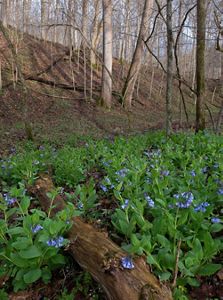
    Spring brings a carpet of wildflowers including spring beauties, anemones, Virginia bluebells, and large-flowered trilliums, and the emergence of cerulean, worm-eating and hooded warblers and great blue herons. The rare-plant seekers won't be disappointed at Big Walnut either; eastern hemlock, Canada yew, Clinton's woodfern, Goldie's fern, and bristly sarsaparilla—among other uncommon plants—can be found in this amazing preserve.

    During the summer, the forests of Big Walnut offer a cool retreat from the urban heat.

    As fall approaches, the summer colors fade to red, orange and gold. Once the leaves fall, Big Walnut is still entrancing, and you may find yourself the only one in the forest.

    When winter arrives, snow and ice blanket the area, making it a welcome respite for visitors seeking the peace and quiet of the season. 

    Many of our preserves allow deer hunting from October through the first week of January, so wearing blaze orange is suggested when hiking in these areas during hunting season.


  • Big Walnut is an ideal spot to enjoy the sights and sounds of nature, hike, take photos and bird watch.

    The Tall Timbers Trail is a 2.8-mile loop trail through a portion of the northern part of Big Walnut, including Fortune Woods. It is a moderate hike, with 40+ stairs that traverse a steep ravine. Fortunately, a landing halfway up the stairs and a bench at the top provide resting areas. There are several small stream crossings, so prepare for wet feet. Parking for five vehicles is available at the trailhead.

    With support from CenterPoint Energy, TNC was able to partner with the Indiana DNR and the Hoosier Hikers Council to reroute the beginning portion of the Tall Timbers Trail to wind through an amazing part of the preserve. Breathtaking views from the get-go!

    The Doyle Trail is a 1.3-mile loop trail through tree plantations that were planted in the early 2000s, many that are now over 10 feet tall. A variety of hardwood tree species were hand-planted in what was once row crop fields, including black cherry, black walnut, red oak and white oak. There are two 0.1-mile paths that cut through the outer loop, allowing two options for visitors to shorten the route. The eastern portion of the loop is a moderate hike and offers glimpses of Big Walnut Creek through the trees, while the western portion of the loop stays in the uplands and is an easy hike. The trailhead has a large 12-car parking area almost directly across the road from the Tall Timbers Trail, so why not hike both?

    The Rayfield Trail is an out-and-back route totaling 2 miles (1 mile in, then 1 mile back). Like the Doyle Trail, it features a tree plantation from the early 2000s. This trail is an easy hike that ends with a great view of Big Walnut Creek. A shorter 0.6-mile alternate loop that meanders through the tree plantation is also an option. This loop branches off to the north of the main trail just before you enter the more mature woods. The trailhead has a small parking area with space for just a few cars.

    To reach the trailhead of the Rayfield Trail from the Tall Timbers Trail parking lot, turn right (south) out of the parking lot and continue on CR 900 N for about one mile. Take the first left onto CR 550 E. In about half a mile, the Rayfield Trail parking area will be on the left.

  • Hours: Sunrise to Sunset

    Parking: Parking for five vehicles is available at the Tall Timbers trailhead. The Doyle trailhead has a large 12-car parking area almost directly across the road from the Tall Timbers Trail. The Rayfield trailhead has a small parking area with space for just a few cars.

    Restrooms: There are no restrooms available.

    Visitor center: There is no visitor center.

    Picnic area: There are no designated picnic areas.

    Wildlife viewing areas: Wildlife viewing is available along the trails; there is no designated wildlife viewing area or platform.

    EV Charging: There is currently no EV charging available.

    Cell phone and wifi service: Most TNC preserves are located in remote areas, meaning cell phone and wifi service may not always be available.

    • Wear comfortable footwear suitable for natural trails, but please do not wear heavy, cleated boots that can damage the trails.
    • To protect yourself from ticks, poison ivy or poison sumac, wear long pants and tuck them into your socks.
    • No matter the season, each person in your party should bring a full water bottle. Dehydration is a serious risk at any time of the year.
    • To get the most from your visit, you may want to include the following items in your backpack:
      • Snacks
      • Camera
      • Insect repellent
      • Rain gear
      • Sunscreen
      • Binoculars
      • Compass
      • Field guides (wildflowers, birds, butterflies & other natural features)
      • First aid kit
  • Our vision is of a world where people and nature thrive together. The Nature Conservancy encourages people of all ages, lived experiences and abilities to visit our preserves and has a zero-tolerance policy for discrimination of any kind.

    Pets are welcome and must remain on leash at all times.

    We encourage you to hike open trails and enjoy bird and wildlife watching and other permitted activities. Please do not trespass (or park) on private property adjacent to TNC preserves. Property lines are clearly marked with yellow signs featuring TNC’s logo. To protect the plants and wildlife that call the preserve home, TNC prohibits the following:

    • Biking and mountain biking
    • Camping, campfires and cooking
    • Caving
    • Fishing (except by permit on designated preserves)
    • Geocaching
    • Horseback riding
    • Hang gliding or paragliding
    • Ice skating
    • Hunting (except by permit on designated preserves)
    • Picking flowers, berries, nuts or mushrooms
    • Removing any part of the natural landscape (shells, rocks, etc.)
    • Rappelling
    • Rock climbing
    • Snowmobiling
    • Swimming
    • Firewood collecting
    • Littering (please remove all trash)
    • Drones—aka personal aircraft, unmanned aircraft systems (UAS) and unmanned aerial vehicles (UAV)—Self-propelled or other aircraft are prohibited from taking off, landing or being operated on any TNC preserve except for official TNC purposes, approved research or in an emergency landing situation. We prohibit the private use of drones on our preserves for the following reasons:
      • Privacy and enjoyment of other preserve visitors—In order to avoid capturing images of people who are not related to TNC and for whom a necessary photo release has not been obtained.
      • Wildlife disturbance—To make sure drones will not disturb resident wildlife, especially in areas with many birds or ground-based nests.
      • Preserve management—Unauthorized drones operating in areas where active land management is taking place, such as prescribed burning, could lead to potentially dangerous interactions.
      • Respecting neighboring property—Preserve boundaries that are not always apparent from the ground. We wish to be good neighbors and minimize the risk of drones accidentally crossing over from our preserves to non-TNC property.
  • If you have any additional questions regarding the preserve, please contact 317-951-8818. If you are experiencing an emergency, please call 911.

Find More Places We Protect

The Nature Conservancy owns nearly 1,500 preserves covering more than 2.5 million acres across all 50 states. These lands protect wildlife and natural systems, serve as living laboratories for innovative science and connect people to the natural world.

See the Complete Map